
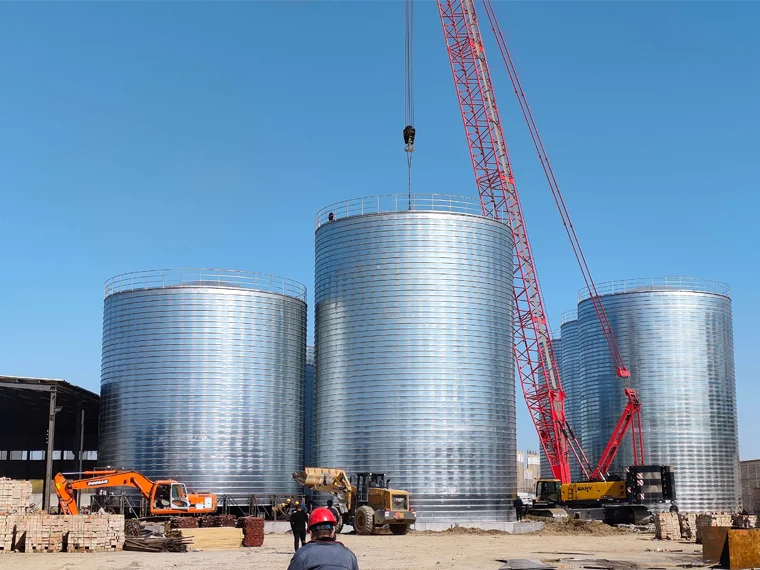
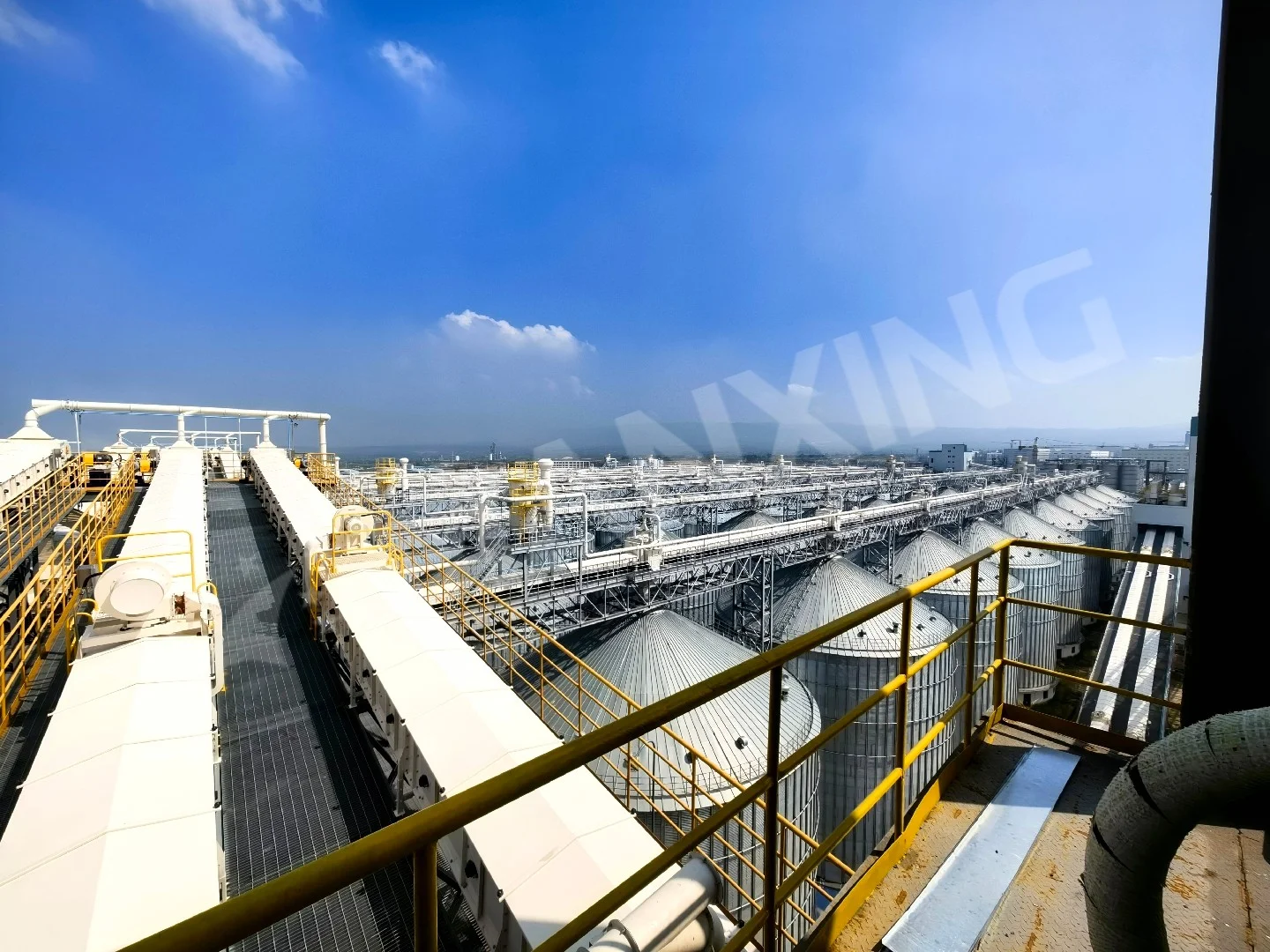


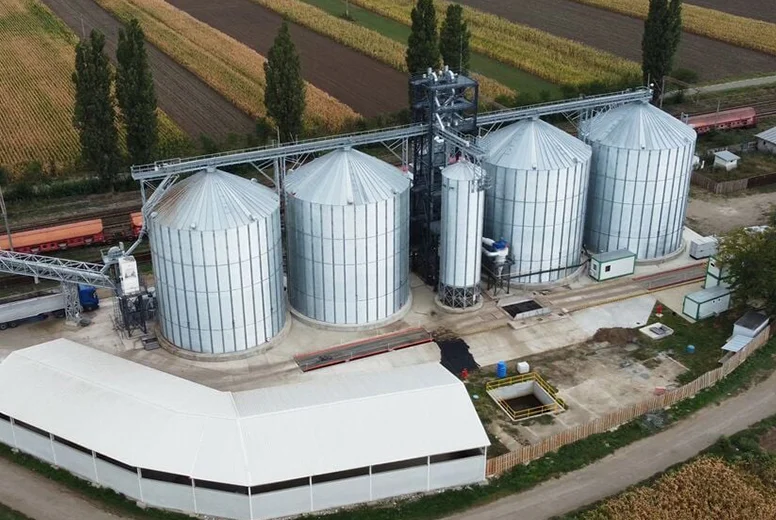
For large-scale fertilizer and industrial bulk storage, the flat bottom silo is the preferred solution due to its superior cost-efficiency, high capacity, and ease of maintenance. Unlike cone-bottom designs, flat bottom silos excel at handling challenging materials like urea and compound fertilizers, offering lower per-ton storage costs and reduced particle degradation. This guide provides an in-depth technical analysis of flat bottom silo design, operation, and best practices for the fertilizer industry.
Why Flat Bottom Silos Are the Optimal Structure for Fertilizer Storage
The physical properties of fertilizer—high hygroscopicity, a tendency to cake, and inconsistent particle strength—place severe demands on storage structures. The flat bottom silo’s design, typically featuring a concrete or steel floor combined with vertical walls, creates a "wide-base, low-center-of-gravity" storage profile. Compared to cone-bottom silos, flat bottom silos distribute bottom stress more evenly when bearing the high-density loads of fertilizer. This avoids localized stress concentrations that can lead to floor deformation or weld cracking.
Furthermore, the flat floor allows large pushing and scraping equipment, such as loaders, to assist in discharge. This is critical when handling fertilizers with poor flowability, like urea and compound fertilizers, as it effectively prevents "rat-holing" or "bridging" and ensures continuous discharge. From an operational cost perspective, the unit storage cost (investment per ton of capacity) of a flat bottom silo is typically 15%–25% lower than that of a cone-bottom silo of equal capacity. For large hub stations or port warehouses needing to store tens of thousands of tons of fertilizer, this economic advantage is decisive. Additionally, the absence of complex internal cone structures reduces the particle breakage rate during material flow, which is vital for maintaining the uniformity and commercial value of fertilizer granules.
Key Technical Parameters and Solutions for Flat Bottom Silo Design
Designing an efficient and safe fertilizer flat bottom silo requires precise calculation and optimization of several parameters to address the corrosive, hygroscopic, and high-density characteristics of fertilizers.
Corrosion Protection and Sealing Systems
Fertilizers, especially those containing chlorides and phosphates, release acidic or alkaline gases during storage that can severely corrode silo steel plates. Solutions include using high weather-resistant steel plates (e.g., S450GD+Z275 coating or higher), applying a composite coating system of epoxy zinc-rich primer and polyurethane topcoat to the inner wall, or using stainless steel liners in critical areas like the silo roof and inlet. An efficient ventilation and anti-condensation system must also be designed to prevent temperature and humidity fluctuations inside the silo from causing fertilizer to absorb moisture and cake.
Discharge Systems and Flow Aids
Flat bottom silos rely on gravity flow, but the angle of repose of fertilizers (typically 30°–45°) and their hygroscopicity can significantly impact flow efficiency. In practice, a "multi-point discharge" design (setting multiple outlets at the silo bottom) is often used, combined with air-cushioned fluidizing pads or vibratory dischargers to improve material flow. For extra-large capacity flat bottom silos (over 20 meters in diameter), it is recommended to configure a central discharge pit combined with a scraper conveyor to achieve uniform discharge across the entire silo floor and eliminate dead material accumulation.
Structural Strength and Foundation Design
The bulk density of fertilizer can reach 1.2–1.8 tons per cubic meter, far higher than that of grain. Therefore, the silo wall must be precisely calculated for lateral pressure based on "deep bin" or "shallow bin" theory, considering wind loads, seismic loads, and the dynamic pressure coefficient of the fertilizer. The foundation design must use a ring raft foundation or pile foundation to distribute the enormous vertical loads and prevent uneven settlement that could cause the silo to tilt or crack.
Key Takeaways
- Key Data: Flat bottom silos reduce unit storage costs by 15%–25% compared to cone-bottom silos, and a single silo can easily exceed 10,000 tons of capacity, making them the most cost-effective choice for bulk fertilizer storage.
- Best Practice: For highly hygroscopic fertilizers like urea, equip the silo with an active dehumidification ventilation system (dew point control) and use stainless steel or high-corrosion-resistant coating for the inner wall to ensure stable quality throughout the storage period.
- Watch Out For: Never underestimate the coupled effect of "chemical corrosion + physical abrasion." Regularly inspect the integrity of the silo wall coating and reserve internal access channels (manholes, ladders) to extend the silo’s service life.
- Pro Tip: When designing a multi-outlet flat bottom silo, ensure the spacing and size of the outlets are calculated to match the specific fertilizer's flow characteristics to avoid preferential flow and dead zones.
- Bottom Line: The flat bottom silo is the most versatile and economical solution for large-scale fertilizer storage, provided that corrosion protection, flow aid, and structural integrity are engineered correctly from the start.
Typical Applications of Flat Bottom Silos in the Fertilizer Industry Chain
The modular design and ultra-large capacity of flat bottom silos make them perfectly suited for several key stages of the fertilizer industry. In port transit warehouses, flat bottom silos paired with gantry cranes or belt conveyor systems enable rapid loading, unloading, and short-term turnover of tens of thousands of tons of fertilizer. The flat floor design allows loaders to enter the silo directly, greatly improving clean-out efficiency. In compound fertilizer plants, flat bottom silos are often used as buffer storage units for raw materials (e.g., potassium chloride, ammonium phosphate) and finished products. Their multi-point discharge capability can precisely match the multi-line feeding requirements of downstream automatic batching systems. In agricultural cooperatives or regional distribution centers, flat bottom silos can integrate weighing, dust removal, and automatic packaging systems to form a "storage-weighing-packaging" integrated operation line, reducing material transfer losses. Notably, for fertilizers with high nitrogen content (e.g., ammonium nitrate), flat bottom silos must also be equipped with explosion-proof ventilation and temperature monitoring systems to comply with safety regulations.
Frequently Asked Questions
Q: What is the difference in discharge residual rate between flat bottom silos and cone-bottom silos for fertilizer storage, and how can residuals be minimized?
A: Under ideal design, cone-bottom silos can control discharge residuals to 1%–3%, while flat bottom silos relying solely on gravity flow may have residuals as high as 10%–15%. However, the advantage of flat bottom silos is that they can achieve near 100% clean-out using mechanical aids like loaders or push feeders. The key to reducing residuals is: 1) Designing the silo floor with a slight slope (1°–3°) and a collection pit; 2) Using air-cushioned or vibratory arch-breaking devices; 3) Planning a rational discharge sequence and equipment access routes. For warehouses that frequently change fertilizer varieties, the ease of cleaning a flat bottom silo far exceeds that of a cone-bottom silo, resulting in higher overall operational efficiency.
Q: How can caking and corrosion be prevented when storing fertilizer in flat bottom silos in hot, humid coastal areas?
A: Caking and corrosion are two major pain points for coastal fertilizer storage. The solution requires both "passive protection" and "active control." For passive protection: use high-galvanized steel plates (e.g., Z600 or higher) and apply a salt-fog-resistant epoxy coating; perform 100% non-destructive testing on all welds and seal them. For active control: install industrial dehumidifiers or dew point control ventilation systems to keep the relative humidity inside the silo below 45%–50%. For particularly aggressive fertilizers, consider a double-wall design or a sacrificial anode system to further extend the silo's lifespan.
Q: What specific design considerations are needed for storing ammonium nitrate in a flat bottom silo?
A: Ammonium nitrate is an oxidizing agent and presents unique fire and explosion hazards. Storage silos must be designed with explosion relief panels, typically on the roof. The electrical system must be explosion-proof, and all equipment must be grounded to prevent static sparks. Temperature monitoring is critical; a continuous monitoring system with alarms should be installed to detect any temperature rise. The silo should be isolated from other combustible materials and have a dedicated fire suppression system. Furthermore, the interior must be kept clean to prevent contamination with organic materials.
Q: How does the particle size distribution of the fertilizer affect the design of a flat bottom silo?
A: Particle size distribution directly impacts segregation and flowability. A wide distribution of particle sizes can lead to segregation during filling, with fines accumulating in the center and coarse particles at the periphery. This can cause uneven discharge and increased dust. To mitigate this, use a central filling spout with a distributor or a telescopic chute to minimize free fall and segregation. For discharge, a multi-outlet design with flow aids (like air pads) is more effective for materials with a high fines content, as these tend to have higher cohesive strength and are more prone to bridging.
Q: What is the typical lifespan of a steel flat bottom silo used for fertilizer storage, and what are the main factors affecting it?
A: With proper design and maintenance, a steel flat bottom silo for fertilizer can last 20–30 years. The main factors affecting lifespan are corrosion rate and coating integrity. The most aggressive environments are those with high humidity, high temperature, and exposure to chloride or phosphate dust. Regular inspection (every 1-2 years) of the internal coating and steel thickness is essential. The use of sacrificial anodes or impressed current cathodic protection can significantly extend the life of the silo floor and lower wall sections. The foundation quality is also critical; any settlement can stress the structure and lead to premature failure.
Need expert manxingsilo solutions for your fertilizer storage project?
We provide professional design, manufacturing, and installation services for bulk storage and material handling systems worldwide. Our team has extensive experience with flat bottom silos for all types of fertilizers, from urea to complex NPK blends.
Get a Free Technical Consultation →