
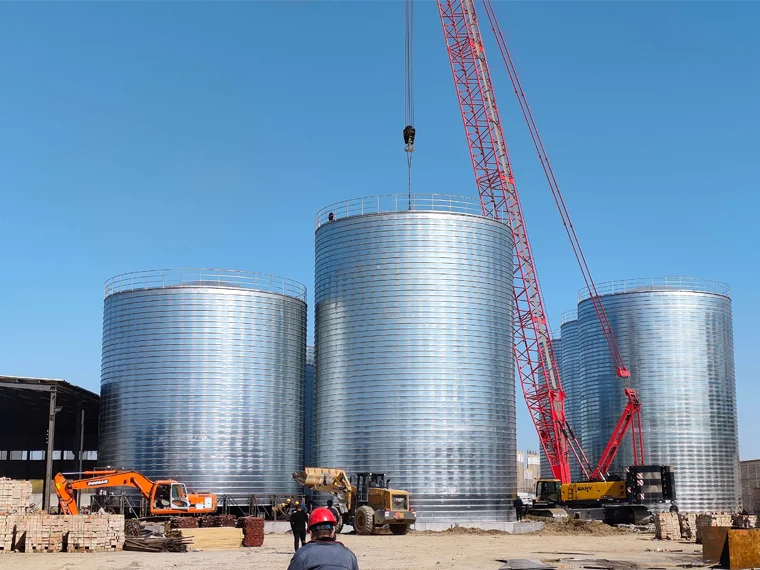
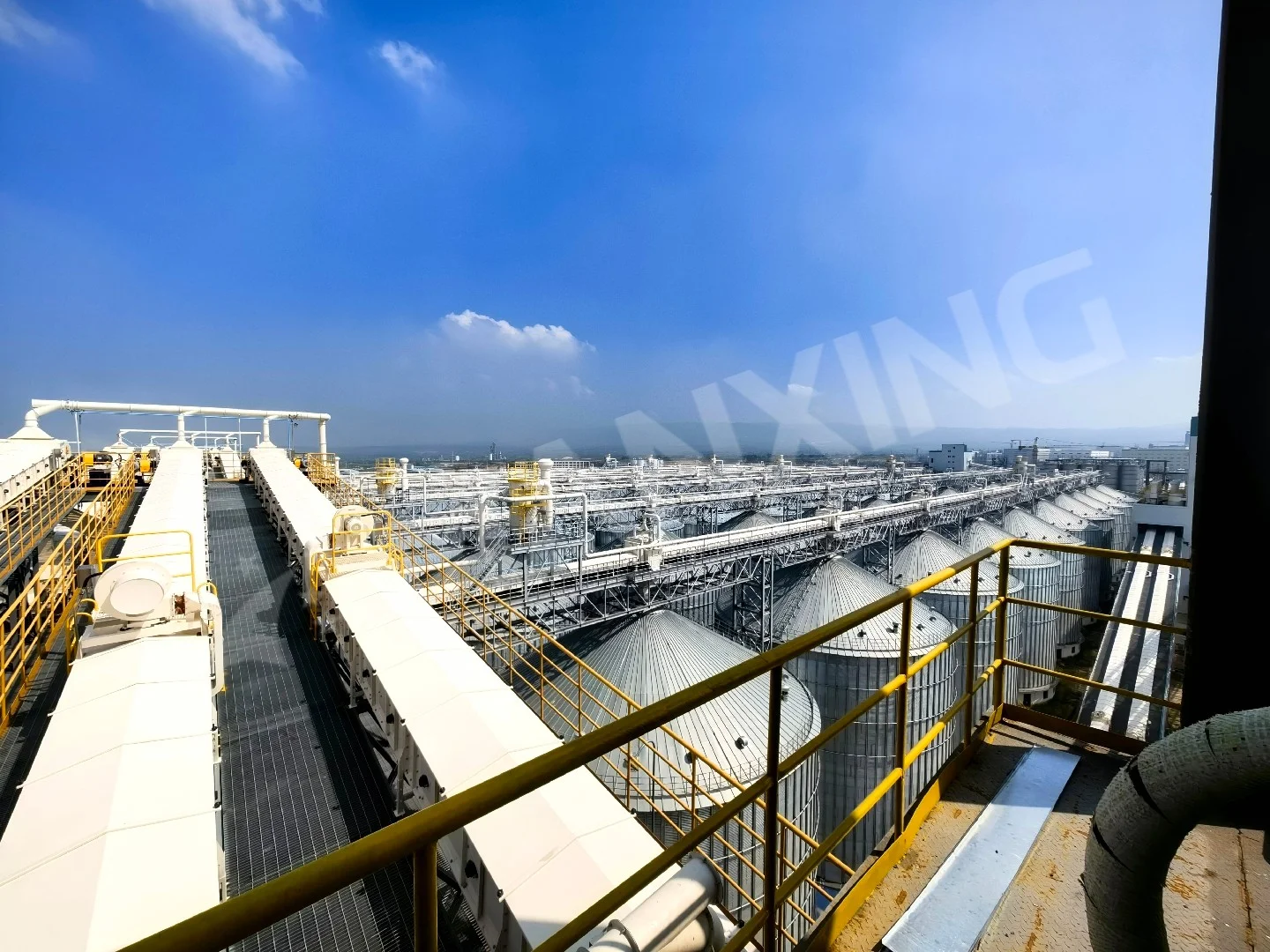


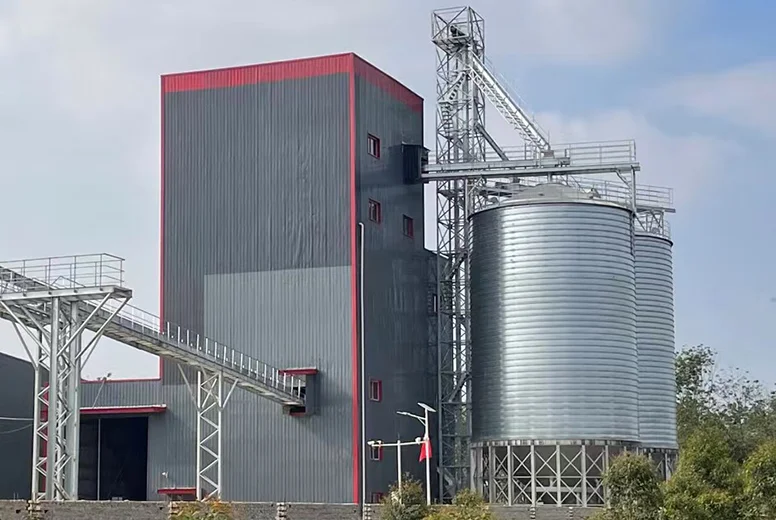
Chinese hopper bottom silo manufacturers have become pivotal players in the global bulk storage industry, offering modular, highly corrosion-resistant, and customizable solutions. By leveraging a steep cone angle design (typically 45° to 60°) and advanced material science, these silos enable gravity-assisted discharge with less than 0.5% residue, solving critical flow issues for grains, feed, and industrial powders across agricultural and industrial sectors.Related: Poultry Feed Silo Buyer’s Guide: 10 Critical Criteria
rong>Why Chinese Hopper Bottom Silo Manufacturers Lead Global Bulk Storage
China has emerged as a major hub for hopper bottom silo manufacturing, driven by a combination of high cost-performance ratios, rapid delivery timelines, and robust engineering capabilities. The core advantage of the hopper bottom design lies in its conical or sloped floor, which leverages gravity to achieve self-flow discharge, dramatically reducing material residue and the need for manual cleanout. Manufacturers typically construct these silos from high-strength galvanized steel (with a zinc coating of ≥275 g/m² for extended corrosion resistance), reinforced concrete, or fiber-reinforced plastics, ensuring resistance to corrosion, weathering, and mechanical wear.
Advanced load-sharing frame structures are engineered to withstand high filling pressures, significantly extending the equipment's service life. Furthermore, modular construction techniques enable rapid on-site assembly and flexible transportation, allowing for customized capacities ranging from a few dozen tons to several thousand tons. Many leading Chinese factories now equip hopper bottom silos with ventilated roof caps and aeration systems that control internal airflow, preventing condensation and preserving material quality. The
se features have made Chinese-made hopper bottom silos not only the preferred choice for domestic projects but also a major export to Southeast Asia, Africa, and South America, establishing them as a key option in international bulk storage solutions.Solving Discharge Challenges in Agriculture and Feed Processing with Hopper Bottom Silos
In agricultural and feed processing operations, material bridging and poor discharge flow are persistent problems that reduce efficiency and increase labor costs. The steep cone angle of a hopper bottom silo—typically designed between 45° and 60°—combined with smooth internal wall surfaces, effectively breaks the bridging effect of materials like grains, soybean meal, and corn. This design ensures reliable discharge even for materials with poor flowability, drastically reducing the need for manual hammering or mechanical breakers and enabling higher levels of automation in the production line.
Precision Control and Automation Integration
Modern hopper bottom silos can be integrated with load cells, level indicators, and automated gates to achieve precise batch discharge. For example, in a feed mill, the silo can be linked directly to the batching system, automatically dispensing raw materials according to a recipe with an accuracy error of less than 1%. This integration significantly enhances mixing uniformity and overall production efficiency, reducing waste and human error.
Moisture and Pest Resistance Design
To address storage challenges in hot and humid climates, Chinese manufacturers add ventilation rings and sealed doors at the bottom of the silo body. When paired with temperature and humidity monitoring probes, these features effectively inhibit the growth of mold and pests. Some high-end models also employ a double-cone structure with a secondary seal at the discharge outlet to prevent external moisture ingress, ensuring long-term material quality preservation.
Key Takeaways
- Key Data: Chinese hopper bottom silos achieve over 95% gravity-assisted material discharge with residual material below 0.5%, thanks to cone angles designed between 45° and 60°.
- Best Practice: Prioritize hot-dip galvanized steel with a zinc coating of at least 275 g/m² for silo construction, which provides a corrosion-resistant service life of 15–20 years in coastal, high-humidity environments.
- Watch Out For: Avoid installing excessive flange connections on the cone section of the silo to reduce stress concentration and leakage risks; schedule internal coating repairs every two years.
- Pro Tip: For materials with high abrasiveness, such as minerals or wet sugar, specify an internal liner of UHMWPE or stainless steel on the cone to extend the silo's overall lifespan by 3–5 years.
- Bottom Line: The combination of gravity flow design, modular construction, and advanced corrosion protection makes Chinese hopper bottom silos a highly reliable and cost-effective choice for global bulk storage needs.
Technical Specifications and Customization: From Selection to Delivery
Chinese hopper bottom silo manufacturers offer highly flexible parameter customization. Standard single-silo capacities range from 10 tons to 5,000 tons, with silo body diameters from 2 meters to 15 meters. The cone height is calculated based on the material's angle of repose. For instance, storing corn (with a repose angle of approximately 30°) requires a 45° cone angle, while storing paddy rice (with a repose angle of about 35°) demands a 60° cone angle to ensure reliable flow. Additionally, discharge outlet size, drive method (manual, pneumatic, or electric), and explosion-proof ratings can all be configured per project requirements.
On the technical solution front, manufacturers typically provide a "turnkey" engineering service, including site survey, foundation design, silo fabrication, on-site installation, and commissioning. For large-scale projects, suppliers often provide Finite Element Analysis (FEA) reports to verify structural safety under wind loads, seismic events, and full-load pressure. Some leading companies have adopted Building Information Modeling (BIM) for 3D collaborative design, which helps identify installation conflicts in advance and reduces project timelines by approximately 20%.
Frequently Asked Questions
Q: Do Chinese hopper bottom silo manufacturers hold international certifications, and how can I ensure export product quality?
A: Yes, mainstream Chinese manufacturers typically hold ISO 9001 quality management system certification, and many also have CE (EU), ASME (American Society of Mechanical Engineers), or SGS third-party inspection credentials. To ensure export quality, request material certificates, weld inspection reports, and full-load test videos from the supplier before purchasing. International buyers can also engage agencies like SGS or BV for pre-shipment inspection, focusing on cone angle tolerances, galvanized coating thickness, and airtightness tests.
Q: What are the key maintenance cost differences between a hopper bottom silo and a flat bottom silo?
A: Hopper bottom silos generally have lower maintenance costs than flat bottom silos. The primary reason is that hopper bottoms rely on gravity for self-discharge, eliminating the need for complex sweep augers or air cushion systems, which reduces mechanical failure points. Flat bottom silos require periodic cleaning of residual material at the bottom, adding labor or equipment costs. However, the cone section of a hopper bottom silo is more susceptible to wear from material impact. Installing wear-resistant liners (such as UHMWPE or stainless steel) on the cone's inner wall involves a slightly higher initial investment but can extend the overall silo lifespan by 3–5 years.
Q: Are hopper bottom silos suitable for high-viscosity or caking materials like wet sugar or mineral powders?
A: Standard hopper bottom silos have limited effectiveness with high-viscosity materials. However, Chinese manufacturers offer customized solutions: for example, installing vibration motors or air cannons inside the cone for arch breaking; using stainless steel to reduce friction; or designing a hyperbolic cone (non-standard angle) to alter the material flow pattern. Additionally, a PTFE (polytetrafluoroethylene) inner coating can be applied to reduce surface adhesion. We strongly recommend providing material samples to the manufacturer for flowability testing (such as shear tests) before procurement to determine the optimal cone angle and auxiliary equipment configuration.
Q: How does the modular construction of Chinese hopper bottom silos impact on-site installation time and cost?
A: Modular construction is a major advantage of Chinese hopper bottom silos. Pre-fabricated panels are shipped in compact bundles, reducing freight costs and allowing for rapid assembly on-site. A typical 500-ton silo can be erected by a small crew in 5–7 days, compared to weeks for welded or concrete silos. This significantly lowers on-site labor costs and minimizes project downtime. The bolted connection system also allows for future disassembly and relocation, adding long-term value for projects with changing storage needs.
Q: What is the typical lead time for a custom hopper bottom silo from a Chinese manufacturer?
A: Lead times vary depending on silo size and customization complexity, but standard projects typically range from 30 to 60 days from order confirmation to delivery. This includes 10–15 days for engineering design and material procurement, 20–30 days for fabrication, and 5–10 days for packing and shipping. For urgent projects, some manufacturers offer expedited production schedules. It is important to factor in additional time for international shipping and customs clearance, which can add 20–45 days depending on the destination.
Need expert hopper bottom silo solutions for your project?
We provide professional design, manufacturing, and installation services for bulk storage and material handling systems worldwide. All products are CE/ISO certified, and we offer free material flowability testing and structural finite element analysis.
Get a Free Technical Consultation →