
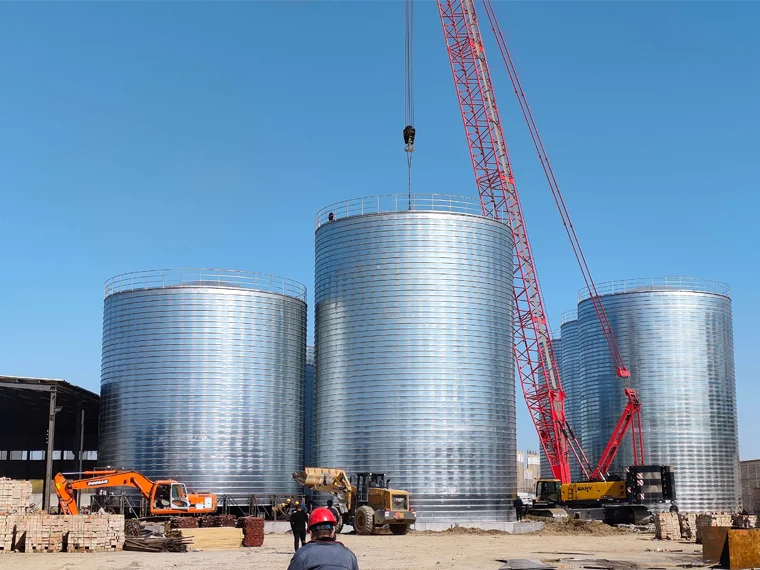
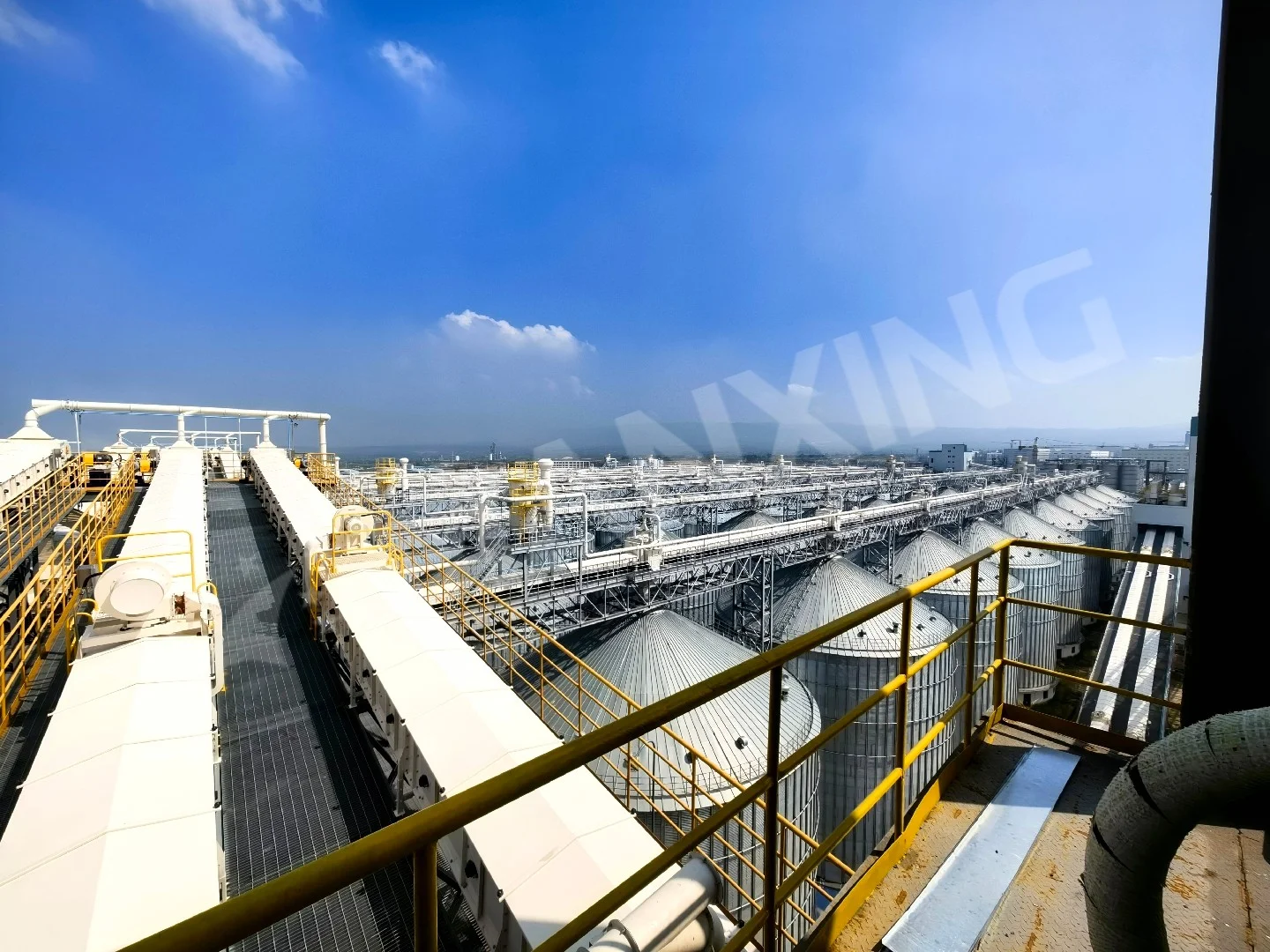


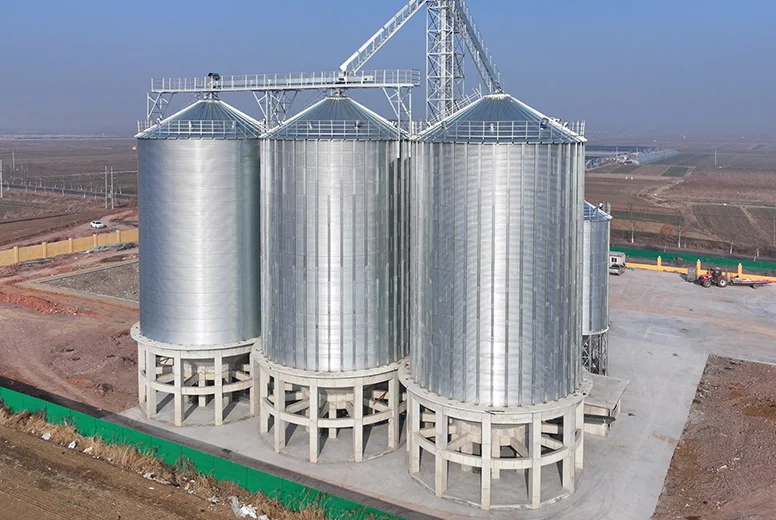
Across Africa, concrete silos are revolutionizing bulk storage by slashing post-harvest grain losses from 40% to under 1% while providing unmatched durability against extreme climates, seismic zones, and corrosion. This comprehensive guide explores the engineering advantages, cost benefits, and real-world applications of concrete silo projects in Africa, offering investors and decision-makers authoritative technical insights for long-term storage infrastructure.
The Strategic Value of Concrete Silos in Africa’s Agricultural and Industrial Development
Agriculture remains the economic backbone for most African nations, yet post-harvest losses have historically crippled food security. According to the Food and Agriculture Organization (FAO), sub-Saharan Africa loses between 30% and 40% of its annual grain harvest after production—a staggering waste that undermines both rural livelihoods and national economies. Concrete silos have fundamentally changed this equation. Unlike traditional open-air storage or rudimentary warehouses, concrete structures provide an effective barrier against the continent’s pervasive threats: extreme heat, high humidity, insect infestation, and rodent damage. By creating a sealed, climate-controlled environment, concrete silos reduce storage losses to below 1%, preserving millions of tons of grain that would otherwise be lost.
Beyond agriculture, concrete silos are equally critical for industrial bulk materials such as cement, mineral powder, and fly ash. As Africa’s rapid urbanization drives unprecedented demand for construction materials, these silos ensure a continuous, moisture-free supply chain that supports cement plants, mining operations, and port terminals. In nations like Ethiopia, Egypt, and Nigeria, concrete silos have become indispensable infrastructure assets—not merely a technical choice, but a strategic investment in national food security and industrial resilience.
Engineering Advantages of Concrete Silos for Africa’s Unique Environment
Africa’s geographic and climatic diversity presents extreme challenges for storage infrastructure—from equatorial rainforests to the Sahara Desert, from the seismic East African Rift Valley to corrosive coastal salt zones. Concrete silos, with their inherent material properties and advanced engineering, offer the most robust solution for these demanding conditions.
Structural Strength and Seismic Resilience
Modern concrete silo design employs low-permeability concrete mixes with high-performance admixtures, combined with slip-form or jump-form construction techniques. Wall thickness and reinforcement are precisely calculated to withstand extreme wind loads, differential settlement, and seismic events up to magnitude 8. In the East African Rift Valley region, multiple projects have been validated against international seismic codes such as UBC-97, ensuring stored materials remain safe even during significant earthquakes. This structural integrity is critical for maintaining operational continuity in regions where natural disasters can disrupt supply chains for months.
Customized Design and Local Adaptability
Every concrete silo project in Africa is tailored to specific site conditions and material characteristics. Diameter, height, and wall thickness are optimized based on the stored product’s angle of repose (for grain) or fluidization properties (for cement). For remote areas with limited construction infrastructure, precast segmented concrete silos significantly reduce on-site wet work, minimize reliance on skilled labor, and shorten construction timelines by over 30%. This modular approach allows projects to be completed in 6–12 months even in challenging logistics environments, using locally available aggregates like volcanic ash or limestone to optimize concrete mix designs and reduce transportation costs.
Key Takeaways
- Key Data: Concrete silos reduce grain post-harvest losses to below 1%—a reduction of over 90% compared to traditional storage methods in Africa.
- Best Practice: In high-temperature, high-humidity, or seismically active regions, prioritize slip-form reinforced concrete silos equipped with active ventilation and temperature monitoring systems.
- Watch Out For: Avoid standard concrete in saline soils or coastal areas; use sulfate-resistant cement and epoxy-coated rebar to prevent chloride-induced corrosion.
- Pro Tip: For off-grid locations, combine concrete silos with gravity-fed discharge and solar-powered monitoring to achieve fully autonomous, low-maintenance operation.
- Bottom Line: For projects with a lifespan exceeding 15 years, concrete silos deliver 30–50% lower total cost of ownership compared to steel alternatives in African conditions. Related: Hopper bottom silo with easy unloading >
Application Scenarios and Differentiated Advantages Over Steel Silos
While steel silos are common globally, concrete silos offer distinct, context-specific advantages for African projects. Two factors stand out: non-corrosiveness and fire resistance. In regions with unstable electricity grids, fire risk from electrical faults is elevated—concrete’s inherent non-combustibility provides a critical safety margin. Additionally, in remote areas where maintenance crews are scarce, concrete silos require no major repairs for 20+ years, yielding a 40–60% lower life-cycle cost compared to steel silos. Specific applications include:
Agriculture: In South Africa, Nigeria, and Kenya, large-scale grain traders are building concrete silo complexes with individual capacities ranging from 500 to 5,000 tonnes. These facilities integrate drying, cleaning, and conveying systems to create modern grain logistics hubs that improve market access for smallholder farmers.
Frequently Asked Questions
Q: How do you overcome material transport and construction skill shortages when building concrete silos in remote African locations?
A: This is the critical success factor. Our phased strategy involves: first, optimizing concrete mix designs using locally available aggregates (volcanic ash, limestone, laterite) to minimize long-distance haulage; second, employing modular precast technology that breaks the silo into standard segments shipped in containers and assembled on-site, dramatically reducing the need for heavy construction equipment; and third, deploying Chinese technical teams for hands-on training in slip-form construction, rebar tying, and quality control. This approach consistently delivers project completion within 6–12 months, even in logistically challenging environments like South Sudan or northern Mozambique.
Q: What is the real-world ROI comparison between concrete and steel silos for a 15-year African project?
A: While concrete silos typically carry a 20–30% higher initial capital cost than steel, the long-term return on investment strongly favors concrete in African conditions. Steel silos in coastal salt-spray or high-humidity zones often show corrosion within 5–8 years, requiring expensive repainting and structural repairs. Concrete silos, by contrast, have a design life of 50 years with minimal maintenance. For any project planned to operate beyond 15 years, concrete silos reduce total costs (construction + maintenance + depreciation) by 30–50%. Additionally, concrete’s superior thermal mass reduces internal temperature fluctuations, minimizing condensation-related mold and spoilage risks for grain—a hidden cost that can wipe out steel silo savings in a single bad season.
Q: How can concrete silos achieve automated management in countries with unstable power supplies?
A: Our solution uses a “low-energy + backup power” dual-track design. The in/out material handling system combines gravity flow with low-pressure pneumatic conveying to minimize electricity demand. A microgrid pairing solar photovoltaic panels with diesel generators ensures continuous operation of monitoring systems, temperature sensors, and ventilation fans. In a Zambian project, we achieved fully off-grid operation, with solar alone meeting all daily monitoring needs. Furthermore, the control system supports remote monitoring via satellite communication, transmitting data to a central management center for true unattended operation—critical for sites where technicians may be hundreds of kilometers away.
Q: What specific concrete mix designs are recommended for silos in saline or alkaline soil conditions common in parts of Africa?
A: For silos built in saline soils (common in the Sahel, coastal East Africa, and the Kalahari Basin), standard Portland cement is inadequate. We specify sulfate-resistant cement (Type V per ASTM C150) with a maximum water-cement ratio of 0.40. All reinforcing steel must be epoxy-coated or galvanized to prevent chloride-induced corrosion. Concrete cover over rebar should be increased to a minimum of 75 mm. For extreme cases, such as coastal projects in Tanzania or Senegal, we add silica fume or fly ash to reduce permeability and specify a corrosion-inhibiting admixture. These measures ensure the silo structure remains intact for its full 50-year design life despite aggressive chemical exposure.
Q: Can concrete silos be integrated with existing grain drying and handling equipment from different manufacturers?
A: Absolutely. Concrete silos are highly adaptable for integration with third-party equipment. The silo roof and bottom cone are designed with standardized flanges and access points to accommodate any brand of bucket elevators, belt conveyors, or chain conveyors. For drying systems, we can incorporate aeration floors with plenum chambers sized to match the airflow requirements of your specific dryer model. Temperature monitoring cables and level sensors are installed during slip-form construction, with wiring conduits routed to a central control panel that can interface with most SCADA systems. In a recent Nigerian project, we integrated a European grain dryer, an Indian conveyor system, and a Chinese control system—all working seamlessly through careful interface planning.
Need expert concrete silo solutions for your African project?
We provide full-cycle services—from geotechnical survey and structural design through construction, commissioning, and operator training. With over 30 silo projects successfully delivered across 12 African countries, our team brings proven expertise in navigating local logistics, regulatory compliance, and climate challenges.
Get a Free Technical Consultation →