


With global grain production approaching 2.8 billion tons annually, the cost of your storage system in 2026 goes far beyond the silo’s sticker price. This guide breaks down the full cost picture—from material selection and hidden installation fees to long-term total cost of ownership—so you can budget with confidence and avoid costly overruns.
Breaking Down the 2026 Grain Silo Total Cost: Material, Installation & Maintenance
When planning a grain storage project for 2026, the total cost typically splits into three distinct categories. The silo body and equipment account for 55% to 65% of the budget. Civil works and installation consume another 20% to 30%, while auxiliary systems and ongoing operations take the remaining 10% to 20%. Ign
oring the latter two categories is the single most common mistake, often leading to budget overruns of 20% to 40%.For the most popular option—galvanized steel silos—the market price per cubic meter of storage capacity ranges from $40 to $80. How
ever, this is only a base quote. The final cost depends heavily on the silo type (spiral vs. bolted), corrosion protection level (e.g., 275 g/m² vs. 600 g/m² zinc coating), and whether discharge equipment (such as sweep augers and belt conveyors) is included. In high-humidity or coastal areas, upgrading to a higher-grade anti-corrosion system will add 15% to 25% to the cost but can dramatically extend the silo’s service life.Steel vs. Concrete: Choosing the Most Cost-Effective Silo Material for Your Project
Material selection is the single most important factor determining both your initial investment and long-term operational efficiency. In the 2026 market, galvanized steel silos remain the best overall value, especially for standardized, fast-track farm projects. Their key advantages include factory prefabrication, short on-site installation (typically 3 to 6 weeks), and lighter weight, which reduces foundation requirements. However, when fire resistance or structural durability is paramount, concrete silos become the irreplaceable choice.
Concrete silos have an initial investment 25% to 40% higher than steel silos of the same capacity. But their superior thermal insulation and exceptionally low maintenance costs (requiring virtually no anti-corrosion treatment) give them a significant edge over a 20-year lifecycle. For projects storing high-value grains long-term, or those located in seismic zones or high-wind areas, the stability and safety of a concrete structure often outweigh the higher upfront price.
Galvanized Steel Silos: The Industry Standard for Rapid Deployment
As the most widely used option, galvanized steel silos cost between $40 and $80 per cubic meter. Their core advantage lies in mature technology and a well-established supply chain. When selecting, pay close attention to the steel’s yield strength (typically no less than 350 MPa) and the adhesion quality of the zinc coating. For temporary or relocatable storage, bolted corrugated panel silos are an alternative, costing 10% to 15% less but offering slightly lower airtightness and durability.
Stainless Steel & Specialty Alloy Silos: A Long-Term Investment for Extreme Environments
In chemical processing, food manufacturing, or high-humidity coastal environments, stainless steel silos provide the ultimate corrosion protection. Their cost is 60% to 80% higher than standard galvanized silos, but they completely eliminate the risk of grain contamination from rust. For projects storing high-oil or high-moisture grains like corn and soybeans, this investment significantly reduces the risk of mold and rising fatty acid values, thereby protecting a higher product premium.
Key Takeaways
- Key Data: The base cost for a galvanized steel silo is $40–$80/m³, but total project costs (including foundation, installation, and discharge systems) typically add 40%–60% to that figure.
- Best Practice: Allocate a 15% contingency fund in your budget to cover unexpected site conditions, steel price fluctuations, or evolving environmental compliance requirements.
- Watch Out For: Never make a decision based solely on equipment quotes. Always demand a full "turnkey" price from your supplier that includes civil works, installation, commissioning, and at least one year of operational support.
- Pro Tip: For permanent facilities, spiral-welded silos offer superior airtightness and a 5–8 year longer lifespan than bolted silos, making them a better long-term value despite a 10%–15% higher initial cost.
- Bottom Line: The cheapest silo is rarely the most cost-effective. A rigorous total cost of ownership (TCO) analysis that factors in installation, maintenance, and energy use is the only reliable way to budget for a 2026 storage project.
Hidden Costs Deep Dive: Civil Works, Installation & Long-Term Operations
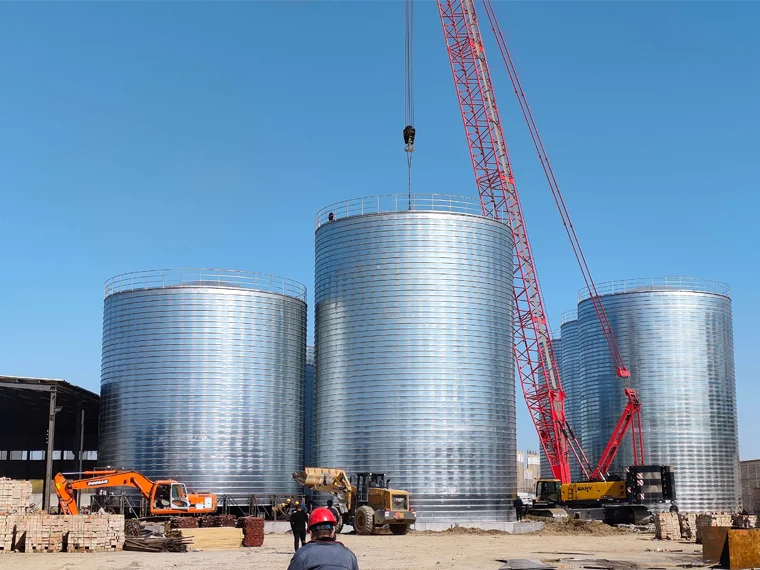
Many agricultural project managers underestimate the cost of civil works and installation. For a steel silo 15 meters in diameter and 20 meters high, the foundation work—including piling, ring beams, and floor slabs—can reach 30% of the equipment cost. Installation fees vary by silo type and site conditions. Spiral-welded silos generally have lower installation costs than bolted silos but require a more specialized crew. Furthermore, discharge equipment (such as chain conveyors, bucket elevators, and dust collection systems) and grain condition monitoring systems (temperature and humidity sensors) are critical for safe storage, accounting for 10% to 15% of the total investment. These are not optional extras.
Long-term maintenance is the core of total cost of ownership (TCO). Galvanized steel silos require anti-corrosion coating repairs every 5 to 8 years, with each repair costing about 20% of the initial coating cost. Concrete silos, while higher in initial investment, require only periodic attention to roof waterproofing and expansion joints, resulting in very low upkeep. Additionally, annual operating budgets must include electricity for ventilation and conveying, as well as pest control measures.
Frequently Asked Questions
Q: In 2026, what are the specific cost and lifespan differences between spiral-welded steel silos and bolted corrugated panel silos?
A: Spiral-welded silos, formed through a continuous rolling process, offer higher overall structural strength and superior airtightness. This makes them ideal for grains like rice that require a sealed environment. Their initial cost is typically 10% to 15% higher than a bolted silo of the same capacity, but their service life is 5 to 8 years longer. Bolted silos have the advantage of being demountable and easier to transport, making them suitable for temporary projects or phased expansion. For a permanent facility, the spiral-welded design offers better long-term value.
Q: With a limited budget, how should I balance a silo's "initial cost" against its "long-term operational efficiency"?
A: Adopt a "core functions first, auxiliary features phased in" strategy. First, ensure the main structure—the silo body, foundation, and discharge outlet—meets your capacity needs for the next 3 to 5 years. This is not an area to cut corners. Second, for high-value add-ons like automatic temperature monitoring, intelligent aeration, and centralized control systems, you can install the necessary wiring and connection ports now and add the equipment when funds become available. Finally, prioritize energy-efficient motors and fans from the start, as these deliver immediate and continuous savings on your electricity bill.
Q: How do site-specific factors like soil type and local climate impact the final installed cost of a grain silo?
A: Soil conditions are a major variable. A site with poor bearing capacity may require deep piling, which can add 15% to 25% to the foundation cost. In high-wind or seismic zones, the foundation and structural bracing must be reinforced, increasing both material and labor costs. Climate also dictates the required corrosion protection level. A standard galvanized coating (275 g/m²) may be sufficient for arid regions, but a coastal or high-humidity environment will necessitate a 600 g/m² coating or even stainless steel, adding 15% to 25% to the silo body cost. Always provide a geotechnical report when requesting quotes for the most accurate pricing.
Q: What are the most commonly overlooked costs in a grain silo project budget?
A: The three most frequently missed costs are: 1) Electrical and control wiring from the main panel to the silo, which can be substantial for remote sites. 2) Safety equipment, including ladders, guardrails, roof walkways, and fall arrest systems, which are now standard safety requirements. 3) The cost of grain conditioning and aeration fans, ductwork, and the concrete plenum beneath the silo floor. These items are critical for maintaining grain quality but are often excluded from basic equipment-only quotes. Always get a detailed line-item breakdown from your supplier to avoid surprises.
Ready to build a storage solution that fits your budget and your grain?
With over 15 years of experience in steel silo design and installation, we help you navigate every cost—from foundation to final commissioning. Get a transparent, turnkey quote tailored to your site and crop.
Get a Free Technical Consultation →