
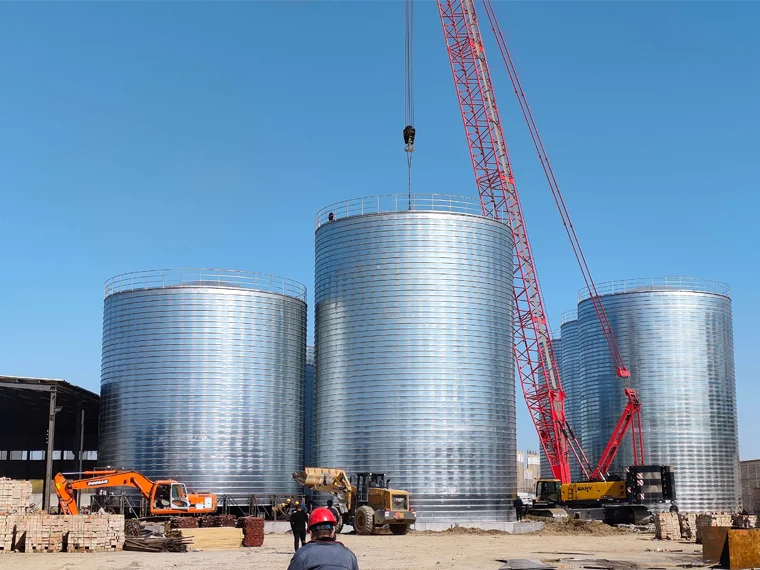
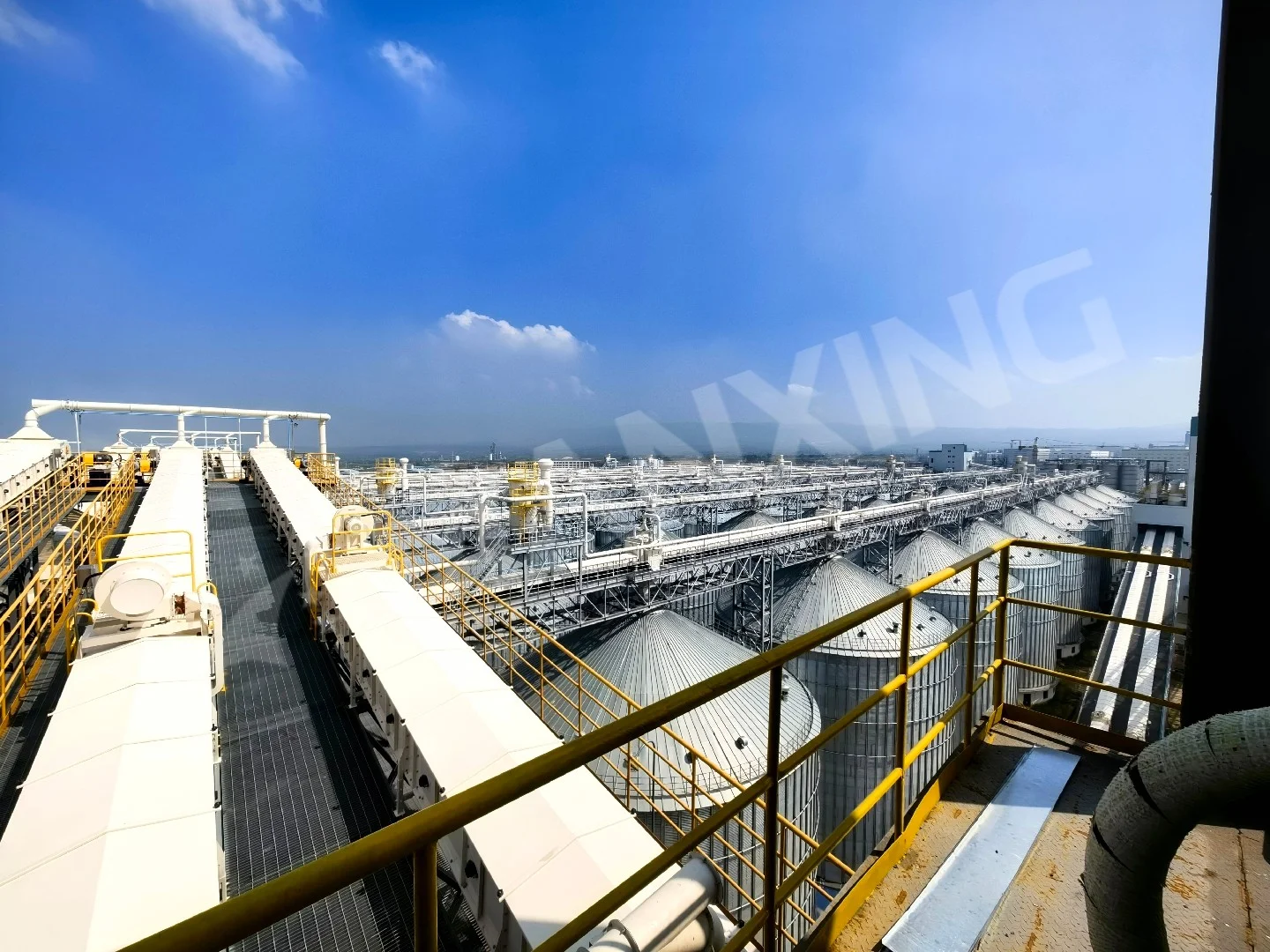


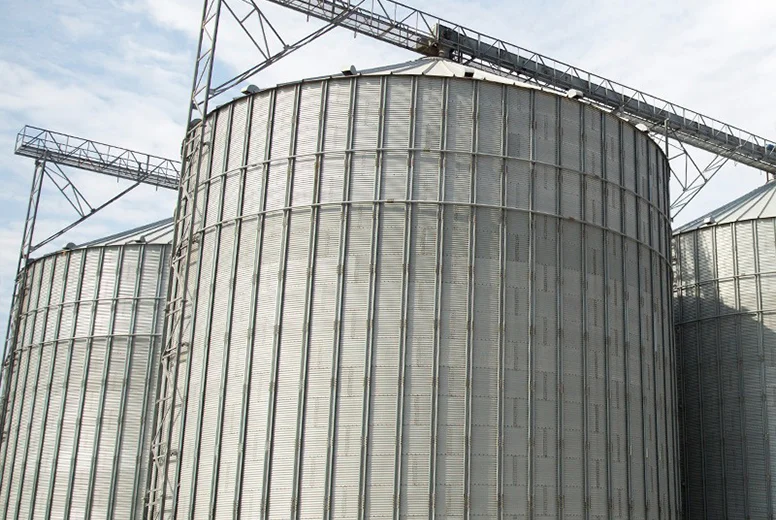
Flat bottom silos have long been the backbone of bulk storage for grain, cement, and chemicals due to their structural stability and high storage density. Now, integrated automatic control systems are revolutionizing these silos, transforming them from passive containers into intelligent hubs that eliminate material bridging, spoilage, and residual waste. For industries seeking measurable gains in throughput, product quality, and operational safety, this technical fusion delivers a powerful competitive edge.
The Technical Fusion of Flat Bottom Silo Design and Intelligent Automation
Unlike cone-bottom or hopper-bottom designs, a flat bottom silo features a level floor that maximizes usable volume and simplifies cleaning and maintenance. Thi
s geometry allows for more uniform material flow during discharge. However, traditional flat bottom silos suffer from well-known drawbacks: "rat-holing," where material flows only through a central channel, and "wall hang-up," where product adheres to the sides. These issues cause significant residual material and operational inefficiency, often leaving 5–15% of stored product unrecoverable without manual intervention.Modern automatic control systems solve these problems by integrating high-precision sensors—such as radar level gauges, temperature probes, and pressure transmitters—with intelligent algorithms. The system continuously monitors level, temperature, humidity, and flow dynamics, then automatically adjusts inlet valves, discharge gates, and anti-bridging devices. This creates a closed-loop "sense-decide-act" process that transforms the silo from a passive container into an active management unit. For example, in grain storage, the system can trigger ventilation or cooling based on internal temperature changes to prevent mold. In cement or fly ash storage, it precisely controls pneumatic conveying start/stop cycles to avoid pipeline blockages.
How Automatic Control Solves Three Critical Pain Points in Traditional Silo Operations
Traditional silo operations have long struggled with three persistent challenges: material bridging, spoilage due to environmental fluctuations, and high labor costs for manual intervention. Automatic control systems address each of these directly. First, by using radar level sensors and vibration-based anti-bridging devices, the system detects and breaks up material arches before they can halt discharge. Second, continuous temperature and humidity monitoring enables real-time adjustments to aeration or cooling systems, drastically reducing spoilage risk. Third, automated gate sequencing and inventory tracking eliminate the need for operators to physically inspect silos, reducing labor costs by up to 30% while improving safety.
Precision Level Measurement and Inventory Management
Radar level gauges provide continuous, non-contact measurement of material height with accuracy within ±5 mm. This data feeds into the central control system, enabling real-time inventory tracking without manual dipping. Operators can monitor stock levels remotely and schedule refills or discharges with confidence, preventing overfills and ensuring supply chain continuity.
Temperature and Humidity Control for Product Quality
Temperature probes embedded at multiple heights within the silo wall detect hot spots that signal potential spoilage. When temperature exceeds a preset threshold, the system automatically activates ventilation fans or cooling coils. In grain storage, this can reduce moisture migration and mold growth by over 60%. For cement, maintaining consistent temperature prevents hydration and quality degradation.
Key Takeaways
- Key Data: Traditional flat bottom silos can leave 5–15% of stored product unrecoverable due to rat-holing and wall hang-up — automatic control reduces this to near zero.
- Best Practice: Integrate radar level gauges with anti-bridging devices to ensure continuous, uninterrupted discharge from flat bottom silos.
- Watch Out For: Over-reliance on manual inspection — without automation, temperature and humidity fluctuations can cause spoilage that goes undetected until it's too late.
- Pro Tip: Use closed-loop "sense-decide-act" control logic to automatically adjust aeration based on real-time grain temperature, reducing energy costs by up to 20%.
- Bottom Line: Automatic control transforms a flat bottom silo from a simple storage container into an intelligent asset that improves throughput, quality, and safety while reducing waste and labor.
Implementing Automatic Control: System Architecture and Key Components
A fully automated flat bottom silo system comprises several interconnected components. The sensor layer includes radar level transmitters, multi-point temperature probes, pressure transmitters for pneumatic conveying lines, and humidity sensors. These feed data to a programmable logic controller (PLC) or distributed control system (DCS) that executes the control algorithms. The actuation layer includes motorized inlet and outlet gates, variable-speed discharge conveyors, pneumatic vibrators or air cannons for anti-bridging, and aeration fans. A human-machine interface (HMI) provides operators with a real-time dashboard showing silo status, alarms, and historical trends. For remote monitoring, the system can connect to a SCADA platform or cloud-based IoT portal, enabling plant managers to oversee multiple silos from a single screen.
Frequently Asked Questions
Q: How does automatic control prevent material bridging in a flat bottom silo compared to a cone-bottom design?
A: Cone-bottom silos rely on gravity alone, which can still lead to bridging if material has high moisture or cohesive properties. In a flat bottom silo with automatic control, radar level sensors detect the formation of a material bridge at the discharge zone. The system then activates pneumatic air cannons or mechanical vibrators at precise intervals to break the arch before it can stop flow. This active intervention is far more reliable than passive gravity flow, especially for sticky or hygroscopic materials like wet grain or fly ash.
Q: Can an automatic control system be retrofitted to an existing flat bottom silo, or is it only for new installations?
A: Retrofitting is entirely feasible and often more cost-effective than building a new silo. The key requirements are access to install sensors (radar level gauges, temperature probes) through existing ports or by adding small flanges, and running control cables to a central PLC cabinet. Anti-bridging devices like air cannons can be mounted externally. Most modern control systems are modular, so you can start with basic level monitoring and add temperature control or automated discharge sequencing over time. A site survey by an experienced silo automation provider is recommended to assess structural compatibility and wiring routes.
Q: What is the typical return on investment (ROI) for adding automatic control to a flat bottom silo used for grain storage?
A: ROI varies by scale, but typical payback periods range from 12 to 24 months. Savings come from three main areas: reduced product loss (eliminating the 5–15% residual material), lower labor costs (automated monitoring replaces manual inspections), and improved quality (temperature-controlled aeration cuts spoilage by over 60%). For a 10,000-tonne grain silo, this can translate to annual savings of $50,000–$100,000, depending on grain prices and local labor rates. Many operators also see a 10–15% increase in throughput due to faster, more reliable discharge cycles.
Q: How does the automatic control system handle power outages or sensor failures?
A: Robust systems are designed with fail-safe defaults. In a power outage, motorized gates and valves return to their last safe position (typically closed or partially open depending on the application). Critical sensors like radar level gauges often have battery-backed memory to retain calibration data. The PLC can be equipped with an uninterruptible power supply (UPS) to maintain control logic for several hours. For sensor failures, the system logs an alarm and switches to a conservative operating mode based on historical data or manual override. Redundant sensors on critical parameters (e.g., dual temperature probes) are recommended for high-value commodities like grain or cement.
Q: What specific sensors are most important for a flat bottom silo handling cement or fly ash?
A: For cement and fly ash, the most critical sensors are radar level gauges for continuous inventory measurement (these are unaffected by dust), pressure transmitters on pneumatic conveying lines to detect blockages, and temperature probes to monitor for hydration exotherms. Humidity sensors are less critical for cement but valuable for fly ash if it is stored dry. Additionally, flow detectors at the discharge point can confirm material is moving, triggering an alarm if discharge stops unexpectedly. All sensors should be rated for the abrasive and fine-particle nature of these materials, with robust housings and air-purge systems to prevent dust buildup on lenses.
Need expert manxingsilo solutions for your project?
We provide professional design, manufacturing, and installation services for bulk storage and material handling systems worldwide. Our team specializes in retrofitting automatic control systems to existing flat bottom silos and engineering new intelligent storage facilities.
Get a Free Technical Consultation →