


Flat bottom silos with integrated aeration systems are an engineered solution to the most persistent challenges in bulk material storage: bridging, spoilage, and poor flowability. By combining a stable, cost-effective structural design with active airflow management, this configuration significantly enhances storage efficiency, preserves material quality, and delivers a rapid return on investment across industries from grain to cement.
Structural Design and Material Advantages of the Flat Bottom Silo with Aeration
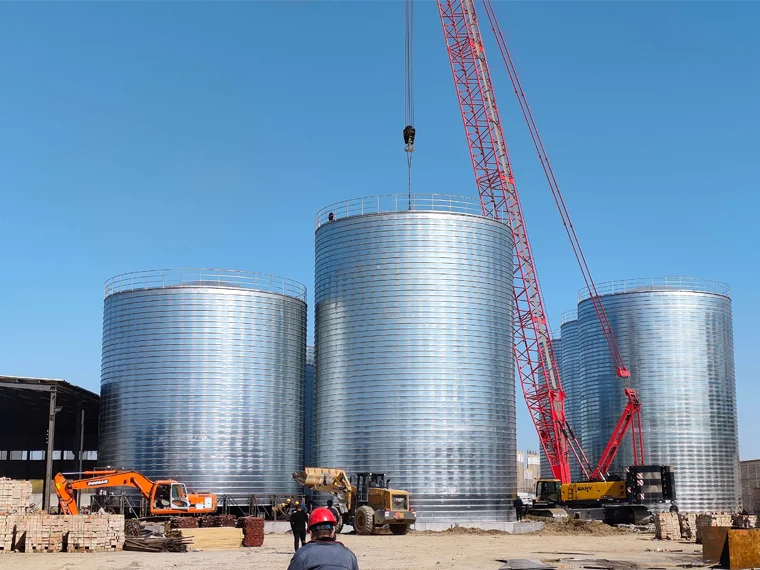
The flat bottom silo is defined by its level, horizontal base, a design that fundamentally simplifies foundation engineering and ongoing maintenance. Unlike cone-bottom silos, the flat floor does not bear the immense vertical loads concentrated at the apex of a cone. This results in lower bearing capacity requirements for the foundation, making flat bottom silos particularly suitable for installation on soft soil or within existing buildings where reinforcement is costly or impossible. The main body is typically constructed from high-strength materials such as galvanized steel sheet, spiral corrugated steel, or cast-in-place reinforced concrete, providing excellent resistance to wind loads, seismic forces, and corrosion.
From a material efficiency perspective, the flat design allows for a nearly uniform distribution of stored product across the entire floor area. This eliminates the "center flow" phenomenon common in cone-bottom silos, which creates uneven lateral pressure on the sidewalls. This uniform load distribution not only extends the structural lifespan of the silo but also provides a flat, easy-to-lay surface for installing internal components like aeration ducts and temperature monitoring cables. For large-scale storage projects with single silo capacities exceeding 5,000 tons, the structural economy of the flat bottom silo is particularly pronounced, often saving 10%–15% in steel consumption compared to equivalent cone-bottom designs.
How the Aeration System Prevents Spoilage and Improves Flowability
The integrated aeration system is the critical differentiator that transforms a simple flat bottom silo into a high-performance storage asset. By introducing controlled airflow through a network of perforated ducts embedded in the silo floor, the system actively manages the storage environment. The primary functions include temperature and moisture control, which directly combat spoilage from mold, insect infestation, and spontaneous combustion—especially vital for grain storage. For cement and other hygroscopic materials, aeration prevents caking and maintains flowability by reducing humidity pockets within the stored mass.
Operationally, the aeration system also addresses the common problem of bridging and rat-holing in flat bottom silos. By maintaining a consistent moisture and temperature profile, the material's cohesive properties remain predictable, allowing for reliable discharge through bottom outlets. The system can be configured for either positive pressure (forcing air in) or negative pressure (pulling air out), depending on the specific material and climate conditions. This flexibility ensures that the aeration system can be fine-tuned to match the unique requirements of each stored product, from grains and seeds to minerals and chemicals.
Key Design Parameters for Aeration Duct Layout
Effective aeration depends on proper duct spacing and sizing. For most bulk materials, ducts are spaced at intervals of 1.5 to 3 meters, with perforated sections covering 5%–15% of the floor area. The airflow rate is typically designed to achieve 0.1–0.3 cubic meters per minute per ton of stored material, ensuring uniform air distribution across the entire silo footprint. Duct materials must resist corrosion and withstand the weight of the stored product, with galvanized steel or stainless steel being the industry standards.
Integration with Temperature Monitoring Systems
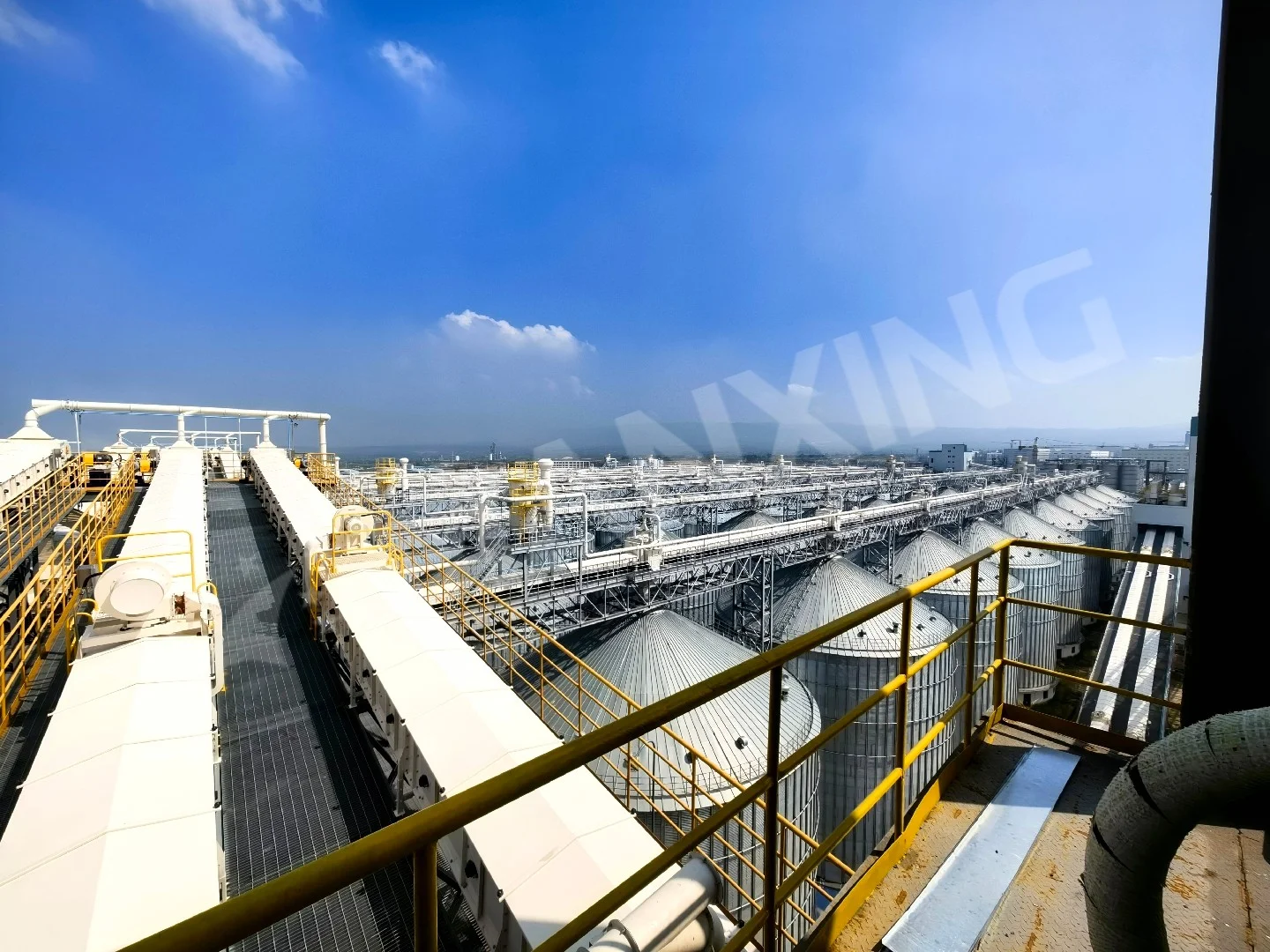
Modern flat bottom silos with aeration systems often incorporate a network of thermocouple cables suspended at multiple levels within the storage volume. These sensors provide real-time temperature data, allowing operators to detect hot spots early and activate targeted aeration zones. This closed-loop control system maximizes energy efficiency by running fans only when needed, reducing operational costs while maintaining product quality. For grain storage, maintaining a temperature differential of less than 5°C between the core and the periphery is a common benchmark for safe storage.
Key Takeaways
- Key Data: Flat bottom silos can reduce steel consumption by 10%–15% compared to equivalent cone-bottom designs for capacities over 5,000 tons.
- Best Practice: Design aeration ducts with 5%–15% floor coverage and airflow rates of 0.1–0.3 m³/min per ton for optimal moisture and temperature control.
- Watch Out For: Inadequate aeration duct spacing can create dead zones where moisture accumulates, leading to localized spoilage and bridging.
- Pro Tip: Integrate temperature monitoring cables at multiple heights to enable zone-specific aeration, cutting energy use by up to 30% compared to continuous fan operation.
- Bottom Line: A flat bottom silo with a properly engineered aeration system is the most cost-effective solution for long-term, high-volume storage of moisture-sensitive bulk materials.
Applications Across Industries: Grain, Cement, and Beyond
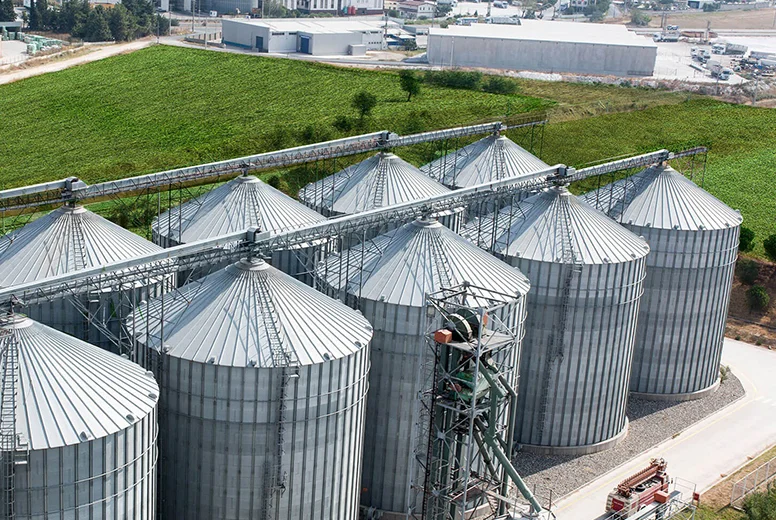
The flat bottom silo with aeration system is not a one-size-fits-all solution but a versatile platform adaptable to diverse materials. In the grain industry, it is the gold standard for storing wheat, corn, soybeans, and rice for periods of 6–12 months or longer. The aeration system maintains grain moisture content below 14% (for most cereals) and keeps temperatures within safe limits, preventing aflatoxin development and preserving germination rates for seed stock. In the cement industry, these silos store finished cement, fly ash, and slag, where aeration prevents the material from absorbing atmospheric moisture and forming hard lumps that clog discharge systems.
Beyond these core applications, flat bottom silos with aeration are increasingly used for storing wood pellets, plastic granules, fertilizers, and chemical powders. For wood pellets, aeration helps dissipate the heat generated by biological activity and friction during loading, reducing the risk of spontaneous combustion. For fertilizers, controlled airflow prevents caking caused by temperature cycling and humidity. The adaptability of the aeration system—through adjustable fan speeds, duct configurations, and control algorithms—makes it possible to tailor the storage environment to the specific physical and chemical properties of almost any granular or powdery material.
Frequently Asked Questions
Q: What is the typical lifespan of a flat bottom silo with aeration system, and what maintenance is required?
A: A well-constructed flat bottom silo with a properly maintained aeration system can last 20–30 years or more, depending on the material stored and environmental conditions. Key maintenance tasks include annual inspection of aeration ducts for corrosion or blockages, cleaning of fan filters, and verification of temperature sensor accuracy. For grain storage, it is critical to clean out residual material between batches to prevent pest harborage. Galvanized steel silos may require touch-up painting every 5–10 years in corrosive environments, while concrete silos need periodic sealing of cracks to maintain airtightness.
Q: How does the aeration system prevent bridging and rat-holing in flat bottom silos?
A: Bridging occurs when material forms a stable arch above the discharge outlet, while rat-holing happens when material only flows from a central column, leaving stagnant material around the walls. The aeration system mitigates these issues by maintaining uniform moisture and temperature throughout the stored mass. By reducing moisture gradients, the system prevents the formation of sticky, cohesive layers that contribute to arching. Additionally, the airflow itself can help fluidize the material near the floor, promoting mass flow behavior. For particularly problematic materials, the aeration system can be combined with mechanical flow aids such as vibratory bin dischargers or screw reclaimers to ensure reliable discharge.
Q: What are the energy costs associated with operating a flat bottom silo aeration system?
A: Energy costs depend on the fan size, operating hours, and local electricity rates. A typical aeration system for a 5,000-ton grain silo uses fans rated at 10–30 horsepower. Continuous operation at full power would cost approximately $50–$150 per day in electricity. However, modern systems with temperature-based control algorithms can reduce runtime by 50%–70% by only activating fans when temperature or humidity thresholds are exceeded. Using variable frequency drives (VFDs) further optimizes energy use by matching fan speed to actual airflow demand. For most applications, the cost of aeration is offset by the value of preserved product quality and reduced spoilage losses.
Q: Can a flat bottom silo with aeration system be retrofitted into an existing storage facility?
A: Yes, retrofitting is feasible for many existing flat bottom silos, provided the floor is structurally sound and accessible. The process involves installing a network of perforated aeration ducts on the existing floor, connecting them to a manifold and fan system, and sealing the ducts with a wear-resistant concrete or steel cover. Temperature monitoring cables can be suspended from the roof or sidewalls. However, retrofitting is more complex than new construction and may require structural modifications to the silo walls to accommodate duct penetrations. A professional engineering assessment is recommended to determine the suitability and cost-effectiveness of retrofitting versus building a new silo.
Q: What is the difference between positive pressure and negative pressure aeration systems?
A: Positive pressure aeration forces air upward through the stored material, which is effective for cooling and drying. It is commonly used for grain storage because it pushes warm, moist air out through the top vents. Negative pressure aeration pulls air downward through the material, which is better for equalizing temperature throughout the silo and is often preferred for cement and other fine powders to minimize dust emissions. The choice depends on the material's characteristics and the primary storage goal. Some advanced systems are designed for reversible operation, allowing operators to switch between positive and negative pressure as conditions change.
Q: How does the aeration system handle condensation inside the silo?
A: Condensation is a major concern in flat bottom silos, especially when warm, moist air contacts cooler silo walls or the product surface. The aeration system addresses this by maintaining a uniform temperature profile, reducing the temperature differential that drives condensation. In humid climates, the aeration system can be operated during cool, dry periods to lower the dew point inside the silo. Additionally, insulated silo roofs and walls can be specified to minimize temperature gradients. For critical applications, desiccant dehumidifiers can be integrated with the aeration system to actively remove moisture from the incoming air stream.
Need expert manxingsilo solutions for your project?
We provide professional design, manufacturing, and installation services for bulk storage and material handling systems worldwide. Our team has decades of experience engineering flat bottom silos with integrated aeration systems for grain, cement, and industrial applications.
Get a Free Technical Consultation →