
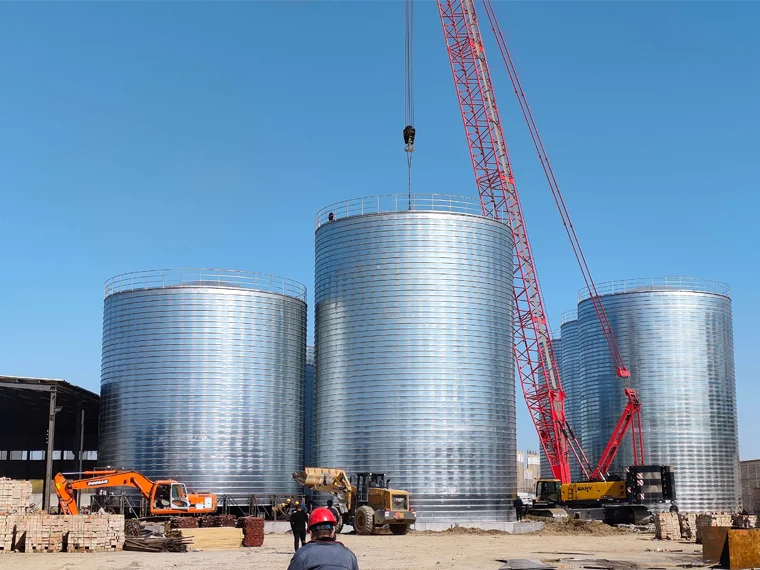
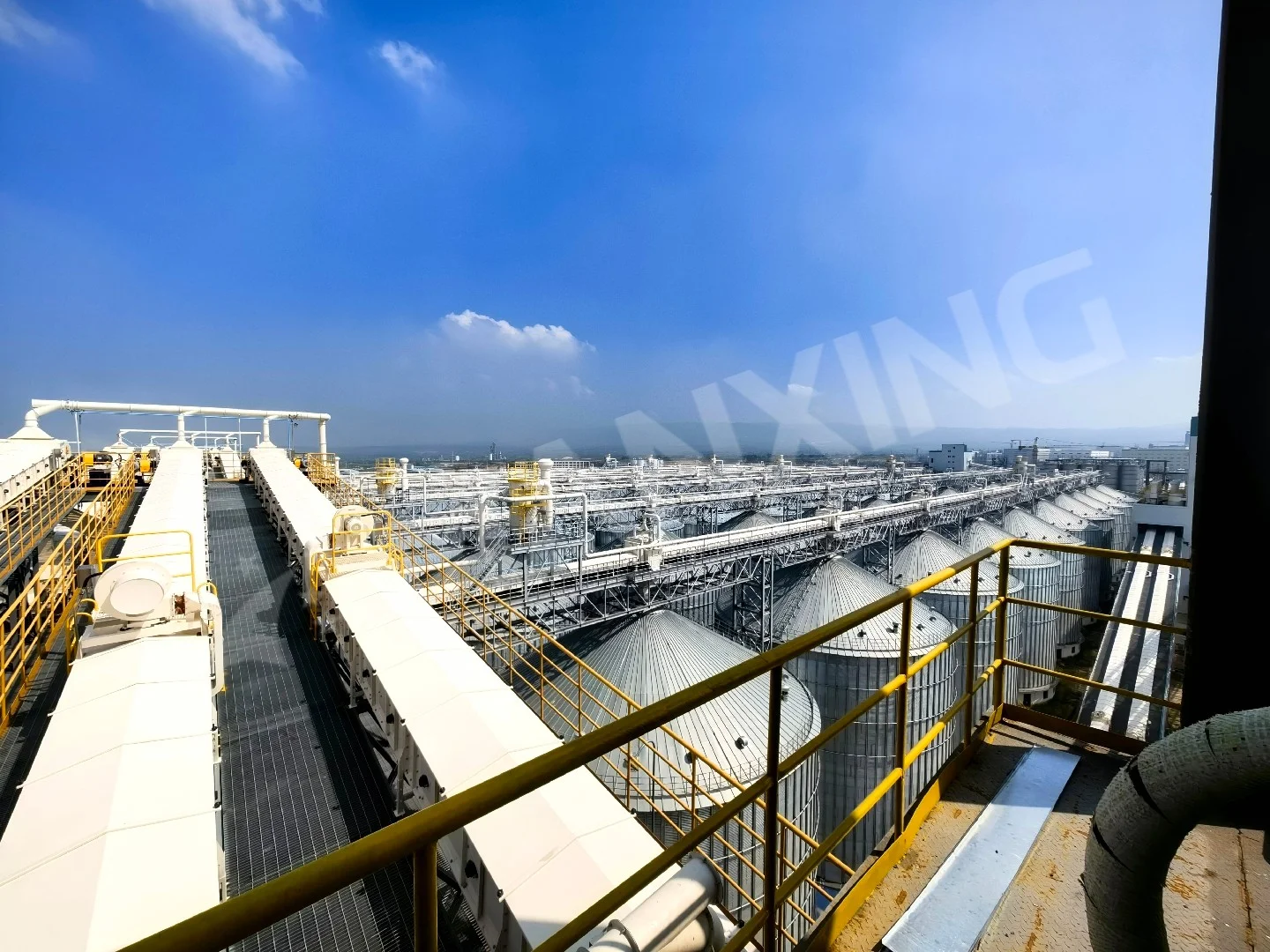


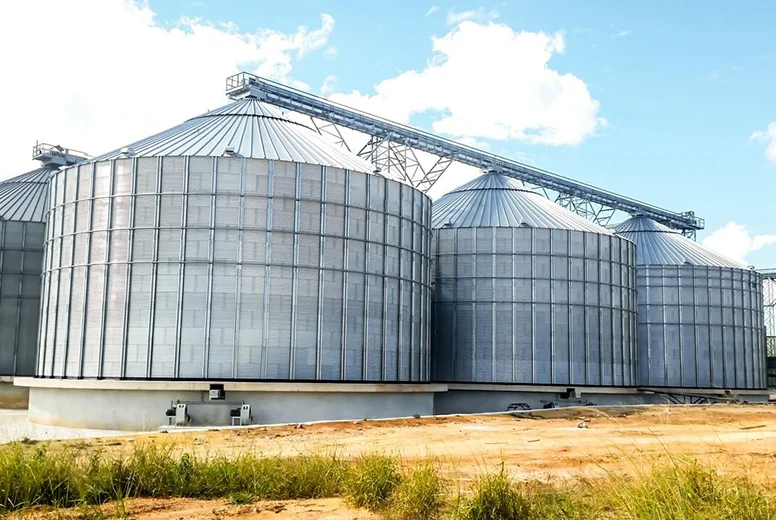
Flat bottom steel silos are rapidly becoming the preferred bulk storage solution in Colombia’s fast-growing agricultural and construction sectors, offering superior structural stability and material handling efficiency in challenging tropical climates. This technical guide provides a deep dive into design considerations for humid and seismic environments, real-world application case studies, and a full lifecycle management framework—from selection and installation to maintenance and upgrades.
Flat Bottom Silo Design and Structural Advantages for Colombia’s Tropical Climate
Colombia’s location near the equator creates a diverse range of climates, from the cool highlands of the Andes to humid coastal plains. This imposes severe demands on storage infrastructure: structures must resist high humidity, frequent rainfall, and dynamic seismic loads. The flat bottom steel silo, with its horizontal base design, is engineered to meet these challenges head-on. The key advantage lies in its uniform base load distribution, which keeps the structure stable even when fully loaded with grain or cement. Gravity-assisted discharge systems, often augmented by vibrators, minimize residual material and significantly reduce waste. Corrosion-resistant coatings and stainless steel components effectively combat salt spray corrosion in coastal regions such as Barranquilla and Cartagena.
In the coffee-growing region near Bogotá, a group of flat bottom silos with a total capacity of 8,000 tons has been operating reliably for over five years. Internal humidity fluctuations are controlled within ±3%, demonstrating the reliability of this solution for tropical agriculture. Compared to cone bottom silos, flat bottom designs offer superior maintenance convenience—operators can directly access the floor for cleaning or repairs without complex scaffolding. This is especially popular among small and medium-sized farms in Colombia, as it reduces long-term labor costs. Industry data shows that annual maintenance costs for flat bottom silos are typically 18%–25% lower than for equivalent-capacity cone bottom silos.
Solving Colombia’s Tropical Storage Challenges: Moisture, Seismic, and Discharge Solutions
Colombia’s rainy season (typically April to November) pushes ambient humidity above 85%, posing a direct threat to grain storage. Flat bottom steel silos address this through a multi-layered technical approach. First, the roof is fitted with double-layer insulated panels and a forced ventilation system, keeping internal temperatures below 35°C to inhibit mold growth. Second, all wall joints are sealed with UV-resistant silicone sealant to prevent rainwater ingress. Finally, the floor is designed with a micro-slope of 3°–5° combined with a central discharge outlet, ensuring smooth material flow even in high-humidity conditions, preventing caking or bridging.
In a cement storage project in Medellín, engineers added wall vibrators and an air cushion conveying system to successfully solve the arching problem caused by fine powder absorbing moisture, boosting discharge efficiency by 40%. Seismic resilience is equally critical: Colombia sits on the boundary between the Nazca and South American plates, making it seismically active. Flat bottom silo seismic design focuses on a reinforced concrete raft foundation (typically 400–600 mm thick), seismic anchor bolts at the silo-to-foundation connection with 20–30 mm displacement gaps, and a spiral crimping process on the wall to enhance overall rigidity. Dur
ing a magnitude 6.2 earthquake in the Cauca Valley department in 2023, multiple flat bottom silos sustained only minor coating peeling, with the structure remaining intact.Discharge System Selection Guide for Different Materials
For granular materials like coffee beans or corn, a gravity slide plate combined with a rotary sweep auger is recommended. When handling cement or mineral powder, a fluidized bed pneumatic discharge system is preferred to eliminate dust explosion risks. For sticky materials such as wet sugar, wall vibrators and stainless steel liners should be added. It is strongly advised to conduct material flowability tests early in the project to determine the optimal discharge angle and outlet size.
Full Lifecycle Project Management: From Design to Operation
A successful flat bottom silo project in Colombia follows five critical stages: needs analysis (defining material density, throughput, and site conditions), structural design (using FEM finite element analysis to optimize wall thickness and stiffener layout), manufacturing and corrosion protection (hot-dip galvanizing ≥85 μm, 100% weld inspection), installation and commissioning (using laser alignment to verify silo verticality), and operation with remote monitoring (deploying temperature, humidity, and level sensors for early warning). In practice, we emphasize the importance of a local service network—establishing spare parts warehouses in major cities like Barranquilla and Cali to ensure a 48-hour response time for repairs. A typical 5,000-ton flat bottom silo project takes 6–8 months from contract signing to commissioning, with foundation work accounting for 30% of that time.
Key Takeaways
- Key Data: Flat bottom silos in Colombia’s tropical environment achieve a service life of 20–25 years, extending lifespan by over 30% compared to traditional concrete silos.
- Best Practice: During the rainy season, prioritize bolted steel silos to reduce on-site installation time by 40%, minimizing weather-related delays.
- Watch Out For: Never lay a vapor barrier directly on the silo floor. Instead, install a raised ventilation layer to prevent condensation buildup and bottom corrosion.
- Pro Tip: For coastal projects, use a three-layer anti-corrosion system: epoxy zinc-rich primer (60 μm), epoxy micaceous iron oxide midcoat (80 μm), and polyurethane topcoat (50 μm). All fasteners must be 316L stainless steel.
- Bottom Line: The combination of FEM-optimized design, robust corrosion protection, and local service support is the proven formula for long-term flat bottom silo success in Colombia.
Frequently Asked Questions
Q: How do flat bottom silos in Colombia’s coastal regions resist salt spray corrosion?
A: A three-layer protective system is recommended: a zinc-rich epoxy primer (60 μm dry film thickness), an epoxy micaceous iron oxide intermediate coat (80 μm), and a polyurethane topcoat (50 μm). All bolts, brackets, and fasteners must be 316L stainless steel. Additionally, wind deflectors should be installed on the silo exterior to reduce direct salt spray contact. Field data shows this approach reduces the corrosion rate from 0.15 mm/year to below 0.03 mm/year.
Q: What is the practical difference between flat bottom and cone bottom silos for Colombian applications?
A: Flat bottom silos are better suited for free-flowing materials like corn, soybeans, and cement, and require a high level of site flatness. Cone bottom silos are ideal for applications needing complete gravity discharge, such as plastic pellets or fly ash, but have a height limitation. In Colombian practice, 80% of grain storage projects choose flat bottom silos, while mining projects tend to favor cone bottom designs. The decision should be based on the material’s angle of repose—≤35° allows flat bottom, while >35° requires cone bottom—and discharge frequency.
Q: How do I assess whether an existing flat bottom silo needs a dust explosion protection upgrade?
A: If the stored material is a combustible dust (e.g., starch, sulfur powder) and the concentration exceeds 25% of the lower explosive limit, explosion venting devices are mandatory. Colombian national regulations require that the roof venting area be no less than 0.04 m² per cubic meter of silo volume. Additionally, install pressure relief panels, spark detection sensors, and automatic suppression systems. A professional dust hazard analysis (DHA) should be conducted every three years to ensure compliance.
Q: What is the typical timeline and key milestones for a 5,000-ton flat bottom silo project in Colombia?
A: From contract signing to commissioning, a typical 5,000-ton project takes 6–8 months. The breakdown is roughly: 30% for foundation construction and curing, 25% for steel component manufacturing and coating, 20% for on-site assembly and welding/bolting, 15% for mechanical and electrical system installation, and 10% for testing, commissioning, and training. Using bolted silo technology can shorten the assembly phase by up to 40% compared to welded construction.
Q: Can flat bottom silos be used for storing high-moisture materials like wet sugar or coffee pulp?
A: Yes, but special modifications are required. For sticky or high-moisture materials, install stainless steel liners on the silo walls to reduce friction, add wall vibrators to prevent bridging, and use a larger-diameter central discharge outlet. The floor slope should be increased to 6°–8° to promote flow. In Medellín, a cement project successfully handled fine powder with moisture content up to 12% by adding an air cushion system, achieving a 40% improvement in discharge efficiency. Always conduct a material flowability test before final design.
Need expert flat bottom silo solutions for your Colombian project?
We provide professional design, manufacturing, and installation services for bulk storage and material handling systems worldwide, with a proven track record in tropical and seismic environments.
Get a Free Technical Consultation →