


In modern poultry farming, feed storage efficiency directly impacts production costs and biosecurity. The flat bottom steel silo, with its structural stability, ease of maintenance, and scalability, has become the preferred solution for large-scale farms and feed mills. This article provides a deep dive into the technical advantages, application scenarios, and key selection criteria for flat bottom silos in poultry feed storage.
Structural Design and Material Advantages of Flat Bottom Steel Silos for Poultry Feed
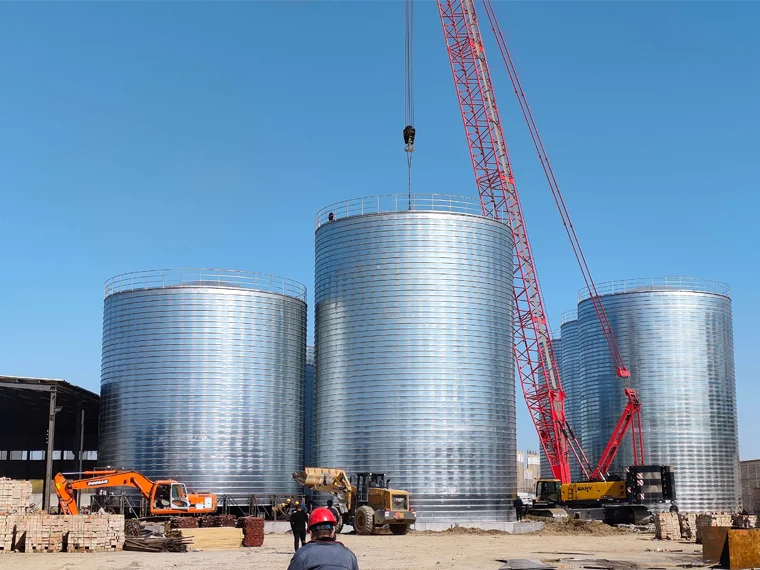
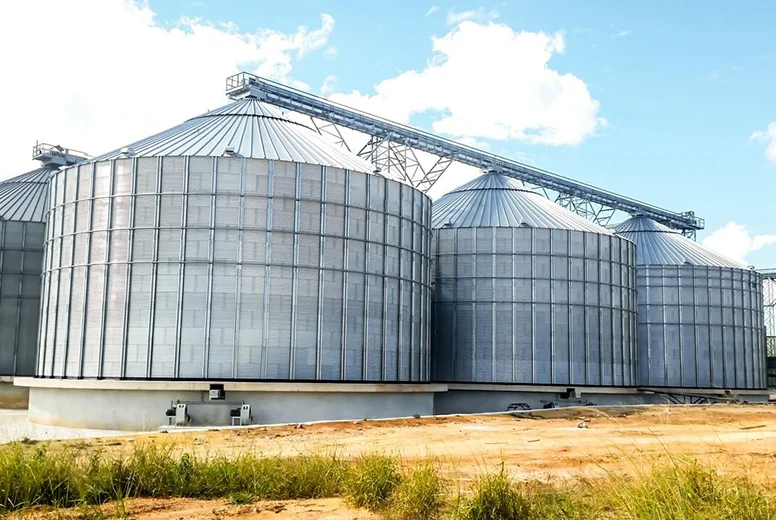
The defining feature of a flat bottom steel silo is its horizontal or slightly sloped flat base, typically constructed from high-strength steel or galvanized steel sheets that are rolled and bolted together. This design allows the silo floor to distribute the weight of the feed evenly, eliminating localized stress concentrations and significantly extending the silo’s operational lifespan. Compared to concrete silos, steel silos are lighter, require lower foundation costs, and can reduce construction time by over 40%. Furthermore, the steel surface is treated with anti-corrosion coatings, such as hot-dip galvanizing, which effectively resists corrosion from acidic compounds in the feed and high-humidity environments, ensuring long-term storage reliability.
For poultry feed, which is characterized by its granular form and high powder content, the silo walls must be smooth and free of dead corners. The inner walls of a flat bottom silo are precision-finished, and when combined with roof-mounted dust collection and ventilation systems, they minimize the risk of feed caking and mold growth. The flat floor design also facilitates the installation of sweep augers and pneumatic bridge-breaking devices, further enhancing discharge efficiency.
How Flat Bottom Silos Solve Critical Pain Points in Poultry Feed Storage
Poultry farming demands high standards for feed flowability, freshness, and hygiene. Traditional cone-bottom silos, while offering fast discharge, are prone to "rat-holing" and "bridging," especially with high-moisture or high-fat feeds. Flat bottom silos address these challenges through several key design features.
Optimized Gravity Discharge and Anti-Blocking Systems
The bottom of a flat bottom silo is typically equipped with a rotating sweep auger or chain scraper, often combined with a fluidized bed air cushion system. This allows feed to flow uniformly and controllably toward the central discharge outlet. Even when feed moisture content reaches 14%, the system ensures smooth flow, preventing costly production stoppages due to blockages.
Ease of Cleaning and Biosecurity Control
The flat floor and accessible manholes make internal cleaning and disinfection simple and efficient. Unlike cone-bottom silos, full internal inspections can be performed without erecting complex scaffolding. This is critical for modern farms that need to rotate feed types regularly and prevent cross-contamination.
Adaptability for Scale and Automation
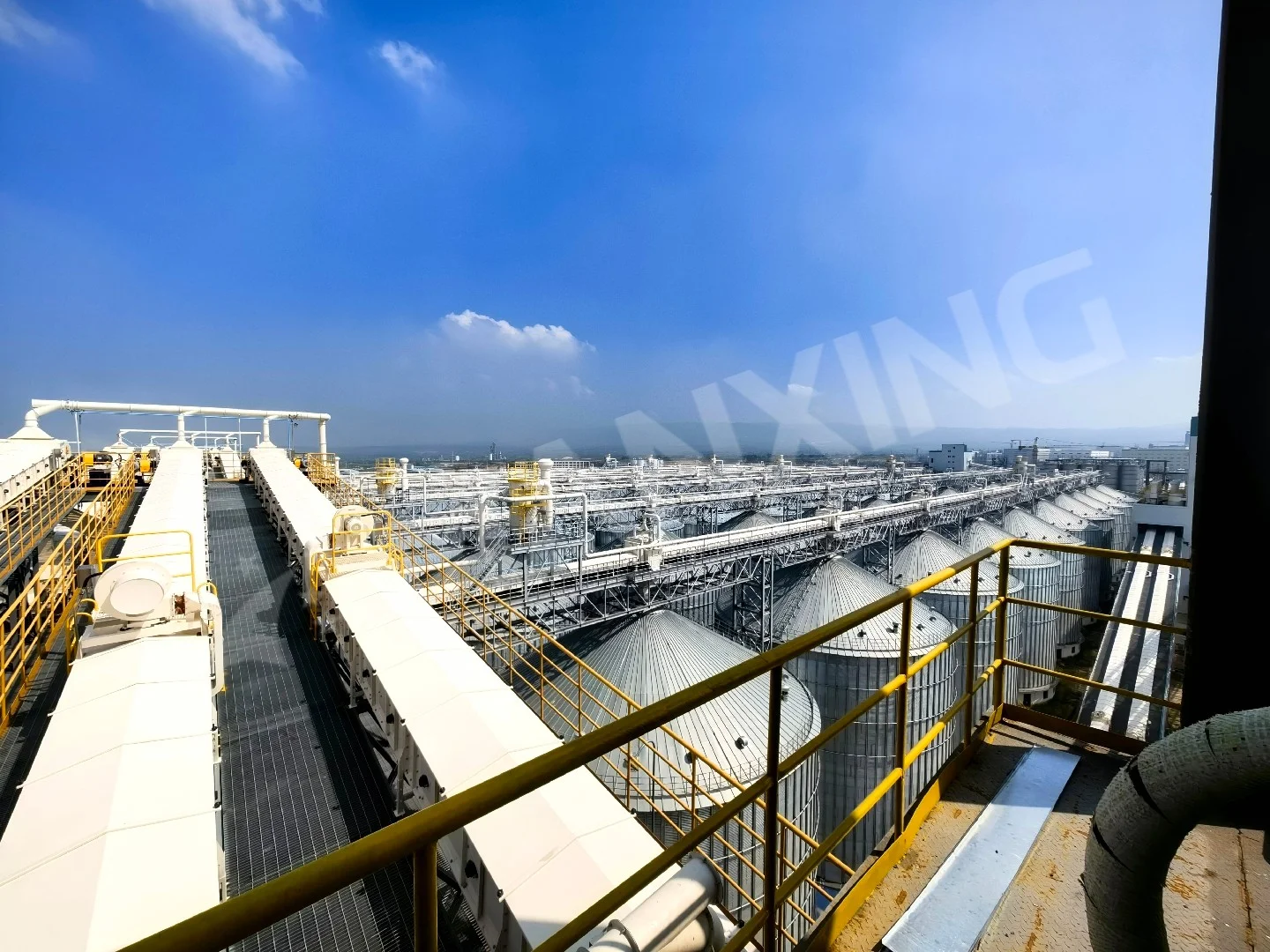
Flat bottom silos support modular expansion, with individual capacities ranging from 100 tons to over 5,000 tons. They are easily integrated with level indicators, temperature sensors, and automated weighing systems for seamless connection with central feeding systems.
Key Takeaways
- Key Data: Flat bottom steel silos reduce construction time by 40% and foundation costs by 30% compared to concrete silos, with a service life exceeding 20 years under normal maintenance.
- Best Practice: Install pneumatic bridge-breaking devices and a rotating sweep auger at the silo bottom, along with a roof-top dust collector, to maintain feed flowability and reduce the risk of dust explosions.
- Watch Out For: Avoid storing feed with high moisture content (>16%) or high oil content in non-temperature-controlled flat bottom silos for extended periods. Ventilation systems and regular feed turning are necessary.
- Pro Tip: For high-fat feeds, reduce the storage height to no more than 70% of the silo’s total height to minimize sidewall pressure and wear on the galvanized coating.
- Bottom Line: For large-scale poultry operations, the flat bottom silo’s lower per-ton storage cost, superior hygiene, and automation compatibility make it the most economically sound long-term investment.
Typical Applications of Flat Bottom Silos in the Poultry Industry Chain
Flat bottom silos are used throughout the poultry value chain, from feed production to on-farm feeding. In large feed mills, they serve as pre-storage bins for raw materials like corn and soybean meal, or as finished product surge bins. Their large capacity effectively buffers fluctuations between production and logistics. For farms with over 100,000 birds, flat bottom silos can centrally store 3-7 days of feed supply, directly connecting to individual house bins via pneumatic or screw conveyors, significantly reducing manual handling and bagging losses. In coastal or high-humidity regions, flat bottom silos can be fitted with insulation and dehumidification systems to maintain feed quality under adverse weather conditions.
Frequently Asked Questions
Q: For poultry feed storage, which is more economical: a flat bottom silo or a cone bottom silo?
A: The answer depends on project scale and budget. A c
one bottom silo has a lower initial cost per unit, but its effective storage volume is only about 70-80% of a flat bottom silo of the same height due to the space occupied by the cone. For large projects requiring single silo capacities over 500 tons, the per-ton storage cost (USD/ton) of a flat bottom silo is typically lower. Additionally, the lower maintenance and cleaning costs of flat bottom silos make them more cost-effective over the long term. A comprehensive evaluation based on feed characteristics, site conditions, and automation level is recommended.Q: How can a flat bottom silo prevent feed caking and mold growth during poultry feed storage?
A: The primary causes of caking and mold are moisture and temperature. Effective solutions include: 1) Installing a high-efficiency dust collector on the silo roof to minimize fine powder accumulation; 2) Placing multi-point temperature sensors inside the silo to trigger bottom ventilation fans when the internal temperature exceeds ambient temperature by 5°C; 3) Implementing a "first-in, first-out" discharge logic to prevent prolonged feed retention; 4) Laying a fluidized bed air cushion at the silo bottom to break up feed bridging. For high-humidity regions, installing a dehumidifier at the air intake is recommended.
Q: How corrosion-resistant are flat bottom steel silos, and can they be used for feed containing added fats and enzymes?
A: High-quality flat bottom steel silos use hot-dip galvanized steel with a zinc coating thickness of at least 275 g/m², offering far superior corrosion resistance compared to standard painted surfaces. For feed containing fats, such as broiler feed with 3-5% added oil, the oil can penetrate and adhere to the silo wall. However, the galvanized layer effectively resists the weak acidic corrosion from fatty acids. It is recommended to perform a coating inspection on the inner wall every 2-3 years and to reduce the storage height to no more than 70% of the silo’s total height when storing high-fat feed to minimize sidewall pressure and wear on the galvanized layer.
Q: What is the typical lifespan of a flat bottom steel silo for poultry feed, and what maintenance is required?
A: Under normal maintenance conditions, a well-constructed flat bottom steel silo can last over 20 years. Key maintenance practices include: annual inspection of the galvanized coating for any damage or rust spots, checking and tightening all bolted connections, ensuring the roof ventilation and dust collection systems are functioning properly, and regularly testing the sweep auger and discharge system for wear. For silos storing high-moisture or high-fat feeds, more frequent internal inspections are advised.
Q: Can a flat bottom silo be integrated with an automated poultry feeding system?
A: Yes, flat bottom silos are designed for seamless integration with automated feeding systems. They can be equipped with load cells for precise weight monitoring, level sensors for inventory management, and variable-speed discharge drives to control feed flow. The silo’s outlet can be directly connected to a central conveying line (pneumatic or mechanical) that distributes feed to multiple poultry houses. This integration allows for centralized control, real-time data logging, and significantly reduces labor costs associated with manual feed handling.
Need expert manxingsilo solutions for your poultry feed storage project?
We provide professional design, manufacturing, and installation services for bulk storage and material handling systems worldwide, with custom flat bottom silos ranging from 300 to 10,000 tons for poultry, swine, and aquaculture feed.
Get a Free Technical Consultation →