
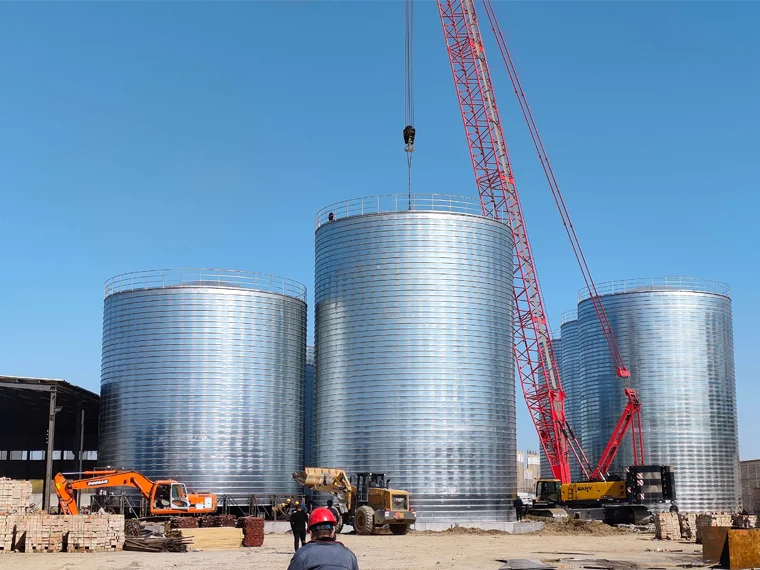
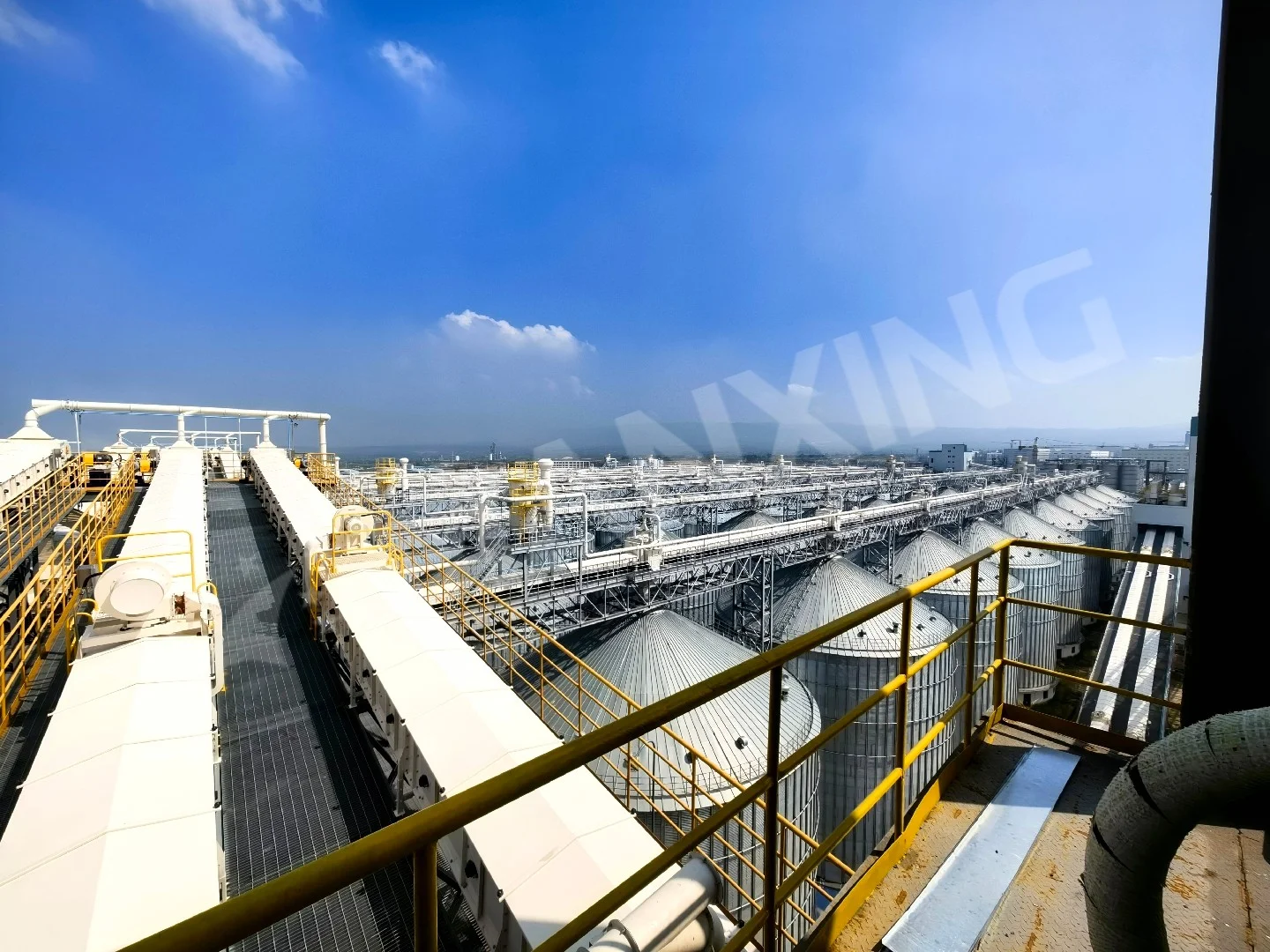


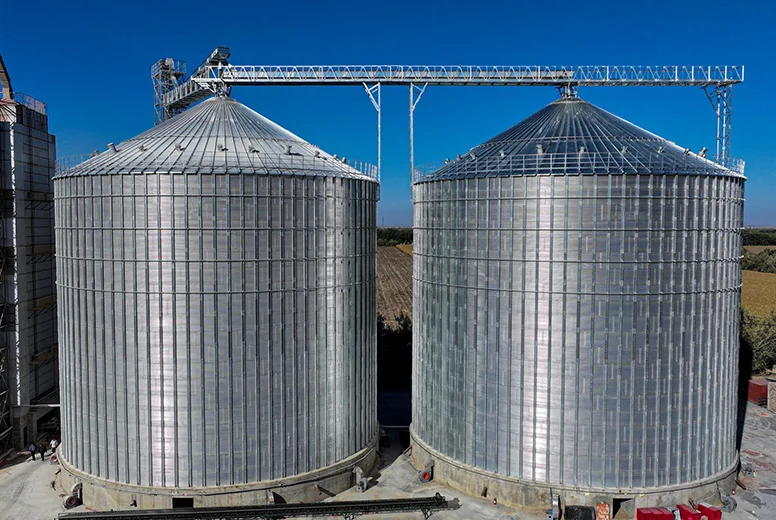
For grain traders and farm operators seeking reliable, long-term storage for malting and feed barley, the flat-bottom steel silo is the globally preferred solution. Its unmatched structural simplicity, ability to achieve complete discharge, and massive single-unit capacity make it the cornerstone of modern bulk grain operations. This in-depth technical guide provides a comprehensive analysis of flat-bottom barley storage silos, covering critical aspects of structural design, temperature and humidity control, and discharge efficiency to help you avoid costly selection mistakes and optimize your grain storage performance.
Structural Design and Load-Bearing Analysis of Flat-Bottom Barley Storage Silos
The core advantage of a flat-bottom barley storage silo lies in its horizontal base structure. Unlike hopper-bottom silos, the flat design eliminates the risk of "rat-holing" or "bridging" at the bottom, making it particularly suitable for barley, a granular material with relatively poor flow characteristics. The
base is typically constructed from a reinforced concrete ring foundation or a high-strength steel plate base, capable of evenly distributing the load of hundreds or even tens of thousands of tons of grain to the ground, significantly reducing the probability of uneven settlement.From a materials science perspective, modern flat-bottom silos are predominantly built using galvanized steel or weathering steel (Corten steel), assembled through rolled or bolted construction. The galvanized coating thickness should be at least 275 g/m² to effectively resist the mildly acidic environment generated during barley storage, such as from respiration before germination. For coastal areas with high humidity or regions with extreme temperature fluctuations, a dual anti-corrosion solution of hot-dip galvanizing plus a polyester resin coating is recommended, extending the silo's service life to over 30 years.
Temperature and Humidity Control for Barley Storage: Designing the Optimal Microclimate
Barley is particularly sensitive to moisture and temperature fluctuations. To maintain its viability for malting and prevent spoilage, the internal environment of a flat-bottom silo must be carefully managed. A well-designed aeration system is non-negotiable, typically incorporating a fully perforated floor plenum that allows uniform air distribution from the bottom up. This design ensures that every cubic meter of grain receives consistent airflow, preventing the formation of hot spots that can lead to mold growth or insect infestation.
For long-term storage exceeding six months, active temperature monitoring is essential. Modern silos are equipped with digital temperature cables suspended at multiple levels, providing real-time data on grain temperature gradients. When combined with automated aeration controllers that activate fans based on ambient temperature and relative humidity, operators can maintain barley at a target temperature of 10–15°C with a moisture content of 12–13%. This precision control preserves the barley's germination energy for malting and its nutritional value for feed.
Discharge Efficiency and Complete Cleanout
A critical advantage of the flat-bottom design is its ability to achieve complete discharge. Barley, with its irregular shape and tendency to interlock, can create flow issues in hopper-bottom silos. Flat-bottom silos paired with a sweep auger or screw reclaim system allow for 100% cleanout, meaning no stale grain is left behind to contaminate the next batch. This feature is particularly valuable for operations that handle multiple barley varieties or grades, as it eliminates cross-contamination risks.
Foundation and Load Distribution Engineering
The foundation of a flat-bottom barley silo must be engineered to handle both static and dynamic loads. A reinforced concrete ring foundation, typically 1.5 to 3 meters wide and 0.5 to 1 meter deep, is standard for large-capacity units. The design must account for the material's angle of repose (approximately 25–30 degrees for barley), which affects the pressure exerted on the silo walls and floor. Proper geotechnical investigation ensures that the foundation can withstand the immense vertical load without differential settlement, which could compromise the silo's structural integrity over its 30-year design life.
Key Takeaways
- Key Data: A galvanized coating of 275 g/m² is the minimum standard for barley storage, with dual anti-corrosion solutions extending silo life beyond 30 years.
- Best Practice: Install a fully perforated floor plenum with automated aeration controllers to maintain barley at 10–15°C and 12–13% moisture content for long-term storage.
- Watch Out For: Avoid hopper-bottom designs for barley, as they are prone to "rat-holing" and "bridging" due to the grain's poor flow characteristics.
- Pro Tip: Use digital temperature cables at multiple levels for real-time monitoring, and couple them with sweep augers to achieve 100% cleanout between different barley batches.
- Bottom Line: The flat-bottom steel silo is the most reliable and cost-effective solution for preserving barley quality over extended storage periods.
Comparing Flat-Bottom vs. Hopper-Bottom Silos for Barley
When selecting a silo for barley storage, the choice between flat-bottom and hopper-bottom designs is critical. Hopper-bottom silos offer gravity discharge but come with significant drawbacks for barley. The steep cone angles required for mass flow (typically 60–70 degrees) increase the silo's overall height and construction cost. More importantly, barley's flowability issues mean that even with steep hoppers, bridging can occur, leading to costly manual interventions and downtime. Flat-bottom silos, in contrast, rely on mechanical sweep systems that provide consistent, controlled discharge without the risk of flow blockages. For operations requiring single-unit capacities over 5,000 tonnes, flat-bottom designs are the industry standard, offering better space utilization and lower per-tonne storage costs.
Frequently Asked Questions
Q: What is the optimal aeration rate for a flat-bottom barley storage silo to prevent spoilage during the first 30 days of storage?
A: For the initial "cooling-down" period, a minimum airflow rate of 0.1 to 0.15 cubic meters per minute per tonne (m³/min/tonne) is recommended. This ensures that the grain temperature is rapidly reduced from harvest heat (often 25–30°C) to the safe storage range of 10–15°C. The aeration system should be operated continuously during the first 48–72 hours, then switched to automated control based on temperature and humidity sensors. Failure to achieve this initial cooling can result in a 5–10% loss in germination energy for malting barley within the first two weeks.
Q: How does the choice of steel grade and coating affect the long-term corrosion resistance of a flat-bottom barley silo in coastal environments?
A: In coastal areas with high salt content in the air, standard galvanized steel with a 275 g/m² coating may only provide 10–15 years of effective protection before corrosion begins. For these environments, we recommend using weathering steel (Corten A) with a minimum thickness of 4 mm for the silo body, combined with a hot-dip galvanized coating of 350 g/m² and an additional polyester resin topcoat of 80–100 microns. This triple-layer protection system can extend the silo's service life to 35–40 years, even in marine environments. Regular inspections every 2–3 years should focus on the bottom ring and weld joints, which are most susceptible to corrosion.
Q: What are the specific design considerations for a flat-bottom barley silo foundation when the soil bearing capacity is less than 150 kPa?
A: When soil bearing capacity is below 150 kPa, a standard ring foundation may not be sufficient. The recommended approach is to use a full concrete slab foundation with a minimum thickness of 400 mm, reinforced with 16 mm diameter steel bars at 150 mm centers in both directions. Additionally, a geotechnical investigation should determine if soil improvement techniques, such as dynamic compaction or stone columns, are needed. For very soft soils, a piled foundation may be necessary, with piles driven to a depth where the bearing stratum can support the load. The design must factor in a safety margin of 1.5 to 2.0 against the maximum expected load, including wind and seismic forces.
Q: Can a flat-bottom barley silo be retrofitted with a hopper bottom later, and what are the cost implications?
A: Retrofitting a flat-bottom silo with a hopper bottom is technically possible but rarely cost-effective. The modification requires cutting out the existing flat floor, installing a steel cone structure, and reinforcing the silo walls to handle the new load distribution. The cost typically ranges from 40% to 60% of the original silo price, and the work often requires the silo to be taken out of service for 4–6 weeks. A more practical and economical approach is to install a sweep auger system or a center-discharge reclaim tunnel under the existing flat bottom, which achieves complete discharge without the structural modifications. This upgrade costs only 10–15% of a full hopper retrofit and can be completed in 1–2 weeks.
Q: How do temperature monitoring systems in flat-bottom barley silos differ from those used in concrete silos, and which is more accurate?
A: Steel flat-bottom silos typically use suspended digital temperature cables that hang vertically from the roof, with sensors spaced every 1.5 to 2 meters along the cable. Concrete silos often use embedded thermocouples cast into the walls or floor. Steel silo systems are generally more accurate for measuring internal grain temperature because the cables can be positioned at the exact center of the grain mass, avoiding the thermal mass effects of the concrete walls. However, steel silo cables are more susceptible to damage during filling and discharge. A best practice is to use a minimum of 3 cables per silo (one center, two at 1/3 and 2/3 radius) for a 15-meter diameter silo, providing a complete temperature profile with ±0.5°C accuracy.
Q: What is the recommended maximum height-to-diameter ratio for a flat-bottom barley silo to ensure structural stability and efficient discharge?
A: For flat-bottom barley silos, the optimal height-to-diameter ratio is between 0.8 and 1.2. A ratio below 0.8 (short and wide) increases the floor area and foundation cost without improving storage efficiency. A ratio above 1.2 (tall and narrow) increases the risk of grain compaction at the bottom, which can impede sweep auger operation and lead to higher power consumption for the reclaim system. For example, a 20-meter diameter silo should have a wall height of 16 to 24 meters. This range balances structural steel costs, foundation requirements, and discharge efficiency. Silo manufacturers typically provide load calculations for specific ratios, and exceeding 1.5 without a center column or reinforced wall design is not recommended.
Need expert manxingsilo solutions for your barley storage project?
We provide professional design, manufacturing, and installation services for bulk storage and material handling systems worldwide. Our team of engineers specializes in flat-bottom silos for grain, cement, and industrial applications, ensuring your facility meets the highest standards of safety, efficiency, and longevity.
Get a Free Technical Consultation →