
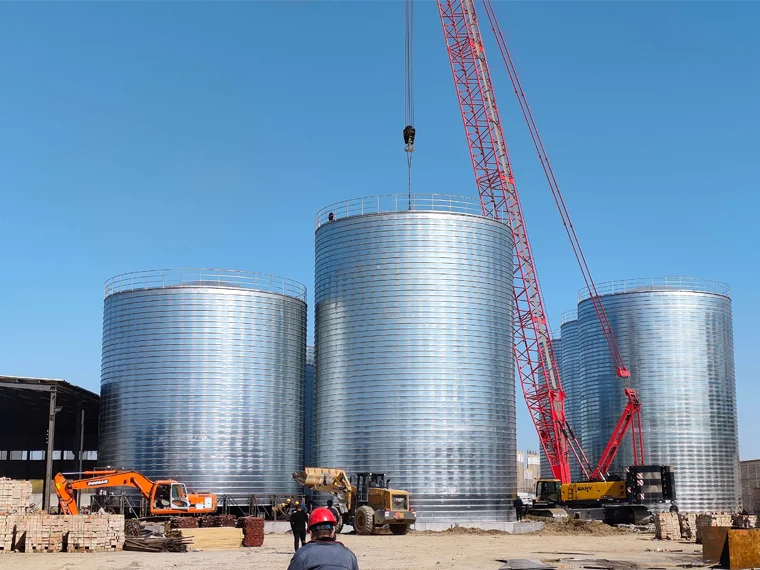
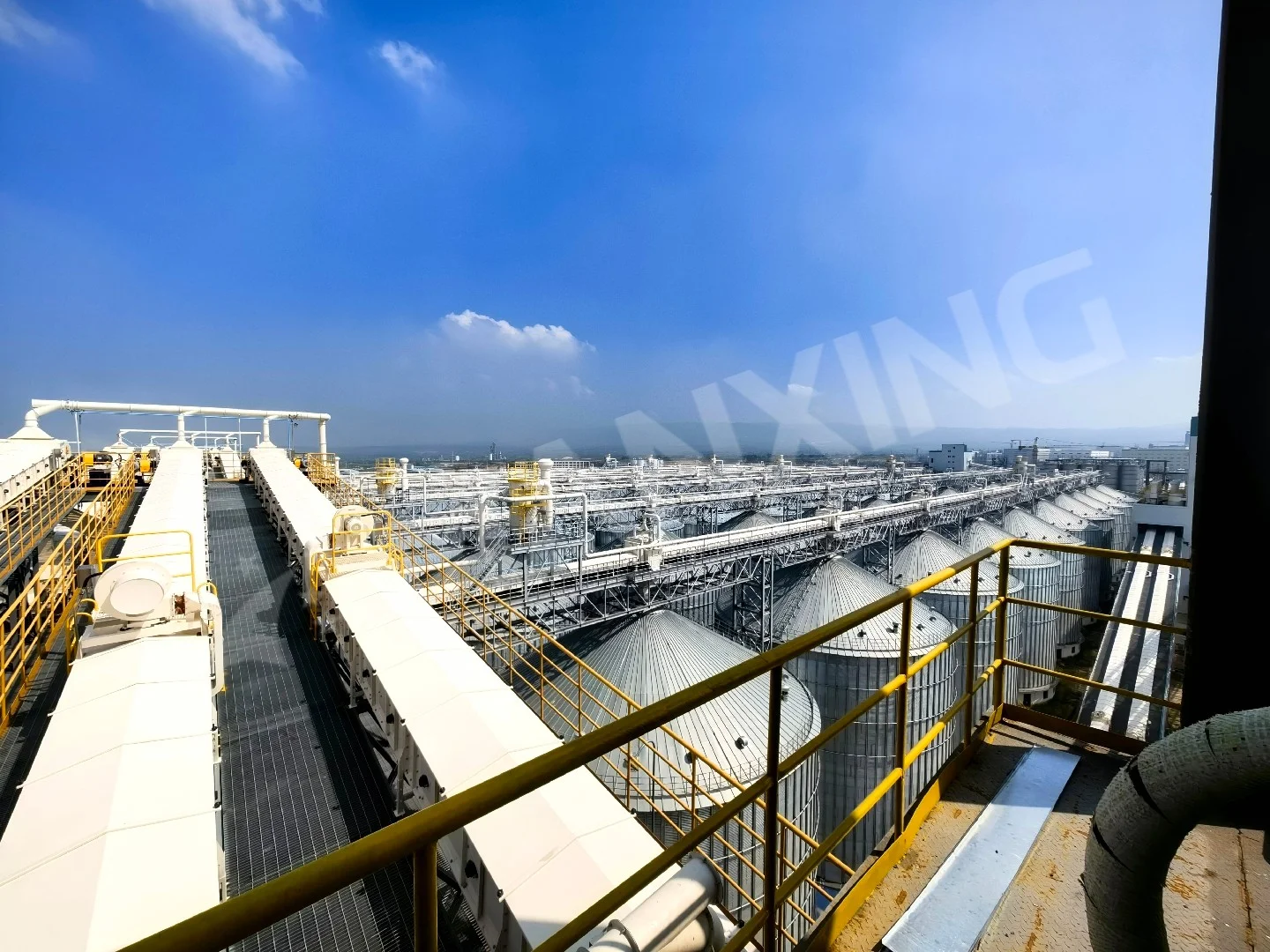


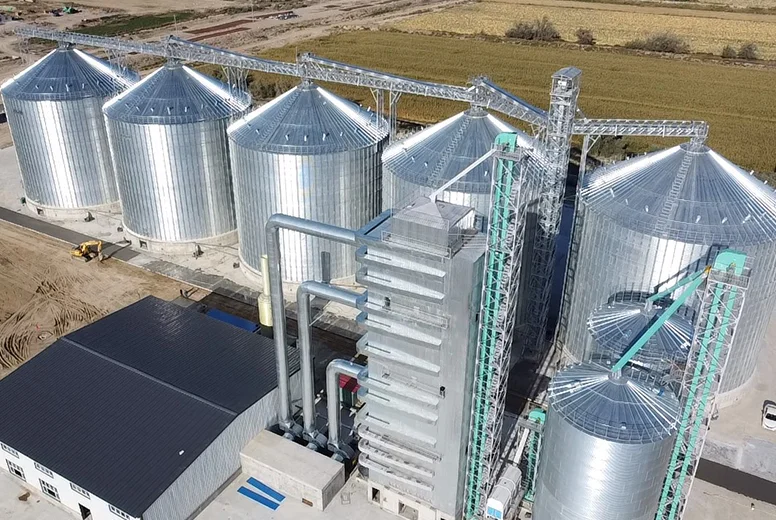
When storing bulk materials in the tens of thousands of tons, the large capacity flat bottom silo stands as the most cost-effective and structurally straightforward solution available. Designed for industries from grain and oilseeds to cement and minerals, this silo type offers unmatched storage volume per dollar invested, provided you engineer around its unique discharge challenges. This guide breaks down the design principles, practical solutions for material flow, and critical selection criteria to ensure your storage investment performs for decades.
Design Principles and Core Advantages of Large Capacity Flat Bottom Silos
The defining feature of a large capacity flat bottom silo is its horizontal floor, which sits directly on a prepared foundation. Unlike hopper-bottom or cone-bottom silos, this flat base dramatically simplifies both foundation engineering and the installation of the silo body—whether it is constructed from spiral-formed galvanized steel sheets or cast-in-place concrete. The
planar base distributes the vertical load of the stored material uniformly across the soil, significantly reducing the risk of structural failure caused by differential settlement, a common issue with point-loaded supports.From a structural mechanics perspective, the flat bottom creates a clear load path: the silo walls resist horizontal lateral pressure from the stored bulk solid, while the entire floor area bears the vertical weight. This clean force distribution makes structural calculations more reliable, especially for high-density or low-flowability materials such as cement, fly ash, and mineral powder. Furthermore, the flat interior floor provides a spacious working environment for cleaning, inspection, and maintenance, reducing the safety risks associated with confined-space entry that are more pronounced in hopper configurations.
Solving the Industry Pain Points: Discharge Difficulties and Material Residue
The most common criticism of flat bottom silos is the challenge of complete material discharge. Unlike hopper silos that rely on gravity to funnel material to a central outlet, flat bottom silos require mechanical or pneumatic extraction systems to move material from the entire floor area to the discharge point. Without proper engineering, significant material residue—often 5% to 15% of total capacity—can remain, leading to spoilage, cross-contamination between batches, and costly manual cleanouts. However, these issues are fully solvable through proven design strategies.
Engineered Discharge Systems for Bulk Flow
The key to reliable discharge lies in selecting the right extraction technology. Sweep augers, chain conveyors, and air slides are the most common solutions. For grain and oilseeds, a rotating sweep auger mounted on a central pivot arm can systematically push material toward a central hopper or tunnel conveyor, achieving discharge rates of 50 to 500 tons per hour. For cement and fly ash, fluidized air slides combined with a slight floor slope (typically 6 to 12 degrees) ensure complete evacuation without mechanical wear.
Preventing Material Residue with Floor Design
Even with mechanical extraction, dead zones near the silo walls can trap material. Advanced flat bottom designs incorporate a slight floor taper—typically a 1:50 to 1:100 slope toward the discharge point—combined with strategically placed air cannons or vibrators to dislodge compacted material. For sticky or hygroscopic materials like mineral powder, a smooth, abrasion-resistant floor lining (such as stainless steel or ultra-high-molecular-weight polyethylene) reduces friction and prevents caking, ensuring that over 99% of stored material can be recovered.
Key Takeaways
- Key Data: Flat bottom silos can reduce foundation costs by up to 30% compared to hopper-bottom designs for capacities above 10,000 tons, due to uniform load distribution.
- Best Practice: Always specify a mechanical extraction system (sweep auger, chain conveyor, or air slide) during the design phase; relying on gravity alone will leave 5–15% of material as residue.
- Watch Out For: Differential settlement is a critical risk—ensure a geotechnical survey is performed before foundation design, especially on soft or variable soils.
- Pro Tip: For high-moisture or sticky materials, install a floor slope of at least 1:50 and use a smooth lining (e.g., UHMWPE) to prevent bridging and caking at the discharge zone.
- Bottom Line: A well-engineered flat bottom silo offers the lowest cost per ton of storage capacity, but its success hinges entirely on the discharge strategy—plan for it from day one.
Material Suitability and Structural Considerations for Long-Term Performance
Large capacity flat bottom silos are versatile but must be matched to the physical and chemical properties of the stored material. For free-flowing grains like wheat, corn, and soybeans, the silo can be designed with a simple sweep auger system and galvanized steel walls. For abrasive materials like cement clinker or iron ore pellets, the walls require thicker gauge steel or concrete construction, plus wear-resistant liners at impact points. For corrosive materials like fertilizers or salt, stainless steel or epoxy-coated interiors are mandatory to prevent degradation and contamination.
Structural design must also account for seismic and wind loads, especially for silos exceeding 20 meters in diameter. The flat bottom's low center of gravity provides inherent stability against overturning, but wall thickness and stiffener rings must be calculated per local building codes (e.g., Eurocode, ACI 313, or GB 50077). For concrete flat bottom silos, post-tensioning is often used to control cracking from thermal and shrinkage stresses, while steel silos benefit from spiral-formed corrugated sheets that increase hoop strength without added weight.
Frequently Asked Questions
Q: What is the maximum capacity achievable with a flat bottom silo, and how does it compare to concrete silos?
A: Flat bottom silos can exceed 100,000 tons in a single unit, with diameters up to 60 meters and heights of 15–25 meters. Steel spiral-formed flat bottom silos are typically cost-effective up to 30,000 tons, while concrete slip-form silos can reach larger capacities. The flat bottom design offers the best cost-per-ton ratio at very high volumes because the foundation cost scales linearly with area, not exponentially as with hopper silos.
Q: How do you prevent material from bridging or rat-holing in a flat bottom silo during discharge?
A: Bridging and rat-holing occur when cohesive materials (e.g., wet grain, fine cement, or clay) form arches above the discharge point. To prevent this, engineers design the discharge system to create a "mass flow" pattern—where all material moves downward simultaneously—rather than a "funnel flow" pattern. This is achieved by using a sweep auger that continuously agitates the material, combined with air cannons or vibrators at strategic locations. For extremely cohesive materials, a live-bottom floor with multiple screw conveyors is recommended.
Q: What are the typical maintenance intervals for a large flat bottom silo, and what tasks are involved?
A: Annual inspections are standard for flat bottom silos. Key tasks include checking the sweep auger or conveyor for wear (especially at the pivot point and flight edges), inspecting floor linings for abrasion or delamination, and verifying the integrity of wall seams and stiffener rings. Every 3–5 years, a full internal cleanout is recommended to remove compacted residue and inspect the foundation for signs of settlement or cracking. For concrete silos, crack monitoring and epoxy injection may be needed every 5–10 years.
Q: Can a flat bottom silo be retrofitted with a hopper or cone bottom after installation?
A: Retrofitting a flat bottom silo with a hopper is technically challenging and rarely cost-effective. The existing foundation is designed for uniform load distribution, and adding a hopper would create concentrated point loads that could cause structural failure. Instead, operators typically install a mechanical extraction system (e.g., a sweep auger or air slide) to improve discharge. If a hopper is absolutely required, it is more economical to demolish the flat bottom silo and build a new hopper-bottom silo from scratch.
Q: How do environmental factors like temperature and humidity affect flat bottom silo performance?
A: Temperature fluctuations cause thermal expansion and contraction in steel silos, which can stress welds and bolted connections—especially in climates with wide daily swings. Insulation or reflective coatings can mitigate this. Humidity and condensation are major concerns for stored grain and cement, as moisture can cause caking, spoilage, or hydration. Proper ventilation (for grain) or dehumidification (for cement) is essential. In coastal or high-humidity environments, galvanized or stainless steel construction is recommended to prevent corrosion.
Q: What is the typical lifespan of a large capacity flat bottom silo, and what factors determine it?
A: With proper maintenance, a steel flat bottom silo can last 20–30 years, while a concrete silo can exceed 50 years. The primary lifespan determinants are material corrosivity (e.g., storing salt or fertilizer accelerates steel corrosion), environmental exposure (UV radiation and rain degrade coatings), and the frequency of internal cleanouts (residue buildup can trap moisture and cause localized corrosion). Regular repainting or recoating every 10–15 years for steel silos, and crack repair for concrete silos, can significantly extend service life.
Need expert manxingsilo solutions for your project?
We provide professional design, manufacturing, and installation services for bulk storage and material handling systems worldwide. Our team has engineered flat bottom silos for everything from grain to cement to mineral powders, with capacities from 5,000 to 100,000 tons.
Get a Free Technical Consultation →