
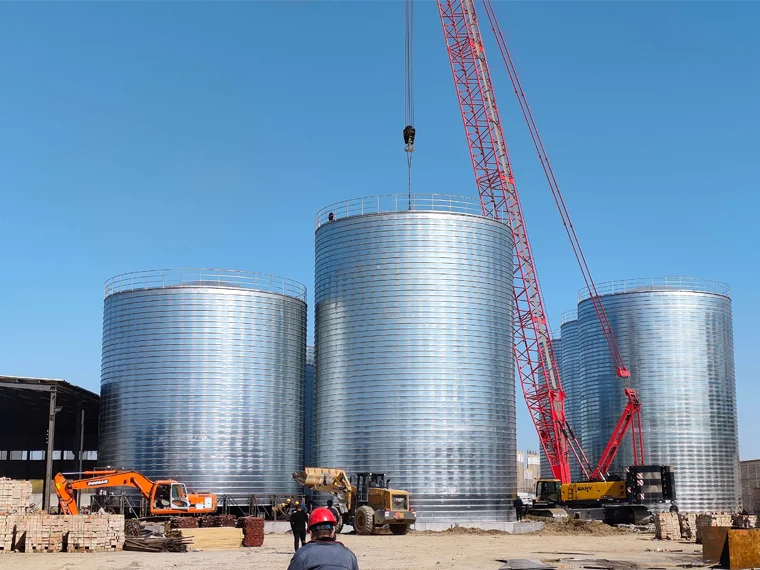
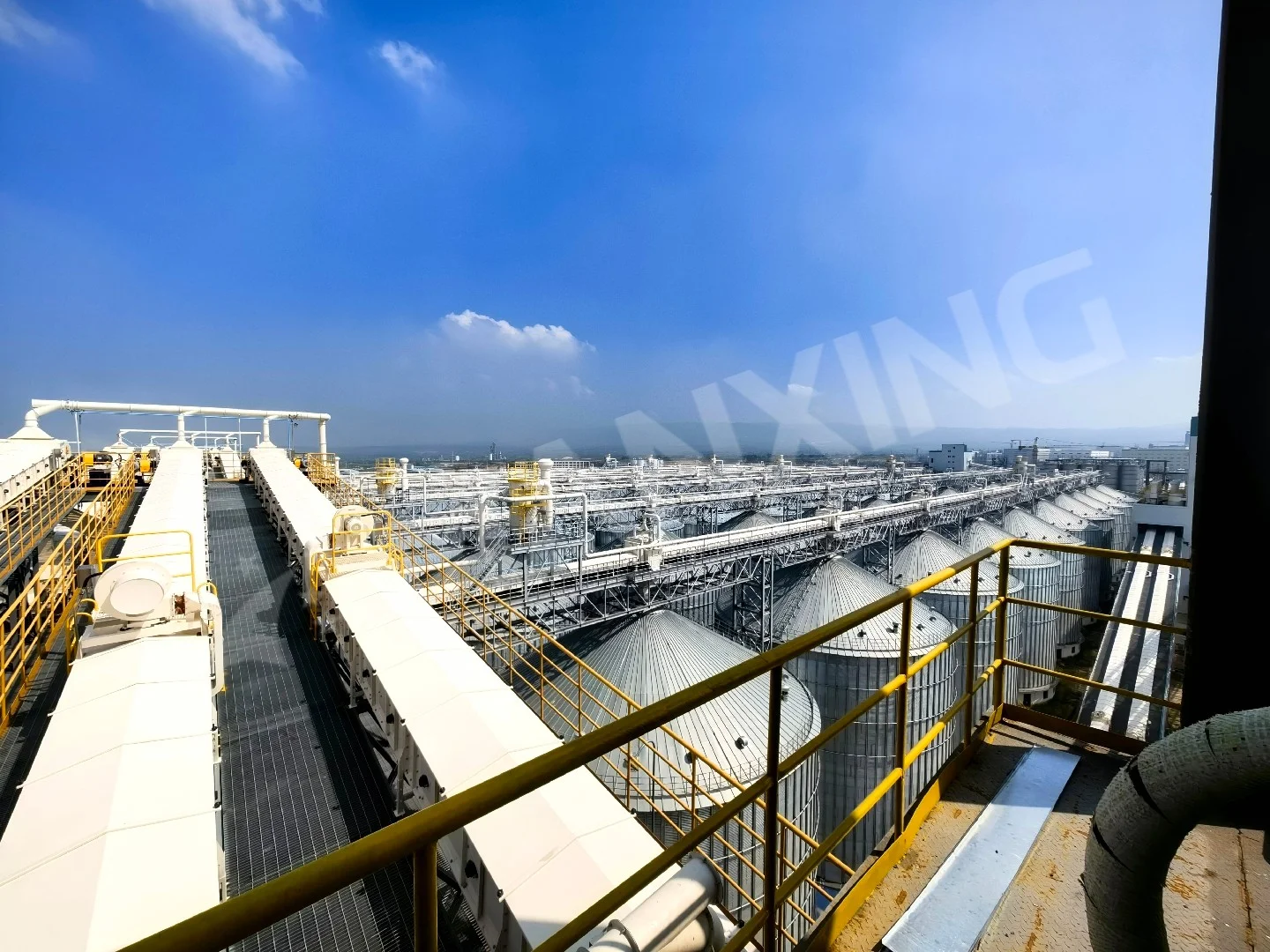


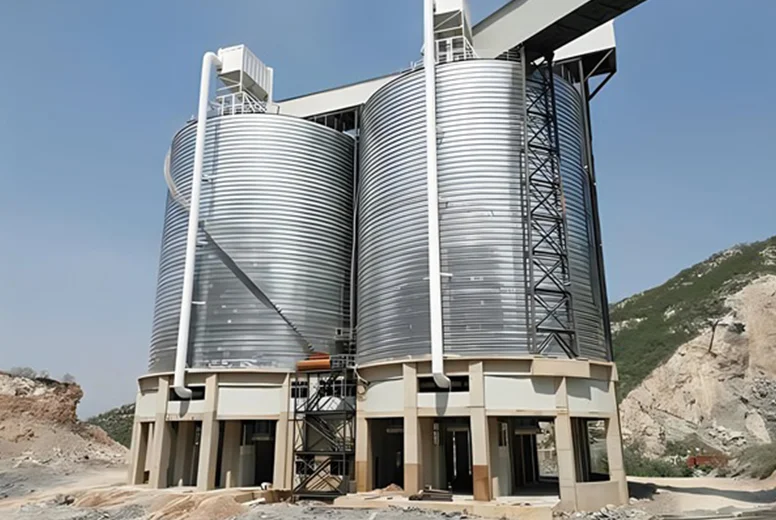
Concrete silo foundation design is far more than simple excavation and backfill—it is the critical determinant of long-term structural stability and operational safety for the entire storage system. This comprehensive guide examines the core design principles—from geological investigation to load distribution—empowering engineers to prevent catastrophic failures such as differential settlement and structural tilting.
Core Design Principles for Concrete Silo Foundations
The concrete silo foundation serves as the essential load-transfer component connecting the upper steel or concrete silo structure to the ground. Its design must simultaneously accommodate vertical loads (self-weight of stored material and the silo structure) and horizontal loads (wind forces and seismic action). Foundation type selection—typically ring spread foundations, raft foundations, or pile foundations—depends on geological conditions, the silo's height-to-diameter ratio, and the density of stored materials. Design must strictly comply with national codes such as the "Code for Design of Building Foundations" and specialized silo standards, ensuring that the base pressure does not exceed the characteristic bearing capacity of the subgrade while controlling differential settlement within permissible limits.
In practical engineering, the primary cause of foundation failure is not insufficient strength but rather misjudgment of ground deformation. For example, constructing large-diameter silos on soft soil without adequately accounting for group pile effects or long-term consolidation settlement can lead to silo tilting or even overturning. Therefore, the design phase must integrate in-situ testing and laboratory data to establish an accurate geotechnical model.
How to Solve Differential Settlement in Silo Foundations
Differential settlement is one of the most dangerous structural ailments for silos, triggering a cascade of failures including silo wall cracking, discharge outlet misalignment, and structural instability. The root cause often lies in non-uniform soil conditions, improper compaction, or inadequate foundation stiffness. To mitigate this risk, engineers must perform detailed soil investigation across the entire footprint, not just at isolated boreholes. For sites with variable soil strata, transitioning to a stiffer foundation system—such as a reinforced concrete raft or deep pile foundation—can redistribute loads more evenly. Additionally, staged construction and preloading techniques allow the ground to consolidate before the silo is fully loaded, reducing post-construction settlement. Monitoring systems, including settlement gauges and tiltmeters, should be installed to track behavior during the first filling cycle, enabling early intervention if differential movement exceeds design tolerances.
Geotechnical Investigation Best Practices
A thorough geotechnical investigation must include standard penetration tests (SPT), cone penetration tests (CPT), and laboratory consolidation tests on undisturbed samples. The number of boreholes should follow code requirements, typically one per 200–400 square meters of foundation area, with depths reaching at least 1.5 times the foundation width or extending to competent bearing strata. Groundwater conditions, soil layering, and the presence of weak lenses must be documented in a detailed geotechnical report that informs both foundation type selection and settlement analysis.
Load Distribution and Foundation Stiffness
The foundation must be designed with sufficient stiffness to bridge local variations in soil support. For ring foundations supporting steel silos, the ring beam depth and reinforcement detailing control differential deflection between the inner and outer edges. For concrete silos, the base slab thickness is often governed by punching shear at the wall junction. Finite element analysis (FEA) is recommended for silos exceeding 15 meters in diameter to accurately model soil-structure interaction and optimize reinforcement placement, balancing material economy with structural safety.
Key Takeaways
- Key Data: Foundation failure in silos is most often caused by misjudgment of ground deformation, not insufficient structural strength.
- Best Practice: Integrate in-situ testing (SPT, CPT) and laboratory consolidation data to build an accurate geotechnical model before selecting foundation type.
- Watch Out For: Constructing large-diameter silos on soft soil without accounting for group pile effects or long-term consolidation settlement can lead to tilting or overturning.
- Pro Tip: Install settlement gauges and tiltmeters for continuous monitoring during the first filling cycle—early detection of differential movement prevents catastrophic failures.
- Bottom Line: A properly designed concrete silo foundation is the single most important factor ensuring long-term structural integrity and operational safety. Related: Hopper bottom silo installation >
Foundation Type Selection Based on Site Conditions
Ring spread foundations are commonly used for steel silos on competent soils, distributing the wall load over a wide annular area. Raft foundations provide a continuous slab that bridges soft spots and are preferred for concrete silos or when soil bearing capacity is moderate but variable. Pile foundations become necessary when surface soils are weak or when the silo is very tall, transferring loads to deeper bearing strata. The choice must also consider the silo's height-to-diameter ratio—taller, slender silos generate higher overturning moments that require deeper or larger foundations. For multi-silo clusters, the interaction between adjacent foundations through soil stress overlap must be analyzed to avoid cumulative settlement that exceeds allowable limits.
Frequently Asked Questions
Q: What is the most common cause of concrete silo foundation failure in practice?
A: The most common cause is not insufficient structural strength, but rather misjudgment of ground deformation behavior. Engineers often underestimate the impact of soft soil layers, long-term consolidation settlement, or group pile interaction effects. This can lead to differential settlement, silo tilting, and eventually structural instability. A thorough geotechnical investigation with in-situ testing and laboratory consolidation data is essential to prevent such failures.
Q: How does differential settlement affect silo performance and what are the warning signs?
A: Differential settlement causes silo wall cracking, misalignment of discharge outlets, and structural tilting. Early warning signs include uneven gaps at the silo base, visible cracks in the wall or floor slab, and difficulty in opening or closing discharge gates. If left unchecked, progressive settlement can lead to complete structural failure. Monitoring systems with settlement gauges and tiltmeters provide real-time data to detect movement before it becomes critical.
Q: What foundation type is recommended for large-diameter silos on soft soil?
A: For large-diameter silos on soft soil, a deep pile foundation is typically recommended to transfer loads to competent bearing strata below the weak surface layers. The pile design must account for group pile effects and negative skin friction. Alternatively, a reinforced concrete raft foundation with ground improvement techniques—such as stone columns or deep compaction—can be used if the soft layer is not too thick. Finite element analysis is advised to model soil-structure interaction accurately.
Q: Can existing silo foundations be repaired if differential settlement has already occurred?
A: Yes, but the approach depends on the severity. Minor differential settlement can be addressed by underpinning with micropiles or jet grouting to stabilize the foundation. For more significant tilting, controlled jacking and re-leveling procedures can restore the silo to its original position, followed by installation of a new reinforced concrete base ring. However, prevention through proper initial design is always more cost-effective and safer than post-construction remediation.
Q: What codes and standards govern concrete silo foundation design?
A: Design must comply with national building codes such as the "Code for Design of Building Foundations" and specialized silo standards that address load combinations, settlement limits, and construction tolerances. International references include ACI 313 (Design of Concrete Silos and Stacking Tubes) and Eurocode 1 for actions on structures. Engineers should always verify the applicable local codes for the project location, as seismic and wind load requirements vary significantly by region.
Q: How does the height-to-diameter ratio influence foundation design?
A: Tall, slender silos with a high height-to-diameter ratio generate larger overturning moments from wind and seismic forces, requiring deeper or wider foundations to resist uplift and maintain stability. Conversely, squat silos with a low ratio produce higher vertical loads but lower overturning demands. The foundation design must be optimized for the specific geometry, with pile caps or ring beams sized to handle the eccentric loading patterns that develop during wind events or earthquakes.
Need expert concrete silo foundation solutions for your project?
We provide professional design, manufacturing, and installation services for bulk storage and material handling systems worldwide, ensuring your foundation meets the highest standards of safety and durability.
Get a Free Technical Consultation →