
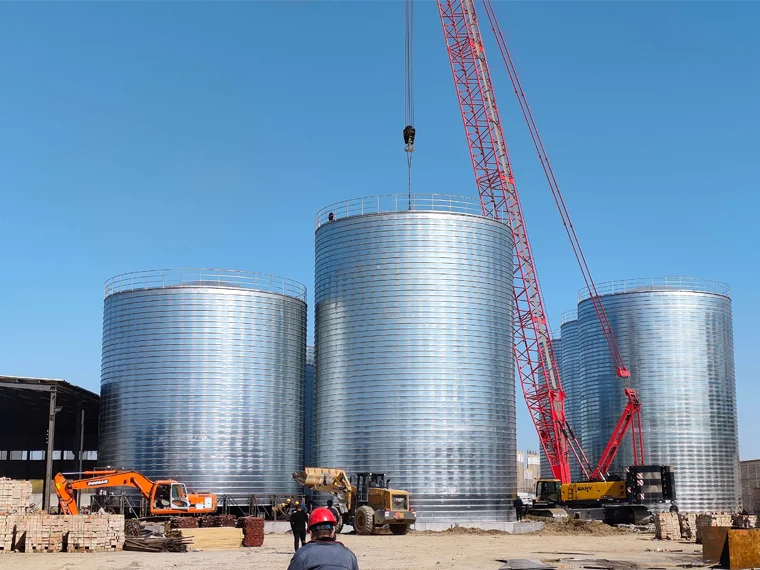
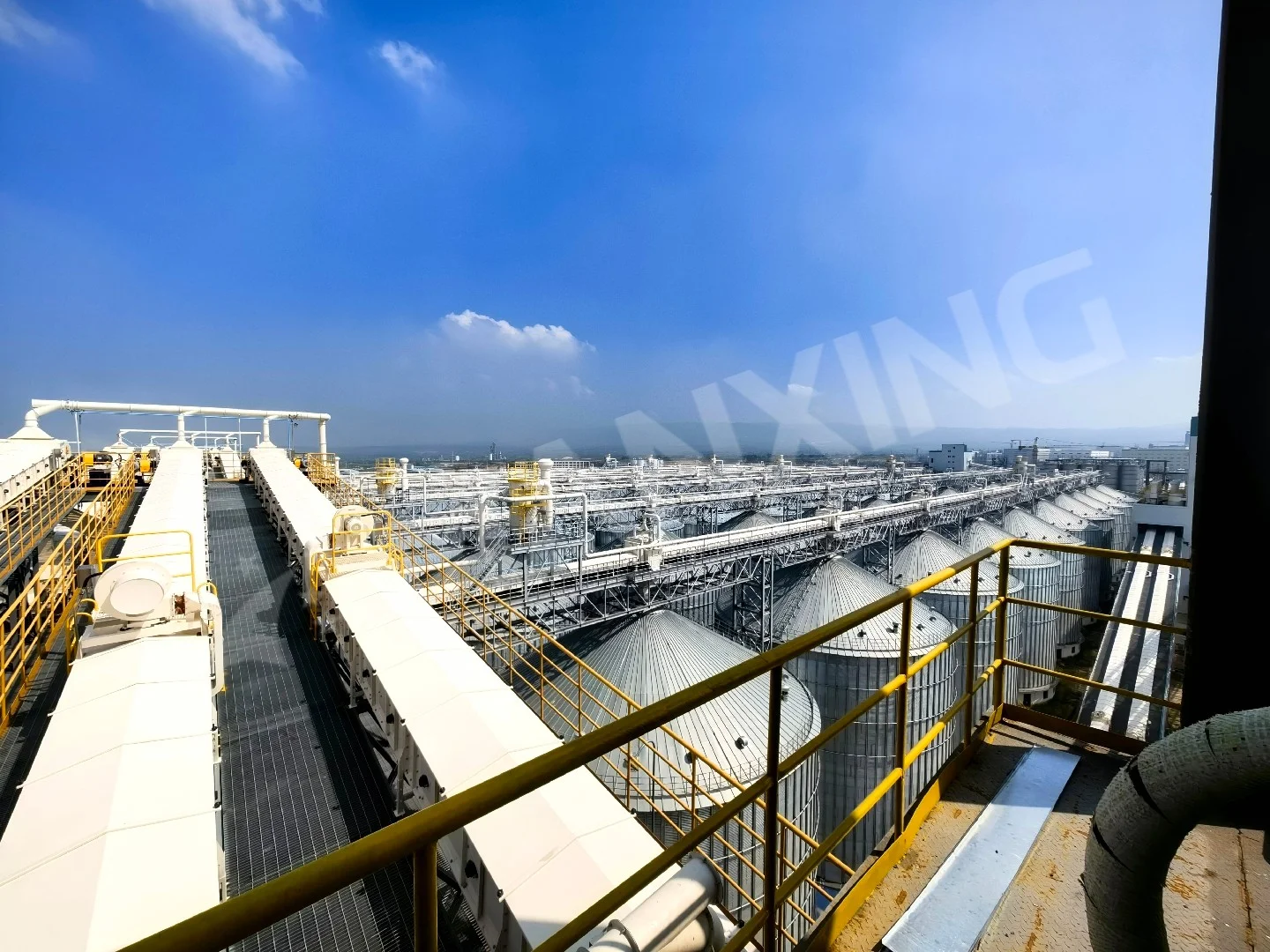


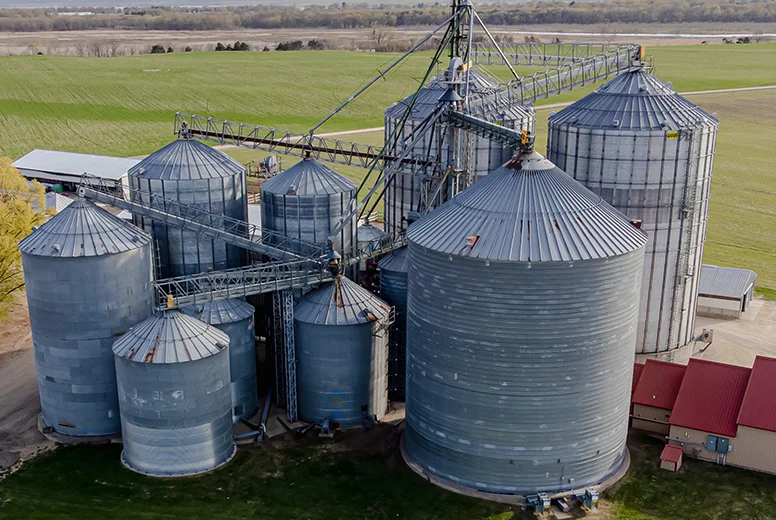
In modern rice storage systems, the flat bottom steel silo is rapidly replacing traditional hopper-bottom designs as the preferred solution for large-scale grain depots and processing plants. By delivering superior structural stability, flexible capacity expansion, and significantly lower grain breakage rates, this engineering approach addresses the three core pain points of rice storage: moisture control, pest prevention, and mechanical damage.Related: Large capacity concrete silo foundation
rong>Structural Advantages and Engineering Principles of Flat Bottom Rice Storage Silos
Unlike conventional conical or funnel-bottom silos, the flat bottom rice storage silo features a completely level base—a design choice rooted in a deep understanding of rice’s physical properties. When piled, rice grains have a natural repose angle of approximately 34–38 degrees. The flat bottom enables uniform vertical load transfer throughout the bin, eliminating the stress concentration that commonly occurs at the junction of the wall and hopper in cone-bottom silos. This even stress distribution directly extends the service life of the silo body—especially for large steel silos—and reduces the risk of cracking due to localized fatigue.
From an engineering materials perspective, flat bottom silos are typically constructed from high-strength galvanized steel (such as Q355B or S350GD+Z) or prestressed concrete. Steel silo walls are joined via spiral crimping or bolted connections to form a continuous structural whole. Combined with an arched roof truss, this system effectively resists wind loads, snow loads, and seismic forces. For rice storage, this structure offers a critical advantage: a more stable internal temperature gradient. The flat design minimizes thermal bridging, thereby reducing the risk of wall condensation—the first line of defense against rice mold and spoilage.
Solving the Three Core Pain Points of Rice Storage: Moisture, Pests, and Breakage
Rice, as a staple grain, demands extremely tight control over humidity, temperature, and mechanical handling to preserve its quality over long-term storage. The flat bottom silo excels in all three critical areas. First, moisture control is achieved through the silo's superior aeration system design. The flat floor allows for evenly spaced aeration channels or perforated ducts that deliver uniform airflow across the entire grain mass. This prevents the formation of damp pockets that can lead to fungal growth and mycotoxin contamination. Second, pest management is enhanced because the sealed, continuous steel structure eliminates entry points for rodents and insects. Temperature monitoring systems can be integrated directly into the flat floor to detect hot spots early, allowing for targeted cooling interventions. Third, and perhaps most importantly for rice, grain breakage is minimized. Unlike hopper-bottom silos where rice grains experience high-velocity impacts and shear forces during discharge, flat bottom silos use sweep augers or reclaim systems that gently move the grain horizontally. This reduces broken rice content by up to 30–50% compared to traditional cone-bottom designs, delivering a direct economic benefit to millers and exporters.
Optimized Aeration and Temperature Management
The flat bottom configuration allows for a plenum chamber beneath the grain mass, creating a true positive-pressure or negative-pressure aeration system. Air distribution is more uniform than in sloped-bottom designs, where air tends to channel along the walls. With proper fan sizing and duct spacing, temperature differentials across the silo can be kept within 2–3°C, preventing condensation and maintaining rice at optimal storage moisture of 12–14%.
Flexible Capacity Expansion and Operational Efficiency
Flat bottom silos are inherently scalable. Because the foundation is a simple reinforced concrete ring wall and slab, increasing storage capacity from 5,000 tons to 10,000 tons or more is a matter of increasing wall height or diameter—not redesigning the entire hopper structure. This modularity allows grain depots to expand capacity incrementally as demand grows. Additionally, the flat floor simplifies cleaning and maintenance. There are no steep slopes or confined hopper spaces that require confined-space entry protocols. Workers can walk freely across the floor for inspection, cleaning, and equipment servicing.
Key Takeaways
- Key Data: Flat bottom silos reduce broken rice content by 30–50% compared to hopper-bottom designs, directly improving market value.
- Best Practice: Use high-strength galvanized steel (Q355B or S350GD+Z) with spiral crimped or bolted connections for maximum structural integrity and corrosion resistance.
- Watch Out For: Inadequate aeration duct spacing can create dead zones where moisture accumulates. Ensure ducts are spaced no more than 2–3 meters apart for uniform airflow.
- Pro Tip: Integrate temperature monitoring cables into the flat floor during construction. This provides real-time hotspot detection without requiring personnel to enter the bin.
- Bottom Line: For large-scale rice storage facilities, flat bottom steel silos deliver the best combination of structural durability, grain quality preservation, and operational flexibility.
Flat Bottom vs. Hopper Bottom: A Comparative Analysis for Rice Storage
When selecting a silo design for rice, the choice between flat bottom and hopper bottom comes down to three factors: grain quality requirements, operational scale, and total cost of ownership. Hopper-bottom silos rely on gravity discharge, which is simple and requires no mechanical equipment. However, this simplicity comes at a cost. The conical hopper concentrates grain flow into a narrow outlet, creating high shear forces that break rice kernels. For high-value long-grain rice varieties, breakage rates can reach 5–8% in hopper-bottom silos, compared to 1–2% in flat bottom designs. Additionally, hopper-bottom silos have limited capacity per unit of land area because the hopper consumes vertical space that could otherwise be used for storage. Flat bottom silos, by contrast, maximize storage volume within a given footprint. The flat floor allows for diameters up to 30 meters or more, with wall heights reaching 20–25 meters. While flat bottom silos require sweep augers, belt conveyors, or pneumatic reclaim systems for discharge, the investment in this equipment is offset by lower grain damage, higher usable capacity, and easier maintenance access.
Engineering Considerations for Flat Bottom Rice Storage Silo Construction
Successful flat bottom silo projects require careful attention to foundation design, wall thickness, roof structure, and aeration system engineering. The foundation must be designed to support the full grain load plus wind and seismic loads. For a typical 10,000-ton rice silo, the ring wall foundation may be 1.5–2 meters wide and 1–1.5 meters deep, reinforced with steel bars to resist tensile stresses. The concrete slab floor should be sloped slightly (0.5–1%) toward a central or perimeter reclaim trench to facilitate drainage and cleaning. Wall thickness is determined by the stored material's pressure profile. Rice exerts a lateral pressure of approximately 0.3–0.4 times the vertical pressure at a given depth. Finite element analysis (FEA) is used to optimize panel thickness, which typically ranges from 2.5 mm for smaller silos to 6 mm or more for large-diameter bins. The arched roof truss must be designed to support the weight of roof panels, insulation, and any rooftop equipment such as bucket elevators or dust collectors. For seismic zones, the entire silo structure should be anchored to the foundation with high-strength bolts and base plates designed to withstand horizontal accelerations.
Frequently Asked Questions
Q: What is the maximum capacity achievable with a flat bottom rice storage silo?
A: Flat bottom steel silos can be designed for capacities ranging from 500 tons to over 50,000 tons per unit. For rice storage, typical diameters range from 10 to 30 meters, with wall heights of 10 to 25 meters. The capacity is a function of the silo's diameter and wall height, with the flat floor allowing maximum utilization of the available volume. For very large capacities (above 30,000 tons), multiple silos are often arranged in a battery configuration with shared conveying systems.
Q: How does a flat bottom silo prevent condensation and mold growth in stored rice?
A: Condensation occurs when warm, moist air inside the silo contacts a cold surface, such as a metal wall or roof. Flat bottom silos minimize this risk through three mechanisms: First, the flat floor design reduces thermal bridging compared to hopper-bottom silos, maintaining more uniform interior temperatures. Second, the aeration system—typically with ducts embedded in or laid on the flat floor—provides uniform airflow that sweeps moisture-laden air out of the grain mass. Third, the silo roof and walls can be insulated with polyurethane foam or mineral wool to prevent temperature differentials. Proper ventilation management, including running aeration fans during cool, dry nights, further reduces condensation risk.
Q: What is the typical discharge rate and reclaim method for a flat bottom rice silo?
A: Flat bottom silos require mechanical reclaim systems because gravity alone cannot move grain across a level floor. The most common method is a sweep auger—a rotating auger that travels around the silo floor, sweeping grain toward a central or perimeter discharge hopper. Discharge rates vary from 50 to 500 tons per hour, depending on auger diameter and rotational speed. For larger installations, multiple sweep augers or a combination of sweep augers and belt conveyors in underground tunnels are used. Pneumatic reclaim systems are also available for applications requiring dust-free operation or when the grain must be conveyed over long distances.
Q: How does the cost of a flat bottom rice silo compare to a hopper-bottom silo of the same capacity?
A: The initial capital cost of a flat bottom silo is typically 15–25% higher than a comparable hopper-bottom silo due to the need for mechanical reclaim equipment (sweep augers, conveyors, motors, and control systems). However, when total cost of ownership is considered over a 20–30 year lifespan, flat bottom silos often prove more economical. The reasons include: lower grain breakage (reducing revenue loss by 2–5% per cycle), higher usable storage capacity per unit of land, lower maintenance costs due to easier access, and longer structural life due to reduced stress concentrations. For facilities processing high-value rice varieties, the payback period for the additional investment is typically 2–4 years.
Q: Can flat bottom silos be used for both paddy rice and milled rice storage?
A: Yes, flat bottom silos are suitable for both paddy (unmilled) and milled rice, though there are important design differences. For paddy rice, which has a natural husk that provides some protection, aeration requirements are moderate, and standard galvanized steel construction is adequate. For milled white rice, which is more susceptible to breakage, moisture absorption, and rancidity, additional considerations apply: the silo should have a smooth interior finish to minimize friction damage, the aeration system must be designed for higher airflow rates (0.1–0.2 m³/min per ton), and the floor should be equipped with temperature monitoring cables. Many modern rice mills use dedicated flat bottom silos for paddy and separate, smaller silos for milled rice to prevent cross-contamination and optimize storage conditions for each product.
Q: What are the seismic design requirements for flat bottom rice storage silos in earthquake-prone regions?
A: Seismic design for flat bottom silos follows the same principles as other steel structures, with additional considerations for the stored grain's dynamic behavior. The silo and its contents are analyzed as a combined system under horizontal and vertical seismic accelerations. Key design elements include: base plates and anchor bolts sized for uplift and shear forces, stiffeners at the wall-to-floor connection to prevent buckling, and roof trusses designed to transfer lateral loads to the walls. For high-seismic zones (PGA > 0.3g), engineers often use a higher safety factor (1.5–2.0) on wall thickness and add circumferential stiffeners at regular intervals. The flat floor itself provides a stable base that distributes seismic forces more evenly than a hopper-bottom design, which can experience stress concentrations at the hopper-to-wall junction during an earthquake.
Need expert manxingsilo solutions for your rice storage project?
We provide professional design, manufacturing, and installation services for flat bottom steel silos and complete bulk storage systems worldwide. Our engineering team has delivered over 500 grain storage projects across 30 countries.
Get a Free Technical Consultation →