


In the world of grain and industrial bulk storage, the hopper bottom silo with ventilation system is redefining efficiency by combining gravity-assisted full discharge with active environmental control. This integrated solution directly tackles the three biggest threats to stored material quality—bridging, mold, and temperature stratification—reducing storage losses from as high as 5% to below 0.5% while cutting energy consumption through data-driven precision ventilation.
How the Hopper Bottom Silo with Ventilation System Eliminates Discharge and Spoilage Risks
Traditional flat-bottom silos suffer from a fundamental flaw: the angle of repose of stored materials leaves a residual cone that requires manual cleanup or mechanical sweep augers. Thi
s not only increases labor costs but also creates cross-contamination risks between batches. The hopper bottom silo solves this with a conical or wedge-shaped hopper design that leverages gravity for complete "full-emptying" discharge. The standard 60° to 70° hopper angle is engineered to eliminate material dead zones, making it particularly effective for low-flow materials such as corn, soybeans, paddy rice, and certain industrial powders. This structural advantage drastically reduces the risk of bridging and arching, enabling faster, cleaner batch changeovers.More critically, this silo integrates an active ventilation system comprising bottom air inlet ducts, radial ventilation mesh panels, and roof-mounted exhaust fans. This "bottom-up, top-out" airflow path ensures uniform through-penetration of the entire material column, rather than mere surface air exchange. For long-term grain storage, this design directly counteracts the localized heat buildup and moisture migration caused by respiration—the physical foundation for maintaining grain stability over months or even years.
Solving the "Invisible Killers" in Grain Storage: Wet-Heat Nuclei and Microbial Explosion
In storage environments lacking effective ventilation, grain mass interiors develop "wet-heat nuclei"—pockets where the core temperature can be 10–15°C higher than the surface layer, driving moisture upward to form condensation at the top. This microclimate is a perfect breeding ground for toxigenic fungi such as Aspergillus flavus and Ochratoxin. The hopper bottom silo with ventilation system combats this through intelligent control strategies. Using real-time data from embedded temperature and humidity sensors, the system automatically initiates intermittent or continuous ventilation to maintain relative humidity inside the silo below 65%, cutting off the microbial reproduction chain at its source.
Precision Ventilation: From Operator Experience to Data-Driven Control
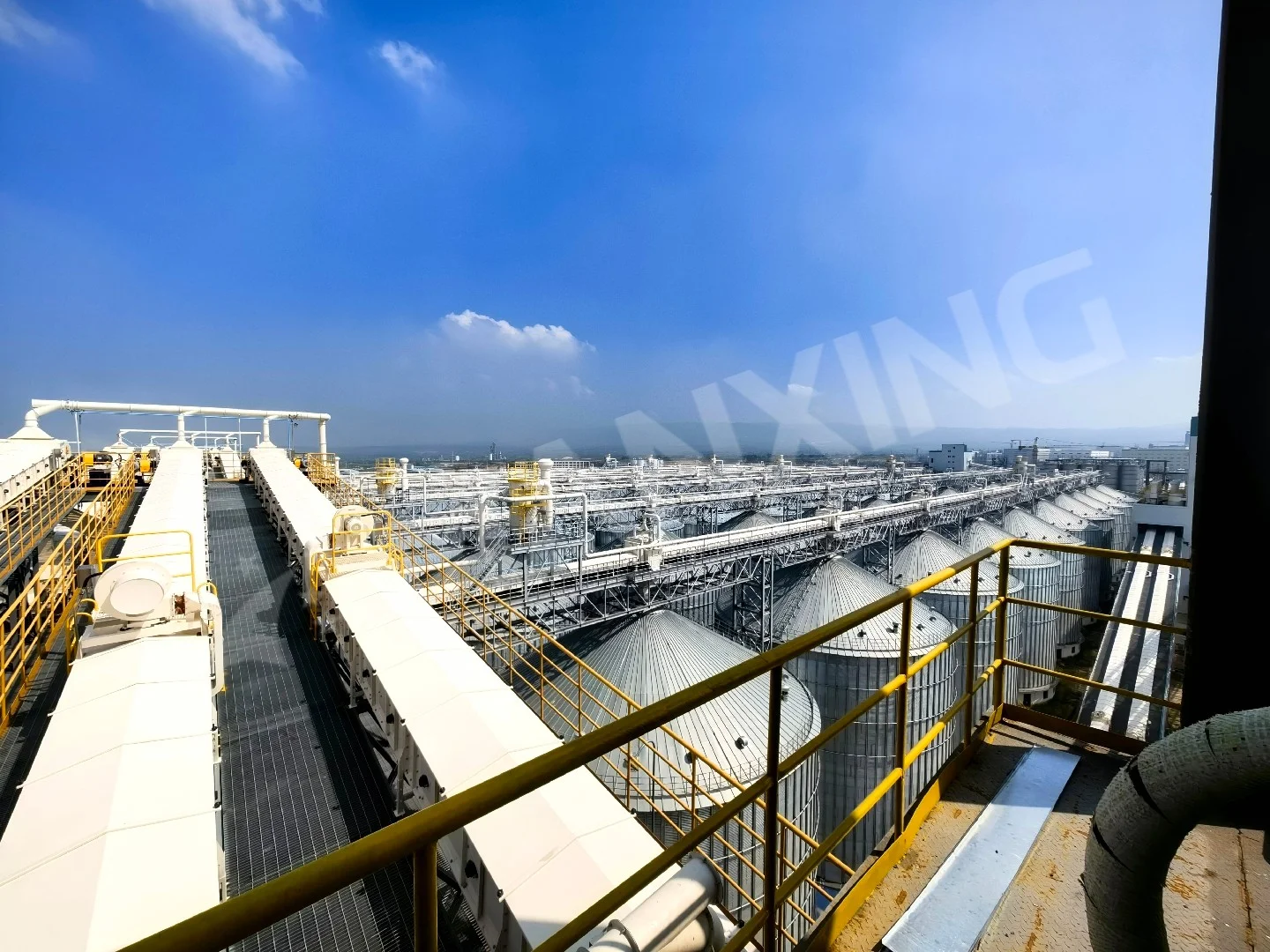
Modern hopper bottom silos have moved far beyond manual fan operation. By embedding multi-point temperature and humidity probes along with pressure sensors, the control system generates real-time "heat maps" and "moisture distribution maps" of the stored material. When a localized temperature anomaly is detected, the control unit adjusts the fan speed and damper opening for that specific zone, enabling "on-demand ventilation." This targeted intervention not only saves energy but also prevents the excessive dry matter loss that can occur with over-ventilation—a common hidden cost in older systems.
Anti-Bridging and Explosion-Proof Design: Dual Safety Assurance
For powdery materials such as flour, feed meal, or biomass dust, bridging in the hopper section is a persistent operational headache. To counter this, the hopper bottom silo is often fitted with fluidization breakers or vibratory motors at the cone section. These devices, combined with the disruptive airflow from the ventilation system, ensure continuous material flow. For applications involving combustible dust—common in oilseed processing and biomass pellet storage—the ventilation system employs explosion-proof fans, electrostatic grounding, and pressure-relief vents to minimize explosion risk. This dual-layer safety design is now a regulatory standard in many jurisdictions for food and biofuel storage.
Key Takeaways
- Key Data: Active ventilation reduces grain storage loss rates from the traditional 3%–5% to under 0.5%, and slows the rise of fatty acid value by more than 60%.
- Best Practice: Install air filtration and dehumidification pre-treatment units at the silo bottom air intake—especially in high-humidity regions—to significantly boost ventilation efficiency and reduce energy consumption.
- Watch Out For: Never treat the ventilation system as a "magic bullet." Materials exceeding safe moisture thresholds (e.g., corn > 14%) must be dried first; forced ventilation on wet grain can accelerate spoilage.
- Pro Tip: For high-oil-content seeds like peanuts or sunflower seeds, specify a steeper hopper angle (≥70°) with a stainless steel or food-grade resin liner to reduce friction and prevent rancidity.
- Bottom Line: The hopper bottom silo with ventilation system is not just a container—it is an active environmental management tool that transforms bulk storage from a passive holding operation into a controlled preservation process.
Application Scenarios and Selection Guide: From Farm to Port
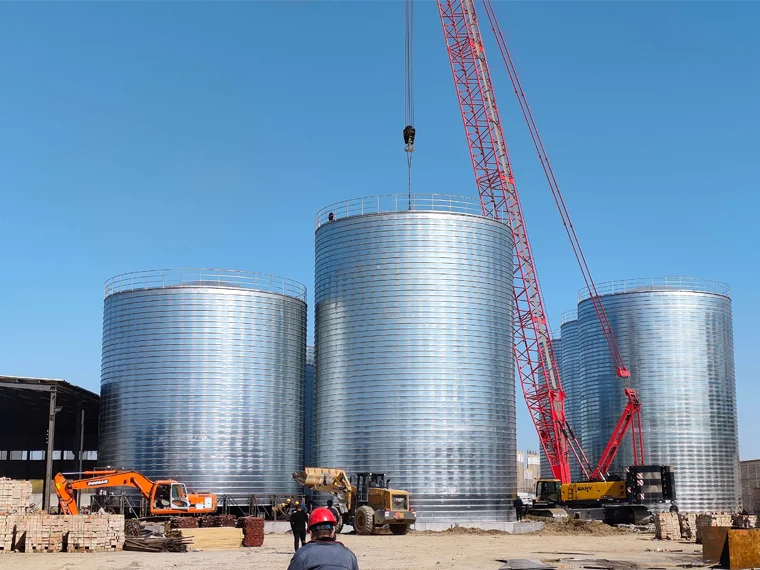
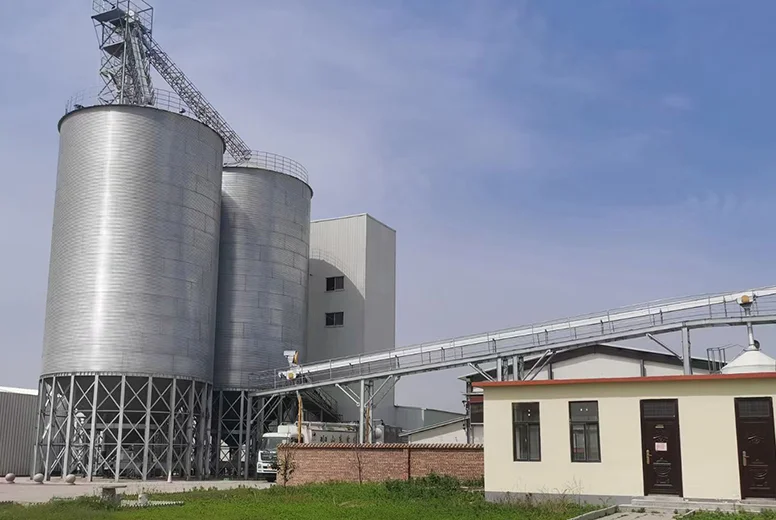
The hopper bottom silo with ventilation system has expanded far beyond traditional grain collection stations. It is now widely used in feed milling, brewing raw material storage, oilseed pressing, and chemical granule handling. For small to medium-sized farms, bolted galvanized steel silos are recommended for their corrosion resistance and short installation time. For ports or large transshipment terminals, spiral-formed corrugated steel silos paired with high-power axial fans are the better choice to handle the continuous, high-throughput demands of bulk loading and unloading. When selecting a system, three parameters must be evaluated: the material's angle of repose, bulk density, and airflow resistance coefficient. These directly determine the hopper angle and fan specification required for optimal performance.
Frequently Asked Questions
Q: Should the ventilation system on a hopper bottom silo be shut down in winter to prevent cold air from causing surface condensation?
A: Winter is actually a critical season for scientific ventilation, but the strategy must change. When outside temperatures drop below -5°C, introducing cold air directly can create a severe temperature differential between the grain core and surface, leading to heavy condensation. The correct approach is to use a "low volume, long cycle" intermittent ventilation pattern, or to recirculate air within the headspace (internal recirculation mode), only exchanging air during warmer daytime hours. Advanced systems use a dew-point control algorithm that automatically calculates and avoids condensation risk zones, ensuring safe winter aeration without moisture damage.
Q: Is a hopper bottom silo with ventilation suitable for high-oil-content materials like peanuts or sunflower seeds, and what special design modifications are needed?
A: Yes, but with targeted modifications. High-oil materials are prone to oxidative rancidity during storage, and the oil reduces inter-particle friction, making discharge more difficult. Design adaptations include: (1) a steeper hopper angle of at least 70° lined with stainless steel or food-grade resin to reduce friction; (2) a low-temperature, low-velocity ventilation mode to avoid accelerating oil oxidation; and (3) an inert gas (e.g., nitrogen) port at the silo roof for oxygen displacement during long-term sealed storage. For premium applications, consider adding a real-time fatty acid value monitoring probe to track quality degradation.
Q: How do I calculate the correct fan capacity for a hopper bottom silo ventilation system?
A: Fan capacity is determined by three factors: the silo's total grain volume, the material's specific airflow resistance (measured in Pa/m), and the desired air exchange rate per hour. A common rule of thumb for grain is 0.1–0.2 m³/min per tonne of stored material, but this varies significantly with moisture content and grain type. For high-resistance materials like wheat, you may need 50% more static pressure than for corn. Always perform a pressure drop calculation across the full column height and include a 20% safety margin in fan selection to account for filter loading and duct losses.
Q: Can a hopper bottom silo with ventilation system be retrofitted onto an existing flat-bottom silo?
A: Retrofitting is technically possible but often uneconomical. The existing foundation and wall structure of a flat-bottom silo are not designed to support the concentrated loads of a steel hopper cone. A full retrofit typically requires installing a new internal hopper structure, reinforcing the walls, and adding a completely new ventilation duct network. In most cases, the cost approaches 70–80% of a new silo. For this reason, it is usually more cost-effective to purchase a purpose-built hopper bottom silo with integrated ventilation from the outset.
Q: What maintenance schedule is required for the ventilation system to ensure long-term reliability?
A: A three-tier maintenance schedule is recommended. Monthly: inspect and clean air intake filters and check fan belt tension. Quarterly: test all temperature and humidity sensors for calibration drift, and verify damper actuator operation. Annually: perform a full system pressure test, clean all radial ventilation ducts (which can become clogged with fines and dust), and lubricate fan bearings. For facilities handling corrosive materials or operating in dusty environments, increase the quarterly inspection to a monthly one. Keeping a log of fan run hours and energy consumption helps predict component wear before failure occurs.
Need a professional hopper bottom silo with ventilation system for your project?
We provide end-to-end services—from structural calculation and CFD ventilation simulation to equipment manufacturing, installation, and commissioning—ensuring your bulk storage operation achieves zero loss and maximum efficiency.
Get a Free Technical Consultation →