
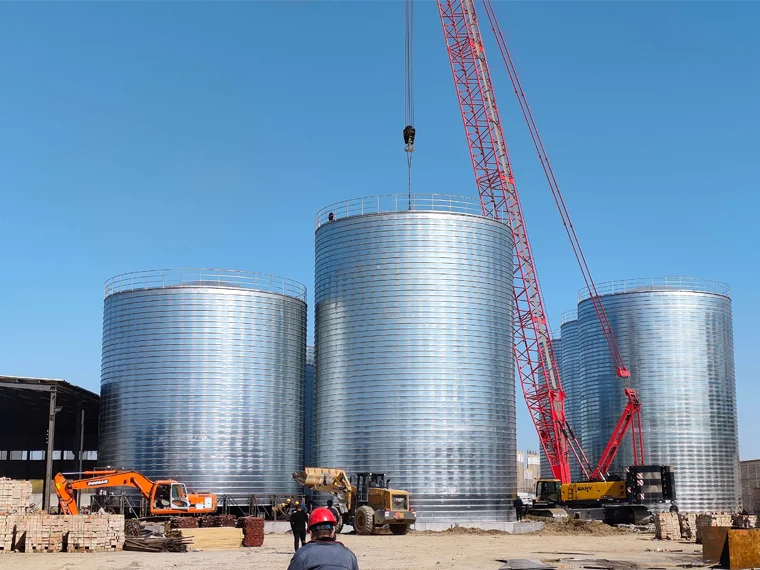
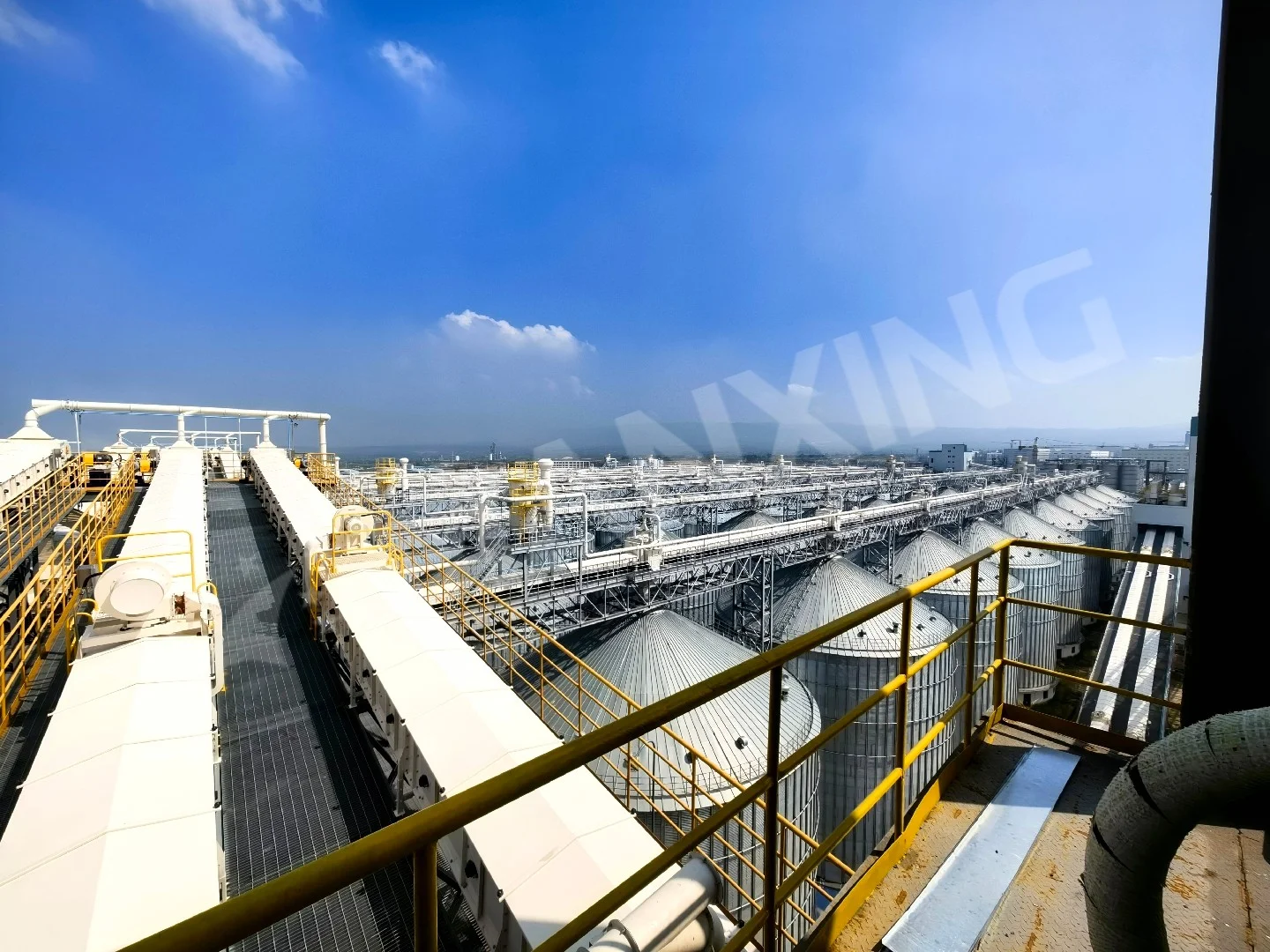


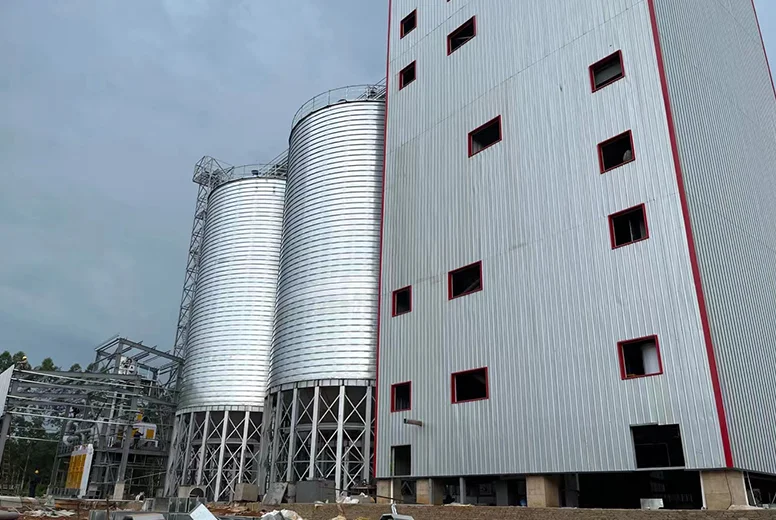
For bulk material handlers facing the challenges of heavy loads, corrosive environments, and demanding discharge cycles, the hopper bottom silo is only as reliable as its connections. A hopper bottom silo with strong bolts, specifically high-strength bolts, delivers superior shear and tensile performance, transforming structural integrity and extending service life. This engineering approach is the optimal solution for storing cement, grain, and chemical raw materials, reducing downtime and total cost of ownership.
Structural Advantages of a High-Strength Bolted Hopper Bottom Silo
The core design of a hopper bottom silo relies on its conical bottom to facilitate gravity discharge, minimizing material residue and clogging risks. However, the structural safety of the entire silo hinges on the bolted connections linking the cone, wall sheets, and support ring. These joints must withstand immense vertical loads and dynamic discharge impacts. Traditional ordinary bolts are susceptible to fatigue failure under long-term cyclic stress. In contrast, high-strength bolts, manufactured from alloy steel or stainless steel and subjected to rigorous heat treatment, offer a preload and slip coefficient far exceeding standard fasteners. This design ensures geometric stability under full-load conditions and provides critical safety redundancy during extreme events like wind loads and seismic activity.
From a manufacturing and installation perspective, a hopper bottom silo with strong bolts also delivers superior assembly precision. Unlike welded structures, bolted connections eliminate thermal stress-induced deformation and allow for on-site adjustments and calibration. For industries requiring frequent material changes or internal cleaning—such as food-grade grain storage—the easy disassembly of bolted connections significantly reduces maintenance and upgrade costs, cutting downtime by over 30% compared to welded alternatives.
Solving Storage Challenges in Heavy-Load and Corrosive Environments
In industries like cement production, chemical processing, and grain handling, silos are exposed to extreme conditions. Heavy loads from bulk materials exert constant pressure on the silo walls and hopper cone, while corrosive atmospheres—from moisture, acids, or alkaline dust—accelerate wear on fasteners and structural components. A hopper bottom silo with strong bolts addresses these challenges head-on. High-strength bolts, often made from stainless steel or coated with anti-corrosion treatments, resist rust and chemical attack far better than ordinary bolts. This resilience ensures that the bolted joints maintain their clamping force over decades of service, preventing loosening, leakage, or catastrophic failure. Additionally, the preload in high-strength bolts creates a frictional connection that absorbs dynamic loads from discharge cycles, reducing stress on the silo shell and extending the overall lifespan of the storage system.
Enhanced Fatigue Resistance Under Cyclic Loading
One of the primary failure modes in bolted silo connections is fatigue cracking caused by repeated loading and unloading during material discharge. High-strength bolts are engineered to withstand millions of cycles without degradation. Their heat-treated microstructure provides a higher endurance limit, meaning they can endure greater stress amplitudes before fatigue cracks initiate. This is particularly critical in hopper bottom silos where the cone experiences fluctuating forces as material flows out. By specifying strong bolts, operators can achieve a service life that is 2-3 times longer than that of ordinary bolted connections, significantly reducing the frequency of inspections and replacements.
Corrosion Protection for Long-Term Reliability
Corrosion is a silent killer in industrial storage environments. Moisture from condensation, chemical fumes, or washdown procedures can quickly degrade standard fasteners. High-strength bolts for hopper bottom silos are available in a range of corrosion-resistant materials, including 304/316 stainless steel and hot-dip galvanized carbon steel. These options provide a robust barrier against rust and chemical attack. Furthermore, the bolted joint design allows for easy application of protective coatings and sealants during assembly, ensuring that every connection point is fully protected. This proactive approach to corrosion management can extend the silo's maintenance interval by 5-10 years, lowering total ownership costs.
Key Takeaways
- Key Data: High-strength bolted connections reduce maintenance downtime by over 30% compared to welded alternatives.
- Best Practice: Specify high-strength bolts (Grade 8.8 or higher) with anti-corrosion coatings for all hopper bottom silo connections in heavy-load or corrosive environments.
- Watch Out For: Avoid using ordinary bolts in critical load-bearing joints; they are prone to fatigue failure under cyclic stress, leading to structural instability.
- Pro Tip: Use torque-controlled tightening methods during installation to ensure consistent preload across all bolts, maximizing joint strength and safety.
- Bottom Line: A hopper bottom silo with strong bolts delivers superior structural integrity, longer service life, and lower total cost of ownership, making it the optimal choice for demanding bulk storage applications.
Installation and Maintenance Advantages of Bolted Hopper Bottom Silos
The decision to use high-strength bolted connections in a hopper bottom silo also brings significant benefits during installation and throughout the operational life of the structure. Unlike welded silos, which require specialized welding equipment, skilled labor, and extensive on-site fabrication, bolted silos can be assembled quickly using standard tools and trained crews. This reduces installation time by up to 40%, especially in remote or challenging locations where welding infrastructure is limited. Additionally, bolted connections allow for precise alignment and adjustment during assembly, ensuring that the hopper cone and wall sheets fit perfectly without the distortion caused by welding heat. This precision translates into better sealing, reduced material leakage, and improved discharge efficiency.
During operation, the modular nature of bolted connections simplifies maintenance and modification tasks. Individual wall sheets or cone sections can be removed and replaced without affecting adjacent components, minimizing downtime. For industries that require periodic internal cleaning or inspection—such as food-grade grain storage or pharmaceutical raw material handling—the ability to quickly disassemble sections of the silo is a major advantage. Furthermore, if the storage requirements change over time, bolted silos can be easily expanded, relocated, or reconfigured, providing unmatched flexibility compared to welded or concrete alternatives. This adaptability is particularly valuable for growing businesses that need to scale their storage capacity without building entirely new structures.
Frequently Asked Questions
Q: What is the difference between ordinary bolts and high-strength bolts in a hopper bottom silo?
A: Ordinary bolts are typically made from low-carbon steel and rely on shear strength to resist loads, making them prone to fatigue failure under cyclic stress. High-strength bolts, on the other hand, are manufactured from alloy steel or stainless steel and undergo heat treatment to achieve a much higher tensile and shear capacity. They are tightened to a specific preload, creating a frictional connection that can withstand dynamic loads and extreme events like earthquakes. In a hopper bottom silo, high-strength bolts provide superior structural integrity, longer service life, and greater safety margins, especially in heavy-load or corrosive environments.
Q: How do high-strength bolts improve the seismic performance of a hopper bottom silo?
A: High-strength bolts create a preloaded, frictional connection that can absorb and dissipate energy during seismic events. The preload ensures that the joint remains tight even under lateral forces, preventing the bolts from loosening or shearing off. Additionally, the bolted connection allows for controlled movement and redistribution of loads across the silo structure, reducing the risk of catastrophic failure. This is particularly important for hopper bottom silos, where the conical bottom and support ring experience complex stress patterns during earthquakes. By using high-strength bolts, engineers can achieve a seismic design that meets or exceeds local building codes, ensuring the safety of the stored material and surrounding infrastructure.
Q: Can a hopper bottom silo with strong bolts be used for food-grade grain storage?
A: Yes, absolutely. High-strength bolts made from stainless steel (e.g., 304 or 316) are ideal for food-grade grain storage because they resist corrosion, are easy to clean, and do not contaminate the stored product. The bolted design also allows for quick disassembly and reassembly, which facilitates thorough cleaning and inspection between batches. This reduces the risk of cross-contamination and mold growth, ensuring that the grain meets food safety standards. Additionally, the smooth interior surfaces of a bolted silo, combined with proper sealing at joints, minimize material residue and clogging, further enhancing hygiene and operational efficiency.
Q: What maintenance is required for the bolted connections in a hopper bottom silo?
A: Regular maintenance of bolted connections involves periodic inspection for signs of loosening, corrosion, or fatigue. For high-strength bolts, it is recommended to check torque levels annually, especially after the first year of operation when initial settling may occur. Any bolts showing corrosion should be replaced immediately, and protective coatings should be reapplied as needed. In corrosive environments, more frequent inspections—every six months—are advisable. Additionally, during material changeovers or internal cleaning, all accessible bolts should be visually inspected for damage. Proper maintenance can extend the life of a bolted hopper bottom silo to 30 years or more, with minimal downtime.
Q: How do I choose the right grade of high-strength bolts for my hopper bottom silo project?
A: The choice of bolt grade depends on the specific load requirements, environmental conditions, and industry standards. For most heavy-load applications, Grade 8.8 or 10.9 carbon steel bolts with hot-dip galvanized or zinc-nickel coating provide an excellent balance of strength and corrosion resistance. For highly corrosive environments, such as chemical storage or coastal installations, stainless steel bolts (304 or 316) are recommended. It is also important to consider the bolt diameter and length, as well as the tightening method (torque-controlled or tension-controlled). Consulting with a structural engineer or silo manufacturer is essential to ensure the selected bolts meet the design criteria and local building codes.
Q: Can a bolted hopper bottom silo be expanded or relocated after initial installation?
A: Yes, one of the key advantages of a bolted silo is its modularity. Individual wall sheets and cone sections can be added, removed, or replaced without affecting the integrity of the entire structure. This makes expansion straightforward—simply add additional rings or sections to increase capacity. Relocation is also feasible, as the silo can be disassembled into its component parts, transported to a new site, and reassembled using the same high-strength bolts. This flexibility is a significant cost-saver for businesses that anticipate future growth or need to move operations. However, it is important to have the relocation supervised by experienced engineers to ensure proper alignment and torque specifications are maintained.
Need expert hopper bottom silo solutions for your project?
We provide professional design, manufacturing, and installation services for bulk storage and material handling systems worldwide. Our high-strength bolted hopper bottom silos are engineered for maximum durability, safety, and efficiency.
Get a Free Technical Consultation →