


In bulk material storage, a flat bottom silo’s structural stability is only half the story. The true determinant of storage quality lies in its roof ventilation system—a critical engineering feature that prevents caking, mold, and thermal runaway. This article provides an in-depth, field-proven analysis of how roof ventilation optimizes airflow for material preservation, with actionable technical recommendations for high-humidity and high-temperature environments.
The Core Structure and Working Principle of a Flat Bottom Silo with Roof Ventilation
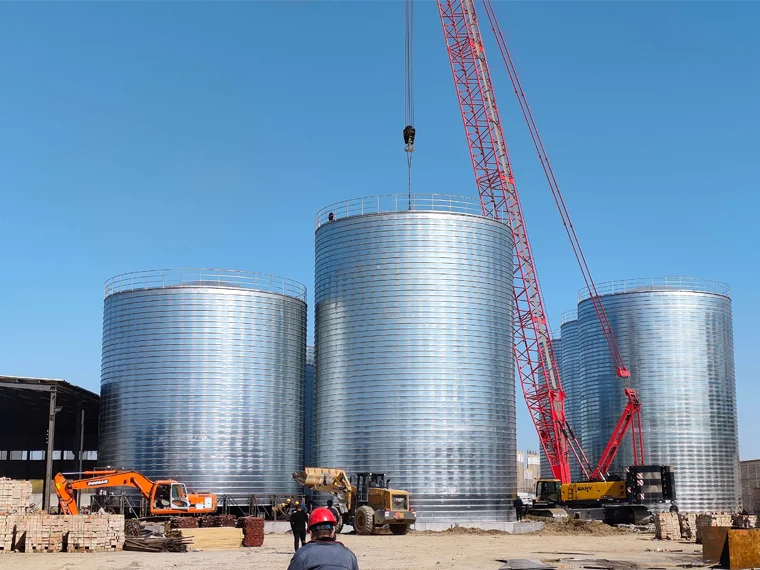
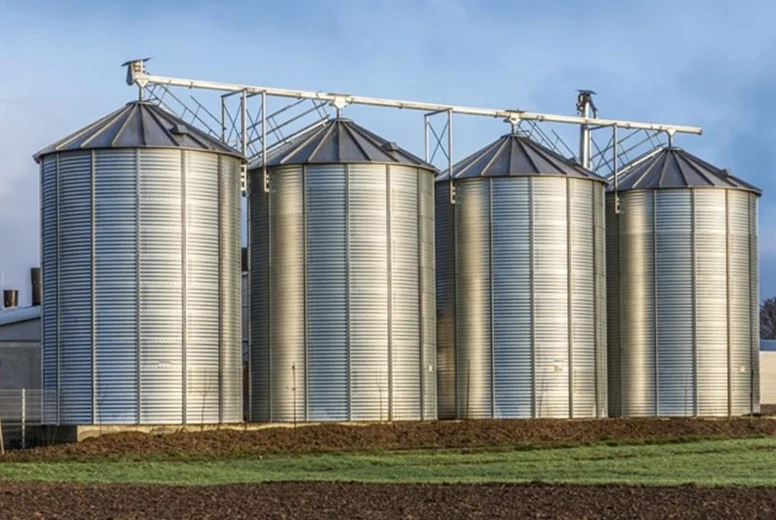
A flat bottom silo typically features a horizontal concrete or steel floor, relying on gravity to direct material toward central or side discharge outlets. Whi
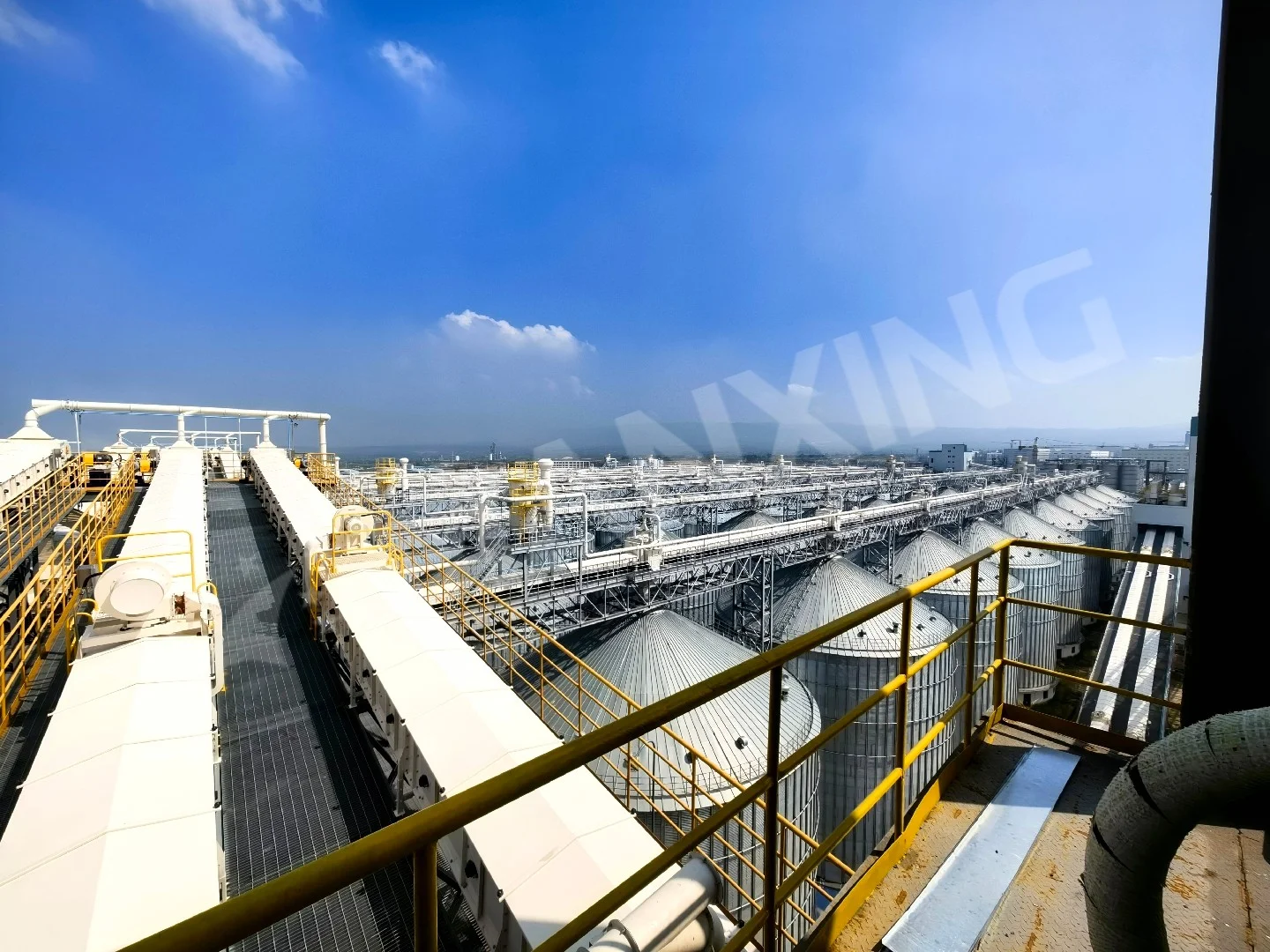
le this design delivers high discharge efficiency and minimal dead zones, it introduces a fundamental challenge: the flat floor restricts internal gas circulation, leading to pronounced temperature stratification and moisture gradients within the stored mass. Roof ventilation systems are engineered specifically to counteract these issues. They consist of three primary components: passive air inlets (located at the lower wall or eaves), active exhaust fans (mounted on the roof ridge or top), and guide ducts or wind caps. The system leverages the “chimney effect” or mechanical forced extraction to draw fresh air from the bottom, pass it through the material layer, and expel it from the top—effectively removing heat, moisture, and metabolic gases like CO₂. For storing grains, feed, cement, or fertilizers—materials highly sensitive to temperature and humidity—this system can significantly extend safe storage periods.Why Roof Ventilation Is Critical for Flat Bottom Silos: Three Pain Points and Proven Solutions
Many silo buyers focus solely on capacity and discharge methods while overlooking ventilation design. In reality, a flat bottom silo without effective ventilation is prone to rapid internal deterioration. The following three scenarios illustrate the stakes:
Pain Point 1: Caking and Mold in High-Humidity Environments
In tropical or subtropical regions, ambient humidity often exceeds 80%. Without roof ventilation, solar radiation heats the top interior, causing moisture condensation on walls and material surfaces. This leads to surface caking and bottom mold. A roof ventilation system continuously exchanges air, expelling saturated moisture and maintaining relative humidity below 65%—the critical threshold for inhibiting mold growth.
Pain Point 2: The “Hot Core” Effect from Temperature Stratification
Large flat bottom silos (over 10 meters in diameter) frequently develop a “hot core”—the central material generates heat through respiration or chemical reactions while the periphery remains cooler. If not dissipated, temperature differentials can exceed 15°C, causing localized spoilage. Roof ventilation, combined with wall-mounted temperature monitoring, can use cooler nighttime air to lower the core temperature by 3–5°C, effectively preventing hot core propagation.
Pain Point 3: Dust Accumulation and Explosion Risk
For silos storing combustible dusts like flour, starch, or coal powder, roof ventilation is not just a quality measure—it is a safety imperative. The system dilutes in-silo dust concentrations to below the lower explosive limit (typically 20–50 g/m³), while explosion-proof fans and flame arresters isolate potential ignition sources.
Key Takeaways
- Key Data: A properly designed roof ventilation system can extend material storage life by 30%–50% and reduce mold incidence to below 0.5%.
- Best Practice: Ventilation rates should be calculated based on material respiration rate and local climate; a general recommendation is 2–6 air changes per hour, depending on the material.
- Watch Out For: Never combine roof ventilation with the roof dust collection system. The former is low-velocity air exchange, while the latter is high-velocity capture—mixing them causes energy imbalance and airflow short-circuiting.
- Pro Tip: Install temperature cables and humidity sensors throughout the silo to enable zoned control, especially in agricultural applications where uniform temperature and moisture are critical.
- Bottom Line: Roof ventilation is not an optional add-on for flat bottom silos; it is a fundamental engineering requirement for safe, long-term bulk storage.
Industry-Specific Design Considerations for Flat Bottom Silos with Roof Ventilation
A one-size-fits-all approach does not work for roof ventilation. Configuration must be tailored to the stored material and operational environment:
Agriculture (Grains, Soybeans, Corn)
The priority here is uniform temperature and humidity. A natural ventilation mode—bottom air intake and top exhaust—is recommended, paired with in-silo temperature cables and humidity sensors for zoned control. During the hot, humid harvest season, auxiliary fans can be activated for forced ventilation; in winter, inlets are closed, and the roof cap facilitates natural moisture expulsion.
Chemical & Building Materials (Cement, Fly Ash, Limestone)
These materials are highly moisture-sensitive and generate significant dust. The roof ventilation system must include high-efficiency filters and explosion-proof motors. Air inlets should be positioned on the upper wall to avoid drawing in bottom dust, and outlets should be fitted with gravity-operated check valves to prevent rainwater backflow.
Feed & Food Processing (Soybean Meal, Fishmeal, Additives)
Food safety requirements demand that ventilation ducts and fans be constructed from 304 stainless steel with smooth, crevice-free interiors. The system should also integrate with fumigation or nitrogen blanketing controls—shutting down ventilation during treatment and automatically resuming air exchange once the process is complete.
Frequently Asked Questions
Q: Is a roof ventilation system suitable for all climate zones, especially freezing winters?
A: No, natural ventilation is not universally applicable. In severe winter climates (below -20°C), continuous ventilation can cause internal icing or material freezing. The solution is intermittent intelligent ventilation: using temperature and humidity sensors to activate fans only when internal humidity exceeds external levels and the temperature is above 0°C. Additionally, inlets can be equipped with electric preheaters to raise incoming air to at least 5°C. For extreme cold regions, mechanical ventilation with heat recovery is strongly recommended over purely natural systems.
Q: What is the recommended maintenance schedule and what are the critical inspection points for a roof ventilation system?
A: A quarterly maintenance cycle is standard. Key inspection points include: ① Fan bearing lubrication and belt tension (monthly); ② Inlet and outlet filter cleaning (bi-weekly, more frequent in dusty environments); ③ Check valve and wind cap moving parts for sticking (at the start of each season); ④ Duct joint sealing inside the silo (annual smoke test). Additionally, a full airflow calibration should be performed every three years to confirm actual air changes per hour meet design specifications.
Q: What is the fundamental difference between roof ventilation on a flat bottom silo and that on a conical bottom silo?
A: The core difference lies in airflow path and discharge interference. In conical bottom silos (e.g., hopper silos), ventilation typically blows directly from the top, which can create preferential airflow channels and disrupt material flow toward the discharge cone. In
flat bottom silos, roof ventilation is designed to draw air from the bottom up through the entire material bed, providing uniform air distribution without interfering with the flat floor discharge process. This makes flat bottom silos inherently better suited for applications requiring consistent, low-velocity aeration across the full cross-section.Q: How do you calculate the required ventilation rate for a specific material and silo size?
A: The ventilation rate is determined by the material’s respiration heat generation and moisture release rate. For grains, a common starting point is 0.1–0.3 m³/min per tonne, adjusted upward for high-moisture or high-oil content seeds. For cement and fly ash, the rate is lower—typically 0.02–0.05 m³/min per tonne—since the primary concern is moisture control rather than biological activity. Always factor in local peak ambient temperature and humidity data, and conduct a full heat and mass balance calculation before finalizing fan and inlet sizing.
Q: Can roof ventilation be retrofitted onto an existing flat bottom silo that was built without it?
A: Yes, retrofitting is possible but requires careful structural assessment. The main challenges are: ensuring the silo roof can support the added weight of fans and ductwork; creating properly sealed openings without compromising structural integrity; and routing ductwork to avoid interference with existing discharge equipment. For silos over 15 meters in diameter, a structural engineer should evaluate the roof load capacity. Retrofits typically cost 20–40% more than integrated new-build systems, but they can still deliver a strong return on investment through reduced spoilage and extended storage life.
Q: What safety features should be mandatory in a roof ventilation system for combustible dust applications?
A: For combustible dusts (e.g., starch, coal, wood flour), the system must include: ① Explosion-proof fans and motors (ATEX or IECEx certified); ② Flame arresters or spark detection systems in the ductwork; ③ Pressure relief panels on the roof; ④ Grounding of all metal components to prevent static discharge; ⑤ Interlocks that shut down ventilation if dust concentration sensors exceed 50% of the lower explosive limit. Never use standard industrial fans—they can become ignition sources. Regular housekeeping to prevent dust accumulation on fan blades is also critical.
Need expert manxingsilo solutions for your project?
We provide professional design, manufacturing, and installation services for bulk storage and material handling systems worldwide. Our engineers specialize in optimizing roof ventilation for flat bottom silos across agriculture, chemical, and food processing industries.
Get a Free Technical Consultation →