
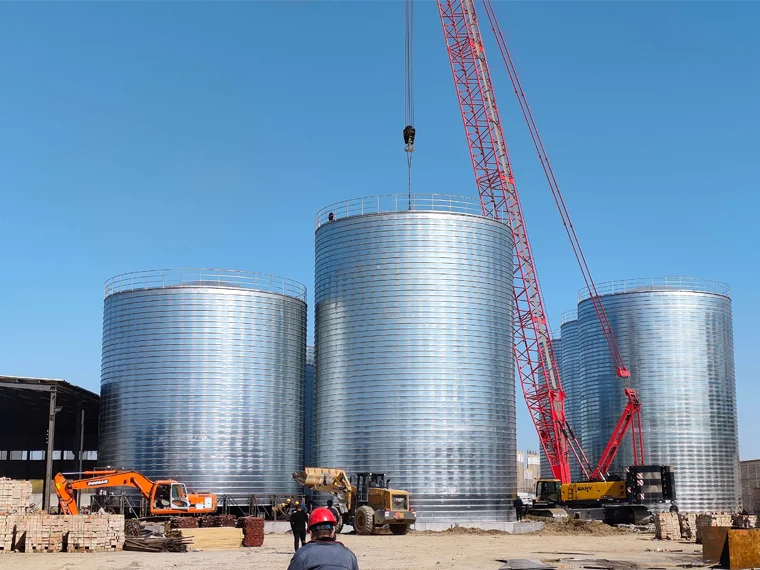
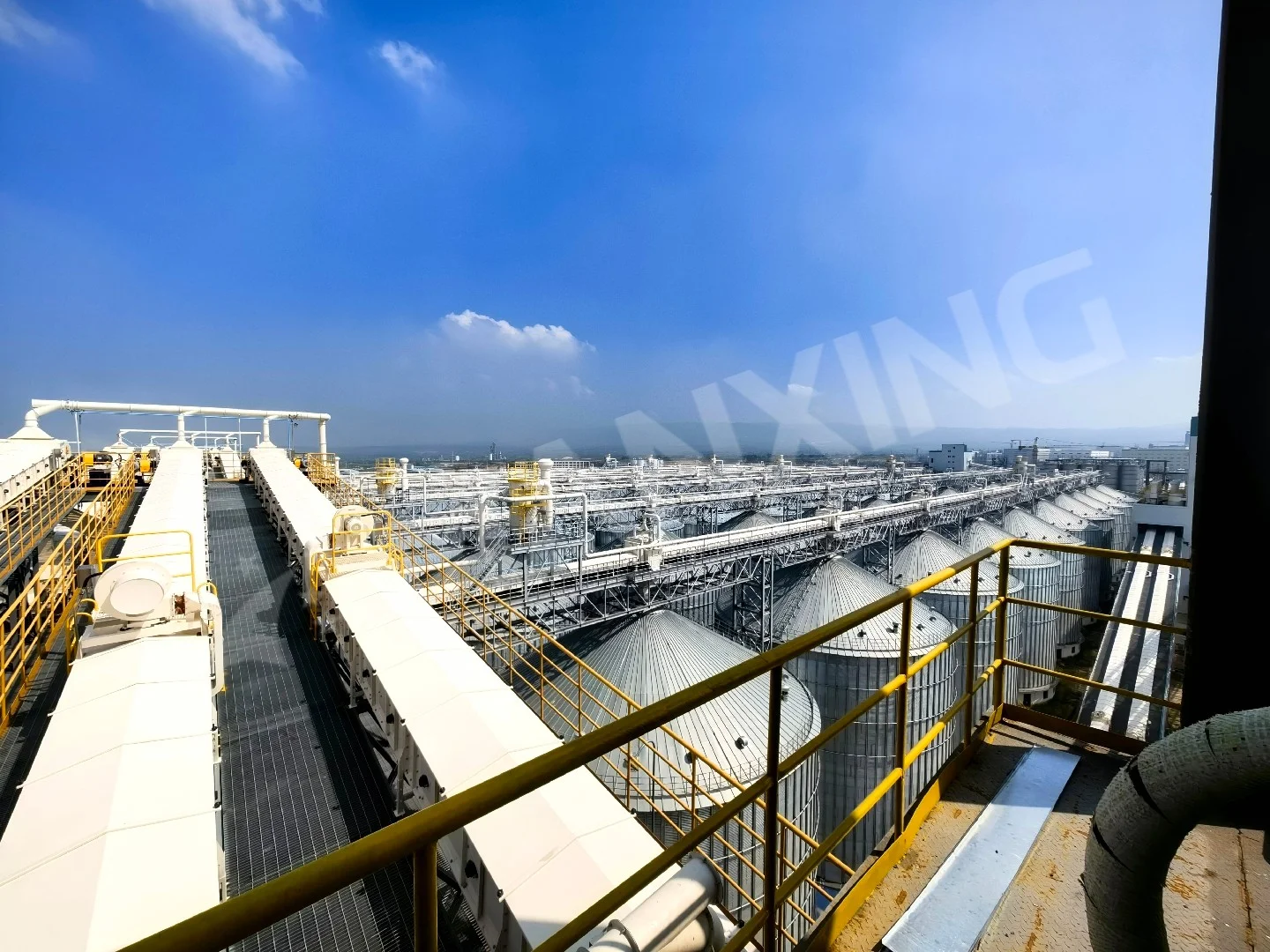


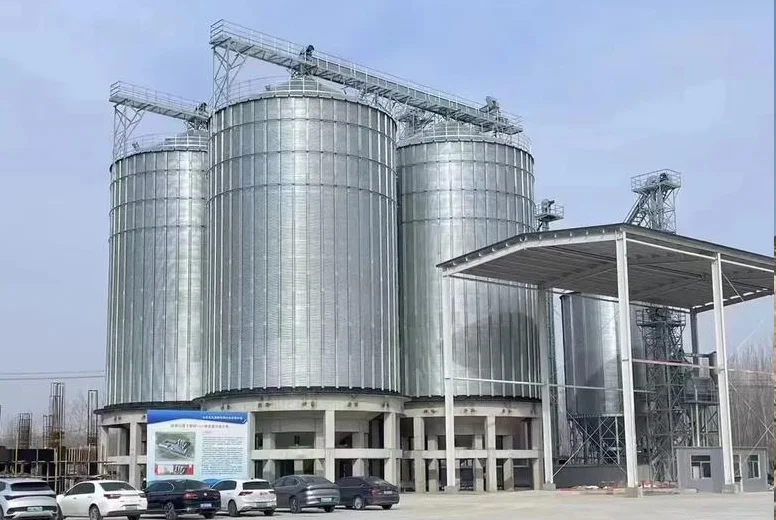
Concrete silos have long been the gold standard for long-term bulk material storage due to their exceptional durability and structural strength. When integrated with an advanced monitoring system, these silos transcend their traditional role, becoming intelligent assets that provide real-time data insights to optimize operations, enhance safety, and slash maintenance costs. This article explores the core features, applications, and critical considerations of smart concrete silos.
Smart Concrete Silos: The Fusion of Structural Durability and Real-Time Data
Concrete silos are renowned for their robustness, resistance to environmental degradation, and exceptionally long service life. However, traditional concrete silos have historically operated as "black boxes," offering no visibility into internal material conditions or structural health. The integration of a monitoring system effectively gives these silos a "digital brain." An embedded network of sensors continuously tracks key structural health indicators, such as micro-crack development and internal stress concentrations, issuing early warnings long before these issues can escalate into catastrophic failures. This hybrid design—combining the physical resilience of concrete with the digital intelligence of sensors and data analytics—is redefining industry standards for silo management. It enables a paradigm shift from passive storage to active management, significantly enhancing the asset's total lifecycle value through data-driven decision-making.
How Monitoring Systems Solve Core Operational Pain Points
A monitoring system is far more than a simple "add-on." It fundamentally addresses three critical operational pain points: inaccurate inventory, material degradation, and unexpected structural failures. By integrating multiple sensing technologies, the system provides unprecedented operational visibility.
Real-Time Material Level Monitoring: Ending the Era of Guesswork
Traditional level measurement relied on manual tapping or visual estimation, which is both inaccurate and inefficient. Smart systems leverage ultrasonic, radar, or load cell technologies to continuously and precisely measure material volume and height within the silo. This real-time data feeds directly into inventory management systems, enabling precise stock reconciliation, reducing waste from over-ordering or stock-outs, and ensuring timely supply chain replenishment.
Environmental and Temperature Monitoring: The Lifeline for Material Quality
Temperature and humidity are critical factors affecting the quality of bulk materials like grain, feed, and cement. Sen
sors embedded in the silo walls and at the inlet/outlet points continuously monitor the internal microclimate. For grain storage, the system can predict and warn of spoilage risks caused by moisture accumulation. For cement storage, it prevents clumping or performance degradation due to excessive heat. This environmental monitoring capability directly translates into guaranteed product quality and reduced loss rates.Predictive Maintenance and Structural Health: From "Firefighting" to "Fire Prevention"
By analyzing long-term data on silo wall stress, foundation settlement, crack propagation, and other parameters, the system can build a structural health model. This allows maintenance strategies to evolve from reactive "fix-when-broken" to proactive "predictive maintenance." Operators can schedule maintenance windows based on data-driven insights, well before a failure occurs. This dramatically reduces unplanned downtime, extends the silo's service life, and significantly lowers total lifecycle maintenance costs.
Key Takeaways
- Key Data: Integrated monitoring systems can reduce unplanned downtime by up to 50% and lower the risk of structural failure by over 70%.
- Best Practice: Design sensor mounting channels and interfaces into the silo during the initial design phase, rather than retrofitting later, to maximize system integration and data accuracy.
- Watch Out For: Sensor selection must be tailored to the stored material's specific characteristics (e.g., corrosiveness, dust concentration, temperature range). Generic sensors are prone to failure in harsh industrial environments.
- Pro Tip: For high-value materials or mission-critical supply chains, invest in redundant sensor arrays and a robust data analytics platform to ensure data integrity and actionable insights.
- Bottom Line: A smart concrete silo is not just a storage structure; it is a data-driven asset that improves safety, efficiency, and profitability across its entire lifecycle. Related: Flat bottom silo for fertilizer storage >
Industry Applications and Customization Considerations
The application of smart concrete silos has expanded far beyond traditional agriculture and construction, penetrating diverse industrial sectors. In the construction industry, they store cement, fly ash, and aggregates, using precise inventory management to ensure continuous production at concrete batching plants. In agriculture, they form the core of large grain terminals, safeguarding food security through temperature and humidity control. In the chemical and mining industries, they store powdered or granular materials with high environmental and safety requirements. The key is that different industries have different priorities: agriculture focuses on temperature, humidity, and pest control; construction prioritizes level monitoring and discharge flow; while the chemical industry demands stringent monitoring of gas concentrations and structural airtightness. A successful project is never about simply "buying a system." It requires a customized design based on material properties, environmental conditions, and specific operational goals.
Frequently Asked Questions
Q: Can the monitoring system for a concrete silo fail due to the alkaline environment of concrete or high dust levels? How is long-term reliability ensured?
A: This is a critical and highly specialized question. The high pH (alkalinity) of concrete and heavy dust are indeed significant challenges for sensors. Solutions include: 1) Using sensor housings made of stainless steel or special polymer coatings to resist chemical corrosion; 2) Employing non-contact measurement technologies like radar to avoid direct contact with material and dust; 3) Designing dust covers and compressed air purge systems at sensor installation points; 4) Selecting industrial-grade sensors certified for harsh environments (e.g., IP67 rating). A well-designed system typically has a sensor lifespan of over 10 years, and accuracy can be maintained through regular calibration and cleaning maintenance.
Q: What are the costs and technical challenges of retrofitting an existing old concrete silo with a monitoring system? Is the investment worthwhile?
A: Retrofitting a project typically costs 30-50% more than integrating a system into a new build. This premium covers costs for core drilling, wiring, structural reinforcement, and system commissioning. The technical difficulty depends on the silo's structure, material type, and required monitoring parameters. However, the return on investment (ROI) is usually very compelling. By reducing inventory losses (e.g., grain spoilage), avoiding unplanned downtime, and optimizing procurement and logistics, most projects achieve payback within 1-3 years. The value is especially high for storing high-value materials or in applications where supply chain continuity is critical. A thorough on-site assessment and feasibility analysis are strongly recommended before proceeding.
Q: How does a monitoring system help with inventory accuracy for materials like cement that can be prone to bridging or rat-holing?
A: This is a common challenge in cement storage. Traditional level indicators often fail because they are buried or bridged over. Advanced systems use 3D laser scanners or multiple-point radar arrays to map the material surface, accurately accounting for irregular flow patterns like rat-holes and bridges. Combined with load cells on the silo supports, these systems provide a true mass-based inventory reading, not just a height measurement. This dual-verification approach eliminates the guesswork and ensures that inventory data reflects the actual usable material, preventing costly production stoppages from unexpected shortages.
Q: What specific structural parameters should be monitored in a concrete silo to predict long-term fatigue or failure?
A: For concrete silos, the most critical parameters for long-term structural health are: 1) Wall strain and stress at key load-bearing points, especially during filling and discharge cycles; 2) Foundation settlement, which can be monitored with tiltmeters and settlement gauges; 3) Crack width and propagation, monitored by crackmeters at known stress concentration zones; 4) Temperature differentials across the silo wall, as significant gradients can induce thermal stress. Analyzing trends in these parameters over time allows engineers to build a predictive model of the structure's fatigue life, enabling proactive repairs before a critical failure occurs.
Q: Can a concrete silo monitoring system be integrated with existing SCADA or ERP systems?
A: Yes, modern monitoring systems are designed for seamless integration. They typically use open communication protocols like Modbus, OPC-UA, or MQTT to connect with Supervisory Control and Data Acquisition (SCADA) systems for real-time process control. Furthermore, the data on inventory levels and material quality can be exported via APIs to Enterprise Resource Planning (ERP) systems for automated procurement, logistics planning, and financial reporting. This integration eliminates data silos and creates a unified view of operations from the silo to the boardroom.
Need expert concrete silo and monitoring system solutions for your project?
We provide professional design, manufacturing, and installation services for bulk storage and material handling systems worldwide, integrating cutting-edge monitoring technology for safety and efficiency.
Get a Free Technical Consultation →