


For large-scale enterprises handling grain, feed, cement, or mining materials, the 3000-ton flat bottom silo represents the benchmark solution for balancing storage capacity with operational efficiency. This comprehensive guide dives deep into its structural design, discharge optimization strategies, and critical safety features, providing a professional selection framework grounded in industry best practices.
Structural Design and Core Advantages of the 3000-Ton Flat Bottom Silo
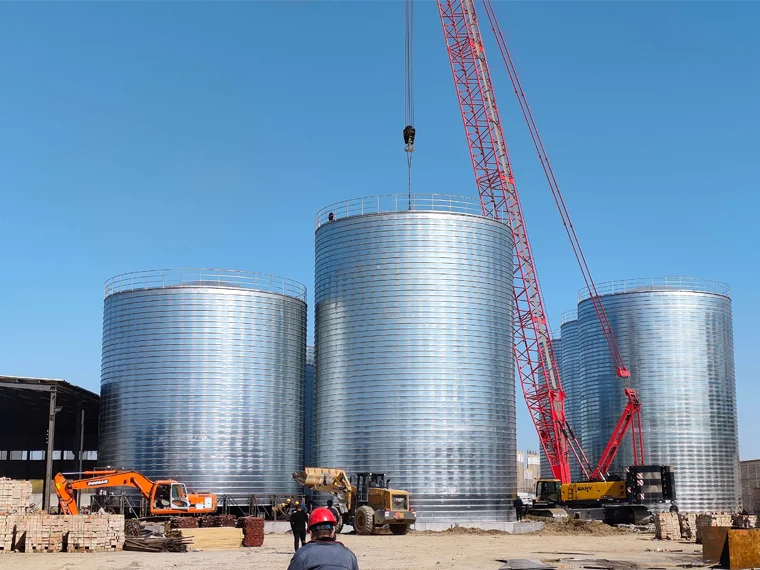
The 3000-ton flat bottom steel silo occupies a central position in large-scale bulk storage due to its unique structural design. The silo body is typically fabricated from high-strength steel plates (such as Q355B or higher grades) using spiral crimping or welding processes, with wall thickness precisely calculated based on material density, wind loads, and seismic loads. Unlike hopper-bottom silos, the flat bottom design maximizes the usable floor area, resulting in a more uniform load distribution across the foundation and thereby reducing the need for specialized ground treatment. Thi
s structure is particularly well-suited for storing free-flowing granular materials such as corn, wheat, soybeans, cement clinker, and plastic pellets.From an engineering perspective, a 3000-ton capacity typically translates to a silo diameter of 18–22 meters and a height of approximately 15–20 meters. Its modular design allows for rapid on-site assembly, significantly shortening the construction period compared to traditional concrete silos. Fur
thermore, the internal space utilization rate of a flat bottom silo exceeds 95%, which is substantially higher than that of a hopper-bottom silo—a critical advantage for projects where land is at a premium.Discharge System Optimization: Solving Flow and Bridging Problems in Flat Bottom Silos
The greatest technical challenge for flat bottom silos is the occurrence of "rat-holing" and "bridging" during discharge. For a large 3000-ton silo, a multi-pronged discharge optimization strategy is essential. The standard bottom discharge system includes multiple outlets (typically 3–6), which, combined with a center cone or pressure-relief cone design, effectively guides material flow toward the outlets. For materials prone to arching (such as fly ash or wet mineral powder), it is necessary to integrate aeration pads or fluidization panels, which use low-pressure air to break the material's internal friction angle and ensure smooth discharge.
Pneumatic Aiding and Intelligent Control
Modern 3000-ton flat bottom silos are commonly equipped with pneumatic aiding devices, including air cannons and bin vibrators. Air cannons release high-pressure gas in an instant to forcefully dislodge material buildup on the walls. Intelligent control systems, using data from level sensors and discharge flow meters, automatically trigger these aiding devices on demand, preventing energy waste. This intelligent configuration boosts discharge efficiency by over 30% and minimizes the risks associated with manual unclogging.
Anti-Corrosion and Wear-Resistant Coatings
Given the chemical properties of stored materials (e.g., acidic components in feed or alkaline erosion from cement), the inner wall of the silo must be sprayed with a specialized anti-corrosion coating. For highly abrasive materials (like quartz sand), installing wear-resistant liners (such as high-chromium cast iron or UHMWPE plates) in the discharge zone and other high-wear areas can extend the silo's service life to 15–20 years.
Key Takeaways
- Key Data: A 3000-ton flat bottom silo typically has a diameter of 18–22 meters and achieves a space utilization rate of over 95%, which is 10–15% higher than a hopper-bottom silo.
- Best Practice: For materials prone to arching, prioritize a combined solution of "center pressure-relief cone + multiple outlets + aeration pads" rather than relying solely on air cannons.
- Watch Out For: The complete discharge rate of a flat bottom silo is typically only 85–90%. The design must include a sweep auger or provide access for manual cleanout to prevent material accumulation and spoilage.
- Pro Tip: When storing temperature-sensitive materials like malt, always specify high-efficiency axial fans and insulation on the silo roof to control the internal microclimate.
- Bottom Line: For free-flowing materials and long-term, single-product storage, the 3000-ton flat bottom silo offers the best cost-per-ton and space efficiency in the industry.
Application Scenarios and Industry Suitability Analysis
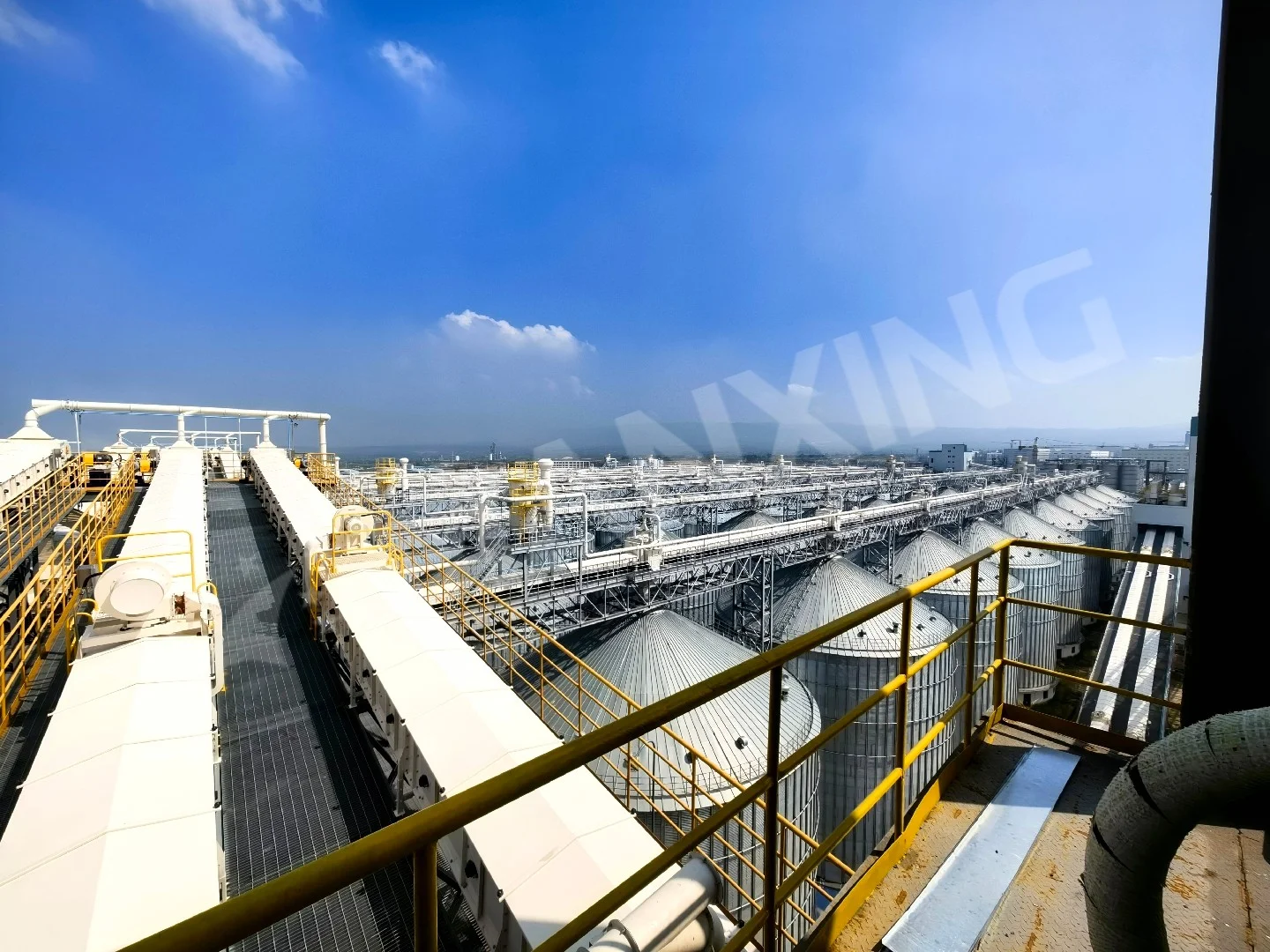
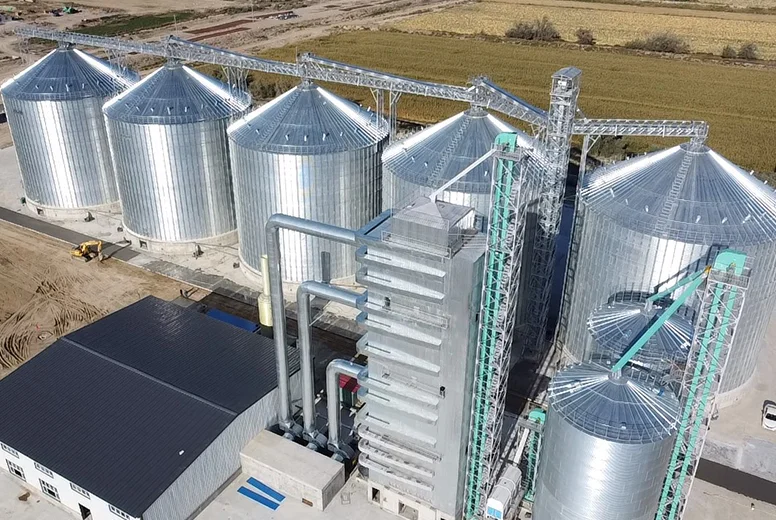
The 3000-ton flat bottom steel silo is used across both agricultural and industrial sectors. In agriculture, it is the standard choice for large grain collection centers, feed mills, and oilseed processing plants. Its excellent sealing properties allow it to be paired with fumigation and temperature monitoring systems for safe, long-term grain storage. In the industrial sector, cement plants, concrete batching plants, and mineral powder processing facilities widely use these silos to store cement, fly ash, and ground slag. The open bottom structure of the flat bottom silo is ideal for installing heavy-duty discharge equipment like screw conveyors and belt conveyors, meeting the demands of high-flow, continuous production.
It is important to note that for temperature-sensitive materials (such as malt or certain chemical raw materials), the silo roof must be equipped with efficient axial fans and insulation layers to control the internal microclimate. Furthermore, in areas with strict environmental regulations, the silo roof must be fitted with a pulse-jet baghouse filter to ensure that dust emissions during loading and unloading comply with national standards.
Frequently Asked Questions
Q: What are the specific total investment cost differences between a 3000-ton flat bottom silo and a hopper-bottom silo?
A: The initial construction cost of a flat bottom silo is typically 20–30% lower than that of a hopper-bottom silo of the same capacity. This saving comes mainly from reduced steel structure usage and simpler foundation work. However, flat bottom silos require additional sweep auger equipment and a more complex discharge system. When analyzing the total lifecycle cost (e.g., 10 years), the flat bottom silo offers lower operating costs for free-flowing materials stored without frequent product changes. Conversely, for multi-product storage or difficult-to-flow materials, a hopper-bottom silo may be more economical because it does not require auxiliary flow-promoting devices. A detailed economic evaluation based on material properties and discharge frequency is strongly recommended.
Q: How can mold and pest infestation be prevented when storing corn in a 3000-ton flat bottom silo?
A: First, the silo body must have excellent airtightness (meeting national standard Grade I or II for airtightness) to allow for effective phosphine fumigation. Second, a multi-point temperature monitoring system must be installed, typically with one sensor point per 50–100 square meters, to track grain temperature in real time. If the grain temperature exceeds 15°C, the bottom ventilation system (using centrifugal or axial fans) should be activated immediately for mechanical cooling. Additionally, roof vents must be fitted with insect screens, and the silo interior should be thoroughly cleaned and treated with insecticides before loading. We strongly recommend adopting "low-temperature grain storage" technology, keeping grain temperatures below 10–15°C, which effectively inhibits mold and insect reproduction.
Q: How is the "cleanout" problem solved in flat bottom silos? Are there automated solutions?
A: Yes, for 3000-ton flat bottom silos, the mainstream automated cleanout solution is the "sweep auger" (also known as a cleanout auger or discharge screw). It is typically installed at the center of the silo floor. A rotating arm with paddles or screws pushes the residual material toward the central outlet. Sweep augers come in hydraulic-driven and electric-driven types. Hydraulic drives offer high torque, making them suitable for sticky materials, while electric drives are simpler to maintain. For very free-flowing materials, a "fluidized bed" technology can also be used, where a series of aeration pads on the silo floor create a shallow fluidized layer to gravity-discharge the remaining material.
Q: What is the typical foundation requirement for a 3000-ton flat bottom silo?
A: The foundation for a 3000-ton flat bottom silo must support a significant vertical load (the weight of the steel structure plus the full stored material) and resist wind and seismic forces. A reinforced concrete ring foundation is the most common design. The width and depth of the ring are determined by the soil's bearing capacity. For poor soil conditions, a raft foundation or even pile foundations may be necessary. A critical detail is the installation of a waterproof membrane and a vapor barrier between the foundation and the silo's steel bottom plate to prevent corrosion from ground moisture.
Q: Can a 3000-ton flat bottom silo be used for cement storage, and what special features are needed?
A: Absolutely. In fact, flat bottom silos are very common in cement plants and terminals. For cement storage, the silo must be designed with a fully welded, airtight structure to prevent moisture ingress, which would cause the cement to hydrate and harden. The discharge system must be robust, typically using a central hopper with aeration pads and a pneumatic conveying system. Additionally, the silo roof must be equipped with high-capacity dust collectors (e.g., pulse-jet baghouses) to capture dust during pneumatic filling. A level indicator and pressure relief valve are also mandatory safety features.
Q: What are the main safety risks associated with a 3000-ton flat bottom silo, and how are they mitigated?
A: The primary risks include structural collapse from over-pressurization or corrosion, dust explosions, and worker entrapment during cleanout. Mitigation strategies are comprehensive: (1) Install pressure/vacuum relief valves on the roof to prevent structural damage from air pressure changes during filling and discharge. (2) Implement a rigorous hot-work permit system and use explosion-proof electrical equipment in dusty zones. (3) For cleanout, strictly enforce a "no entry" policy unless the silo is completely empty and the auger is locked out. (4) Use high-strength steel with corrosion allowances and perform regular ultrasonic thickness testing on the silo walls.
Need expert manxingsilo solutions for your project?
We provide professional design, manufacturing, and installation services for bulk storage and material handling systems worldwide. From 3000-ton flat bottom silos to complete turnkey projects, our engineers bring decades of field experience to ensure your storage is safe, efficient, and cost-effective.
Get a Free Technical Consultation →