
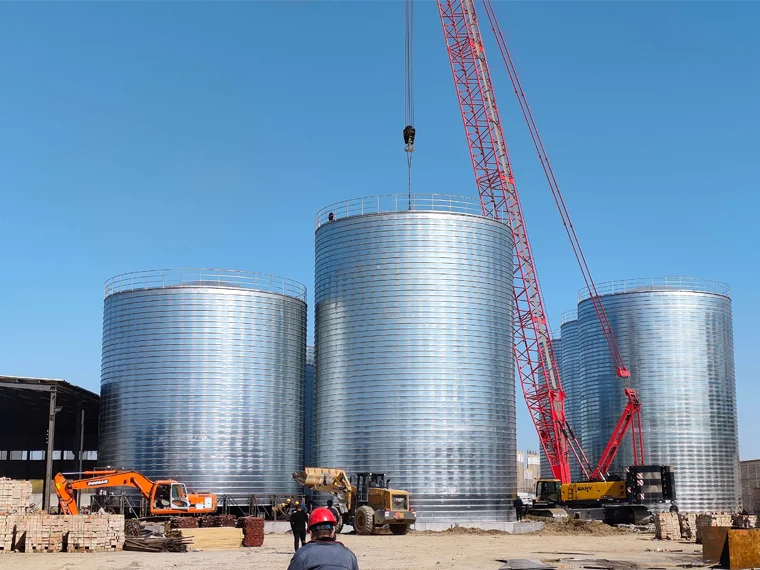
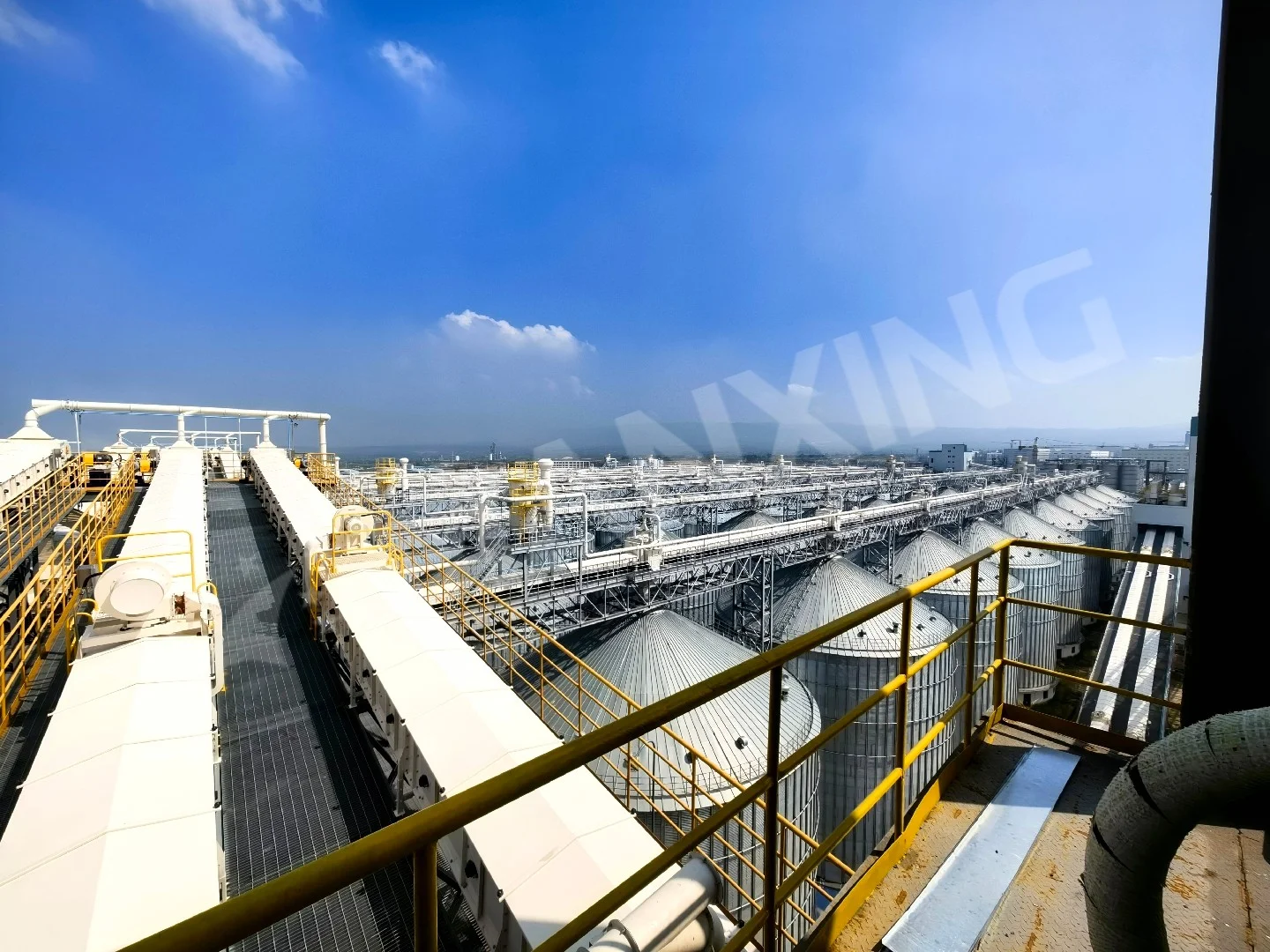


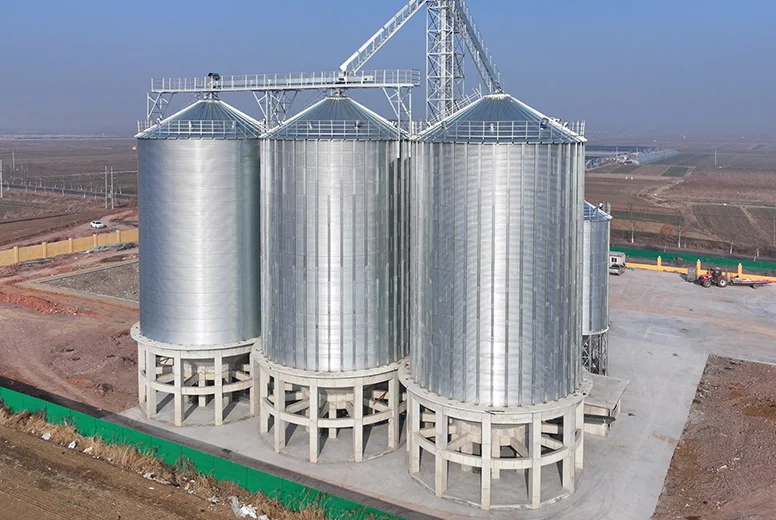
In large-scale industrial and commercial construction projects, cast-in-place concrete silos have become the preferred solution for storing bulk materials like cement and fly ash, offering superior durability, structural integrity, and unparalleled customization. This article provides a comprehensive technical guide to on-site construction methods, key advantages, and critical design considerations, empowering engineering decision-makers with authoritative insights for optimizing their bulk storage infrastructure.
Structural Advantages and Design Flexibility of In-Situ Concrete Silos
Compared to prefabricated or steel silos, the most significant feature of cast-in-place (in-situ) concrete silos is their monolithic integrity and adaptability. Constructed using reinforced concrete and continuously poured via slip-form or jump-form methods, the silo wall is formed without construction joints, greatly enhancing impermeability, corrosion resistance, and seismic performance. Thi
s integrated design is particularly well-suited for storing chemically reactive fine powders such as cement and fly ash, effectively resisting abrasion from internal materials and erosion from external environments.In terms of dimensional customization, on-site construction offers unparalleled flexibility. Project teams can freely adjust the silo’s height, diameter, and hopper angle based on site constraints, required capacity, and discharge methods. Whe
ther serving a small concrete batching plant or a large precast component factory, precise capacity matching from hundreds to tens of thousands of tons is achievable. Furthermore, the silo foundation can be designed and constructed in tandem with the plant’s overall foundation, ensuring optimal load distribution and minimizing the risk of differential settlement.How On-Site Construction Solves Critical Project Pain Points
In modern construction projects with tight schedules, the stability of material supply directly impacts project progress. On-site concrete silos effectively resolve the problem of work stoppages caused by supply chain disruptions or transportation delays through "on-site storage." The construction process itself has also been optimized; slip-form technology can achieve a lifting speed of 3-5 meters per day, significantly shortening the main structure construction period.
Reducing Material Loss and Pollution
The airtightness of concrete silos is far superior to traditional open stockpiles or simple steel sheds. By using pneumatic conveying systems to feed materials directly into the silo, combined with roof dust collectors and bottom fluidization devices, dust loss during the loading and unloading of cement and fly ash can be minimized. This not only reduces raw material costs but also meets increasingly stringent environmental protection regulations.
Enhancing Automation and Batching Accuracy
On-site silos can be directly and seamlessly integrated with concrete batching plants or dry-mix mortar production lines. Through level indicators, load cells, and PLC control systems, automatic material replenishment and precise metering are achieved. This integrated design eliminates intermediate transfer steps, improving production efficiency while reducing human operational errors, thus ensuring the stability of the concrete mix design.
Key Takeaways
- Key Data: Using slip-form construction, in-situ concrete silos can achieve a construction speed of 3-5 meters per day, improving efficiency by over 40% compared to traditional formwork methods.
- Best Practice: Spraying a polyurea or epoxy resin coating on the inner wall of the silo significantly enhances protection against highly corrosive powders, extending service life to over 30 years.
- Watch Out For: For large-diameter (greater than 15 meters) concrete silos, thermal stress calculations and crack control design are mandatory to prevent early-age cracking caused by hydration heat.
- Pro Tip: Integrating the silo foundation design with the plant’s overall foundation from the start ensures optimal load distribution and minimizes differential settlement risks.
- Bottom Line: For permanent storage facilities with a design life exceeding 30 years, in-situ concrete silos offer superior life-cycle cost-effectiveness despite a higher initial investment.
Typical Applications of Concrete Silos in Industrial Storage
The application of concrete silos extends far beyond cement storage. In precast component factories (PC factories), ready-mix concrete batching plants, and dry-mix mortar production lines, they play the role of a core logistics node. For example, at the construction sites of large infrastructure projects (such as bridges and tunnels), multiple concrete silos are often configured to store cement, fly ash, slag powder, and bentonite separately. A central control system coordinates the delivery of multiple materials, ensuring the material demand for continuous pouring operations is met. Furthermore, in industrial fields such as power plant desulfurization and mine mineral processing, concrete silos are widely used to store bulk powdered materials like limestone powder and gypsum powder. Their weather resistance and impact resistance make them particularly outstanding in harsh operating conditions.
Frequently Asked Questions
Q: How does the long-term operational cost of an in-situ concrete silo compare to a spiral bolted steel silo?
A: While the initial construction cost of a concrete silo (including foundation and labor) is typically 20-50% higher than a steel silo of the same capacity, its life-cycle cost advantage is significant. A concrete structure requires almost no anti-corrosion maintenance, whereas a steel silo needs recoating every 5-8 years. When storing abrasive materials like cement, the wall wear rate of a concrete silo is much lower than that of steel, often allowing for maintenance-free operation for over 20 years. For permanent storage facilities with a design life exceeding 30 years, the concrete solution offers superior economic value.
Q: What are the critical ground treatment measures for constructing large concrete silos on soft soil foundations?
A: Soft soil foundations are a primary technical challenge in concrete silo construction. First, a detailed geotechnical investigation is essential to determine the depth of the bearing stratum. Common treatment solutions include CFG (Cement Fly-ash Gravel) pile composite foundations, prestressed pipe piles, or deep mixing piles. For extra-large capacity silos (greater than 5,000 tons), a combined raft foundation and pile foundation design is recommended, controlling differential settlement by adjusting pile length and diameter. Settlement monitoring must be conducted during construction, with a preloading period of no less than 30 days to ensure post-construction settlement remains within allowable limits (typically less than 50 mm).
Q: How does the slip-form construction process minimize cracking in large-diameter concrete silos?
A: Slip-form construction for large-diameter silos requires meticulous thermal control. The process involves using a low-heat cement mix design, incorporating fly ash or slag to reduce the peak hydration temperature, and sometimes embedding cooling pipes within the wall. The continuous, slow movement of the slip-form system itself helps distribute thermal stresses more evenly than traditional formwork. Additionally, post-construction curing with insulating blankets and controlled water spraying is critical to manage the temperature gradient between the core and the surface of the concrete, preventing thermal shock and early-age cracking.
Q: Can an existing concrete silo be retrofitted to handle a different type of bulk material, such as switching from cement storage to fly ash storage?
A: Yes, retrofitting is often feasible, but it requires a thorough engineering assessment. Key modifications typically include adjusting the aeration system (fluidization pads) to suit the different flow characteristics of fly ash, which is finer and more cohesive than cement. The discharge cone angle may also need to be steepened to prevent bridging or arching. The existing coating on the inner wall should be inspected for compatibility with the new material’s chemistry. While the structural shell is generally adaptable, the mechanical and pneumatic systems must be redesigned to ensure efficient and reliable material handling.
Q: What are the specific seismic design considerations for a tall, slender concrete silo located in a high-risk zone?
A: Seismic design for concrete silos is governed by specialized codes (e.g., ACI 313 or Eurocode 8). The primary considerations include the dynamic interaction between the stored bulk material and the silo wall, which can generate significant lateral forces. The slenderness ratio (height-to-diameter) must be carefully limited to prevent overturning. The foundation must be designed to resist both vertical and horizontal seismic loads, often requiring a deep pile cap or a mat foundation with substantial reinforcement. Ductile detailing of the reinforcement, including closely spaced ties in potential plastic hinge zones, is mandatory to ensure the silo can absorb and dissipate seismic energy without brittle failure.
Need professional on-site concrete silo solutions for your project?
We provide comprehensive one-stop services, from geotechnical investigation and structural design to slip-form construction and equipment integration. With 20 years of industry experience, we ensure your project is safe, efficient, and fully compliant.
Get a Free Technical Consultation →