
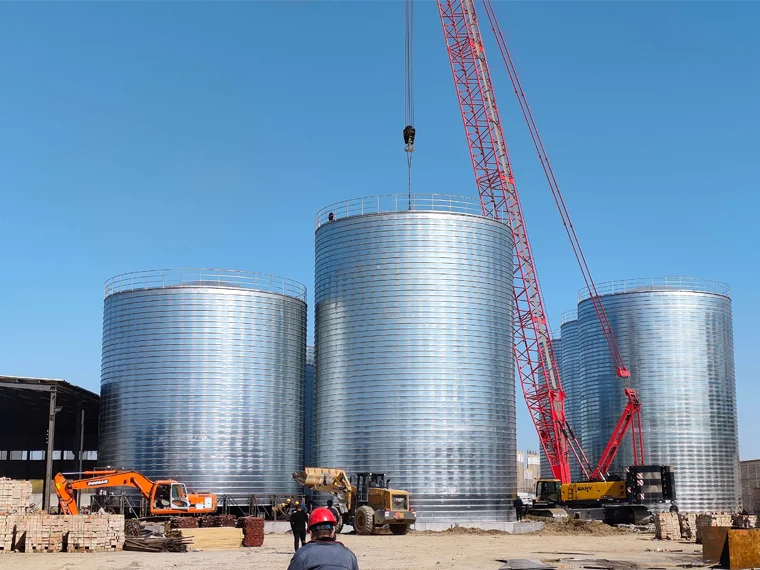
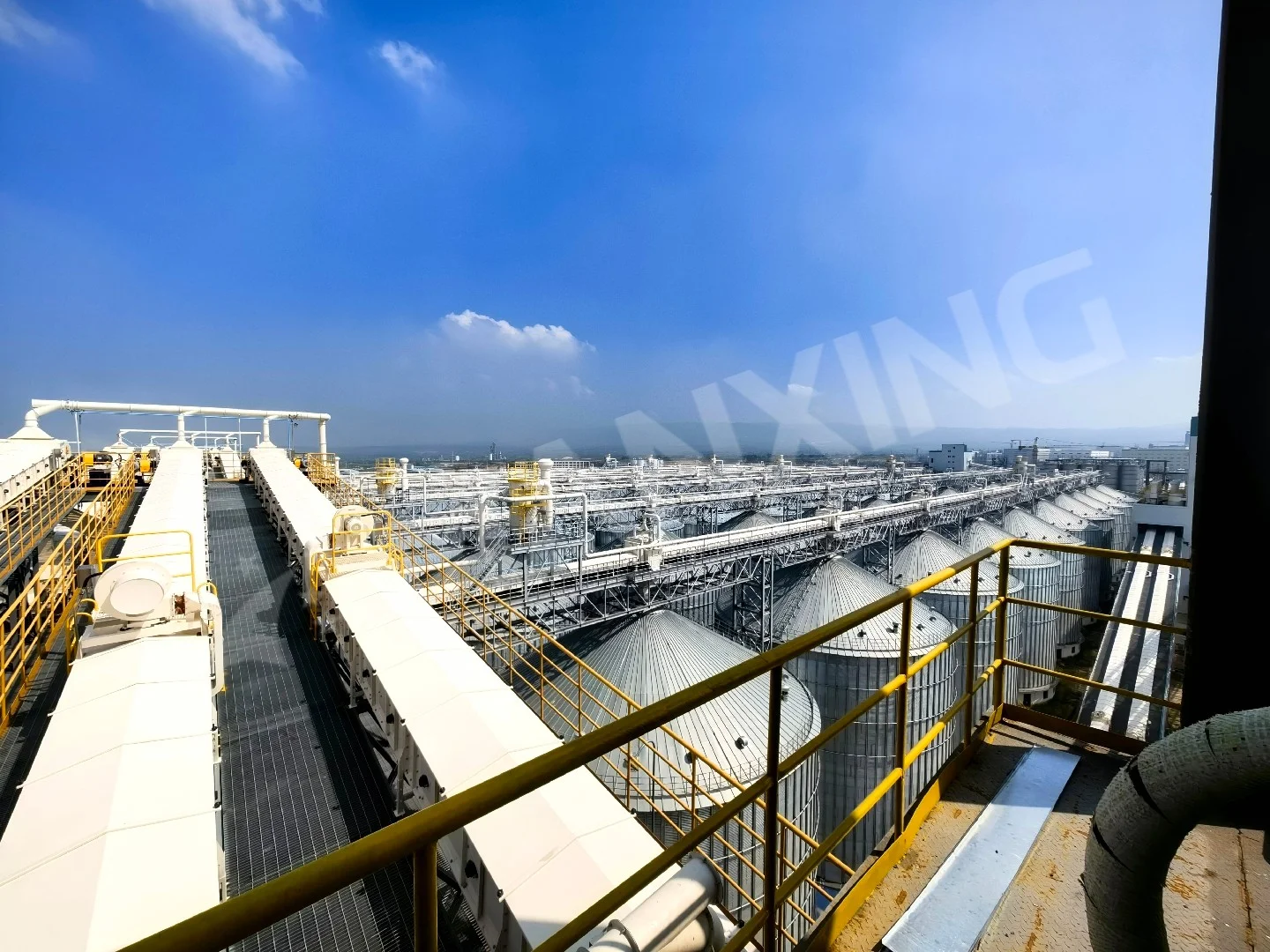


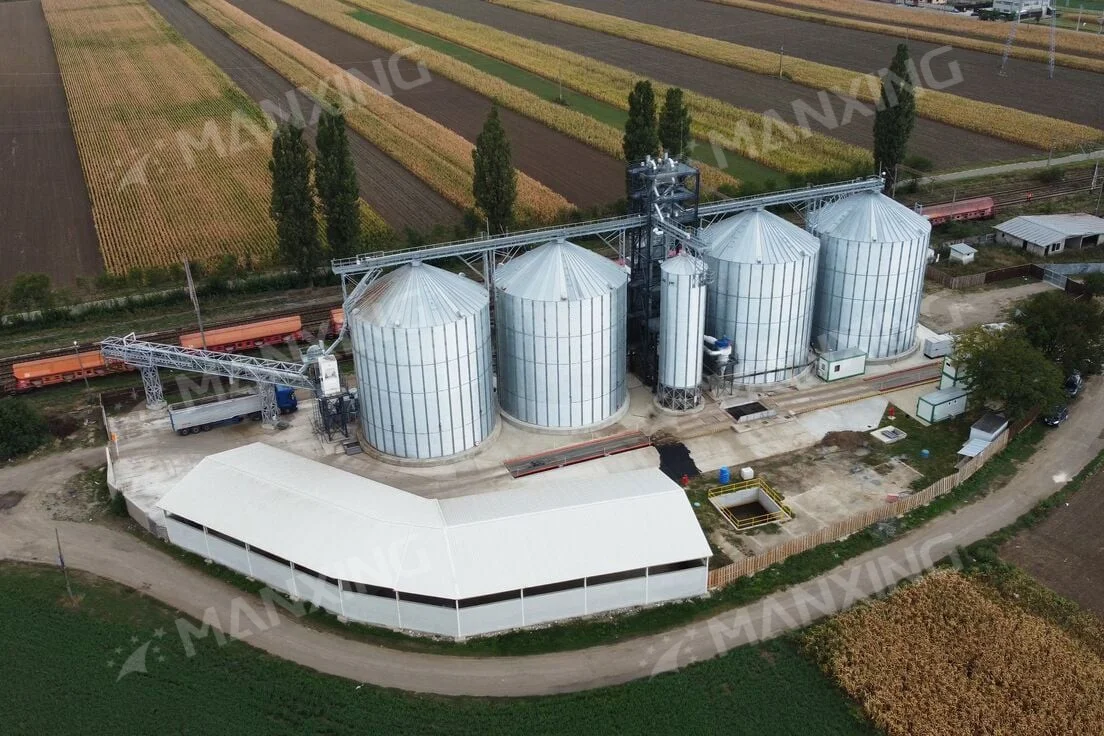
Steel silo stiffeners are the vertical "ribs" or columns that run along the silo wall, acting as the structural backbone that prevents buckling and collapse. Without properly designed stiffeners, thin-walled steel silos storing grain, cement, or industrial powders would fail under vertical compression from their own weight, material friction, and environmental loads like wind and snow. This article explains the mechanics, design strategies, material standards, and common misconceptions about stiffeners to help engineers and facility owners ensure safe, long-lasting bulk storage.
The Core Mechanics of Steel Silo Stiffeners: Resisting Vertical Compression and Buckling
Steel silos experience two fundamentally different types of pressure during operation: hoop tension and vertical compression. The corrugated wall panels are designed primarily to handle hoop tension—the outward bursting force exerted by stored materials against the silo wall. Stiffeners, however, are exclusively responsible for carrying vertical loads. These include the dead weight of the silo roof, the downward drag force caused by friction between the stored material and the wall, and external loads from wind, snow, and seismic events.
Without high-quality stiffeners, a thin-walled steel silo under vertical compression will behave like a sheet of paper—it will crinkle, wrinkle, or undergo catastrophic global buckling. Stiffeners transfer these vertical loads step by step down to the concrete foundation, maintaining geometric stability even at heights exceeding 30 meters. In large flat-bottom silos, the spacing and cross-sectional moment of inertia of the stiffeners directly determine the silo's wind resistance rating and seismic performance. Finite element analysis (FEA) is the industry standard for optimizing these parameters.
Stiffener Placement Strategy: The Engineering Trade-Off Between External and Internal Designs
The decision to place stiffeners on the outside or inside of the silo wall is not arbitrary—it is a critical engineering choice based on the stored material's characteristics and operational requirements. Each approach has distinct advantages and application scenarios that cannot be substituted.
External Stiffeners: The Industry Standard for Grain Storage
In the vast majority of grain steel silos, stiffeners are installed on the exterior of the silo wall. The primary advantage is that this design eliminates internal ledges or pockets where grain can accumulate, significantly reducing the risk of mold, insect infestation, and storage losses. External stiffeners also allow maintenance personnel to inspect weld seams and bolted connections visually from the outside, without ever entering the confined space of the silo. This dramatically improves both maintenance efficiency and worker safety, as confined space entry is one of the most hazardous activities in grain handling facilities.
Internal Stiffeners: Specialized Solutions for Industrial and Chemical Storage
When storing powdery materials with poor flowability—such as cement, fly ash, or certain chemical powders—or when a smooth exterior is required to save floor space, internal stiffeners become the preferred choice. However, engineers must be aware of a critical drawback: internal ribs can disrupt the mass flow of material during discharge, creating "rat holes" or "bridging" that prevents complete emptying. To
mitigate this, internal stiffener designs must be paired with steep cone bottoms, fluidizing pads, or aeration systems to ensure reliable material flow. This adds complexity and cost to the discharge system.Key Takeaways
- Key Data: Stiffeners are typically made from high-strength steel such as S350GD or ASTM A653 Grade 50, with a yield strength 1.5 times or more than that of standard wall panel material.
- Best Practice: For grain silos exceeding 15 meters in diameter, stiffener vertical spacing should not exceed 2 meters, and connections must use continuous welding or high-strength bolts.
- Watch Out For: Never place drainage holes at the lowest point of an external stiffener—rainwater will pool and corrode the connecting welds, creating a structural failure initiation point.
- Pro Tip: For coastal environments with high salt spray, specify Z600 galvanization (600 g/m²) on stiffeners and apply an additional epoxy zinc-rich primer coating after installation. Related: Epoxy-Coated Steel Silos: Pros and Cons >
- Bottom Line: Stiffeners are not optional reinforcements; they are the primary load-bearing elements for vertical forces, and their design must be validated by structural analysis, not guesswork.
Material Selection and Corrosion Protection: The Hidden Factors Determining Stiffener Lifespan
Because stiffeners bear the majority of structural stress, their material grade directly dictates the service life of the entire silo. The industry standard practice is to use high-strength galvanized steel sheets, with common grades including S350GD, S420GD, and ASTM A653 Grade 50. These steels have carefully controlled carbon equivalent values to ensure good weldability while providing sufficient tensile strength. For extremely tall silos or those in high-wind zones, S420GD is often specified to reduce the required cross-sectional area and weight.
On the corrosion protection front, the zinc coating weight for stiffeners should typically reach Z450 or even Z600 (450 g/m² or 600 g/m² of zinc on both sides). This is significantly higher than the Z275 coating used on standard wall panels, because the crevices between stiffeners and the silo wall act as "capillary channels" for moisture and corrosion. In practical engineering, we recommend applying a secondary sealant coating to all bolt holes after installation, and performing zinc-rich repair on all weld seams to create a complete anti-corrosion barrier. For high-salt-spray coastal environments, an additional spray coat of epoxy zinc-rich primer on the stiffener surfaces provides an extra layer of defense.
Frequently Asked Questions
Q: Is it better to space stiffeners as closely as possible? What hidden risks does over-design create?
A: No, closer spacing is not always better. While it increases local stiffness, it significantly increases total silo weight, which can overload the foundation. It also increases the friction surface area between the material and the wall, raising discharge resistance. More critically, overly dense stiffeners restrict the natural thermal expansion and contraction of the silo wall, leading to thermal stress concentration. The correct approach is to determine optimal spacing—typically between 1.5 meters and 2.5 meters—through finite element analysis (FEA) based on silo diameter, material bulk density, and local wind loads.
Q: Can stiffeners be retrofitted onto an existing steel silo? What precautions are essential?
A: Technically yes, but the risks are high. Retrofitting requires drilling or welding onto the existing silo wall, which damages the original anti-corrosion coating and can introduce welding distortion. More importantly, the original corrugated wall panels may not have been designed to handle additional concentrated loads from new connection points, leading to localized overstress. We recommend considering reinforcement only if the remaining wall thickness is verified to meet design requirements, and only when using "flameless mechanical connections" such as specialized clamps or splint plates. Any retrofit must be reviewed and certified by a licensed structural engineer.
Q: How do stiffener cross-section shapes—C-channel, Z-section, and rectangular tube—affect structural performance?
A: The moment of inertia varies dramatically between profiles. C-channel and Z-section are the most common in grain silos because their open sections facilitate bolted connections, but they have relatively weak torsional stiffness. Rectangular tubes (square tubes) offer excellent torsional resistance due to their closed cross-section, making them ideal for high-wind or high-seismic zones, but they are more expensive and require more complex joint detailing. For silos over 30 meters in height, we recommend rectangular tubes or reinforced Z-sections with end plates to enhance overall stability.
Q: What is the typical galvanizing specification for stiffeners in a grain silo, and why is it higher than for wall panels?
A: The standard specification is Z450 to Z600 (450 to 600 grams of zinc per square meter, both sides). This is significantly higher than the Z275 coating typical for wall panels because the stiffener-to-wall interface creates narrow crevices that trap moisture through capillary action. These crevices are the most vulnerable points for corrosion initiation. The heavier coating ensures that even if the edges are slightly exposed during cutting or drilling, sufficient zinc remains to provide sacrificial protection. For added security, all bolt holes and field welds should be touched up with zinc-rich paint after installation.
Q: Can stiffener failure occur without visible wall deformation? How can it be detected early?
A: Yes, stiffener failure can begin as localized buckling at the mid-height of the silo, which may not be visible from the ground. Early warning signs include unusual creaking or popping sounds during filling or emptying, and slight bulging that is only detectable with a laser alignment survey. We recommend annual inspections that include visual checks of all stiffener-to-wall connections, ultrasonic thickness measurements at critical points, and a full structural audit every five years. For silos storing abrasive materials like cement, internal inspection intervals should be shorter due to accelerated wall thinning.
Need expert silo stiffener design and structural optimization for your project?
We provide professional engineering services including finite element analysis, custom cross-section design, and turnkey manufacturing and installation for bulk storage systems worldwide. Our team has extensive experience with grain, cement, and industrial powder applications.
Get a Free Technical Consultation →