
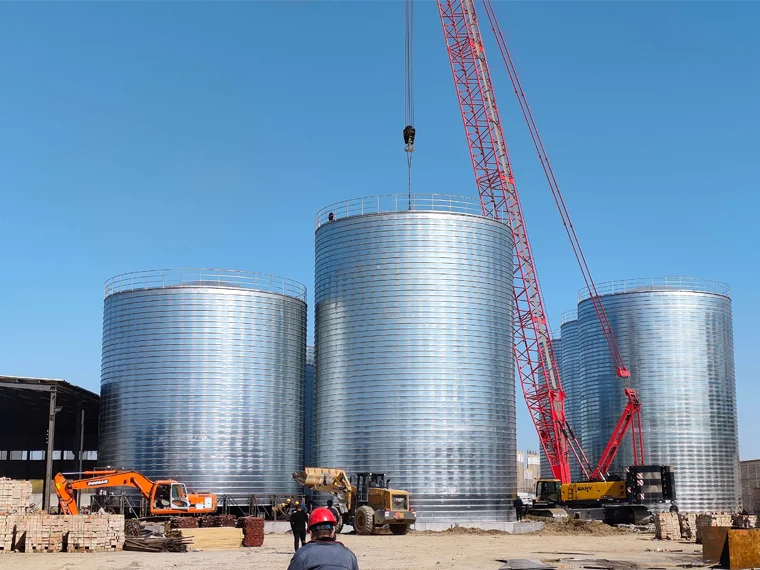
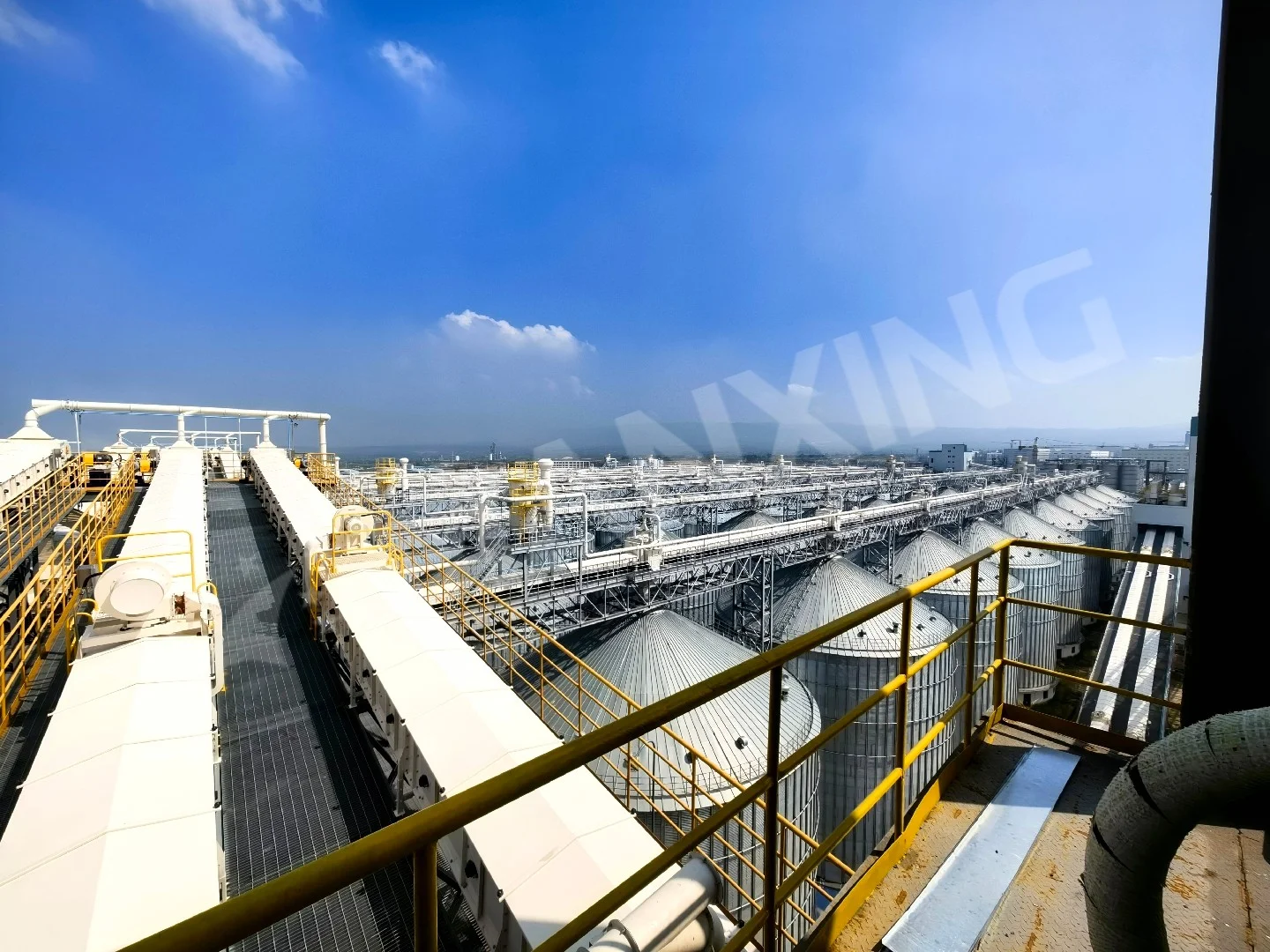


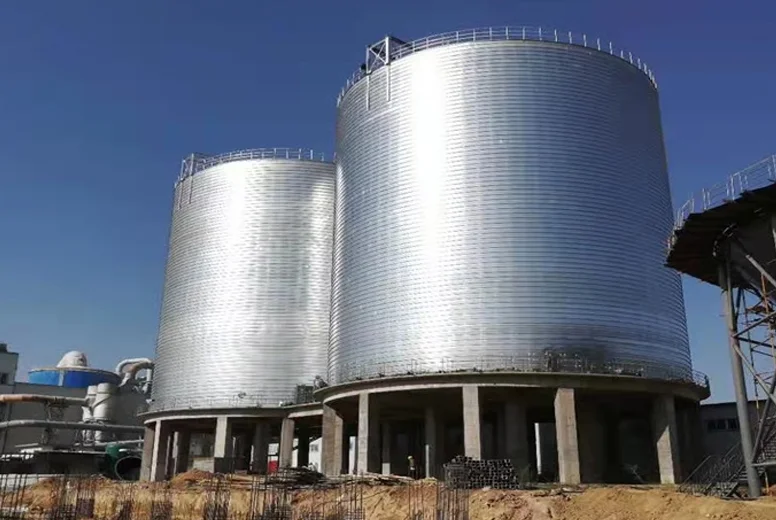
Concrete silos have long been the backbone of industrial bulk storage, but their traditional joint connections often become the weakest link. By integrating high-strength bolting technology, modern concrete silos achieve a quantum leap in seismic resilience, durability, and construction efficiency, offering a more reliable solution for storing bulk materials like cement and grain.
The Critical Role of High-Strength Bolts in Concrete Silos
In the realm of bulk material storage, concrete silos are widely used across agriculture, cement manufacturing, and industrial material handling due to their exceptional durability and large capacity. Tra
ditional concrete silos rely on monolithic casting or precast components, where joint locations—such as ring connections and wall panel seams—become stress concentration points under dynamic loads like material impact, wind forces, and seismic events. This can lead to cracking or even structural failure. The introduction of high-strength bolts, such as ASTM A490/A325 grade alloy steel bolts, fundamentally changes this dynamic. By applying a controlled pre-tension force, these bolts tightly connect precast concrete elements, creating a continuous and uniform load-bearing system.The key advantages of this technology are threefold. First, high-strength bolts enable efficient load transfer, evenly distributing stresses between the silo wall, ring beams, and foundation, significantly reducing local stress peaks. Second, their excellent tensile and shear performance ensures that connection points remain stable during thermal expansion, contraction, or seismic activity, preventing brittle fracture. Finally, the detachability of bolted connections facilitates easier maintenance and localized replacement, extending the overall service life of the silo. For materials with high sealing requirements, such as cement, clinker, or grain, high-strength bolting ensures long-term airtightness and structural integrity.
Solving Traditional Concrete Silo Pain Points: Joint Failure and Seismic Deficiency
The most critical hidden dangers in traditional concrete silos often lie within the connection joints. Whether it is the seams between precast wall panels or the anchorage points between ring beams and walls, fatigue cracks can develop under long-term cyclic loading. High-strength bolts, through precise torque control, apply a compressive force that generates sufficient friction at the interface to resist shear slippage, fundamentally eliminating joint loosening and leakage issues.
Key Mechanism for Enhanced Seismic Performance
In seismically active regions, the seismic design of a silo is paramount. Concrete silos connected with high-strength bolts exhibit a unique ductile energy dissipation capacity. When seismic waves strike, the bolted joints allow for controlled, minute displacements. Through the elastic deformation of the bolts and friction at the interfaces, seismic energy is dissipated, preventing total structural collapse. This stands in stark contrast to traditional rigid connections, such as welding or monolithic casting, which are prone to brittle failure under overload conditions.
Optimizing Construction Efficiency and Quality Control
Using high-strength bolting significantly speeds up the on-site installation of precast concrete components. Bolted connections eliminate the need for complex welding or extended curing periods, reducing wet work on site and minimizing weather-related delays. Furthermore, the installation torque of each bolt can be precisely measured and recorded, ensuring controllable quality for every joint and avoiding the quality fluctuations often caused by human factors in traditional construction methods.
Key Takeaways
- Key Data: Concrete silos using ASTM A490 grade high-strength bolts can see a 300%+ increase in joint fatigue life and a 40% improvement in seismic design capacity.
- Best Practice: Always perform bolt pre-tension calibration and torque coefficient verification before installation. Use lock washers or lock nuts to prevent preload loss over time.
- Watch Out For: Avoid using high-strength bolts in joints subject to alternating bending stresses. Bolt holes must be machined strictly to design specifications to prevent capacity reduction from oversizing.
- Pro Tip: For large-diameter (over 20m) or ultra-high (over 40m) silos, high-strength bolting is often the only viable solution that meets both structural strength and construction feasibility.
- Bottom Line: High-strength bolting transforms concrete silos from rigid, failure-prone structures into ductile, maintainable, and highly durable assets. Related: Hopper bottom silo with fumigation system >
Typical Applications and Technical Requirements for High-Strength Bolted Concrete Silos
This technology is not suitable for every scenario, but it demonstrates significant advantages in specific areas: cement and clinker storage (requiring resistance to high temperatures and corrosive gases), grain and feed storage (demanding high airtightness to prevent pests and mold), and long-term storage of industrial raw materials like fly ash and slag. On the technical side, key factors for system reliability include bolt material selection (e.g., galvanizing for corrosion resistance), installation procedures (e.g., the step-tightening method), and periodic inspection (e.g., ultrasonic testing). For large-diameter (over 20 meters) or ultra-high (over 40 meters) silos, high-strength bolting is often the only method that can simultaneously meet structural strength and construction feasibility requirements.
Frequently Asked Questions
Q: How does the long-term maintenance cost of high-strength bolted connections compare to traditional welding or monolithic casting?
A: While the initial material cost of high-strength bolts is higher than ordinary welding, the maintenance costs are significantly lower. Repairing a cracked weld requires cutting, re-welding, and non-destructive testing, which is expensive and disrupts operations. In contrast, a bolted joint can be repaired by simply replacing the damaged bolt and re-tightening, without affecting adjacent connections. For monolithic cast silos, cracks are nearly impossible to repair locally, whereas bolted precast structures allow for partial disassembly and replacement. Over a 20-year lifecycle, the total maintenance cost of bolted connections is typically 30%–50% lower than that of welded connections.
Q: What corrosion protection measures are recommended for high-strength bolts in highly corrosive environments, such as coastal areas or chemical plants?
A: For corrosive environments, we recommend using high-strength bolts with hot-dip galvanizing or Dacromet coating, which can achieve over 1,000 hours of salt spray resistance. For more severe conditions, stainless steel bolts (e.g., 316L) can be used, but note that their strength grade is typically lower than alloy steel bolts, requiring a re-evaluation of structural calculations. Additionally, after installation, sealant should be applied to the bolt head and nut, or plastic protective caps should be installed to prevent corrosive media from penetrating the thread gaps. Regular torque checks and visual inspections every 3–5 years are also necessary maintenance practices.
Q: Can high-strength bolting be retrofitted to an existing traditional concrete silo to improve its seismic performance?
A: Yes, retrofitting is possible but requires careful engineering analysis. The existing structure must be evaluated for its capacity to accommodate new bolted connections. Typically, this involves drilling precise holes through the existing concrete walls and installing post-installed anchors or through-bolts. The process can strengthen weak joints and introduce ductility. However, the cost and complexity are higher than for new construction, and a detailed structural assessment by a qualified engineer is mandatory before proceeding.
Q: What is the recommended inspection frequency for the high-strength bolts in a concrete silo after it is in service?
A: For the first year of service, a full torque audit is recommended after the first major filling and after any significant seismic event. Thereafter, a visual inspection and a random torque check on 5–10% of the bolts should be performed annually. A comprehensive inspection, including ultrasonic testing for bolt integrity, should be conducted every 5 years. The frequency should be increased for silos in corrosive environments or those handling abrasive materials, as thread wear and corrosion can accelerate preload loss.
Q: How does the thermal expansion of a concrete silo affect the performance of high-strength bolted joints?
A: Thermal expansion is a critical consideration. Concrete and steel have different coefficients of thermal expansion, which can induce additional stresses in the bolted joints. However, the controlled pre-tension in high-strength bolts provides a clamping force that accommodates minor differential movements. The design must account for the expected temperature range of the stored material (e.g., hot clinker vs. ambient grain) and the local climate. Proper joint design, including the use of slotted holes or flexible connection plates in specific locations, can mitigate these stresses and prevent joint fatigue.
Need expert high-strength bolted concrete silo solutions for your project?
We provide professional design, manufacturing, and installation services for bulk storage and material handling systems worldwide, ensuring your silo project achieves optimal performance in seismic resistance, durability, and construction efficiency.
Get a Free Technical Consultation →