


Choosing the right steel silo ventilation system is critical for preserving grain quality, preventing cement caking, and avoiding spontaneous combustion in bulk storage. This guide provides a detailed comparison of natural, mechanical, and auxiliary drying ventilation systems, helping you select the optimal solution based on material properties and climate conditions.
The Core Functions of Steel Silo Ventilation Systems
When storing grains, feed, cement, or chemical raw materials in steel silos, the internal micro-environment directly determines product quality and storage duration. A ventilation system’s primary task is to actively regulate air circulation within the silo to control temperature, humidity, and oxygen concentration. For grains, respiration continues after harvest, releasing heat and moisture. If ventilation is inadequate, heat accumulation can lead to “self-heating,” which in severe cases may cause spontaneous combustion. For hygroscopic materials like cement, poor ventilation results in caking and product failure. An efficient ventilation system is therefore not just a quality assurance tool but a critical safety barrier.
From an engineering perspective, ventilation system design must account for material characteristics, local climate (such as average humidity and temperature differences), silo volume, and loading/unloading frequency. Choosing the wrong system wastes energy and can accelerate material degradation. For example, in the hot and humid conditions of Southeast Asia, forced mechanical ventilation is far more critical than natural ventilation.
Comparing Main Types of Steel Silo Ventilation Systems
Based on the power source and path of air movement, steel silo ventilation systems are primarily divided into three categories: natural ventilation, mechanical ventilation, and auxiliary drying ventilation. Each type differs significantly in control precision, energy consumption, and suitable applications.
Natural Ventilation Systems
Natural ventilation relies on roof vents, sidewall windows, and bottom air inlets to create airflow through wind pressure and thermal buoyancy. Its advantages are zero operating costs and simple construction. However, it is heavily influenced by external weather conditions and cannot precisely control internal temperature and humidity. It is only suitable for dry regions with large temperature swings and should be used as a supplementary method. For storing high-moisture grain or for long-term storage, natural ventilation is almost never adequate.
Mechanical Ventilation Systems (Forced Air)
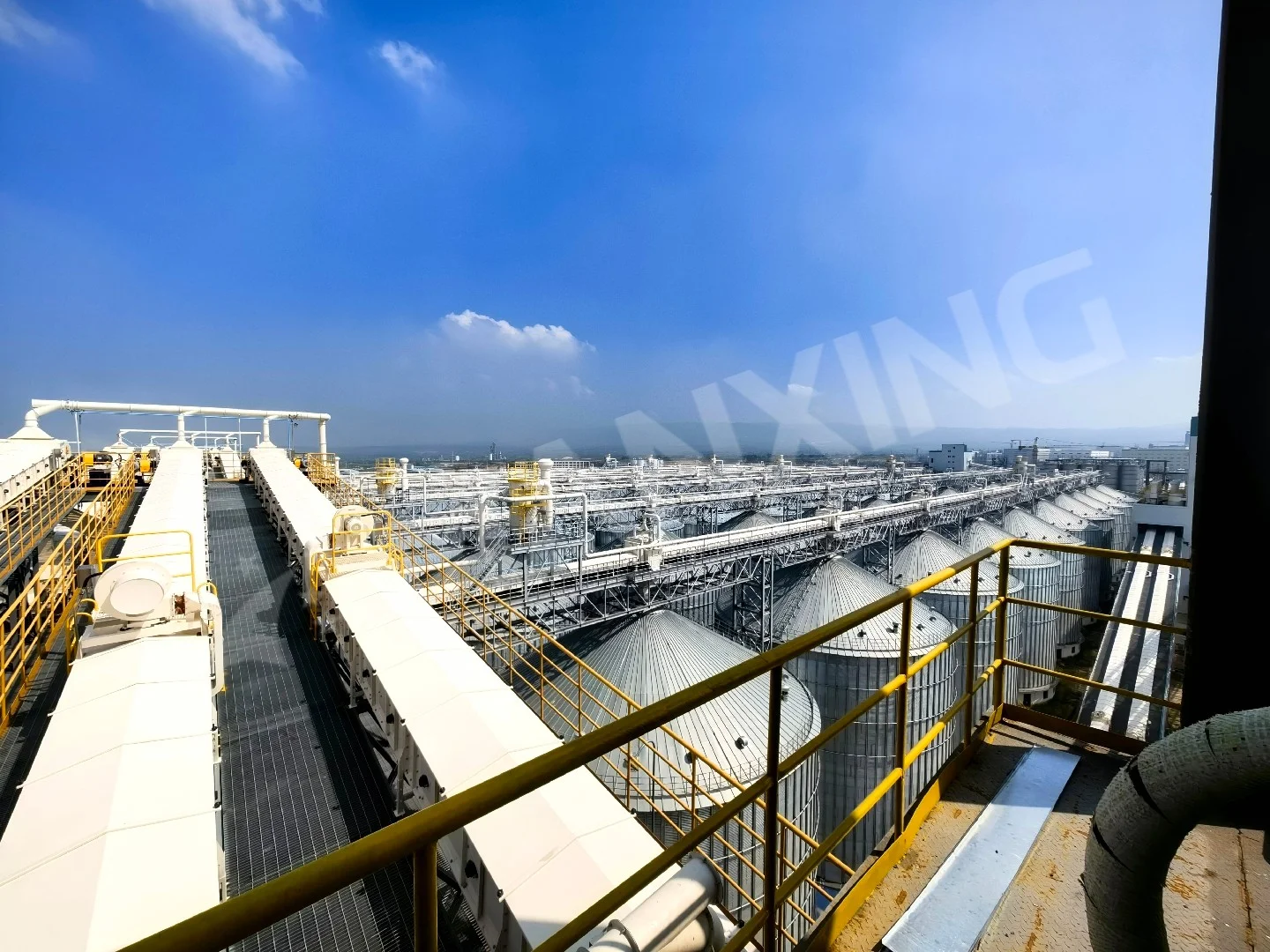
This is the most common method in modern industrial storage. Centrifugal or axial fans installed at the silo bottom or side force air into or out of the silo. Based on airflow direction, it can be pressure-type (positive pressure) or suction-type (negative pressure). Mechanical systems can be equipped with temperature/humidity sensors and PLC controllers for automated, precise regulation. Their core advantage is high controllability and efficiency, effectively managing the risk of self-heating. They are especially suitable for large-capacity steel silo clusters.
Auxiliary Drying Ventilation Systems
For high-moisture grain (like freshly harvested corn or paddy), simple ventilation is insufficient for moisture removal. These systems integrate heating elements or dehumidification modules into the ventilation ducts to heat or dry the air before it enters the silo. This significantly shortens the drying cycle but has higher energy consumption. Careful temperature monitoring is required to prevent over-drying and quality loss.
Key Takeaways
- Key Data: Automated mechanical ventilation systems can reduce grain storage loss rates by 3% to 5% and decrease the risk of fire from self-heating by over 80%.
- Best Practice: For new steel silo projects, prioritize a “multi-point bottom air intake + top centralized exhaust” mechanical ventilation layout, integrated with an online temperature and humidity monitoring network.
- Watch Out For: Never rely solely on natural ventilation for high-moisture or high-value materials. Avoid dead zones in duct design, as localized mold can spread rapidly.
- Pro Tip: For cement storage, use a low-volume, low-velocity, slightly positive pressure system to prevent dust generation and condensation.
- Bottom Line: The correct ventilation system is a non-negotiable investment for the safety and quality of any bulk material stored in a steel silo.
How to Select a Ventilation System Based on Material Properties
The core logic for selection is: “Material determines air volume; climate determines air quality.” For grain, the primary goals are cooling and moisture equalization. Low-temperature ventilation is commonly used (ambient air temperature 5–10°C cooler than the grain), requiring an airflow rate of 8 to 15 cubic meters per hour per ton of grain. For powdery materials like cement, the main goal is to prevent condensation and remove moisture. A low-volume, low-velocity, slightly positive pressure system is best to avoid dust. For chemical raw materials, the selection must consider volatility, corrosiveness, and explosion-proof requirements, necessitating explosion-proof fans and special material ducts.
Silo structure also influences the choice. Cone-bottom silos typically use central pipe ventilation, while flat-bottom silos are better suited for floor ducts or sidewall ventilation. Lar
ge silo clusters (like those in grain terminals) also require consideration of zoned ventilation and the integration capacity of a central control system.Frequently Asked Questions
Q: How can condensation be prevented in steel silo ventilation systems in hot, humid southern regions?
A: Condensation is a major challenge in humid climates. Solutions include: 1) Using a “bottom air intake, top exhaust” negative pressure ventilation mode to prevent moist air from condensing on the cool silo roof. 2) Adding insulation to the inner wall of the silo roof to reduce temperature differences. 3) Installing intelligent dew point sensors that automatically stop ventilation when the ambient air dew point exceeds the material temperature. Additionally, a dehumidification module can be integrated into the system to pre-treat incoming air.
Q: Are mechanical ventilation systems expensive to operate, and how can energy consumption be reduced?
A: The energy cost is mainly from fan operation. Key strategies for reducing consumption include: 1) Using variable frequency drives (VFDs) on fans to automatically adjust airflow based on temperature and humidity, avoiding full-speed operation. 2) Implementing “intermittent ventilation” during cooler nighttime hours to achieve cooling while saving power. 3) Optimizing duct layout to minimize air resistance. Industry data shows that intelligent control can reduce ventilation system energy consumption by 30% to 50%.
Q: Does a steel silo ventilation system require regular maintenance, and what are the main service points?
A: Yes, neglecting maintenance will lead to system failure. Key service points include: 1) Regularly cleaning fan filters and ventilation ducts to prevent blockage from dust and insect webs. 2) Checking fan belt tension and motor bearing lubrication. 3) Calibrating temperature and humidity sensors to ensure data accuracy. 4) Performing system draining and anti-rust treatment before seasonal changes or long-term shutdowns. A comprehensive inspection every six months is recommended.
Q: What is the typical airflow requirement for grain stored in a steel silo?
A: For grain cooling and moisture equalization, the standard recommendation is an airflow rate of 8 to 15 cubic meters per hour per ton of grain. This rate ensures effective heat and moisture removal without excessive energy use. The exact rate within this range depends on the grain type, initial moisture content, and the specific climate conditions at the storage site.
Q: Can a natural ventilation system be used as the primary system for a large grain storage facility?
A: No, natural ventilation is not recommended as the primary system for any large or long-term grain storage facility. Its effectiveness is entirely dependent on favorable weather conditions, which cannot be guaranteed. It offers no control over temperature or humidity and cannot prevent self-heating in the core of a grain mass. It should only be considered as a supplementary system in dry climates with large diurnal temperature swings.
Need expert steel silo ventilation solutions for your project?
We provide professional design, manufacturing, and installation services for bulk storage and material handling systems worldwide. Our engineers can help you select the perfect ventilation system for your specific material and climate.
Get a Free Technical Consultation →