


Facing escalating competition and rising quality standards, a 50,000-metric-ton grain storage facility in the U.S. Midwest transformed from a loss-prone manual operation into a smart, automated hub. This case study reveals how a comprehensive modernization strategy slashed spoilage rates from 2.5% to 0.3% and boosted overall operational efficiency by 35%, delivering a measurable return on investment within just 18 months.
The Triple Threat of Traditional Grain Storage: Inefficiency, Spoilage, and Safety Risks
Before modernization, the mixed storage facility—a combination of concrete silos and bolted steel bins built in the 1980s—struggled with a host of interconnected problems. Manual loading and unloading procedures created erratic material flow, leading to severe bottlenecks during the harvest season. Outdated temperature and humidity control methods, relying on insufficient aeration and periodic manual checks, resulted in an average annual spoilage rate of 2–3% due to mold and insect damage. Inventory management was equally archaic, depending on manual counts that introduced significant data lag and errors. Furthermore, workers faced constant safety hazards from climbing silo roofs for inspections. These issues eroded profit margins, damaged customer trust, and created compliance headaches.
According to industry benchmarks, facilities using traditional storage methods face 18–25% higher overall operating costs compared to automated counterparts, with annual losses from spoilage typically ranging from 1.5% to 3% of stored volume. For any grain enterprise seeking sustainable growth, modernization has shifted from a strategic option to an operational necessity.
The Core Modernization Solution: A Leap from Manual to Intelligent Operations
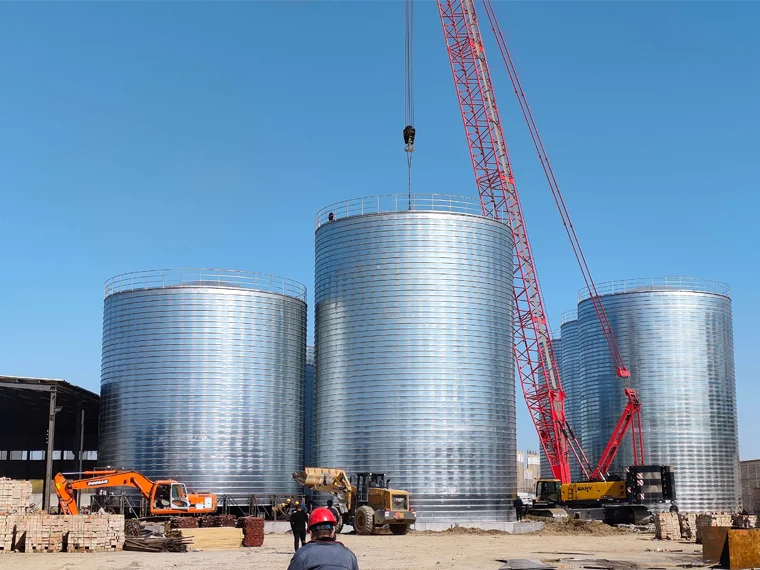
The facility’s leadership decided to implement a fully automated bolted steel silo system integrated with a centralized control platform. The retrofit focused on three critical dimensions: automated material handling, intelligent environmental monitoring, and data-driven inventory management. By deploying a central control system, all processes—loading, unloading, turning, and cleaning—could be dispatched with a single command, completely eliminating the inefficiencies and risks of manual labor.
Intelligent Handling & Flow Optimization
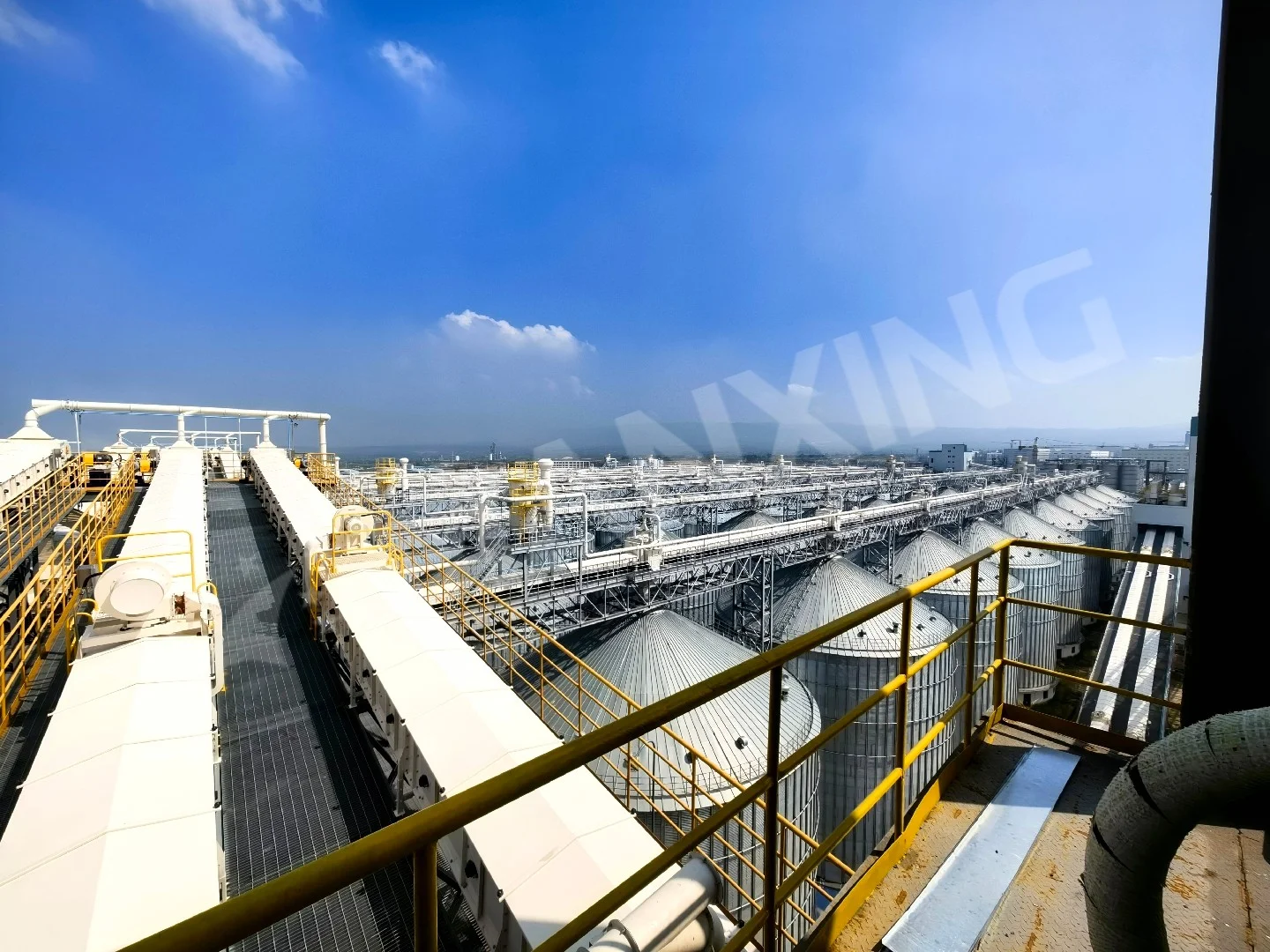
The new system installed variable-frequency-drive (VFD) drag conveyors and bucket elevators, paired with level sensors and automatic gates. This enabled continuous, stable material flow from intake to outtake. The system automatically adjusts flow rates based on downstream demand, increasing peak handling capacity by 40% and completely resolving harvest-season congestion. Operators now manage all scheduling from a single control room interface.
Precision Environmental Control & Loss Reduction
The silos were equipped with multi-point temperature and humidity sensors and a smart aeration system. Using real-time data and weather forecasts, the system automatically activates or deactivates fans to maintain safe internal conditions. Additionally, an automated nitrogen gas flushing system was introduced to effectively suppress mold and pests. Post-retrofit, the annual spoilage rate plummeted from 2.5% to below 0.3%, directly saving over 1,000 metric tons of grain per year.
Key Takeaways
- Key Data: Automation reduced grain spoilage from 2.5% to 0.3%, saving over 1,000 metric tons annually.
- Best Practice: Prioritize an integrated control system that links handling, temperature control, and inventory management, rather than upgrading individual components.
- Watch Out For: Avoid over-automation. Select sensors and actuators that match your actual throughput capacity and material characteristics.
- Pro Tip: Use a "recipe management" feature in your control system to pre-set parameters for different grains (corn, wheat, soybeans) for seamless changeovers.
- Bottom Line: The 18-month payback period proves that automated grain storage is not just a cost—it’s a high-ROI investment in long-term profitability.
Data-Driven Operational Transformation: Quantifiable ROI
In the first full year post-modernization, the facility achieved remarkable financial and operational improvements. Beyond the drastic reduction in spoilage, labor costs fell by 60% as automation replaced three-shift manual handling and inspection roles. Inventory accuracy soared from 85% to 99.8%, enabling real-time, transparent stock management that strengthened trust with downstream customers. Critically, the system’s operational data—covering energy consumption, equipment efficiency, and batch traceability—provided a solid foundation for management decision-making, driving a 35% improvement in overall operational efficiency.
While the initial investment was substantial, the combined annual savings from reduced spoilage, lower labor costs, and decreased maintenance allowed the project to achieve full cost recovery within 18 months. This predictable, sustainable return is the core value proposition of modern automated storage solutions.
Frequently Asked Questions
Q: Can an existing old concrete silo facility be automated without demolition?
A: Absolutely. Modernization does not always require tearing down existing structures. For concrete silos, you can upgrade by installing steel liners, adding level sensors, modifying inlet/outlet points, and integrating an external automated control system. The key is a thorough structural assessment and process design to ensure compatibility between the new system and the old infrastructure. This "hybrid retrofit" approach often involves lower investment and shorter downtime while preserving the inherent durability of concrete silos.
Q: What specific adjustments are needed when an automated system handles different grains like corn, wheat, and soybeans?
A: Different grains have distinct physical properties (flowability, angle of repose, bulk density) and storage requirements (safe moisture content, temperature thresholds). A sophisticated automation system should feature a "recipe management" function. Operators can pre-set a complete set of process parameters for each material, including feed speed, aeration strategy, gas flushing mode, and discharge sequence. When switching materials, the system automatically calls up the correct recipe without manual intervention. Additionally, the design of conveying equipment—such as drag chain pitch or bucket elevator cup shape—should be optimized for the primary materials handled.
Q: How does automated inventory management improve customer trust and supply chain reliability?
A: Real-time inventory visibility eliminates the guesswork and errors associated with manual counts. With accuracy rates reaching 99.8%, you can provide downstream partners with precise, verifiable stock levels at any moment. This transparency allows for better contract fulfillment, reduces the risk of overselling, and enables just-in-time logistics planning. The
data also supports batch tracing, which is critical for quality assurance and recall management, building a foundation of trust that manual systems simply cannot match.Q: What is the typical payback period for a full-scale grain storage automation project?
A: While it varies based on facility size, existing infrastructure, and local costs, the case study demonstrates a realistic benchmark: an 18-month payback period for a 50,000-metric-ton facility. The primary savings drivers are the elimination of spoilage losses (often 1.5–3% of stored volume), a 50–60% reduction in labor costs, and improved energy efficiency from smart aeration. Many operators also report additional revenue from increased throughput capacity during peak seasons, further accelerating the return on investment.
Q: Are there hidden operational risks when transitioning from manual to fully automated grain handling?
A: The most common risk is not technical failure, but inadequate staff training and change management. Operators must be trained not just on the user interface, but on system logic, troubleshooting protocols, and emergency shutdown procedures. A second risk is sensor calibration drift, which can lead to inaccurate inventory or environmental readings. Implementing a regular calibration schedule and having a manual override plan for critical processes (like aeration) are essential best practices to ensure a smooth and safe transition.
Need expert grain storage modernization solutions for your facility?
We provide professional design, manufacturing, and installation services for automated bulk storage and material handling systems worldwide. From site assessment to commissioning, we help you achieve measurable efficiency gains and a rapid return on investment.
Get a Free Technical Consultation →