
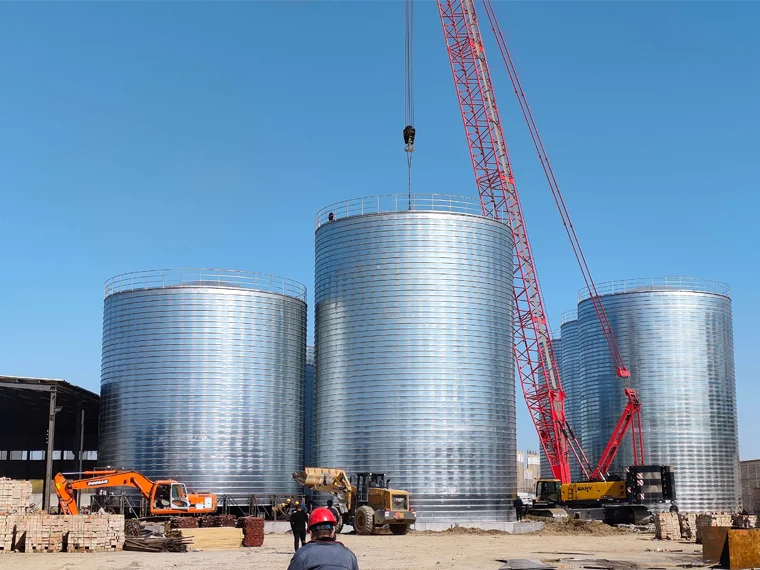
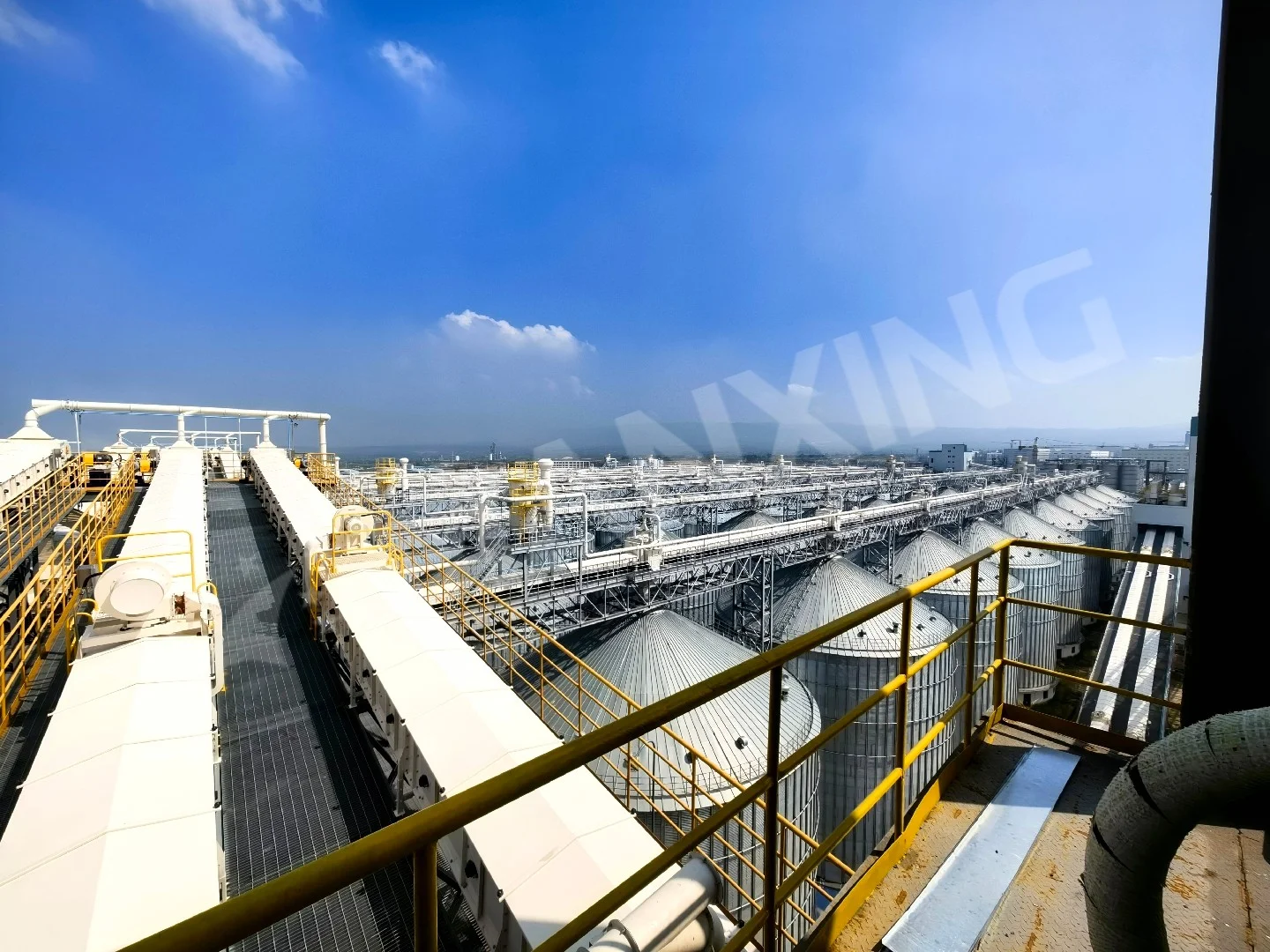


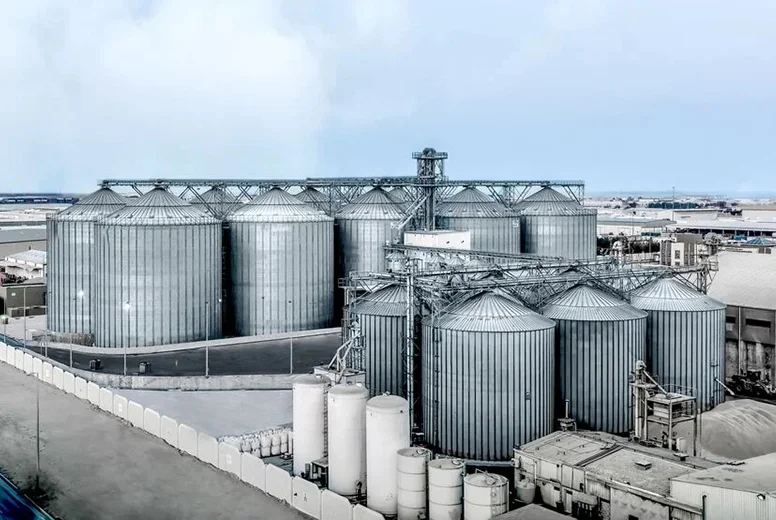
In modern grain storage systems, the flat bottom wheat storage silo is becoming the global first choice for agricultural and processing enterprises due to its simple structure, large capacity, and exceptional cost-effectiveness. This article provides a deep technical analysis of flat bottom silos from three critical dimensions—structural mechanics, discharge efficiency, and moisture-proof sealing—to help you make a more informed equipment selection decision.Related: Flat bottom silo project in Ethiopia
rong>Core Structural Advantages of Flat Bottom Wheat Storage Silos
A flat bottom wheat storage silo uses a horizontal concrete or metal base floor to directly support the grain pile, eliminating the complex support structures required by traditional cone-bottom hoppers. Thi
s design significantly reduces manufacturing and installation costs while achieving uniform load distribution through the large-span reinforced concrete floor, effectively managing the volume expansion and uneven settlement caused by changes in moisture content during wheat storage. According to industry field measurements, a single silo can achieve a capacity of over 5,000 tons, with unit storage costs 15%–20% lower than those of cone-bottom silos.In terms of seismic and wind resistance, the silo wall of a flat bottom silo is typically constructed from spiral crimped steel plates or welded steel plates, forming a rigid connection with the base floor. Through finite element analysis to optimize wall thickness and stiffener spacing, structural integrity can be ensured even under a seismic fortification intensity of 8 degrees. Furthermore, the flat bottom design eliminates dead corners inside the silo, allowing easy access for mechanical cleaning equipment and solving the "dead material" problem common in traditional cone-bottom silos due to material bridging and caking.
Solving the Industry Pain Points of Discharge Efficiency and Material Flow
The core challenge of discharging a flat bottom silo is achieving "mass flow" out of the silo, preventing wheat from stagnating at the edges of the floor. Modern flat bottom silos integrate multiple pneumatic or electric discharge gates, combined with a central outlet and peripheral sweep augers, to create a composite discharge mode of "gravity flow + mechanical assistance." For example, a variable-frequency-drive sweep auger can automatically adjust its rotation speed based on the material level inside the silo, boosting discharge efficiency to over 100 tons per hour while keeping residual material below 0.3%.
Multi-Point Discharge and Flow Control
The floor of a flat bottom silo can be embedded with 6 to 12 discharge outlets, controlled by a PLC system for sequential zone opening. This design not only supports the segregated storage and precise blending of different quality wheats but also effectively suppresses the risk of dust explosions during discharge—by controlling the discharge speed at a single point, the negative pressure inside the silo is maintained within a safe threshold.
Compatibility with Automated Cleaning Systems
For large flat bottom silos, we recommend equipping a fully automatic hydraulic cleaning machine. This device travels back and forth along tracks on the floor, using high-pressure air nozzles to loosen caked material layers, completely solving the low efficiency and high safety risks of manual cleaning. A real-world case from a 500,000-ton-per-year flour mill showed that after introducing automated cleaning, a single cleaning cycle was reduced from 72 hours to just 8 hours, with no personnel needing to enter the silo.
Key Takeaways
- Key Data: Flat bottom silos offer unit storage costs 15%–20% lower than cone-bottom silos, with single-silo capacities exceeding 5,000 tons.
- Best Practice: Adopting a "gravity flow + sweep auger + PLC zone discharge" combination can control residual material below 0.3%.
- Watch Out For: The floor of a flat bottom silo must be equipped with a moisture barrier and a drainage slope (≥2%); otherwise, long-term storage can lead to mold in the bottom layers of wheat.
- Pro Tip: For strategic reserve grain stored for over a year, the uniform grain layer distribution in a flat bottom silo helps maintain stable grain temperature, reducing ventilation energy consumption.
- Bottom Line: When storage cycles exceed six months, the flat bottom silo's lower comprehensive operating costs and superior grain quality preservation make it the more economical choice.
Technical Implementation of Sealing, Moisture Proofing, and Pest Control
The key to preserving wheat quality during storage lies in moisture control and pest isolation. The sealing system of a flat bottom silo consists of three layers: first, epoxy resin sealant at the joint between the floor and the silo wall; second, double-layer airtight gates at the roof inlet; and finally, 100% airtightness testing of all welds on the silo wall. When combined with an in-silo nitrogen atmosphere system (reducing oxygen concentration to below 2%), the storage period for wheat can be extended to 18 months without loss of germination rate. For tropical or high-humidity regions, it is recommended to install ventilation ducts beneath the floor to reduce humidity inside the silo through natural or mechanical ventilation.
Frequently Asked Questions
Q: What are the long-term storage cost differences between flat bottom and cone-bottom wheat silos?
A: From a lifecycle cost perspective, the initial investment for a flat bottom silo is 10%–15% lower than for a cone-bottom silo. However, operations require an additional sweep auger system (approximately 5% of total cost). When the storage period exceeds six months, the flat bottom silo's overall operating cost becomes lower due to the elimination of hopper clogging risks and higher cleaning efficiency. For strategic reserve grain stored for more than a year, the flat bottom silo's cost-effectiveness is especially prominent—its uniform grain layer distribution helps maintain stable grain temperature and reduces ventilation energy consumption.
Q: How is the discharge residual rate of a flat bottom silo evaluated, and what is the industry standard?
A: According to the Chinese standard GB 50320-2017 "Code for Design of Grain Bungalow Silos," the discharge residual rate for a flat bottom silo should not exceed 0.5% of the total capacity. In practice, a "center discharge + peripheral sweep" design can easily achieve a residual rate below 0.3%. However, the residual rate is directly related to the wheat's angle of repose (typically 25°–35°) and moisture content. We recommend requiring suppliers to provide a CFD simulation report based on your specific material parameters to validate the effectiveness of the discharge solution.
Q: Is a flat bottom silo suitable for storing high-moisture wheat (moisture content > 14%)?
A: Yes, but it requires a supporting active ventilation and temperature control system. When high-moisture wheat is piled in a flat bottom silo, the bottom layers experience high pressure and poor air permeability, making them highly prone to heating and mold. Solutions include installing U-shaped ventilation trenches in the floor (spacing ≤ 3 meters) with axial fans for forced ventilation, or using roof-mounted centrifugal fans for negative pressure extraction. Notably, the flat bottom structure provides more uniform ventilation paths compared to cone-bottom silos, which is actually beneficial for controlling moisture gradients.
Q: What is the typical lifespan of a flat bottom wheat storage silo, and what are the main maintenance requirements?
A: A well-designed and properly maintained flat bottom steel silo can have a service life of 25 to 30 years or more. The primary maintenance tasks include annual inspections of the protective coating for rust, checking the integrity of seals at the floor-wall junction, and verifying the functionality of the aeration and temperature monitoring systems. For concrete base floors, monitoring for cracks and ensuring the drainage slope remains effective are critical to prevent moisture ingress.
Q: Can flat bottom silos be integrated with existing grain receiving and outloading systems?
A: Absolutely. Flat bottom silos are designed for high compatibility. The multi-point discharge outlets can be directly connected to existing belt conveyors, bucket elevators, or truck loading spouts. The PLC-controlled discharge system can also be integrated into a facility's central control system for automated batch management. This modularity makes them an excellent choice for expanding storage capacity at existing grain terminals or processing plants without a complete system overhaul.
Need professional flat bottom wheat storage silo solutions for your project?
We provide full-service support from structural design and steel plate coiling to airtightness testing, with customized flat bottom silos ranging from 500 to 10,000 tons.
Get a Free Technical Consultation →