
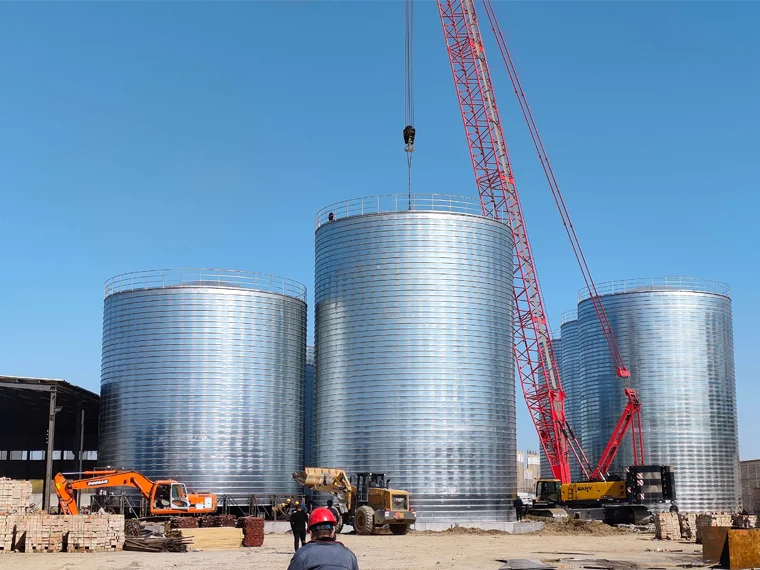
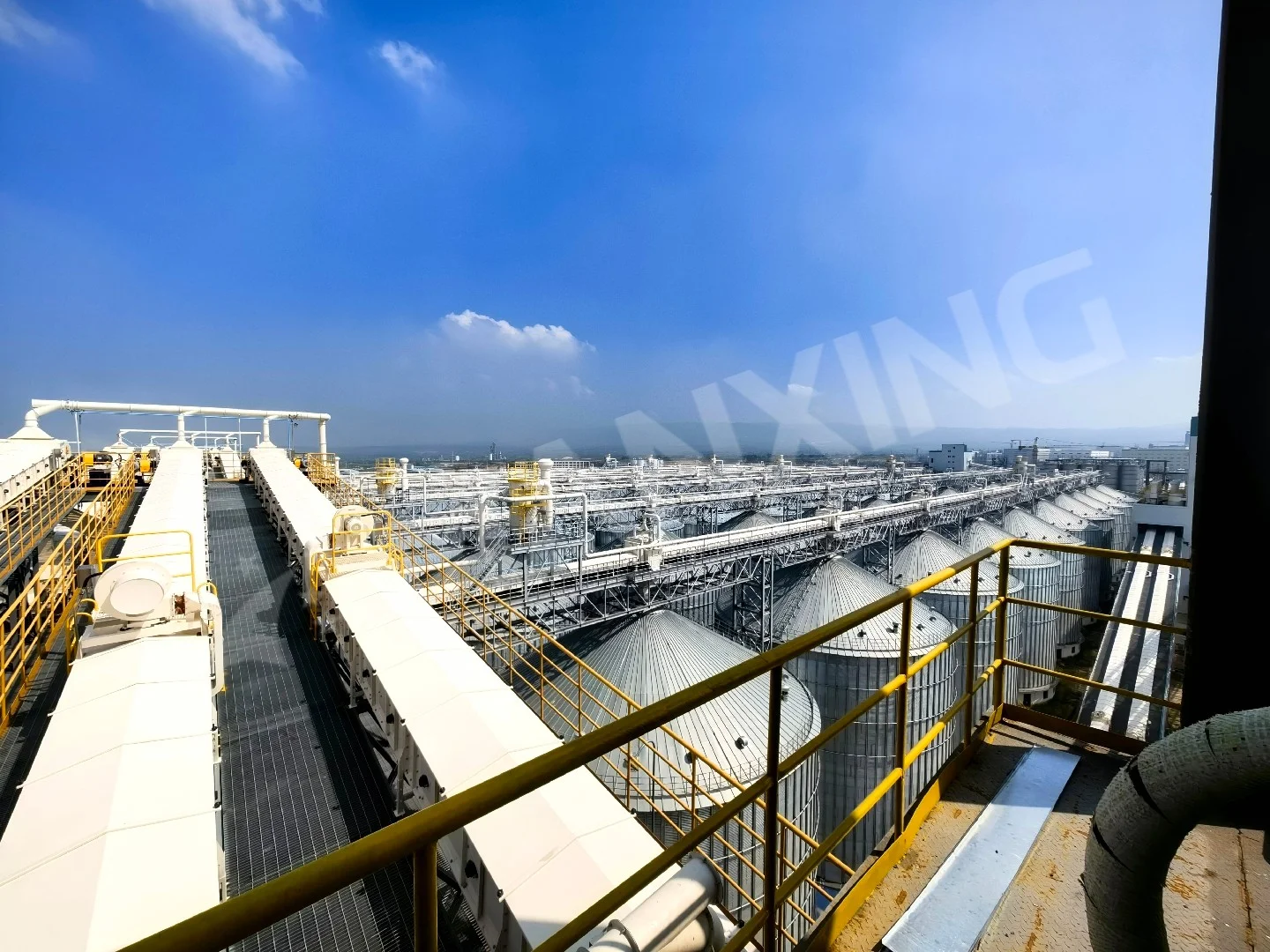


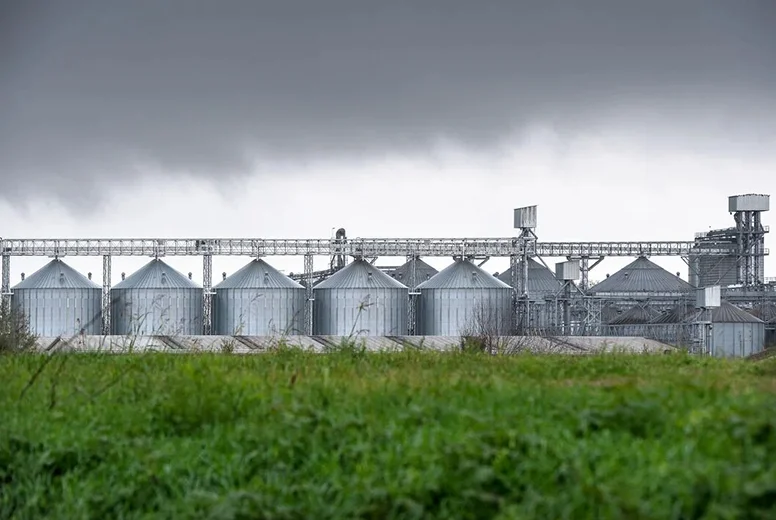
In the world of bulk material handling, the flat bottom silo stands as an industry benchmark for its structural simplicity, ease of maintenance, and remarkable adaptability. When engineered for an ultra-long service life, it transforms from a mere storage container into a core asset that boosts operational efficiency and minimizes total lifecycle costs. Drawing on over 15 years of field experience, this article provides a systematic deep dive into how material science, structural optimization, and intelligent maintenance can help achieve a 50+ year design life for flat bottom silos.
Systematic Engineering for Ultra-Long Life Flat Bottom Silos
The extended service life of a flat bottom silo is not the result of a single factor but a systemic outcome of material selection, structural design, and manufacturing precision. In industries such as agriculture, food processing, cement, and chemicals, silos must endure long-term exposure to material loads, wind forces, seismic events, and corrosive environments. Achieving a design life of over 50 years hinges on using high-strength, corrosion-resistant materials—such as galvanized steel, stainless steel, or high-performance concrete—combined with advanced anti-corrosion coating systems. For
instance, hot-dip galvanized steel plates with a zinc coating thickness of 85 μm or more can provide a maintenance-free period of 20 to 30 years under normal conditions.From a structural perspective, the uniformly distributed load characteristic of flat bottom silos reduces stress concentration points, a natural advantage over hopper bottom silos. By
employing finite element analysis (FEA) to optimize wall thickness distribution and stiffener ring configurations, engineers can effectively resist material lateral pressure and thermal stresses. Equally critical is the foundation design—a ring-shaped reinforced concrete foundation with a waterproof layer prevents uneven settlement caused by groundwater erosion, forming the first line of defense for the silo’s structural integrity.Three Core Advantages: Why Flat Bottom Silos Are the Long-Life Champion
Among the many silo types, the flat bottom silo has earned its reputation as a model of long-life design due to three irreplaceable core advantages: structural simplicity, ease of maintenance, and strong material adaptability. These benefits translate directly into lower operating costs and a longer equipment service cycle.
Structural Simplicity and Stress Distribution
The flat bottom design allows material loads to be uniformly transferred to the foundation, avoiding the localized high-stress zones common in hopper bottom silos. This stress distribution characteristic reduces the risk of fatigue cracks in the silo wall, particularly under dynamic conditions involving frequent filling and discharging. Field measurement data shows that, at the same capacity, the peak stress in a flat bottom silo is 30% to 40% lower than in a hopper bottom silo, which translates directly to a longer fatigue life.
Accessibility and Ease of Inspection
Flat bottom silos are typically equipped with multiple access doors, manholes, and internal ladders, facilitating regular inspection, cleaning, and repairs. Unlike silos that require entry into narrow conical spaces, the flat bottom design provides more spacious working conditions. Industry best practice recommends a comprehensive internal wall inspection every 2 to 3 years, covering coating integrity, weld condition, and floor corrosion. This preventive maintenance approach can extend the overall silo life by 15 to 20 years.
Key Takeaways
- Key Data: Flat bottom silos with a dual protection system of hot-dip galvanizing and epoxy coating can achieve a design life of over 50 years, extending service life by 2–3 times compared to standard paint systems.
- Best Practice: Reserve interfaces for intelligent monitoring sensors (e.g., strain gauges, corrosion probes) during the design phase to enable real-time structural health warnings, reducing unplanned downtime by up to 80%.
- Watch Out For: Avoid long-term storage of high-moisture materials (moisture content >15%) in flat bottom silos, as this can accelerate localized corrosion in the floor area. Install forced ventilation systems or moisture-proof liners if necessary.
- Pro Tip: For highly abrasive materials like cement or mineral powder, consider pneumatic conveying discharge systems to reduce mechanical friction and further minimize wear.
- Bottom Line: A 50-year flat bottom silo is achievable through the systematic integration of superior materials, optimized structural design, and a proactive maintenance strategy.
Discharge System Optimization: The Key to Extending Silo Life
The discharge system is the most wear-prone component of a flat bottom silo, and its design quality directly determines the silo’s actual service life. Traditional flat bottom silos often suffer from material "rat-holing" or "bridging," leading to uneven discharge and eccentric structural loads. Modern long-life designs employ "full live-bottom" discharge solutions, such as air cannons, vibratory dischargers, or rotary sweep augers, to ensure mass flow. Additionally, equipping discharge openings with wear-resistant liners (e.g., ceramic or high-chromium cast iron) can extend the service life of the discharge opening from 3 years to over 10 years. For highly abrasive materials like cement and mineral powder, pneumatic conveying discharge systems are recommended to reduce mechanical friction and further mitigate wear.
Frequently Asked Questions
Q: In terms of long-life design, how does a flat bottom silo compare with a hopper bottom silo?
A: Flat bottom silos hold a clear advantage for long-life applications. First, the flat bottom structure avoids the localized high-stress concentrations caused by material self-weight in hopper bottom silos, resulting in a longer fatigue life. Second, flat bottom silos offer larger maintenance spaces, making it easier to perform coating repairs and structural inspections. However, flat bottom silos require more complex cleaning equipment (such as sweep augers) to prevent material residue, and the service life of this mechanical system (typically 10–15 years) can become a bottleneck for overall silo longevity. Therefore, optimizing the durability of the cleaning system is a critical design focus for long-life flat bottom silos.
Q: How can a 50-year service life be ensured for flat bottom silos in coastal, high-salt-spray environments?
A: Coastal environments pose extreme corrosion challenges. A dual-protection strategy is recommended. First, structural materials should be weather-resistant steel (e.g., Corten) or duplex stainless steel, which offer 5–10 times greater resistance to chloride ion corrosion than ordinary carbon steel. Second, the coating system should adopt a three-layer structure: a zinc-rich epoxy primer (zinc content ≥85%), an epoxy micaceous iron oxide intermediate coat, and a polyurethane or fluorocarbon top coat. All welds must undergo 100% magnetic particle testing (MT) and be ground smooth to eliminate corrosion initiation points. Regular coating thickness inspections every 5 years are essential; if thickness falls below 80% of the design value, immediate re-coating is required.
Q: Floor corrosion is the most common failure mode for flat bottom silos. How can it be prevented through design?
A: The root cause of floor corrosion is moisture condensation from the material keeping the floor contact surface in a persistently damp state. Solutions include: 1) Using a double-layer floor structure with a ventilation layer in between, reducing humidity through natural or forced ventilation; 2) Laying a corrosion-resistant rubber mat or polyethylene sheet on the floor surface to isolate the material from direct contact with the steel plate; 3) Designing the floor with a slope of 1:100 to 1:50 to ensure condensate drains toward the outlet; 4) Installing a cathodic protection system (sacrificial anode or impressed current) beneath the floor, which is particularly effective for large-diameter silos in aggressive environments.
Q: What specific maintenance schedule is recommended to maximize the service life of a flat bottom silo?
A: A structured maintenance plan is essential. For the first 10 years, conduct an annual visual external inspection and a biennial internal inspection focusing on coating integrity and weld condition. Between years 10 and 25, increase internal inspections to annually, especially for the floor area and discharge system components. After 25 years, perform a comprehensive structural assessment including ultrasonic thickness measurements of the wall and floor plates, and replace any wear liners in the discharge system. Proactive replacement of high-wear parts like sweep auger blades every 8–10 years can prevent secondary damage to the silo structure.
Q: Can a flat bottom silo be retrofitted with smart monitoring technology after installation?
Yes, retrofitting is possible and often highly beneficial. The most effective approach is to install wireless strain gauges on the external wall at critical stress points and corrosion monitoring probes in the floor area. These sensors can transmit data to a central platform for real-time analysis. For existing silos, access doors can be used for internal sensor installation. While retrofitting may cost 15–25% more than designing for sensors from the start, it still provides significant value by enabling predictive maintenance and preventing catastrophic failures. The payback period is typically under 3 years for large-capacity silos.
Need expert manxingsilo solutions for your project?
We provide professional design, manufacturing, and installation services for bulk storage and material handling systems worldwide, with a proven track record of delivering silos engineered for 50+ years of reliable service.
Get a Free Technical Consultation →