
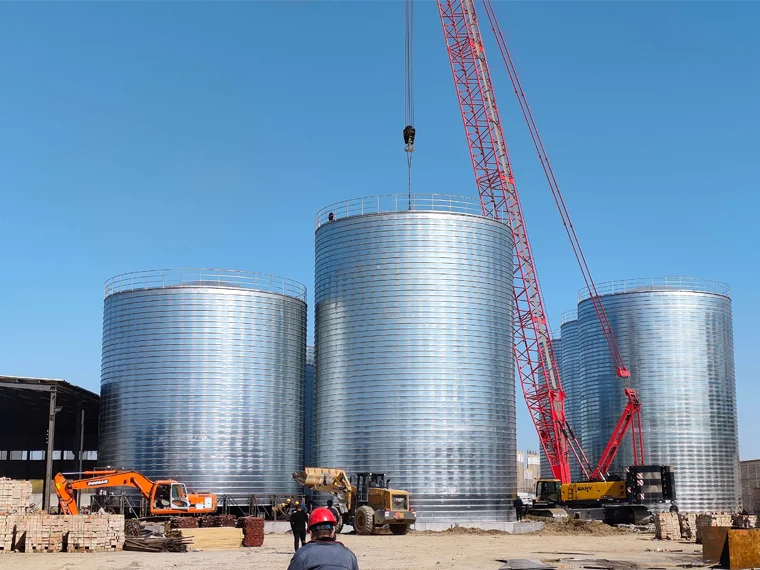
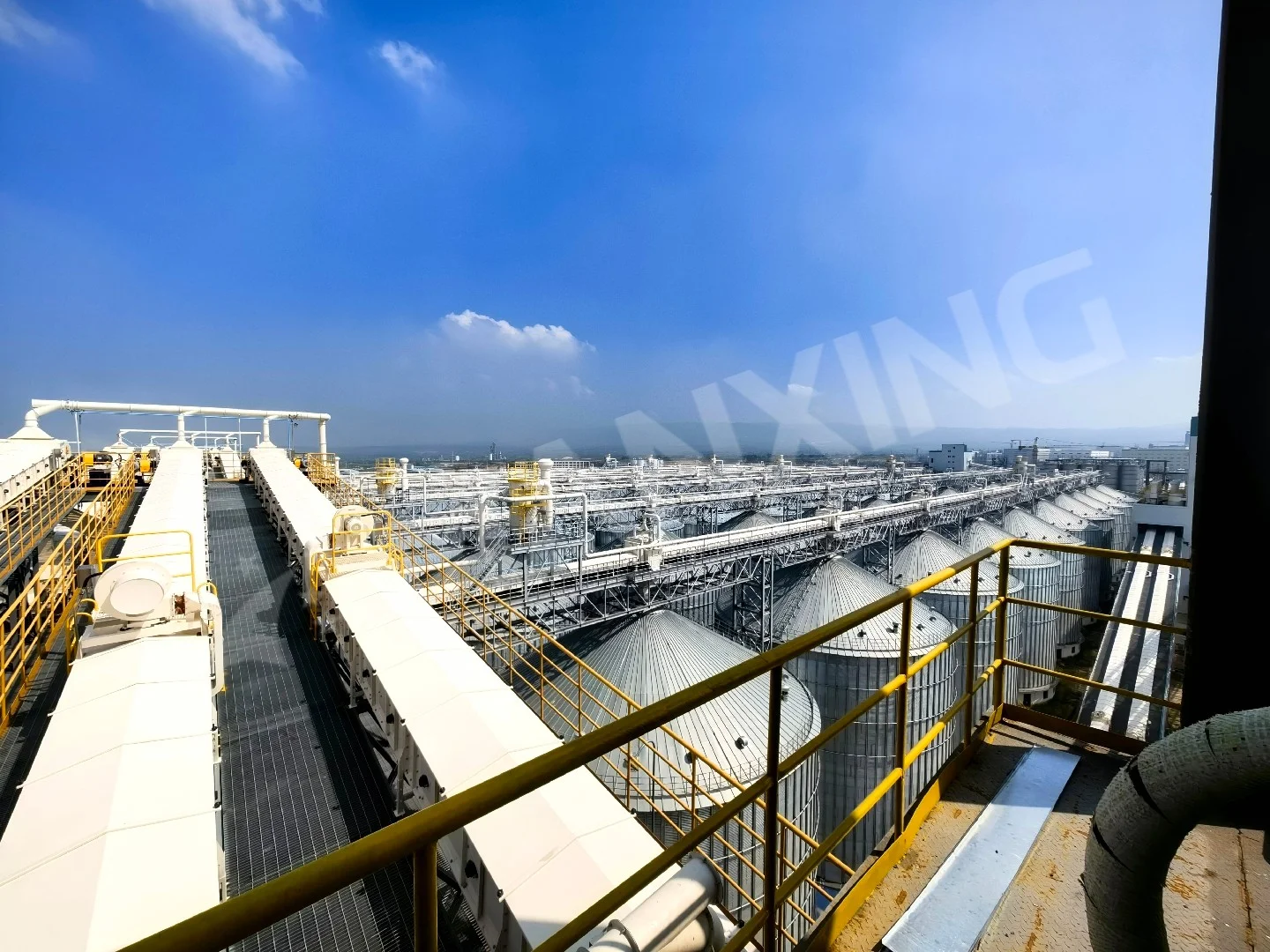


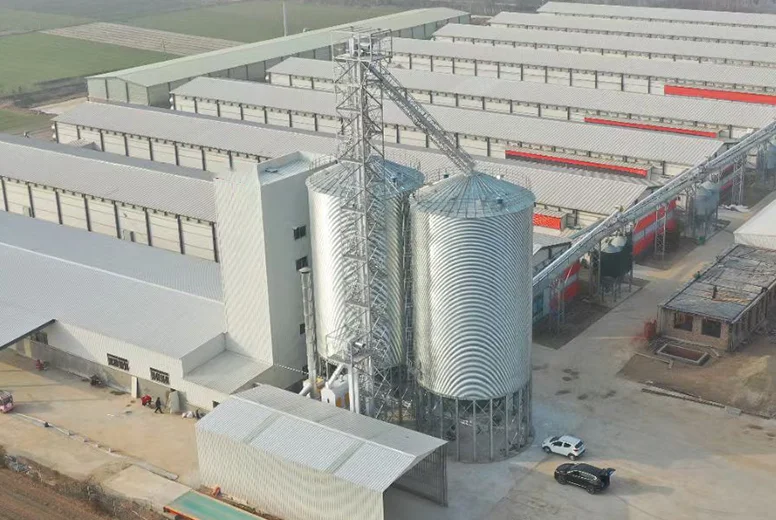
For agricultural cooperatives (co-ops) managing diverse grains like wheat, corn, and soybeans, the hopper bottom silo offers a transformative solution for efficient, low-loss storage. By leveraging gravity discharge and robust structural design, these silos minimize residue, reduce cross-contamination, and cut operational costs—making them a smart, long-term investment for co-op grain storage operations seeking precision and profitability.
Why Hopper Bottom Silos Are Essential for Co-op Grain Storage
Co-ops face unique challenges: handling multiple grain varieties, frequent batch changes, and unpredictable outbound schedules. Traditional flat-bottom silos rely on mechanical sweep augers for unloading, increasing energy consumption, maintenance costs, and the risk of grain residue and cross-contamination. The hopper bottom silo solves these issues with a conical or wedge-shaped base, typically angled between 45° and 60°, enabling gravity-driven self-discharge. This design significantly reduces residual grain, boosts unloading efficiency, and minimizes manual intervention—a critical advantage for co-ops focused on operational economy and consistent grain quality.
Moreover, co-op storage capacities often range from 500 to 5,000 tons. Hopper bottom silos strike an optimal balance between footprint, return on investment, and ease of use. Their modular construction allows for future expansion, seamlessly accommodating business growth without major structural overhauls.
Solving Core Technical Pain Points with Precision Engineering
A hopper bottom silo is far more than a flat silo with a funnel added. Its technical design must be meticulously calculated based on grain properties to ensure reliable performance. Three key factors determine its real-world effectiveness and long-term durability.
1. Hopper Angle Matching Material Flow Characteristics
The hopper angle is the critical parameter for smooth discharge. Engineers must select the optimal angle based on grain density, moisture content, and flowability. For free-flowing grains like dry corn, a 45° angle provides stable flow. For denser, more cohesive grains such as wheat or soybeans, a steeper 55° to 60° angle is recommended to prevent bridging or rat-holing. Incorrect angle selection can lead to flow obstructions, reduced unloading efficiency, and dangerous overpressure on silo walls.
2. Structural Strength and Load Distribution
The asymmetric geometry of the hopper bottom imposes higher stress on steel and concrete components. High-quality designs incorporate reinforcement ribs and stress-relief nodes in the hopper region, preventing localized buckling or weld cracking under full-load and dynamic discharge conditions. For large-scale co-op projects, finite element analysis (FEA) is strongly recommended to validate safety factors and structural integrity.
3. Integrated Ventilation and Temperature Control Systems
Co-ops often store grain for extended periods, making temperature and humidity management vital. Hopper bottom silos can integrate bottom aeration ducts and top exhaust systems, leveraging natural convection or forced ventilation to reduce internal temperature and moisture gradients, preventing condensation and mold. Advanced configurations support multi-point temperature monitoring and automated control, enabling remote management for enhanced grain preservation.
Key Takeaways
- Key Data: Hopper angles between 45° and 60° reduce residual grain by 8%–12% for every 5° increase in steepness.
- Best Practice: Co-ops should select suppliers offering customizable hopper angles, with design tailored to primary grain types.
- Watch Out For: Avoid directly applying flat-bottom silo aeration designs; the hopper area requires dedicated airflow channels to eliminate dead zones.
- Pro Tip: For high-moisture corn or grains with high impurity content, specify a larger discharge opening and a hopper angle above 60° to prevent clogging.
- Bottom Line: Hopper bottom silos deliver a 30% reduction in annual maintenance costs and 40% faster unloading times for co-ops, with the initial premium recouped within 2–3 years through operational savings.
Differentiated Advantages of Hopper Bottom Silos for Co-op Operations
Unlike large commercial grain terminals, co-ops prioritize equipment flexibility and ease of maintenance. The modular design of hopper bottom silos allows rapid installation and relocation without extensive foundation work, making them ideal for dispersed farm sites. The gravity discharge system drastically reduces reliance on screw conveyors and drag chains, lowering power consumption and failure rates. Industry data shows that co-ops using hopper bottom silos cut annual equipment maintenance costs by over 30% and reduce unloading time by 40%. Furthermore, minimal residue inside the silo eliminates cleaning costs between batches, effectively preventing cross-contamination and ensuring consistent end-product quality.
From a return-on-investment perspective, while the initial cost of a hopper bottom silo is slightly higher than a flat-bottom silo of equivalent capacity, the operational savings typically recover the difference within 2–3 years. For co-ops seeking stable, long-term returns, this is a highly worthwhile capital asset.
Frequently Asked Questions
Q: Are hopper bottom silos suitable for all types of grain, including high-moisture or sticky varieties?
A: Yes, but the hopper angle and discharge opening must be adjusted based on grain characteristics. For high-moisture corn or grains with significant impurities, a steeper angle (60° or more) and a larger outlet are necessary to prevent blockages. For powdery materials like flour or feed ingredients, adding a vibratory anti-bridging device is recommended. Always provide detailed grain parameters during the design phase to enable engineering optimization.
Q: Is a hopper bottom silo worth the investment for a small co-op with less than 500 tons of storage capacity?
A: Absolutely. Even at smaller capacities, the gravity-discharge advantage is significant. Small co-ops often have limited labor—self-unloading can reduce reliance on 1–2 operators daily. The modular design also allows phased investment: start with the core silo body and add ventilation or monitoring systems later. Over the full lifecycle, the cost-effectiveness of a hopper bottom silo outperforms the combination of a flat-bottom silo plus mechanical cleanout equipment.
Q: What are the key maintenance points for a hopper bottom silo?
A: Focus on three areas: First, regularly inspect the hopper liner for wear, especially in grain impact zones—install wear-resistant liners if needed. Second, ensure the discharge gate and seals operate smoothly to prevent sticking. Third, keep aeration ducts clean to avoid dust accumulation, which poses a fire risk. A comprehensive inspection every quarter is recommended, with increased frequency before and after rainy seasons.
Q: How does a hopper bottom silo handle grain quality during long-term storage compared to a flat-bottom silo?
A: Hopper bottom silos offer superior grain quality preservation. Their full discharge capability prevents the accumulation of spoiled grain at the bottom, a common issue in flat-bottom silos. Integrated aeration systems, when properly designed, ensure uniform temperature and moisture distribution, reducing the risk of hot spots and mold. This makes them particularly effective for co-ops that store grain for several months or require strict quality consistency for premium markets.
Q: What structural certifications or engineering validations should a co-op look for when purchasing a hopper bottom silo?
A: Co-ops should demand that suppliers provide finite element analysis (FEA) reports verifying the hopper’s structural integrity under full-load and dynamic discharge conditions. Additionally, ensure the silo meets ISO 9001 quality management standards and, where applicable, local building codes for seismic and wind loads. For large-scale projects, third-party structural audits add an extra layer of safety assurance.
Q: Can a hopper bottom silo be retrofitted into an existing flat-bottom silo structure?
A: Retrofitting is technically challenging and rarely cost-effective. The structural loads and foundation requirements differ significantly between flat-bottom and hopper bottom designs. It is almost always more practical and economical to install a dedicated hopper bottom silo. However, for co-ops with existing infrastructure, a hybrid approach using a separate hopper bottom discharge unit beneath a flat silo may be explored, though it compromises some efficiency.
Need a custom hopper bottom silo solution for your co-op grain storage project?
We provide end-to-end services—from site survey and structural design to installation and commissioning. Our silos support customizable hopper angles from 45° to 60°, optimized for wheat, corn, soybeans, and more. Every product is validated through FEA structural analysis and manufactured to ISO 9001 standards.
Get a Free Technical Consultation →