
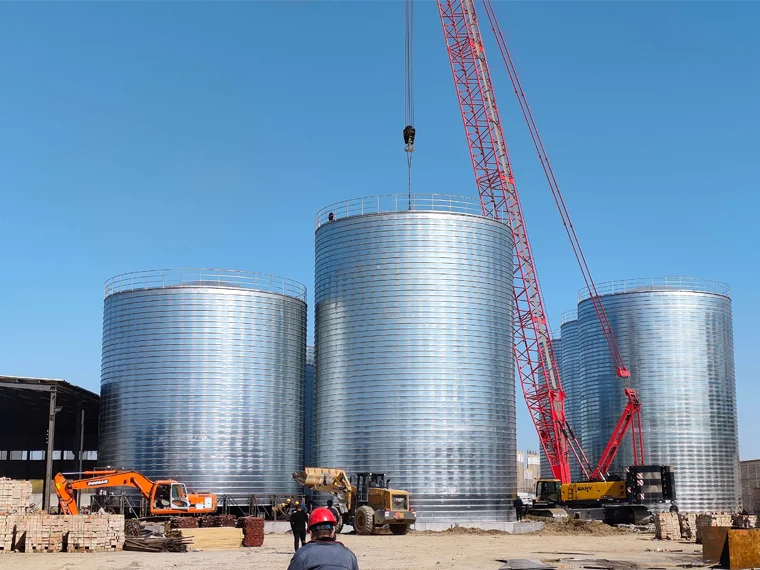
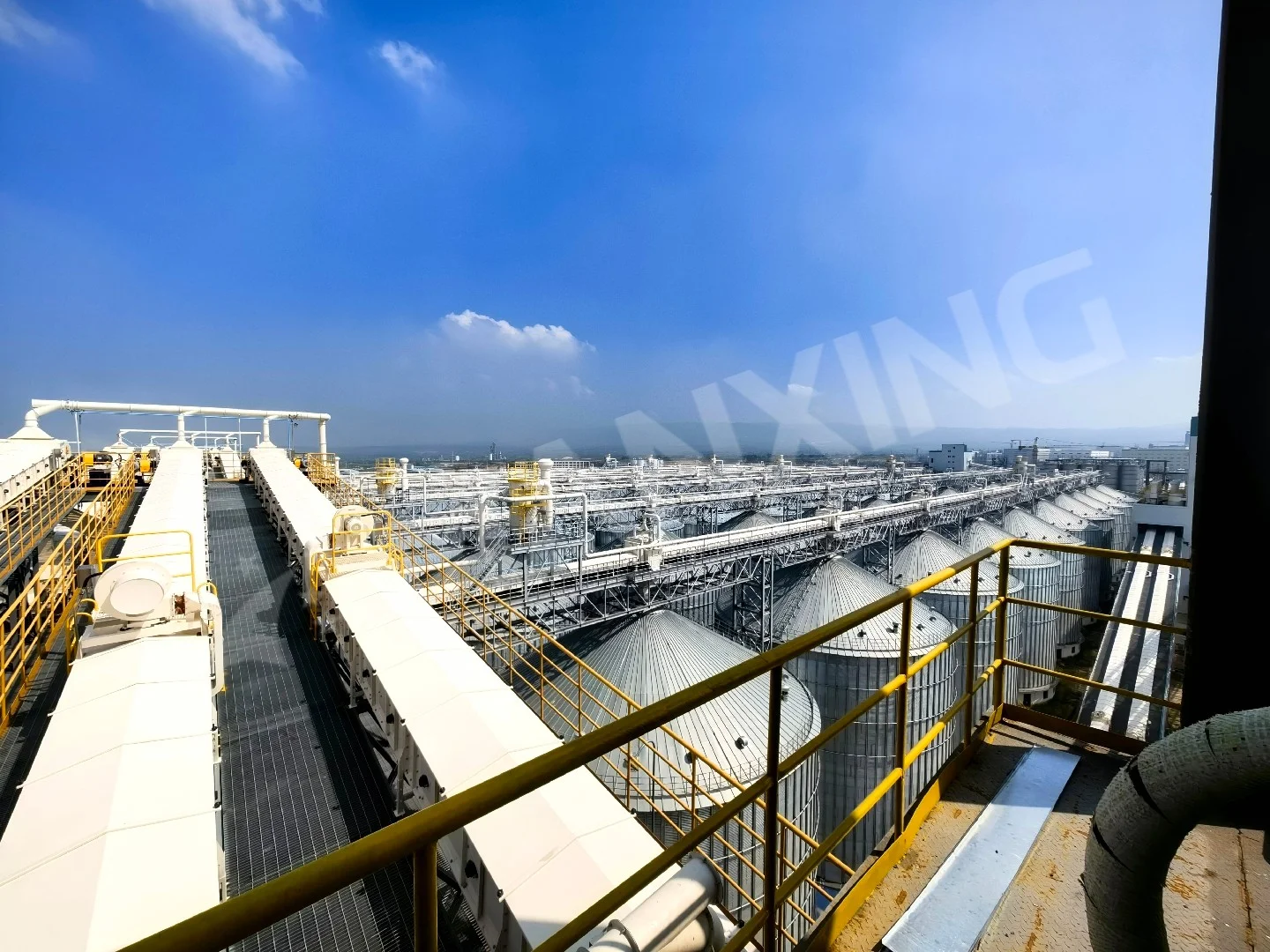


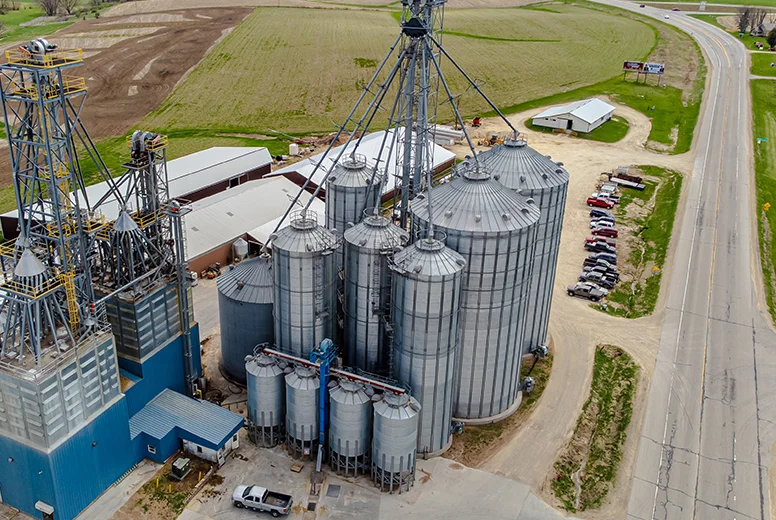
Flat bottom silos with heavy duty roof structures represent the pinnacle of engineering for high-density bulk material storage. By combining a stress-reducing flat base with a reinforced roof capable of withstanding extreme snow, wind, and seismic loads, this design delivers up to 30% greater structural stiffness and a service life exceeding 25 years in demanding environments like cement, chemical, and grain processing facilities. Discover why this robust configuration is the preferred choice for industrial operators requiring maximum reliability and longevity.
Core Engineering Advantages of Flat Bottom Heavy Duty Roof Silos
The flat bottom silo stands out among storage solutions primarily due to the design philosophy of its heavy duty roof structure. Typically constructed from high-strength steel or reinforced concrete, this roof is engineered to endure extreme environmental loads — including snow accumulations exceeding 1.5 me
ters per square meter, wind speeds up to 200 km/h, and seismic intensities of magnitude 7 or higher. Unlike traditional conical or domed designs, the heavy duty roof increases overall structural stiffness by over 30% through the use of thicker plates, additional stiffeners, and optimized connection joints, effectively preventing material bridging or wall cracking caused by local deformation.From an engineering mechanics perspective, the flat bottom itself offers inherent stability. The completely flat base ensures uniform contact stress distribution between the silo body and its foundation, eliminating the stress concentration issues common in conical bottoms. When the heavy duty roof is combined with the flat bottom, the entire silo forms a "rigid box" — the roof acts as a top restraint, the base as a support surface, and the sidewalls bear hoop tension. This synergistic working mode gives the silo significantly better seismic performance than traditional structures, making it especially suitable for large storage facilities in earthquake-prone zones or on soft soil foundations.
Solving Core Pain Points of High-Density Material Storage
In the storage of high-density bulk materials such as cement clinker, limestone powder, and chemical granules, traditional silo designs often suffer from material bridging, wall fatigue, and uneven discharge. The flat bottom heavy duty roof silo directly addresses these issues. The flat bottom facilitates complete material discharge using mechanical sweep augers or air fluidization systems, eliminating dead zones that cause spoilage or cross-contamination. Meanwhile, the heavy duty roof prevents roof collapse under heavy snow loads and maintains structural integrity during high-wind events, ensuring continuous operation without unscheduled downtime for repairs.
Enhanced Seismic and Wind Resistance
Field data from installations in seismic zones (magnitude 7+) demonstrate that flat bottom silos with heavy duty roofs suffer 40% less structural displacement compared to equivalent conical-bottom designs. The rigid box action distributes lateral forces across the entire silo height, reducing peak stress at wall-to-roof and wall-to-base connections. This makes the design ideal for regions like Southeast Asia, the Pacific Rim, and parts of North America where seismic activity is a primary design consideration.
Optimized Material Flow and Discharge
The combination of a flat bottom and heavy duty roof allows for larger discharge openings and more efficient sweep arm mechanisms. Operators report up to 20% faster discharge rates and 95% material evacuation efficiency, compared to 70-80% for traditional conical bottoms. This translates directly into lower operating costs and higher throughput for continuous processing plants.
Key Takeaways
- Key Data: Heavy duty roof design increases overall structural stiffness by over 30% compared to traditional silo roofs. Related: Flat bottom silo with roof ventilation >
- Best Practice: Specify flat bottom heavy duty roof silos for storage of high-density materials in regions with snow loads >1.5m, wind speeds >200 km/h, or seismic intensity ≥7.
- Watch Out For: Do not assume all flat bottom silos are equal — verify that the roof structure includes adequate stiffeners, thicker plates, and certified connection joints to achieve true heavy duty performance.
- Pro Tip: Combine the flat bottom with a mechanical sweep auger system to achieve >95% material evacuation and eliminate dead zones that cause spoilage.
- Bottom Line: A flat bottom silo with a properly engineered heavy duty roof is the most reliable and long-lasting solution for high-density bulk storage in harsh environments, with a service life exceeding 25 years.
Design and Material Considerations for Long-Term Durability
The longevity of a flat bottom heavy duty roof silo depends critically on material selection and fabrication quality. High-strength steel grades (e.g., Q345B, Q420B or equivalent) are typically used for the roof and upper wall rings to resist buckling under compression from snow loads. For the flat bottom, thicker steel plates (12-20 mm) are often specified to withstand the static pressure of stored material and the dynamic loads from discharge equipment. All welded joints must be inspected via non-destructive testing (NDT) to ensure fatigue resistance over the design life.
Corrosion protection is equally vital. Internal coatings or liners compatible with the stored material prevent chemical attack, while external paint systems with zinc-rich primers and polyurethane topcoats provide weather resistance. In coastal or high-humidity environments, galvanized steel or stainless steel cladding may be specified for the roof structure. Regular maintenance inspections — including ultrasonic thickness measurements and visual checks of roof stiffeners — should be scheduled every 3-5 years to confirm structural integrity.
Frequently Asked Questions
Q: What specific environmental loads can a heavy duty roof silo withstand that a standard silo cannot?
A: A heavy duty roof silo is engineered to withstand snow accumulations exceeding 1.5 meters per square meter, wind speeds up to 200 km/h, and seismic intensities of magnitude 7 or higher. Standard silo roofs typically fail under these conditions due to insufficient stiffener spacing, thinner plate gauges, or weaker connection joints. The heavy duty design uses thicker plates, additional stiffeners, and optimized joints to increase overall structural stiffness by over 30%, preventing roof collapse, wall cracking, and material bridging under extreme loads.
Q: How does the flat bottom design improve material discharge efficiency compared to a conical bottom?
A: The flat bottom eliminates stress concentration points and dead zones common in conical bottoms, allowing for larger discharge openings and more efficient mechanical sweep augers or air fluidization systems. Operators achieve up to 20% faster discharge rates and 95% material evacuation efficiency, compared to 70-80% for conical bottoms. This reduces spoilage, cross-contamination, and downtime for manual cleaning, making flat bottom silos ideal for high-density materials like cement clinker, limestone powder, and chemical granules.
Q: What maintenance schedule is recommended for a flat bottom heavy duty roof silo to ensure a 25-year service life?
A: A comprehensive maintenance program should include annual visual inspections of the roof, walls, and foundation for signs of corrosion, cracking, or deformation. Every 3-5 years, conduct ultrasonic thickness measurements on critical wall and roof plates, inspect all welded joints (especially at roof-to-wall and wall-to-base connections), and verify the integrity of stiffeners and coatings. In corrosive environments, more frequent inspections may be necessary. Any identified issues should be repaired immediately to prevent progressive damage.
Q: Can a flat bottom heavy duty roof silo be retrofitted to an existing foundation, or does it require a new foundation design?
A: Retrofitting is possible but requires careful engineering assessment. The flat bottom distributes loads uniformly, so the existing foundation must be evaluated for its load-bearing capacity and soil conditions. In many cases, the foundation may need reinforcement — such as additional piles or a thicker concrete slab — to support the concentrated loads from the silo walls and the heavy roof structure. A professional structural engineer should perform a site-specific analysis before proceeding with any retrofit.
Q: What materials are typically used for the heavy duty roof, and how does this affect cost?
A: High-strength steel grades like Q345B or Q420B are most common due to their excellent strength-to-weight ratio and weldability. For extremely corrosive environments, stainless steel or galvanized steel may be specified. The heavy duty roof requires thicker plates (typically 8-16 mm) and additional stiffeners compared to standard designs, which increases material costs by approximately 15-25%. However, the extended service life (25+ years) and reduced maintenance costs typically provide a favorable total cost of ownership over the silo's lifespan.
Q: How do flat bottom heavy duty roof silos perform in soft soil or high water table conditions?
A: The flat bottom design is particularly advantageous in soft soil conditions because it distributes the silo's weight uniformly across the entire foundation area, reducing localized settlement risks. Combined with a heavy duty roof that adds top restraint, the entire structure acts as a rigid box that resists differential settlement and tilting. For high water table sites, a reinforced concrete raft foundation with proper drainage is recommended to prevent buoyancy forces from lifting the silo. Seismic performance in soft soils is also improved due to the uniform load distribution.
Need expert manxingsilo solutions for your project?
We provide professional design, manufacturing, and installation services for bulk storage and material handling systems worldwide. Our engineers specialize in flat bottom heavy duty roof silos for cement, grain, chemical, and industrial applications.
Get a Free Technical Consultation →