
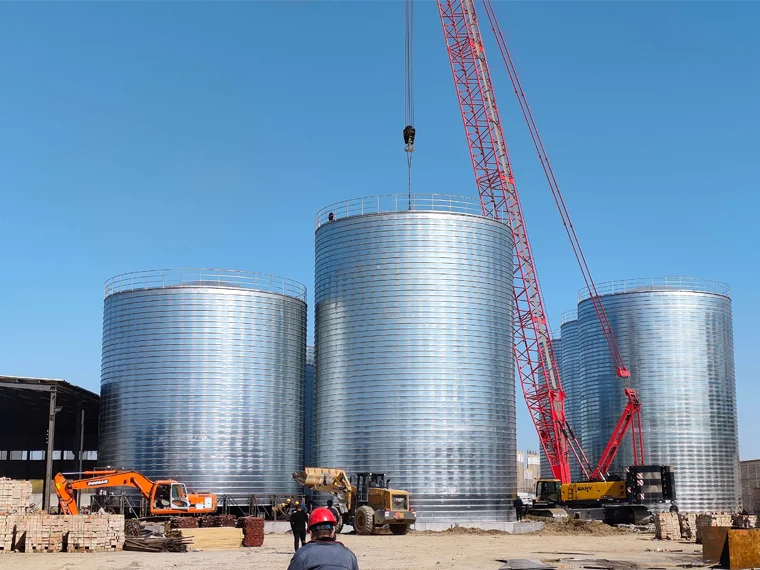
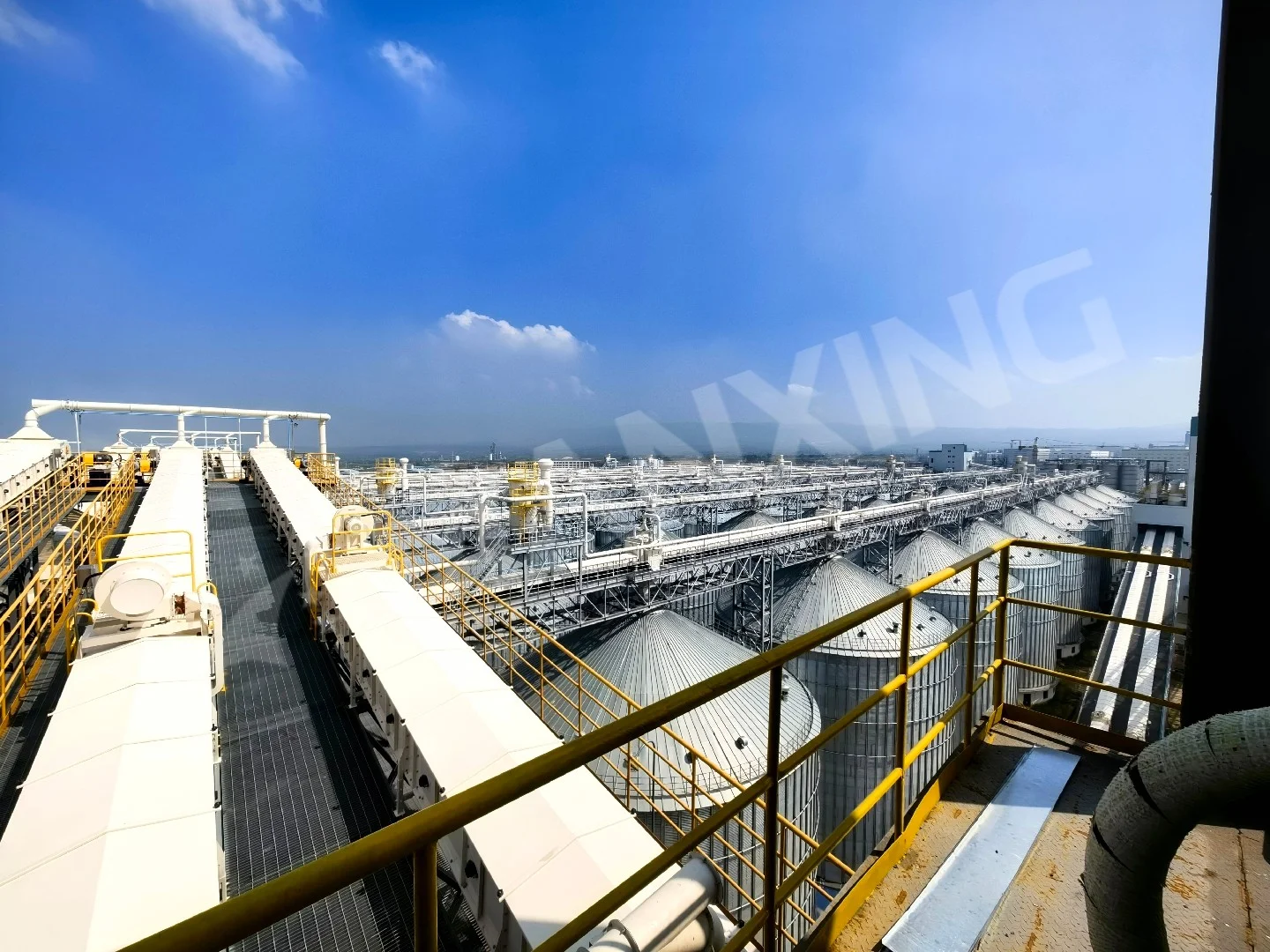


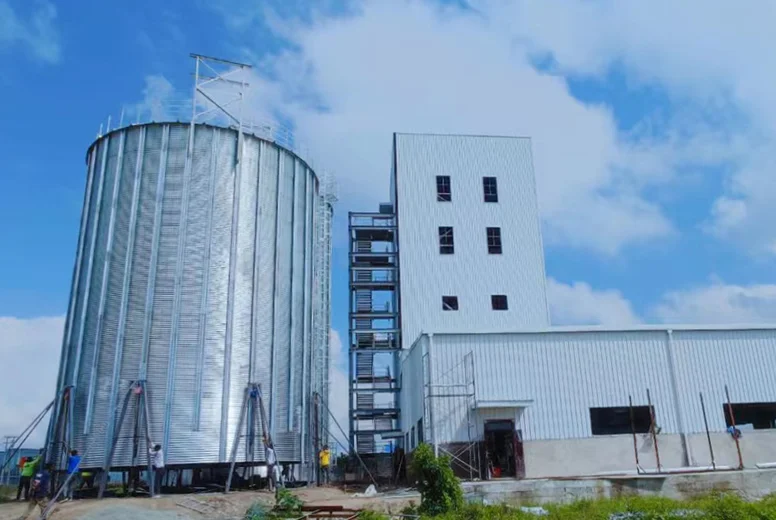
In the world of bulk material handling, the combination of a flat bottom silo and a chain conveyor is widely recognized as the gold standard for storing and discharging grains, cement, and chemical raw materials. By merging gravity-assisted discharge with mechanical forced conveying, this system effectively solves the common industry problems of bridging and uneven discharge found in traditional cone-bottom silos. Drawing on 15 years of engineering practice, this guide provides an in-depth analysis of the system’s structural logic, selection criteria, and maintenance strategies.
How Flat Bottom Silos and Chain Conveyors Work Together for Efficient Discharge
The bottom of a flat bottom silo is not perfectly level; it features a slight incline or a central discharge outlet that uses the material’s own weight to initiate discharge. The critical component is the chain conveyor installed at the silo base. When material flow is poor or there is a risk of bridging, the conveyor’s high-strength chain drives paddles along the bottom, forcibly scraping material and moving it horizontally or at a slight incline to the next process. This dual mechanism of “gravity plus mechanical force” allows the system to handle everything from free-flowing grains to semi-cohesive materials like fly ash.
Unlike traditional cone-bottom silos that rely on steep angles for natural discharge, flat bottom silos significantly reduce overall structure height, saving on civil engineering costs. The enclosed design of the chain conveyor effectively prevents dust leakage, meeting increasingly strict environmental emission standards. In real-world applications at cement plants and feed mills, this system can boost discharge efficiency by over 30% and reduce the frequency of shutdowns for cleaning caused by material caking.
Solving Bridging and Ratholing Discharge Problems in Bulk Storage
After storage, bulk materials often form stable arch structures (bridging) or vertical channels (ratholing) due to moisture absorption, compaction, or particle interlocking. These phenomena can halt discharge entirely, leading to costly downtime and manual intervention. The flat bottom silo with chain conveyor system directly addresses these challenges through continuous mechanical agitation. The conveyor’s paddles break up incipient arches before they can stabilize, while the horizontal scraping action prevents the formation of preferential flow channels.
Bridging: How the Chain Conveyor Prevents Arch Formation
Bridging occurs when particles lock together above the outlet, creating a self-supporting dome. In a flat bottom silo, the chain conveyor’s paddles sweep the entire floor area, constantly disrupting any developing arch. This is particularly effective for hygroscopic materials like cement or soybean meal, which tend to cake under pressure. The mechanical force ensures that even if a bridge begins to form, it is immediately broken apart.
Ratholing: Ensuring Even Flow Across the Silo Base
Ratholing happens when material flows only through a central vertical channel, leaving stagnant material around the periphery. This reduces usable storage capacity and can cause material degradation. The chain conveyor’s full-floor coverage ensures that material is drawn evenly from all areas of the silo bottom, eliminating dead zones. This uniform extraction is critical for maintaining consistent feed rates to downstream processes like milling or batching.
Key Takeaways
- Key Data: Flat bottom silo with chain conveyor systems can boost discharge efficiency by over 30% compared to traditional cone-bottom designs.
- Best Practice: Specify a chain conveyor with paddle spacing matched to your material’s flow characteristics—closer spacing for cohesive materials, wider spacing for free-flowing grains.
- Watch Out For: Inadequate conveyor chain tension can lead to slippage and uneven discharge; always use a tensioning system with a load cell for real-time monitoring.
- Pro Tip: For cement storage, install aeration pads at the silo base to supplement the chain conveyor, reducing the mechanical load on the chain and paddles.
- Bottom Line: The flat bottom silo with chain conveyor is the most reliable solution for eliminating bridging and ratholing, ensuring continuous operation and maximum storage utilization.
Design Considerations and Material Selection for Long-Term Reliability
Selecting the right flat bottom silo and chain conveyor system requires careful evaluation of material properties, storage capacity, and environmental conditions. For abrasive materials like cement clinker or fly ash, the chain should be made of hardened alloy steel with replaceable wear plates. For food-grade grains, stainless steel construction with sanitary seals is mandatory to prevent contamination. The silo’s bottom slope should be designed at a minimum of 6 degrees to facilitate gravity flow, while the conveyor’s drive unit must be sized to handle peak loads during restart after a power outage.
Structural engineers must also account for the dynamic loads imposed by the chain conveyor during operation. The silo foundation should be reinforced to withstand the horizontal thrust from the conveyor’s scraping action. Additionally, dust collection ports should be integrated into the conveyor housing to maintain negative pressure and prevent fugitive emissions. Properly designed systems can achieve a service life of 15 to 20 years with routine maintenance, including chain lubrication and paddle replacement every 2 to 3 years.
Maintenance Strategies to Maximize System Uptime
Regular maintenance is essential to prevent unexpected failures in flat bottom silo and chain conveyor systems. The most common failure points are chain wear, paddle breakage, and drive motor overload. Implementing a predictive maintenance program using vibration analysis and chain elongation monitoring can reduce unplanned downtime by up to 40%. Weekly inspections should focus on chain tension, paddle alignment, and the condition of the silo liner. For cement and fly ash applications, the conveyor housing should be cleaned of built-up material every month to maintain airflow and prevent corrosion.
Frequently Asked Questions
Q: What is the maximum storage capacity achievable with a flat bottom silo and chain conveyor system?
A: Flat bottom silos can be designed for capacities ranging from 500 tons to over 50,000 tons, depending on the material and site constraints. The chain conveyor’s length and power are scaled accordingly. For very large capacities, multiple conveyors can be installed in parallel to ensure complete floor coverage and even discharge. The key limitation is the conveyor’s ability to handle the full cross-section of material without overloading, which is addressed by proper sizing during the design phase.
Q: How does the chain conveyor handle materials with high moisture content, such as wet grains or sludge?
A: For high-moisture materials, the chain conveyor should be equipped with corrosion-resistant chains (e.g., stainless steel or zinc-plated) and self-cleaning paddles. The conveyor housing must have drainage ports to allow excess water to escape. In severe cases, the system can be combined with aeration or heating elements to reduce moisture before discharge. The paddle speed should be reduced to prevent material from sticking, and the drive motor should have a higher torque rating to handle the increased friction from wet material.
Q: Can a flat bottom silo with chain conveyor be retrofitted into an existing cone-bottom silo?
A: Yes, retrofitting is possible but requires significant structural modifications. The cone bottom must be removed, and a new flat base with a chain conveyor trench must be constructed. The silo’s support structure may need reinforcement to handle the new load distribution. Retrofitting is most cost-effective when the existing silo shell is in good condition and the site has sufficient headroom. A structural engineering assessment is mandatory to ensure the silo can support the dynamic loads of the conveyor system.
Q: What safety systems are essential for a flat bottom silo with chain conveyor?
A: Essential safety systems include emergency stop pull cords along the conveyor length, torque limiters on the drive motor to prevent overloading, and level indicators to prevent overfilling. For combustible materials like grains or wood pellets, explosion venting panels must be installed on both the silo roof and the conveyor housing. Additionally, confined space entry procedures must be strictly followed during maintenance, as the silo interior can accumulate hazardous gases or dust.
Q: How does the system compare to a screw conveyor for discharging cohesive materials like fly ash?
A: For cohesive materials, the chain conveyor is generally superior to a screw conveyor. The chain conveyor’s paddles provide positive scraping action across the entire silo floor, while a screw conveyor relies on a rotating helix that can become clogged with sticky material. The chain conveyor also handles larger particle sizes and can be designed with a wider trough to accommodate bridging-prone materials. However, screw conveyors are more compact and may be preferred for small-capacity applications where space is limited.
Q: What is the typical power consumption of a chain conveyor in a flat bottom silo system?
A: Power consumption varies widely based on material density, conveyor length, and capacity. For a typical 10,000-ton cement silo with a 20-meter-long chain conveyor, the drive motor is usually rated between 15 kW and 30 kW. Energy consumption can be optimized by using variable frequency drives (VFDs) that adjust conveyor speed based on discharge demand. On average, the system consumes 0.5 to 1.5 kWh per ton of material discharged, making it energy-efficient compared to pneumatic conveying systems that can consume 3 to 5 kWh per ton.
Need expert manxingsilo solutions for your project?
We provide professional design, manufacturing, and installation services for bulk storage and material handling systems worldwide. Our team has over 15 years of experience in flat bottom silo and chain conveyor systems for grain, cement, and chemical applications.
Get a Free Technical Consultation →