


Nigeria’s ambitious agricultural modernization and industrial expansion programs demand robust, climate-resilient storage infrastructure. Flat bottom silos, with their superior structural stability and cost efficiency, are emerging as the cornerstone solution for drastically reducing post-harvest losses and enabling bulk material handling across grain, cement, and industrial sectors. Drawing on 15 years of field expertise, this guide provides actionable technical insights for investors and engineers planning storage projects in Nigeria.
Structural Advantages of Flat Bottom Silos in Nigeria’s Tropical Climate
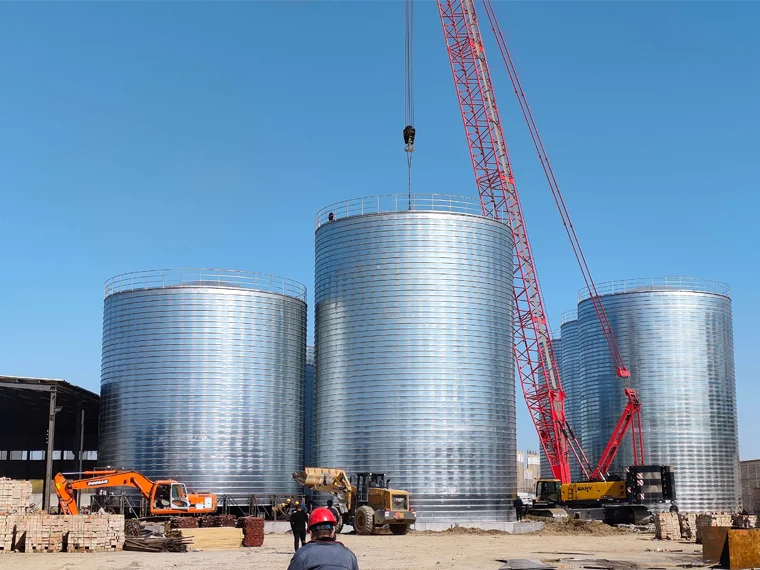
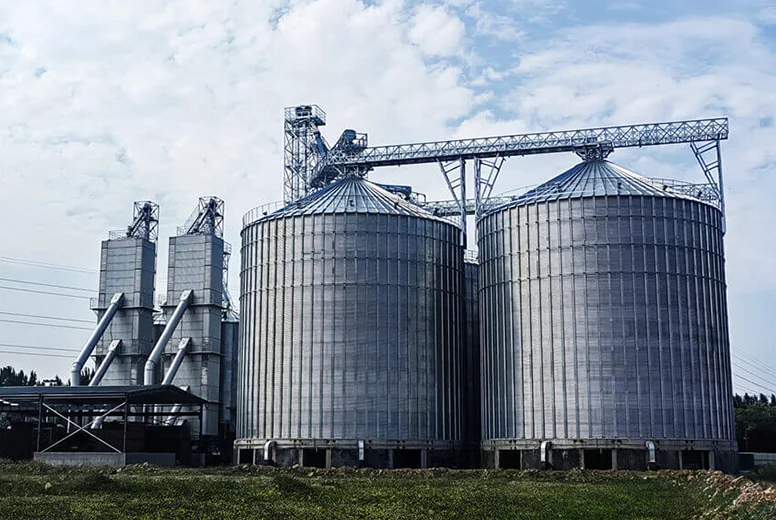
The flat bottom silo, characterized by its cylindrical body and flat reinforced concrete or steel base, offers unique value in Nigeria’s challenging tropical environment. Com
pared to cone-bottom or hopper silos, its low profile significantly lowers the center of gravity, enhancing wind and seismic resistance—a critical factor for Nigeria’s southern regions along the Gulf of Guinea, which experience seasonal high winds and heavy rainfall. The flat base ensures uniform pressure distribution across the floor, preventing localized stress concentrations that lead to structural fatigue, thereby maintaining long-term integrity over decades of service.From a maintenance perspective, the flat bottom design greatly simplifies internal cleaning and inspection. In remote agricultural zones like Kano and Jigawa states, where professional maintenance teams are scarce, this ease of service reduces downtime and improves operational continuity. Furthermore, the uniform discharge plane, when paired with sweep augers or pneumatic conveying systems, achieves near 100% material discharge rates, significantly lowering the risk of mold, pest infestation, and aflatoxin contamination—a critical advantage for storing moisture-sensitive crops like maize and paddy rice.
Solving Nigeria’s Post-Harvest Loss Crisis with Flat Bottom Silos
Nigeria suffers post-harvest losses of 20% to 30% annually due to inadequate storage, particularly during the rainy season when traditional bag storage is highly susceptible to moisture and pest damage. Flat bottom silos directly address this crisis by providing a hermetic, climate-controlled environment that maintains grain quality for extended periods. The silo’s ability to integrate with aeration systems and temperature monitoring allows operators to actively manage moisture content and prevent spoilage, turning a chronic liability into a strategic asset for food security and export quality.
Climate Adaptability and Moisture Control
Nigeria’s dual-season climate—wet and dry—creates extreme humidity fluctuations. Flat bottom silos, constructed from galvanized steel with sealed joints, prevent moisture ingress that plagues bagged storage. Integrated aeration fans and roof vents allow forced air circulation, reducing grain temperature and moisture content to safe levels (below 13% for long-term maize storage). This technical capability is essential for protecting Nigeria’s staple crops during the critical rainy season from June to October.
Cost Efficiency and Scalability for Nigerian Projects
For large-scale storage projects, flat bottom silos offer the lowest cost per ton of storage capacity among all silo types. Their simple foundation requirements—reinforced concrete ring beams rather than complex hopper supports—reduce civil engineering costs by up to 25% compared to cone-bottom designs. This makes them ideal for the phased expansion strategies common in Nigerian agribusiness, where investors can start with a few units and scale capacity as production grows.
Key Takeaways
- Key Data: Flat bottom silos achieve near 100% discharge rates with sweep augers, eliminating residual grain that attracts pests and mold.
- Best Practice: Integrate temperature monitoring cables and automated aeration controls to manage Nigeria’s high humidity during the rainy season.
- Watch Out For: Inadequate foundation drainage in flood-prone areas—ensure the silo pad is elevated and includes a perimeter drainage system.
- Pro Tip: Specify galvanized steel with a minimum coating weight of 350 g/m² (Z350) to resist corrosion in Nigeria’s coastal and high-humidity regions.
- Bottom Line: Flat bottom silos are the most cost-effective and structurally sound solution for reducing Nigeria’s 20–30% post-harvest losses at scale.
Material Handling Versatility Across Multiple Sectors
Beyond grain storage, flat bottom silos serve as critical infrastructure for Nigeria’s expanding industrial base. In the cement industry, they store clinker, fly ash, and finished cement with minimal segregation. For the agricultural processing sector, they handle soybean meal, cassava chips, and cocoa beans. The silo’s flat base accommodates multiple discharge configurations—center draw, side draw, or full sweep—allowing seamless integration with existing bucket elevator and conveyor systems. This versatility makes them the preferred choice for multi-purpose bulk terminals and port-side storage facilities.
Frequently Asked Questions
Q: What is the typical lifespan of a flat bottom silo installed in Nigeria’s tropical climate, and what maintenance is required?
A: With proper design and galvanized steel protection (Z350 coating or higher), flat bottom silos in Nigeria typically last 20 to 30 years. Key maintenance includes annual inspection of roof seals and wall joints for corrosion, cleaning of sweep auger mechanisms after each emptying cycle, and ensuring aeration fans are free of debris. In coastal areas like Lagos or Port Harcourt, more frequent inspections every six months are recommended due to higher salt and humidity exposure.
Q: How do flat bottom silos compare to concrete silos in terms of cost and construction time for Nigerian projects?
A: Flat bottom steel silos offer significant advantages over concrete: construction time is typically 4 to 8 weeks versus 6 to 12 months for concrete, and capital cost is 30% to 50% lower for equivalent capacity. Steel silos are also relocatable and easier to expand. However, concrete silos may be preferred for very large capacities (over 50,000 tons) or where fire resistance is a primary concern. For most Nigerian agribusiness and industrial applications, steel flat bottom silos provide the best balance of speed, cost, and performance.
Q: What foundation and civil works are required for a flat bottom silo project in Nigeria?
A: The foundation typically consists of a reinforced concrete ring beam and a compacted granular pad, designed to distribute the silo’s weight evenly and prevent differential settlement. For capacities above 5,000 tons, geotechnical soil testing is essential to determine bearing capacity. The foundation must include a vapor barrier and perimeter drainage to prevent groundwater wicking. In regions with expansive clay soils (common in parts of Oyo and Kaduna states), deeper piles or soil stabilization may be required. Total civil costs usually represent 10% to 15% of the project budget.
Q: Can flat bottom silos handle multiple grain types, and how do you prevent cross-contamination?
A: Yes, flat bottom silos are designed for multi-product storage. To prevent cross-contamination, implement a strict cleaning protocol between product changes: use sweep augers to remove all residual material, followed by manual sweeping and vacuum cleaning of walls and floor. For high-value crops like cocoa or sesame, consider dedicated silos or install flexible partition walls. Proper labeling and inventory management systems are equally important to maintain traceability and quality.
Q: What aeration capacity is needed for storing maize in Nigeria’s hot, humid climate?
A: For maize stored at 13% moisture content in Nigeria’s tropical conditions, a minimum aeration airflow rate of 0.1 to 0.2 cubic meters per minute per ton (m³/min/ton) is recommended. The system should be capable of reducing grain temperature to 25°C or below within 48 hours of filling. Use axial fans for low-resistance systems or centrifugal fans for deeper bins (over 15 meters). Automatic controls with temperature sensors at multiple depths are essential to prevent hot spots and mold development during the rainy season.
Q: How do I choose between bolted and welded flat bottom silo construction for my Nigerian project?
A: Bolted silos are preferred for most Nigerian projects due to faster on-site assembly, lower transportation costs (flat-packed panels), and easier future relocation or expansion. They require skilled bolting crews but no specialized welding equipment. Welded silos offer superior airtightness for fumigation and are better suited for very high capacities (above 10,000 tons) or where a monolithic structure is required. For remote sites with limited access to skilled labor, bolted construction is almost always the more practical and cost-effective choice.
Need expert flat bottom silo solutions for your Nigerian project?
We provide professional design, manufacturing, and installation services for bulk storage and material handling systems worldwide, including turnkey flat bottom silo projects tailored to Nigeria’s climate and regulatory requirements.
Get a Free Technical Consultation →