
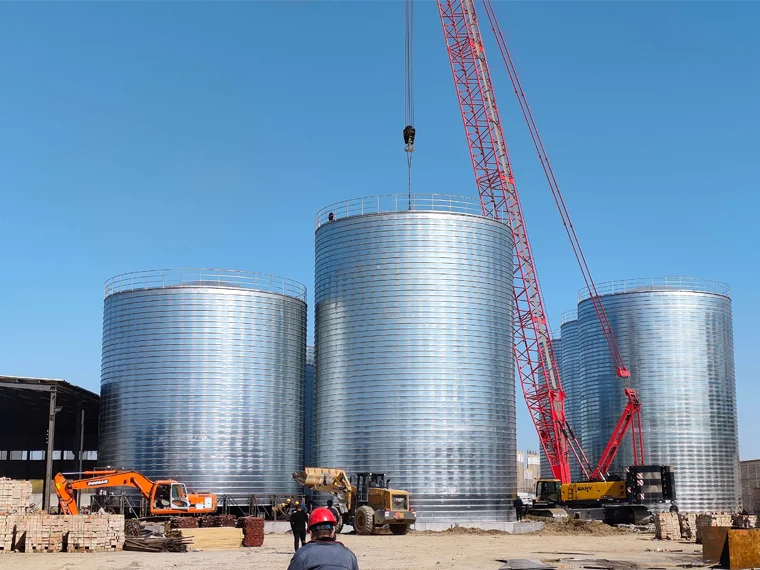
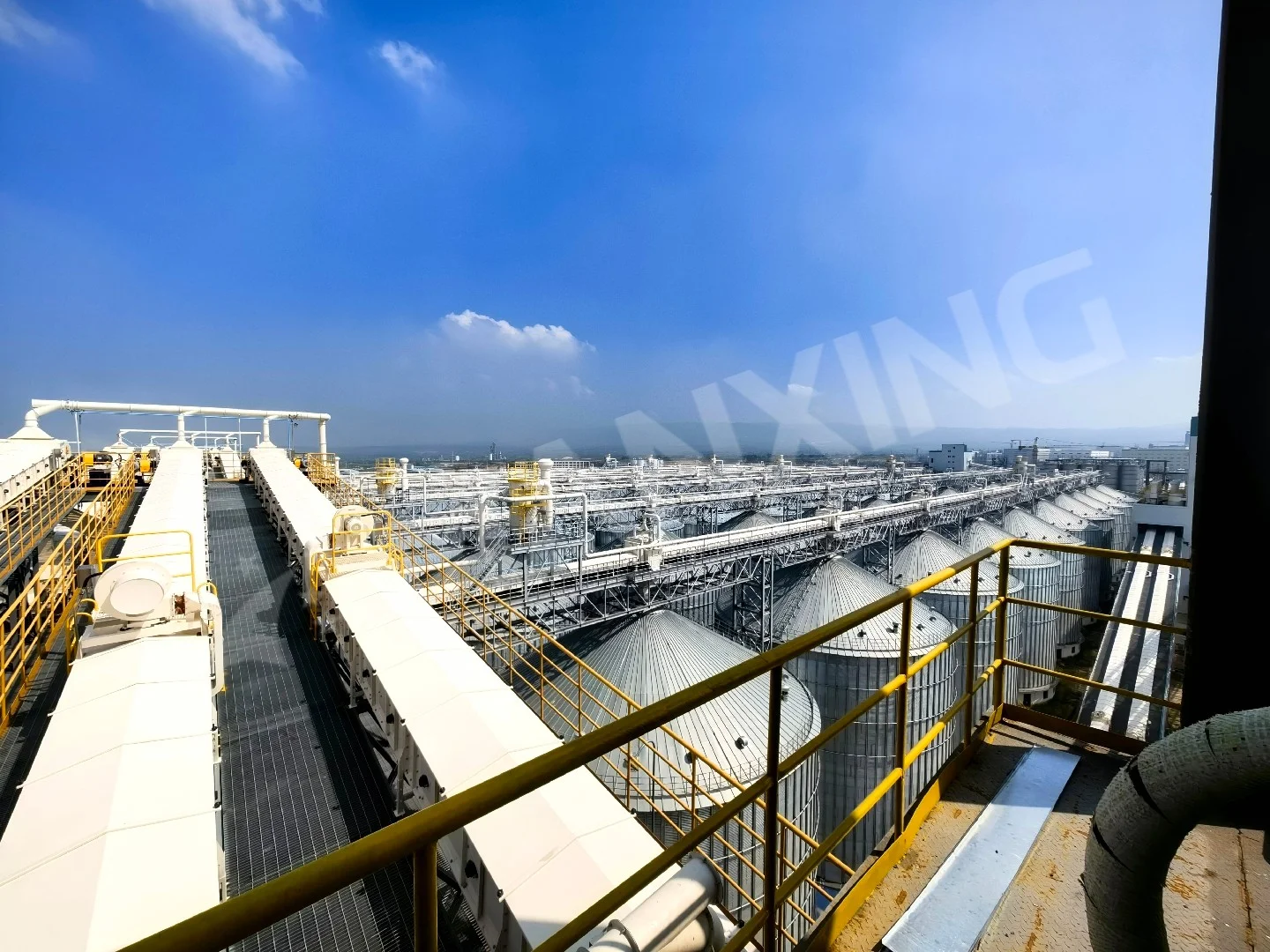


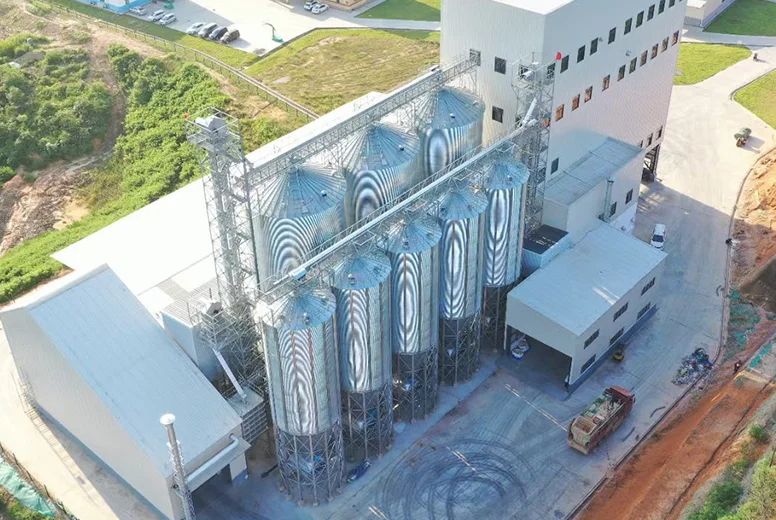
A 500-ton hopper bottom silo is far more than a large-scale funnel. Its steep 60° to 70° cone angle, combined with high-strength steel construction, is redefining industrial bulk material storage efficiency. This article explores how this design achieves near-zero residue discharge through gravity flow, and provides critical selection insights for agricultural and industrial applications.
Structural and Engineering Advantages of the 500-Ton Hopper Bottom Silo
In the realm of large-scale storage solutions, the 500-ton hopper bottom silo stands out due to its unique conical base design. Unlike traditional flat-bottom silos, the bottom section utilizes a steep cone with an angle of 60° to 70°. This geometry allows for complete gravity discharge without the need for mechanical sweep augers or air pads. This design drastically reduces energy consumption and maintenance costs while fundamentally solving problems related to material bridging and residue build-up. It is particularly advantageous for applications requiring frequent cleanouts or strict batch management.
From a structural mechanics perspective, a 500-ton capacity places extreme demands on wall thickness, stiffener layout, and foundation bearing capacity. Modern hopper bottom silos typically employ spiral crimping technology or high-strength bolted connections to ensure geometric stability under the immense lateral pressure of hundreds of tons of stored material. Furthermore, the cone section is often lined with wear-resistant materials, such as stainless steel or ultra-high molecular weight polyethylene (UHMWPE), which significantly extend service life and reduce the risk of localized failure from material abrasion.
Solving Discharge Efficiency and Residue Problems
In many industrial settings, poor discharge flow and "dead zones" are primary causes of capacity bottlenecks and material waste. The 500-ton hopper bottom silo is engineered to address these pain points directly. By optimizing the cone angle and outlet size, the design promotes "mass flow" rather than "funnel flow," preventing material stagnation along the sides of a central discharge channel. For materials with poor flowability, such as damp grain or sticky powders, vibration breakers or pneumatic aeration systems can be installed to ensure smooth, reliable discharge.
Gravity Flow and Near-Zero Residue Design
The core value of a hopper bottom silo lies in its near 100% evacuation rate. Field data shows that with a 60° cone angle, residue rates for free-flowing grains like corn and wheat can be controlled below 0.3%. Even for fine powders like cement or mineral flour, residue rates can be kept under 0.8% by combining the steep angle with polished interior surfaces. This means that cleanouts rarely require manual entry, improving operational safety and preventing cross-contamination between different material batches.
Integrated Explosion Venting and Ventilation Systems
When storing 500 tons of combustible dust, such as flour, starch, or coal powder, safety design must be a top priority. Modern hopper bottom silos are standardly equipped with explosion vents, explosion-proof electrical components, and active dust collection systems. Additionally, natural ventilation caps or mechanical exhaust fans installed at the silo roof effectively reduce internal temperature and humidity, preventing condensation that can lead to mold growth or spontaneous combustion. The integration of smart level sensors and temperature monitoring systems enables over-temperature alerts and automatic ventilation, minimizing safety risks.
Key Takeaways
- Key Data: A 60° cone angle can achieve grain discharge residue rates below 0.3%, significantly outperforming the 3%-5% typical of flat-bottom silos.
- Best Practice: For sticky materials, prioritize stainless steel liners and install pneumatic breakers to prevent discharge interruptions.
- Watch Out For: Never neglect the wear-resistant design of the cone section—untreated carbon steel cones can develop perforations and leaks under prolonged material abrasion.
- Pro Tip: For high-frequency batch changes, consider adding a dedicated clean-out port and an automated purge cycle to maximize the zero-residue benefit.
- Bottom Line: A 500-ton hopper bottom silo is a premium investment that pays for itself through energy savings, reduced labor, and near-zero material loss.
Practical Applications in Agriculture and Industry
In agriculture, the 500-ton hopper bottom silo has become standard equipment for large farms and grain transfer stations. For example, during the corn harvest season, a single 500-ton silo can hold approximately 7,000 bushels of grain. With gravity discharge, loading efficiency can reach 80 to 120 tons per hour, dramatically shortening logistics turnaround times. In the industrial sector, cement plants and feed mills leverage the silo’s airtightness and rapid discharge capabilities, using them as intermediate surge bins or finished product silos to seamlessly connect production lines with transportation.
It is critical to note that material characteristics dictate the required silo materials. For corrosive materials like sulfur or fertilizers, weathering steel or epoxy coatings are mandatory. For food-grade materials such as soybeans or flour, the liner must comply with FDA standards. Furthermore, a 500-ton capacity implies a foundation load that can exceed 3,000 kN. A geotechnical survey is essential before site selection to prevent uneven settlement that could cause the silo to tilt.
Frequently Asked Questions
Q: Can a 500-ton hopper bottom silo handle extremely poor-flowing materials like wet slag or clay?
A: Yes, but with specific design modifications. For materials with moisture content above 15%, a standard 60° cone angle may not guarantee mass flow. We recommend increasing the cone angle to 70°-75° and installing stainless steel liners to reduce friction. The outlet should be equipped with a hydraulic gate and a vibrator motor, and in severe cases, an "air cannon" aeration system may be necessary. Be aware that these modifications can increase manufacturing costs by 20%-30% and may slightly reduce discharge speed.
Q: How does the total cost of ownership (TCO) of a 500-ton hopper bottom silo compare to a flat-bottom silo?
A: From a lifecycle perspective, the hopper bottom silo is more economical. While its initial purchase cost is 15%-25% higher than a flat-bottom silo (which requires a sweep auger or unloader), the operational savings are significant. Annual electricity and maintenance savings can reach $4,000 to $7,000 (based on 200 tons of daily discharge). More importantly, eliminating the need for manual entry for cleaning avoids 2-3 high-risk confined space entries per year—a safety benefit that is difficult to quantify. For high-turnover applications (over 10 cycles per year), the payback period is typically under 2 years.
Q: What are the critical safety certifications required for storing combustible dust in a 500-ton hopper bottom silo?
A: For combustible dust like grain flour or coal powder, the silo must comply with ATEX or NFPA 61 standards. This requires certified explosion venting panels sized for the silo's volume, dust-tight electrical enclosures, and a bonded grounding system to prevent static discharge. We also recommend installing a temperature monitoring probe and a CO sensor for early fire detection. All safety components must be integrated into a single control loop that can automatically isolate the silo and activate suppression systems.
Q: What is the typical lead time for manufacturing and installing a 500-ton bolted hopper bottom silo?
A: For a standard bolted hopper bottom silo, the manufacturing lead time is typically 6-8 weeks after engineering approval. On-site installation, including foundation preparation, erection, and commissioning, usually takes 4-6 weeks with a dedicated crew. However, this timeline can extend to 12-16 weeks if the project requires custom features like special coatings, stainless steel liners, or complex integrated automation systems. We recommend scheduling the geotechnical survey and foundation work at least 4 weeks before the silo components arrive on site.
Q: Can a 500-ton hopper bottom silo be used for both grain and cement storage without modification?
A: A single silo is not recommended for switching between grain and cement, as the material properties and cleanliness requirements are fundamentally different. Cement is highly abrasive and requires a much thicker or lined cone section to prevent wear, while grain requires a smooth, food-grade finish to avoid contamination. Furthermore, the discharge system design differs—grain allows for larger openings, while cement requires aeration pads to fluidize the powder. A dedicated silo for each material type is always the safer and more cost-effective approach.
Q: What is the maximum allowable eccentric discharge for a 500-ton hopper bottom silo?
A: Eccentric discharge—where the outlet is not centered—is strongly discouraged for silos of this capacity. Even a small offset can create uneven lateral loads that exceed the structural design limits, leading to buckling or collapse. For a 500-ton silo, the outlet must be precisely centered. If your process layout requires off-center discharge, the entire structural design must be re-evaluated with finite element analysis (FEA) to account for the asymmetric loads. In most cases, adding a short conveyor under a central outlet is simpler and more reliable than designing for eccentric discharge.
Need expert manxingsilo solutions for your 500-ton hopper bottom silo project?
We provide professional design, manufacturing, and installation services for bulk storage and material handling systems worldwide. All silos are verified through finite element analysis and can be equipped with explosion-proof, corrosion-resistant, and remote monitoring modules.
Get a Free Technical Consultation →