


In Thailand’s hot, humid tropical climate, storing grain and industrial powders presents severe challenges: caking, mold, and blocked discharge. The hopper bottom silo, with its gravity-discharge and zero-residue design, is rapidly becoming the preferred solution for upgrading storage facilities in the country’s agricultural and building materials sectors. Drawing on 15 years of industry experience, this article provides an in-depth analysis of the technology’s application parameters, selection criteria, and common pitfalls for projects in Thailand.
Core Technology of Hopper Bottom Silos: Why It Suits Thailand’s Tropical Conditions
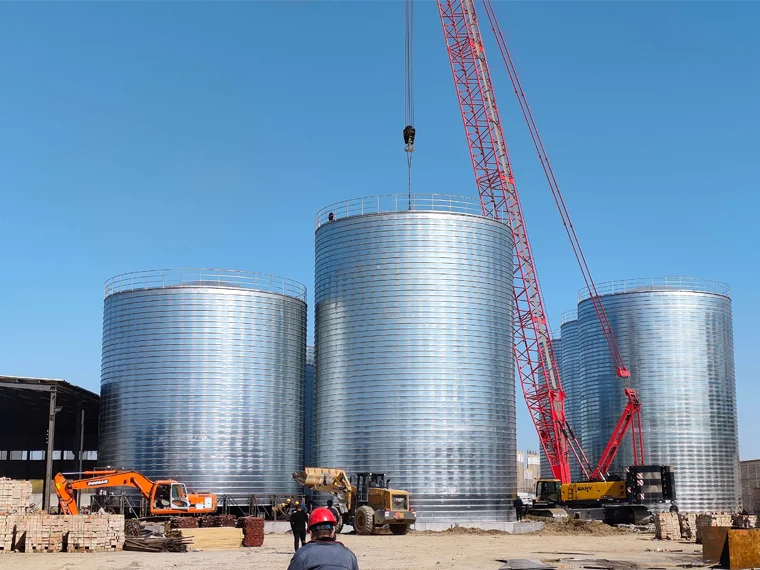
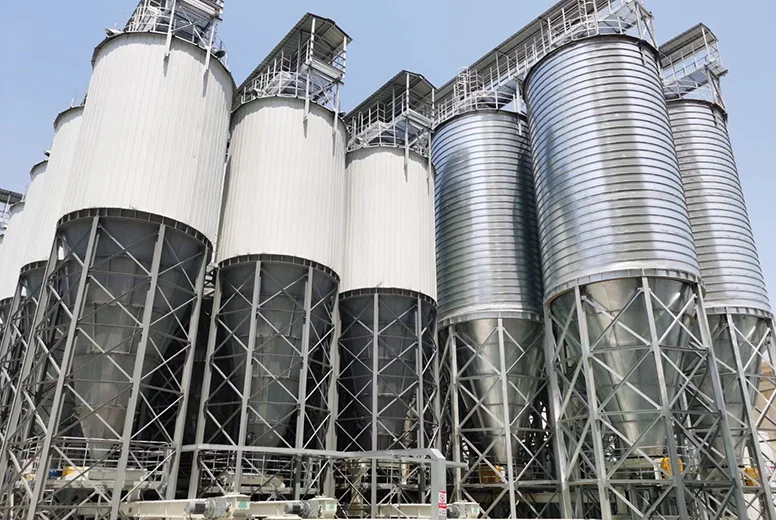
The key advantage of a hopper bottom silo lies in its conical bottom structure (typically with an angle of 45° to 60°), which allows materials to flow out by gravity alone, without requiring vibrators or air hammers. This design is particularly critical in Thailand’s high-temperature, high-humidity environment. Traditional flat-bottom silos often suffer from material bridging and discharge interruptions due to moisture absorption, whereas the hopper bottom design eliminates dead zones, controlling residual material to below 0.5%.<
/p>Regarding material selection, projects in Thailand commonly use hot-dip galvanized steel sheets or zinc-rich epoxy coatings, with corrosion resistance meeting C4 level (ISO 12944). For storing fertilizers or chemical powders, the inner walls must be lined with food-grade or anti-static panels. Notably, during the rainy season, Thailand’s relative humidity often exceeds 85%; therefore, the silo roof must be equipped with a dehumidifying breather valve or baghouse dust collector to prevent condensation from causing material hardening.
Typical Applications in Thailand: Tailored Solutions from Rice to Cement
Thailand is the world’s third-largest rice exporter and a major hub for cement and fertilizer production in Southeast Asia. The demand for hopper bottom silos is growing fastest in the following three sectors:
Agriculture: Zero-Residue Storage for Rice and Cassava Chips
Thailand produces over 30 million tons of rice annually, and processing plants frequently need to switch between different batches. The rapid emptying feature of hopper bottom silos (discharge speed up to three times that of flat-bottom silos) reduces batch changeover time to under two hours. For fragile materials like cassava chips, the cone angle must be increased to 60° or more, and a buffer cone should be installed to minimize breakage.
Building Materials: Moisture-Proof Storage for Cement and Fly Ash
Thailand’s annual cement production capacity is about 50 million tons, with over 30% handled through silos. Hopper bottom silos, combined with pneumatic conveying systems, enable sealed cement discharge, keeping dust emission concentrations below 10 mg/Nm³. Given the fluidizing characteristics of fly ash, the silo bottom must be equipped with fluidizing pads and compressed air nozzles to prevent material bridging.
Fertilizer and Chemicals: Safe Storage for Corrosive Powders
Thailand consumes approximately 6 million tons of fertilizer annually, with urea and monoammonium phosphate (MAP) being highly hygroscopic. Hopper bottom silos for these materials require 316L stainless steel or polyurea linings, along with online temperature and humidity monitoring. For chlorine-containing chemical powders, the cone angle must exceed the material’s angle of repose (typically 50° to 55°); otherwise, “rat-holing” can occur.
Key Takeaways
- Key Data: Hopper bottom silo discharge residue rates can be as low as 0.3% to 0.5%, reducing manual cleaning costs by 80% compared to flat-bottom silos. Related: How to clean a grain bin >
- Best Practice: For projects in Thailand, prioritize hot-dip galvanized spiral corrugated silo bodies. Their airtightness is superior to bolted structures, improving moisture resistance by 40%.
- Watch Out For: Never store combustible dusts like starch or aluminum powder without explosion venting. Thai industrial safety regulations mandate ATEX Zone 22 explosion-proof design.
- Pro Tip: For coastal projects within 5 km of the shoreline, use a three-layer protection system: hot-dip galvanizing + epoxy sealer + polyurethane topcoat, with a galvanized layer thickness of at least 85 μm.
- Bottom Line: Despite a 15%–25% higher initial investment, the hopper bottom silo’s payback period is typically 2–3 years due to reduced labor, lower material loss, and minimal maintenance.
Technical Parameters and Custom Design: From 50-Ton to 10,000-Ton Projects
Hopper bottom silos offer a vast capacity range, from 50-ton units for small and medium-sized processing plants to 10,000-ton units for port transfer stations. Design must focus on three critical parameters: cone angle (based on the material’s angle of repose plus 5° to 10°), discharge outlet diameter (to ensure the largest particle can pass through), and wall thickness (calculated according to wind load and seismic intensity). Most of Thailand is located in a seismic zone (intensity 7 to 8), so the silo base must be fitted with seismic ring beams, and the connection between the cone and the silo body must use a curved transition to eliminate stress concentration.
For materials stored at temperatures exceeding 60°C (such as freshly produced cement clinker), the silo must be equipped with a heat-resistant insulation layer and multiple thermocouples for temperature monitoring. For the discharge system, a manual + pneumatic dual-mode gate is recommended to meet daily continuous discharge needs while also allowing emergency operation during a power outage.
Frequently Asked Questions
Q: Is a hopper bottom silo suitable for storing wet paddy with a moisture content exceeding 20%?
A: Direct storage is not recommended. Although the hopper bottom design enables gravity discharge, high-moisture paddy can form “wet clumps” in the cone, leading to blockages. The correct approach is to first reduce the moisture content below 14% using a dryer before loading into the silo, or alternatively, install stainless steel liners and vibration breaking devices inside the silo. This is especially critical for paddy harvested during Thailand’s rainy season; consider installing an online moisture meter at the silo top to trigger an alarm if levels exceed the threshold.
Q: What anti-corrosion solution should be selected for a hopper bottom silo built on the coast of Thailand?
A: For projects within 5 km of the coastline, a three-layer protection system is mandatory: hot-dip galvanizing + epoxy sealer + polyurethane topcoat, with a galvanized layer thickness of no less than 85 μm. All bolted connections must be 316 stainless steel, and every weld must undergo 100% magnetic particle inspection. Additionally, the silo base should be fitted with a 400 mm high moisture-proof concrete foundation and installed with sacrificial anodes (magnesium alloy blocks) for cathodic protection. We implemented this exact solution for a port project in Rayong Province, Thailand, which has been operating stably for 8 years with no corrosion.
Q: How much higher is the initial investment for a hopper bottom silo compared to a flat-bottom silo, and what is the payback period?
A: For the same capacity, a hopper bottom silo typically costs 15% to 25% more than a flat-bottom silo, primarily due to the cone section’s steel plates and reinforcement ribs. However, considering the hidden benefits, the payback period is generally 2 to 3 years: (1) discharge efficiency increases by over 50%, reducing labor and equipment energy consumption; (2) material loss from residue and spoilage saves approximately 3% to 5% of raw material costs annually; (3) maintenance costs drop by 60% due to less frequent cleaning. For processing plants with more than 20 turnovers per year, a hopper bottom silo is strongly recommended.
Q: What specific modifications are needed for a hopper bottom silo to store cement clinker at temperatures above 60°C?
A: Storing hot cement clinker requires several critical modifications. First, install a high-temperature-resistant insulation layer inside the silo to protect the steel structure. Second, embed multiple thermocouples at different heights to monitor temperature gradients and prevent hotspots. The cone angle may need adjustment, as hot clinker can have different flow properties. Finally, the discharge gate must be rated for high-temperature service. We recommend a manual + pneumatic dual-mode gate to ensure operation even in a power outage, which is vital for continuous plant processes.
Q: How does the hopper bottom silo’s airtightness compare to bolted silos, and why does it matter in Thailand’s climate?
A: Spiral corrugated hopper bottom silos offer significantly better airtightness than bolted structures. In Thailand’s high-humidity environment, this is a decisive advantage. The continuous spiral seam creates a near-hermetic seal, preventing moisture ingress that can cause caking and spoilage. Bolted silos, with their many joints, are more prone to leaks over time. Our field data shows that spiral silos improve moisture resistance by up to 40% compared to bolted designs, directly translating to longer storage life and reduced product loss for grains and cement.
Q: For storing highly hygroscopic fertilizers like urea, what internal coatings or linings are most effective?
A: For urea and monoammonium phosphate, the most effective solution is an internal lining of polyurea or 316L stainless steel. Polyurea provides excellent chemical resistance and is more cost-effective for large silos. Stainless steel is preferred for smaller, high-value installations where absolute purity is required. Additionally, the silo must be equipped with an online temperature and humidity monitoring system. If humidity inside the silo rises above a critical threshold, the system can trigger aeration or dehumidification to prevent the fertilizer from absorbing moisture and forming hard cakes that block the hopper.
Need expert hopper bottom silo solutions for your project?
We provide professional design, manufacturing, and installation services for bulk storage and material handling systems worldwide, from 50-ton to 20,000-ton custom solutions, all certified to ISO 9001 and Thai Industrial Standards (TIS).
Get a Free Technical Consultation →