
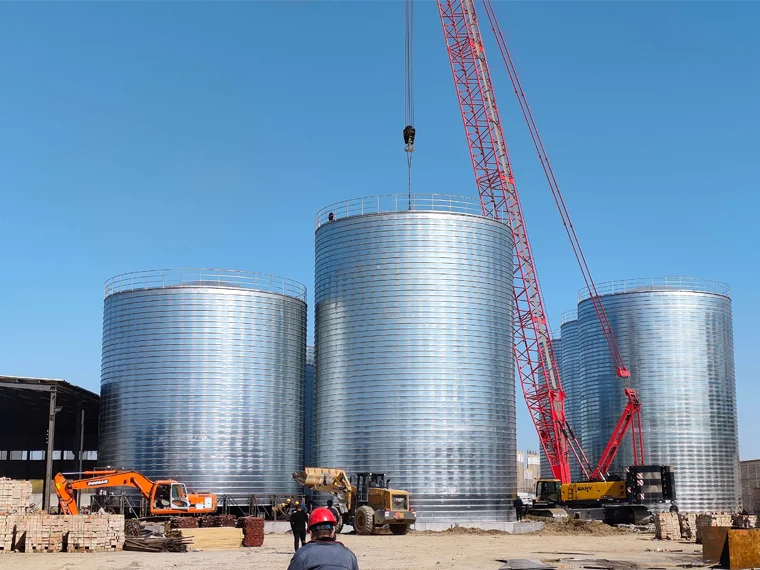
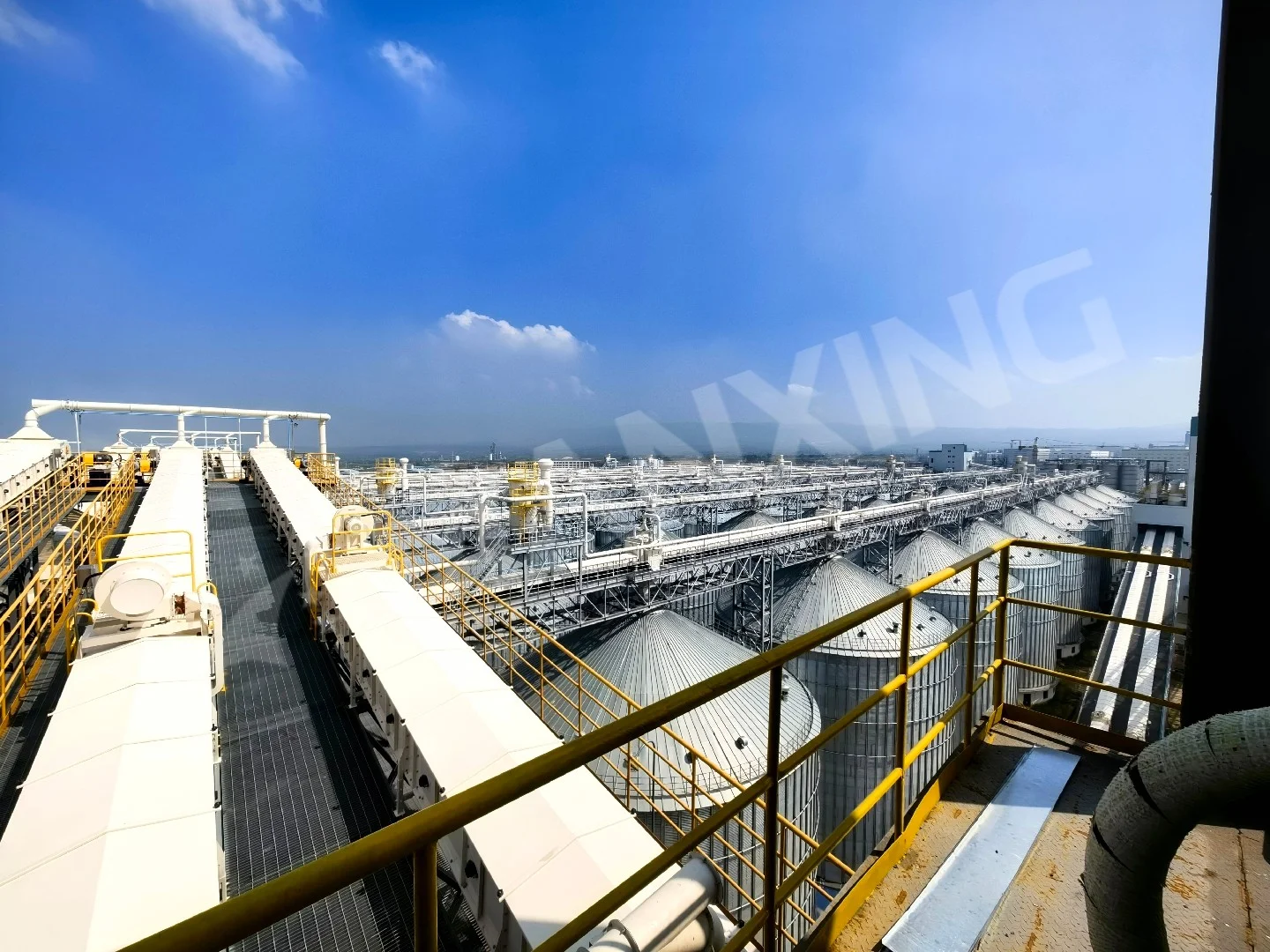


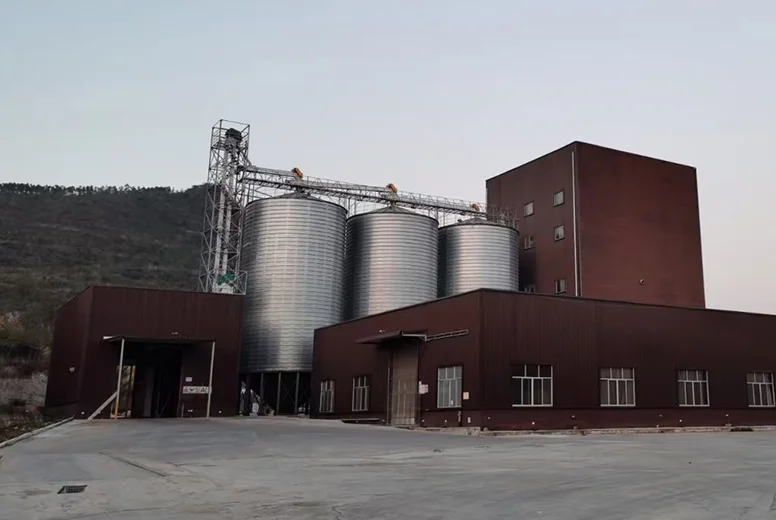
The 2000-ton hopper bottom silo is a cornerstone of high-capacity bulk material storage, engineered to solve the persistent challenges of bridging and clogging during discharge. This guide provides an in-depth analysis of its structural design, operational advantages, and maintenance strategies, demonstrating how this solution enhances industrial storage efficiency and safety for materials like cement, grain, and minerals.
Structural Design and Core Advantages of the 2000-Ton Hopper Bottom Silo
The 2000-ton hopper bottom silo is constructed from high-strength steel grades such as Q235, Q345, or stainless steel, forming an integrated load-bearing system that combines the cylindrical shell with the conical hopper bottom. This unified structure is designed to withstand several times the weight of the stored material, along with environmental stresses from wind, snow, and seismic activity. The hopper’s cone angle is typically engineered between 45° and 60°, ensuring that material flows smoothly by gravity, significantly reducing dead zones and the risk of bridging. To further enhance discharge reliability, the silo roof is equipped with a pressure balancing system and dust collection ports, while the silo wall can accommodate vibrators or pneumatic arch-breaking devices.
For corrosion protection, especially when storing abrasive materials like cement or fly ash, the interior walls can be lined with epoxy or polyurea coatings. The exterior is often finished with hot-dip galvanizing or weather-resistant paint. This multi-layered protection extends the silo’s service life to 15-20 years under harsh conditions. All designs comply with the "Code for Design of Steel Silo Structures" (GB 50884), ensuring safety factors meet international standards.
Solving Discharge and Clogging Issues in High-Capacity Storage
The discharge efficiency of a 2000-ton silo is critical to maintaining production line continuity. While the conical hopper bottom promotes bulk flow through a "funnel flow" pattern, high-moisture or sticky materials can still form "rat holes" or "arches." Modern silos integrate multiple active intervention technologies: a pneumatic aeration system with nozzles arranged along the hopper wall, which periodically injects compressed air to break up material bridges; low-frequency, high-amplitude mechanical vibrators to loosen adhered layers; and a rotary discharge valve to control the flow rate and prevent instantaneous overload.
Hopper Angle and Material Flowability
For poorly flowing materials like fine fly ash or cement, the hopper cone angle must be increased to over 60°, often in combination with a stainless steel liner to reduce friction. Field data shows that adjusting the cone angle from 45° to 55° can reduce material retention by 40% and shorten discharge time by 30%.
Key Configuration Points for Pneumatic Arch-Breaking Systems
Pneumatic arch-breaking nozzles should be arranged in a spiral pattern along the hopper wall, with a spacing of no more than 500 mm. The system should operate in a pulsed mode (intervals of 5-10 seconds). An air dryer is essential to prevent moisture in the compressed air from aggravating material caking. System pressure is typically set between 0.4 and 0.6 MPa; excessive pressure can damage the wall coating.
Key Takeaways
- Key Data: Optimizing the hopper cone angle (55°-60°) can boost discharge efficiency by 30% and reduce material retention by 40%.
- Best Practice: For high-stickiness materials, prioritize a stainless steel liner combined with a pneumatic arch-breaking system, and regularly inspect nozzles for blockages.
- Watch Out For: Avoid horizontal sections at the hopper bottom, as they create "dead material zones"; the pneumatic system must include an oil-water separator.
- Pro Tip: When retrofitting an existing plant, consider a bolted sectional panel design to reduce lifting difficulty while maintaining airtightness.
- Bottom Line: The 2000-ton hopper bottom silo is a long-term investment in operational efficiency, with the added cost of the conical design often recovered in 2-3 years through reduced maintenance and increased throughput.
Industry Applications and Customization for 2000-Ton Hopper Bottom Silos
In the cement and building materials industry, the 2000-ton silo frequently serves as a central powder transfer station, seamlessly integrating with bulk tankers and pneumatic conveying systems for full automation from intake to discharge. In agriculture, the focus shifts to grain storage, requiring the silo to be equipped with temperature monitoring, aeration, and fumigation systems to prevent mold and pests. For the mining industry, when storing mineral or coal powders, explosion-proof pressure relief devices and inert gas protection systems are necessary. The differing material characteristics across industries demand customized designs in structure, corrosion protection, and flow assistance—for example, grain silos require food-grade coatings, while cement silos emphasize wear resistance.
The installation method also impacts overall project cost. Spiral-folded silos are suitable for rapid on-site assembly but have limited wall thickness. Welded silos offer higher structural strength but require longer construction periods. For plant renovation projects, a bolted sectional panel solution can be chosen, which reduces the difficulty of lifting while ensuring airtightness.
Frequently Asked Questions
Q: What are the significant differences in discharge efficiency and maintenance costs between a 2000-ton hopper bottom silo and a flat bottom silo?
A: A hopper bottom silo utilizes gravity for self-discharge, eliminating the need for mechanical cleanout equipment. Its discharge efficiency is 40%-60% higher than a flat bottom silo, and residual material in dead zones can be kept below 5%. While a flat bottom silo has a slightly lower initial cost (about 10%-15% less), it requires a rotary sweep auger or pneumatic cleaning system. The long-term maintenance costs for motors and chain replacements can add $4,000 to $7,000 USD annually. For a 2000-ton capacity, the hopper bottom design typically recovers the initial investment difference within 2-3 years through savings in maintenance expenses.
Q: How can blockages at the hopper bottom be prevented when storing high-moisture fly ash, and what special designs are needed?
A: High-moisture fly ash (moisture content >8%) is prone to forming a hard layer on the cone wall. Solutions include: 1) Increasing the hopper cone angle to over 65° and using a 316L stainless steel liner to reduce adhesion; 2) Installing high-frequency vibrators (amplitude 0.5-1mm, frequency 50Hz) on the cone wall, set to run automatically for 30 seconds every 2 hours; 3) Configuring a hot air circulation system to preheat the silo (to 40-50°C) before discharge, reducing surface moisture activity. Additionally, a breaker roll or crusher at the hopper outlet is recommended to prevent large agglomerates from jamming the discharge valve.
Q: Is a 2000-ton hopper bottom silo suitable for storing grain, and what specific safety features are required?
A: Yes, it is highly suitable, but grain storage requires specific safety and preservation features. The silo must be equipped with a multi-point temperature monitoring system (cables spaced every 2-3 meters vertically) to detect hotspots. A fully integrated aeration system with variable-speed fans is needed to control moisture and temperature gradients. For pest control, a closed-loop fumigation system with recirculation is essential. All interior surfaces must be coated with a food-grade, FDA-approved epoxy to prevent contamination. Safety features also include pressure relief panels to manage the risk of dust explosions.
Q: What is the typical lifespan of a 2000-ton hopper bottom silo, and what factors most significantly affect its longevity?
A: With proper design and maintenance, the typical lifespan is 15-20 years. The most critical factor affecting longevity is corrosion, especially when storing abrasive or acidic materials like cement or fly ash. Using a high-quality, thick epoxy or polyurea lining for the interior and hot-dip galvanizing for the exterior is crucial. The second factor is fatigue from cyclic loading and unloading; a robust structural design that adheres to standards like GB 50884 is essential to prevent metal fatigue. Regular inspections of the hopper wall thickness and coating integrity are recommended every 2-3 years.
Q: Can a 2000-ton hopper bottom silo be integrated with an existing automated material handling system?
A: Absolutely. Modern 2000-ton hopper bottom silos are designed for seamless integration with PLC-based control systems. They can be equipped with load cells for real-time inventory monitoring, automated fill-level control, and variable-speed rotary valves to precisely control the discharge rate into downstream conveyors or pneumatic lines. The silo's pressure balancing and dust collection systems can also be tied into a central plant DCS (Distributed Control System) for fully automated and safe operation, from truck or railcar unloading to final process feeding.
Need a professional 2000-ton hopper bottom silo solution for your project?
We provide full-process customized services, from structural calculation and corrosion protection selection to automation control, serving over 200 clients in the cement, grain, and mining industries.
Get a Free Technical Consultation →