

Feed Mill Corn Storage & Drying Facility – Thailand
Project Overview
| Project Title | Turnkey Supply of a 6,000 MT Corn Silo Complex with High-Moisture Drying and High-Speed Outload for Animal Feed Production |
|---|---|
| Location | Nakhon Ratchasima Province, Thailand (Korat) |
| Client | A fast-growing Thai animal feed manufacturer supplying poultry and swine feed to domestic and ASEAN markets |
| Completion Date | Projected Q1 2027 |
| Project Scope | Turnkey grain storage, drying, handling, and logistics solution including wet corn receiving, biomass-powered grain drying, steel silo storage, aeration, temperature monitoring, and high-speed truck loading system. |
1. Client Background & Needs Analysis
The Client
Our client is a mid-sized feed milling company based in Nakhon Ratchasima (Korat), Thailand's largest agricultural province and one of the country's major corn-producing regions.
The company currently produces approximately 150 tons of compound feed per day for local poultry and pig farms. With Thailand's livestock industry continuing to expand and feed exports to neighboring ASEAN markets such as Myanmar, Laos, and Vietnam increasing, the client needed a reliable year-round supply of high-quality corn — their primary raw material accounting for approximately 55–60% of total feed recipes.
To improve supply security, reduce raw material costs, and avoid seasonal price fluctuations, the client decided to develop an integrated corn storage and drying facility directly connected with their feed mill operation.
The Challenge
Before this project, the client mainly purchased dried corn from intermediaries during the off-season. This resulted in higher procurement costs and inconsistent raw material quality, especially during Thailand's wet harvest season.
Thailand's tropical monsoon climate from May to October creates significant challenges for corn processing. Freshly harvested corn typically arrives with moisture levels of 28–32%, which is far above the safe storage moisture requirement of approximately 13–14%.
Without their own drying and storage capacity, the feed mill was dependent on third-party drying services with limited availability during peak harvest periods.
Major Operational Pain Points
| Pain Point | Impact on Business |
|---|---|
| Raw material dependency | The client purchased dried corn at an additional premium of approximately ฿1,800–2,200 per ton during the off-season, reducing profit margins by 12–15%. |
| Extreme moisture at harvest | During Thailand's rainy season, freshly harvested corn enters the supply chain at 28–32% moisture, making immediate storage impossible without professional drying. |
| No on-site drying capacity | The client relied on external dryers with limited availability, causing production interruptions of 3–5 days per month during peak harvest periods. |
| Slow outload operation | Existing manual bagging and loading processes could only dispatch 50–60 tons per shift, which could not support the feed mill's daily corn consumption of 80–100 tons. |
| High drying energy costs | Traditional diesel-powered drying solutions would create excessive operating costs. The client required a renewable and locally available energy source. |
Client's Explicit Requirements
Based on the client's production targets and future expansion plan, the required system needed to achieve the following performance objectives:
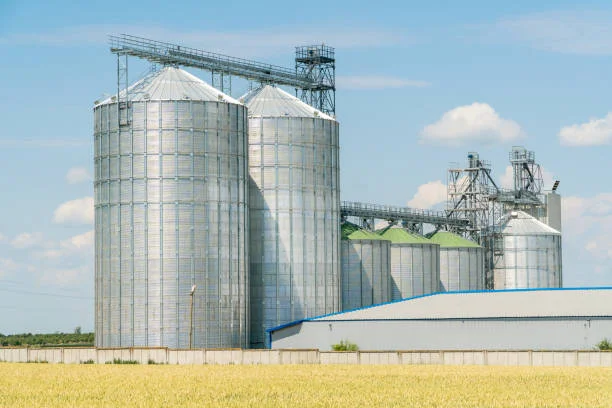
6,000-ton corn storage capacity:Receive and store 6,000 tons of corn through two 3,000-ton steel silos, providing approximately 5–6 months of raw material security for continuous feed production.
High-moisture corn drying capability:Process 50 tons of wet corn per day, reducing moisture content from approximately 30% to 13% in a continuous drying process while maintaining grain quality.
Long-term safe storage:Maintain corn quality for at least 5 months through forced aeration, temperature monitoring, and automated storage management to prevent mold growth, insect infestation, and spoilage.
High-speed truck loading:Dispatch 200–300 tons of corn within 2–3 hours, achieving an outload capacity of 100–120 tons per hour to ensure uninterrupted feed mill operation.
Efficient truck logistics management:Handle 40-ton inbound and outbound trucks through an integrated weighing and tracking system for accurate inventory control.
Future expansion capability:The silo complex must support future expansion as the client plans to double production capacity within three years.
Project Design Philosophy
To solve the client's supply chain challenges, we developed a fully integrated "Harvest-to-Mill" grain storage and processing solution.
The design concept was:
"Receiving at harvest, drying with biomass, storing with safety, and dispatching at mill-speed."
The complete system integrates:
Wet corn receiving and cleaning system
50 TPD continuous flow grain drying system
Biomass-fired heating system using agricultural waste
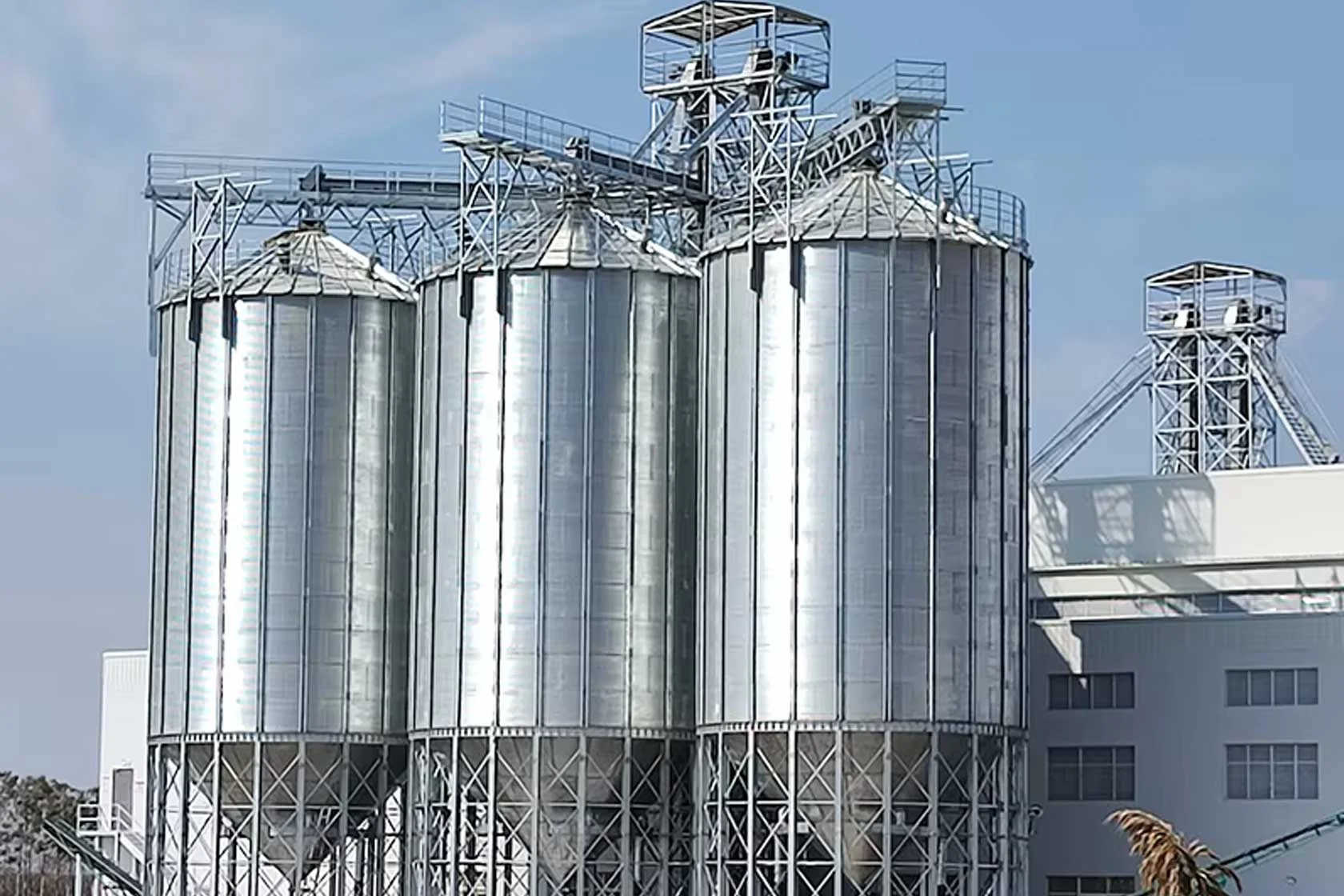
Two 3,000-ton bolted steel grain silos
Automated aeration and temperature monitoring
High-speed grain discharge and truck loading system
Integrated weighbridge and logistics management
2. Our Designed Solution
We proposed a fully integrated "Harvest-to-Mill" grain storage and processing system designed to bridge Thailand's wet-season corn supply gap while improving energy efficiency, storage safety, and feed mill reliability.
The solution follows a complete grain handling process:
Receive: Collect freshly harvested high-moisture corn directly from farms during harvest season.
Dry: Reduce moisture from 30% to 13% using a biomass-powered continuous grain dryer.
Store: Preserve dried corn safely for months through advanced aeration and monitoring systems.
Dispatch: Deliver corn to the feed mill at high speed through automated conveying and truck loading.
The complete system includes wet corn receiving, cleaning, continuous drying, biomass fuel handling, steel silo storage, aeration, temperature monitoring, truck loading, and logistics control.
A. Intake & Receiving System (Wet Corn Inbound)
Reception Pit
A heavy-duty receiving hopper was designed for direct unloading from 40-ton grain trucks.
Capacity: 40-ton receiving hopper with heavy-duty steel structure
Truck unloading: Direct tipping from inbound wet corn trucks
Feeding control: Variable-speed belt feeder for stable material flow
Designed flow rate: 50 tons/hour
The controlled feeding system ensures a stable supply of wet corn to the cleaning and drying section, preventing overload and improving dryer operating efficiency.
Scalping & Cleaning System
Before entering the dryer, freshly harvested corn passes through a scalping drum to remove large impurities including:
Corn cobs
Husks
Stones
Agricultural debris
The removed corn cobs are collected and transferred to the biomass fuel storage area, creating a circular energy solution using agricultural waste.
B. Continuous Grain Drying System – The Core 50 TPD Solution
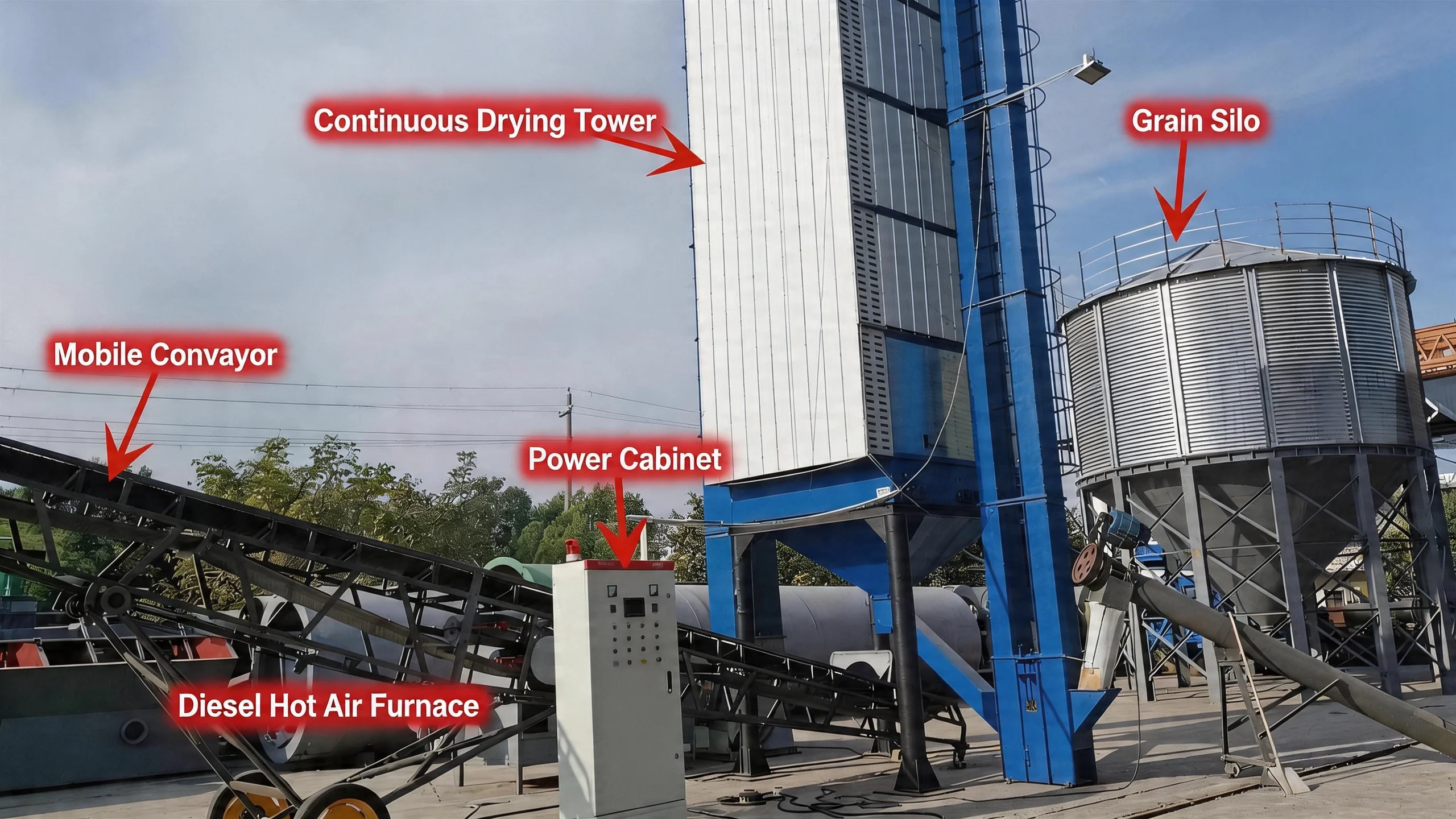
50 TPD Continuous Flow Grain Dryer
The project uses a continuous mixed-flow multi-pass grain dryer specifically engineered for high-moisture tropical corn conditions.
| Parameter | Specification |
|---|---|
| Drying Capacity | 50 tons/day |
| Initial Moisture | Approximately 30% |
| Final Moisture | 13% ±0.5% |
| Drying Type | Continuous mixed-flow tower drying |
| Heating Source | Biomass furnace using corn cobs and rice husks |
Advanced Drying Process
Wet corn enters the top of the drying tower and gradually moves downward through multiple heating and tempering zones.
The controlled airflow and retention time allow moisture to be removed gradually, reducing grain stress and minimizing kernel cracking.
Compared with traditional batch drying methods, the continuous drying system provides:
Stable moisture control
Lower grain damage rate
Higher energy efficiency
Continuous operation during harvest season
Biomass Heating System
Instead of relying on expensive diesel fuel, the drying system uses locally available agricultural biomass including:
Corn cobs
Rice husks
Other agricultural residues
The biomass furnace produces hot air at approximately 120–150°C, which passes indirectly through the drying column to ensure clean and hygienic grain drying without smoke contamination.
This solution significantly reduces drying energy costs while supporting Thailand's Bio-Circular-Green (BCG) economic development strategy.
Automatic Moisture Control
An online NIR (Near-Infrared) moisture sensor continuously monitors dried corn quality at the dryer outlet.
The control system automatically adjusts:
Drying temperature
Airflow rate
Grain retention time
This ensures consistent output moisture of 13% ±0.5%, improving feed quality and storage stability.
Integrated Cooling Section
After drying, hot corn passes through an integrated cooling section where forced ambient air reduces grain temperature close to surrounding conditions.
This prevents condensation inside the storage silos and ensures safe long-term preservation.
C. Main Grain Storage System – 2 × 3,000 Ton Steel Silos
The storage section consists of two high-quality bolted steel grain silos with a combined capacity of 6,000 tons.
| Item | Specification |
|---|---|
| Silo Type | Bolted Steel Grain Silos |
| Quantity | 2 units |
| Capacity | 3,000 tons per silo |
| Total Storage | 6,000 tons |
| Storage Period | Approximately 5 months |
Advanced Aeration System
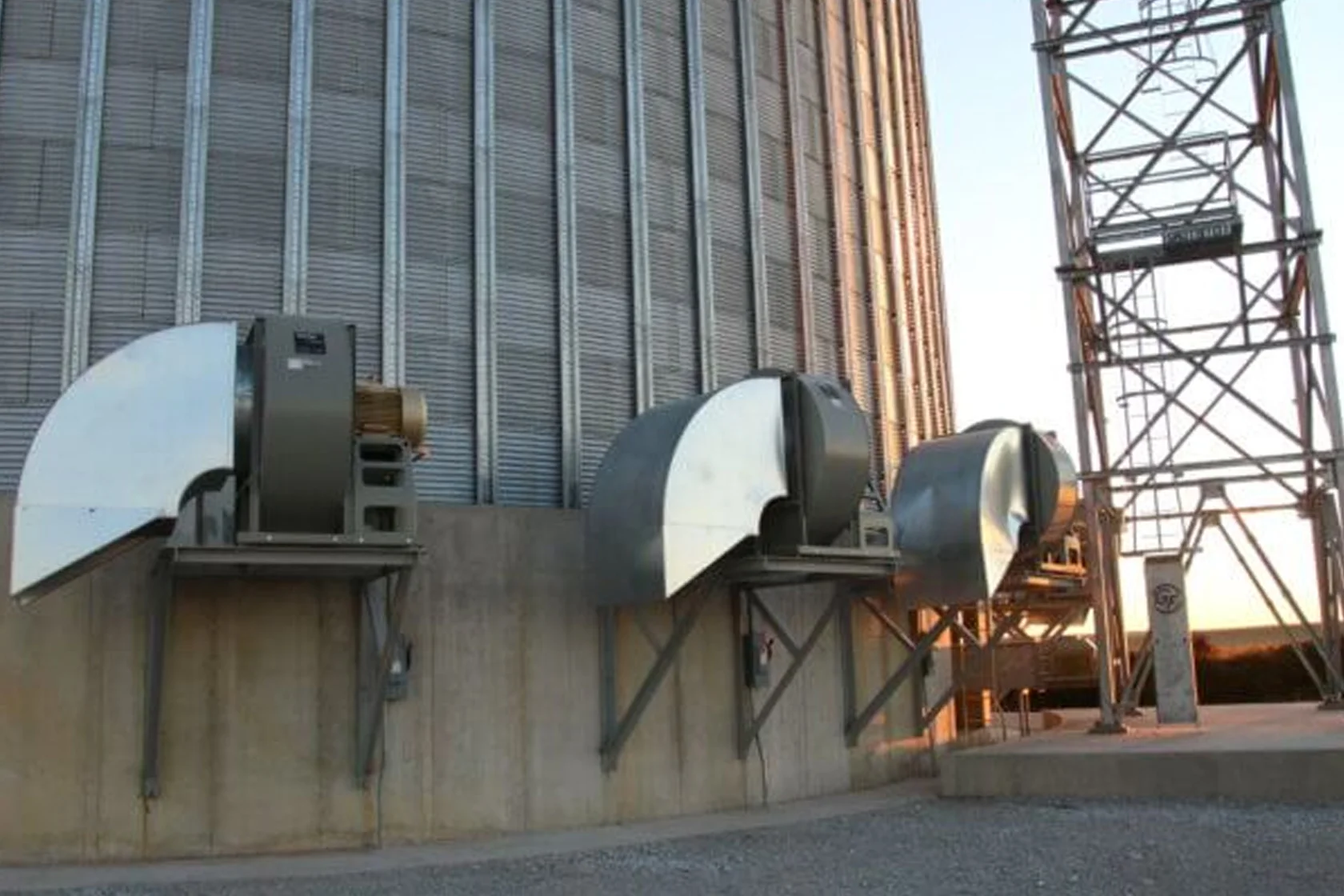
Each silo is equipped with a complete aeration system including:
Full-floor perforated aeration plenum
High-volume low-pressure centrifugal fans
Automated ventilation control
The system provides approximately 0.2–0.3 CFM/bu airflow to maintain safe grain temperature and control moisture migration.
This is especially important during Thailand's hot season when ambient temperatures can reach 38–40°C.
Temperature Monitoring System
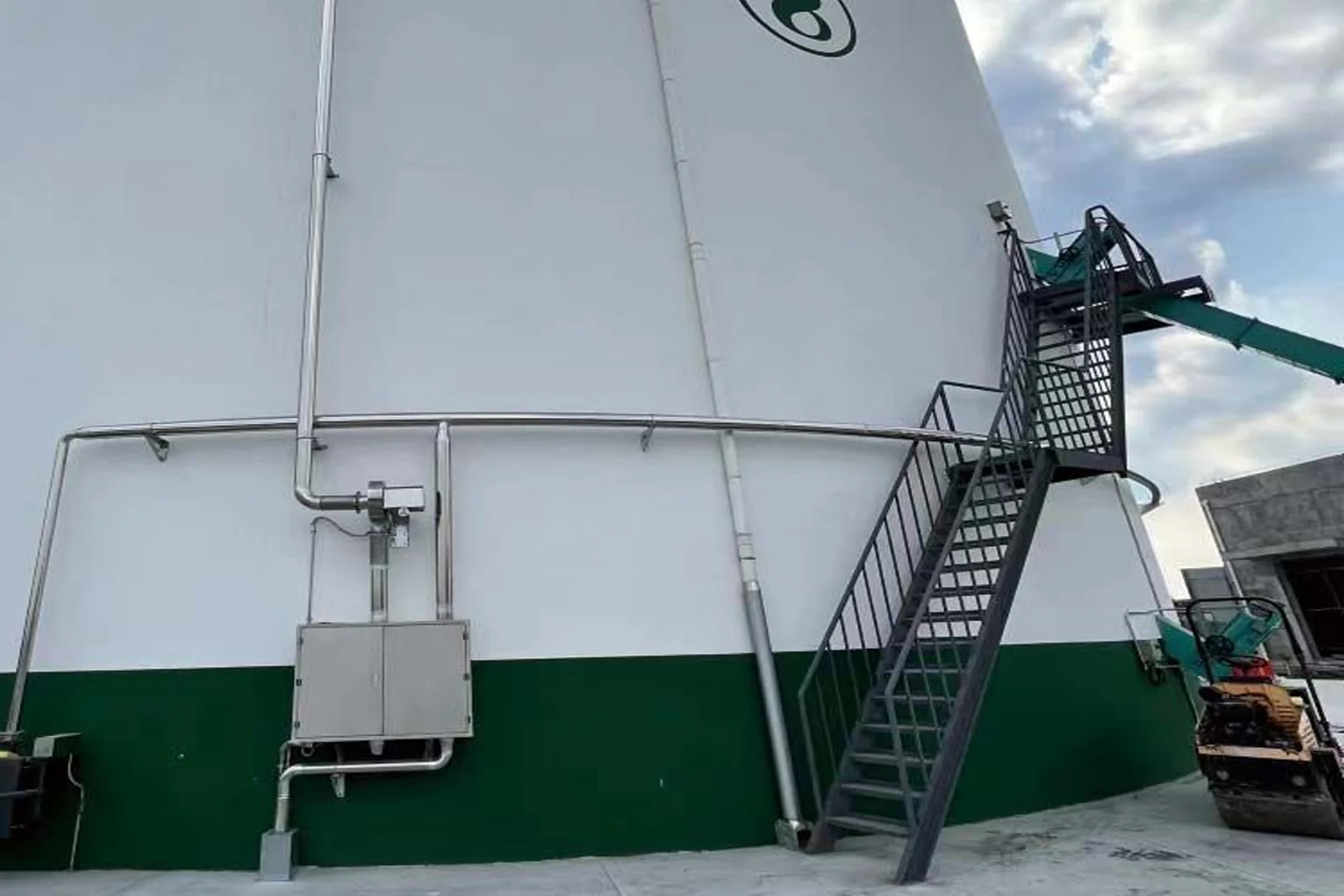
Each silo is equipped with multiple temperature sensor cables connected to a centralized SCADA monitoring system.
16-point temperature monitoring per silo
Real-time hotspot detection
Automatic SMS alerts
Remote storage condition monitoring
The system helps prevent mold growth, insect infestation, and quality deterioration during long-term storage.
D. High-Speed Outbound Handling System
Fast corn delivery to the feed mill was one of the client's most important requirements. The designed system enables continuous and efficient truck loading.
Discharge Hopper
Capacity: 150 tons
Function: Provides approximately 90 minutes of buffer storage
Purpose: Ensures uninterrupted feed mill operation during truck loading cycles
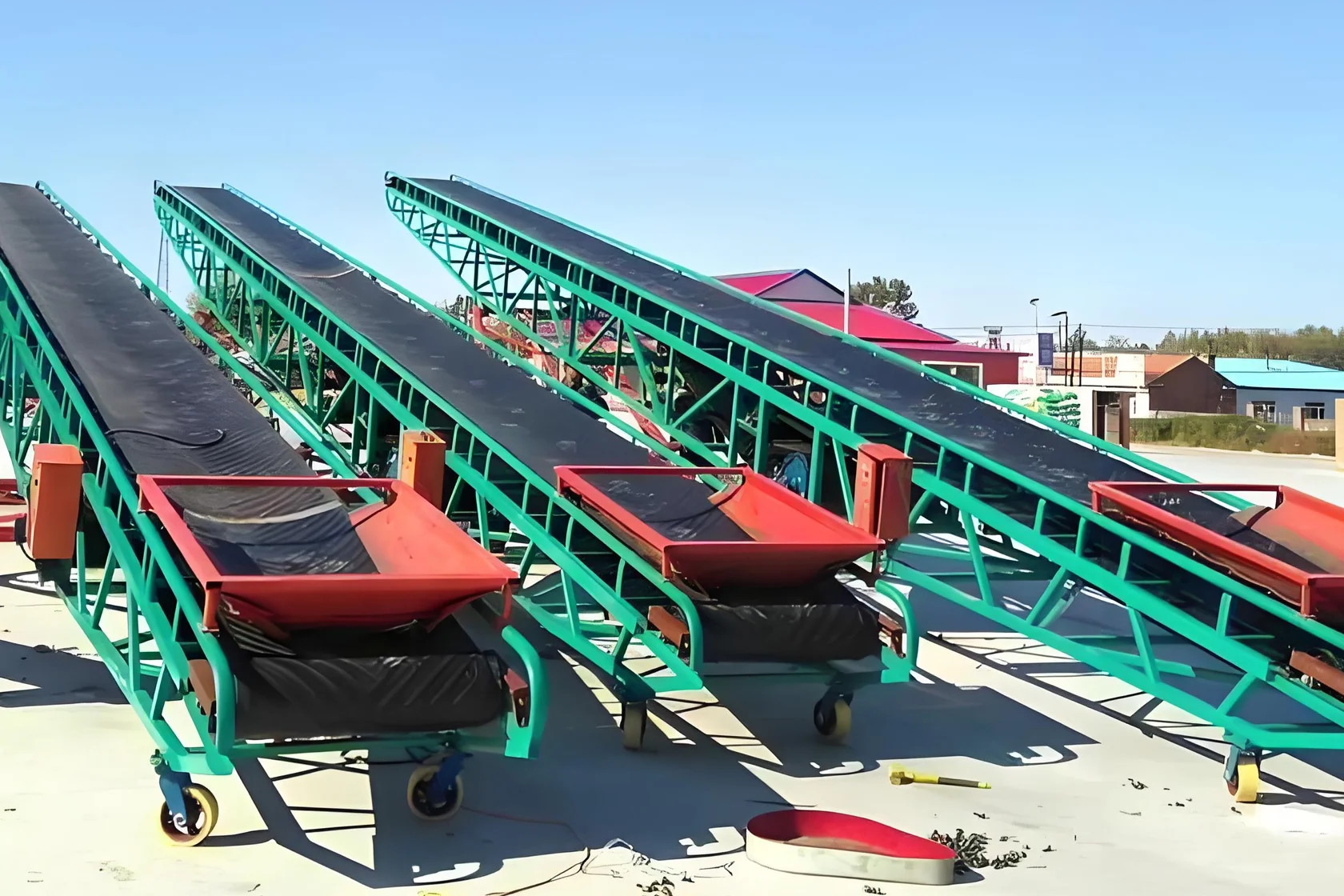
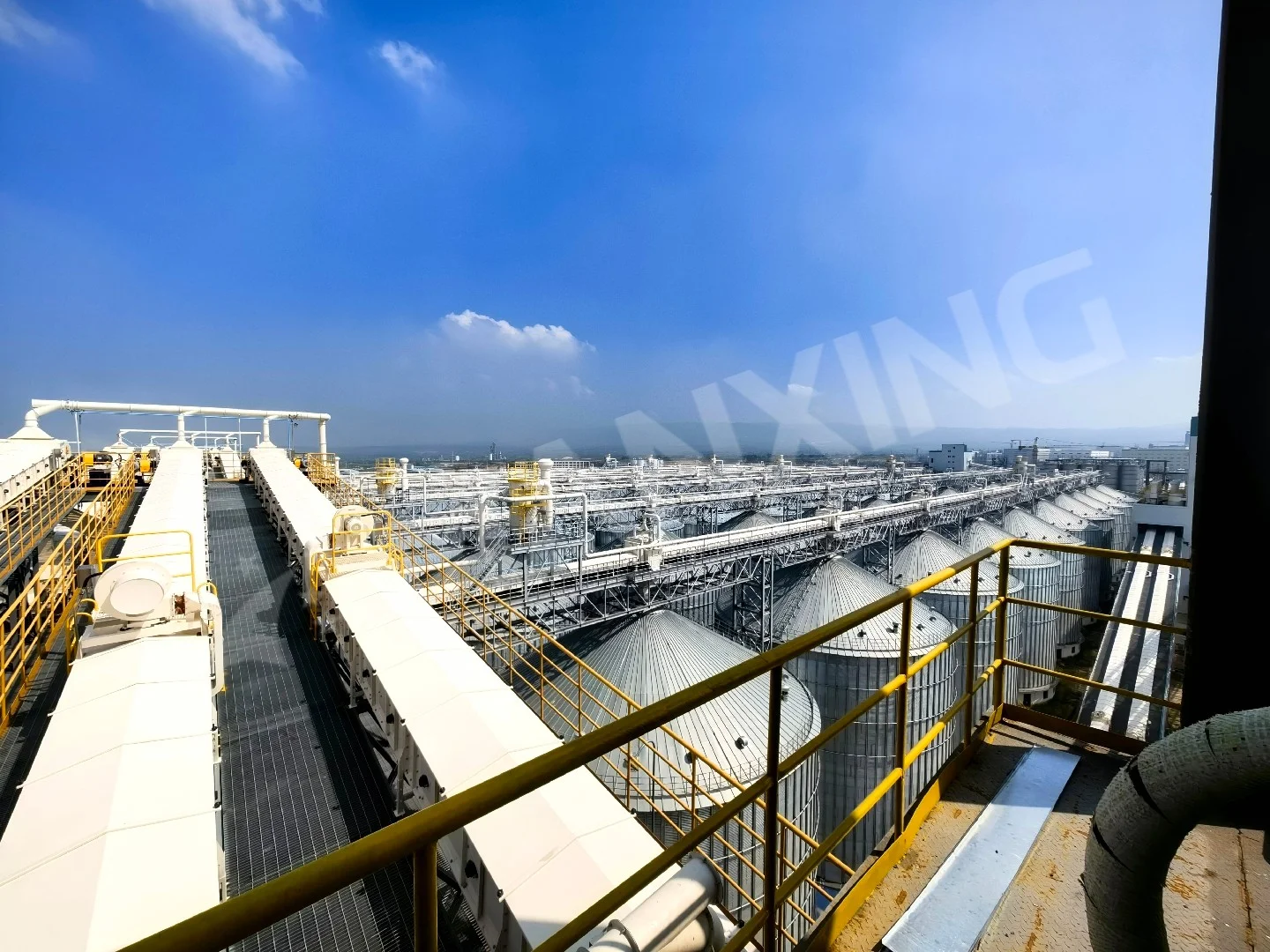
Dual Belt Conveyor System
Two independent heavy-duty belt conveyors are installed for reliable grain transfer.
| Equipment | Capacity |
|---|---|
| Belt Conveyor No.1 | 60 tons/hour |
| Belt Conveyor No.2 | 60 tons/hour |
| Total Outload Capacity | 120 tons/hour |
The dual conveyor design provides operational redundancy. If one conveyor requires maintenance, the second conveyor can continue supplying the feed mill.
Truck Loading Station
A gravity-fed loading spout equipped with dust collection provides efficient truck loading.
40-ton truck filling time: approximately 20–25 minutes
Daily dispatch capability: 200–300 tons within 2–3 hours
Designed loading speed: 100–120 tons/hour
E. Weighbridge & Logistics Control System
Digital Weighbridge
A digital weighbridge is installed at the facility entrance for accurate measurement of inbound wet corn and outbound dried corn shipments.
Size: 3m × 18m
Capacity: 100 tons
Application: Incoming raw material and outgoing product verification
Truck Management System (TMS)
The weighbridge is integrated with the facility management system and ERP platform for complete logistics traceability.
The system records:
Truck information
Batch number
Moisture content
Loading quantity
Truck turnaround time
This improves inventory accuracy, reduces material loss, and provides complete supply chain visibility.
F. Biomass Fuel Storage & Handling
Fuel Storage Facility
A dedicated biomass storage area is provided for collecting and storing corn cobs, rice husks, and other agricultural residues.
Storage area: approximately 500 m²
Fuel handling: Front-end loader feeding system
Fuel source: Local agricultural waste
Energy Efficiency Performance
The 50 TPD dryer consumes approximately 1.2–1.5 tons of biomass per ton of evaporated water.
By utilizing abundant agricultural residues available in Nakhon Ratchasima, the client can achieve approximately 70–80% fuel cost savings compared with conventional diesel drying systems.
3. Implementation & Operational Flow
The complete corn storage and drying facility was designed as a continuous "harvest-to-mill" operation, ensuring smooth material flow from wet corn receiving to final delivery into the feed mill.
| Stage | Equipment | Flow Rate | Function |
|---|---|---|---|
| 1. Wet Corn Intake | Reception Pit + Scalper | 50 t/h | 40-ton trucks unload freshly harvested corn at approximately 30% moisture. Large impurities are removed before drying, and corn cobs are collected for biomass fuel. |
| 2. Grain Drying | 50 TPD Continuous Tower Dryer | Approximately 2.1 t/h average continuous output | Reduces corn moisture from 30% to 13% using biomass-generated hot air while maintaining grain quality. |
| 3. Cooling | Integrated Dryer Cooling Section | Continuous operation | Removes excess heat from dried corn before silo storage to prevent condensation and moisture migration. |
| 4. Storage | 2 × 3,000-ton Bolted Steel Silos | 6,000 tons total capacity | Provides safe long-term storage through aeration, temperature monitoring, and automated management. |
| 5. Outload | 150-ton Discharge Hopper + Dual Belt Conveyors | 120 t/h | Transfers dried corn from silos to the truck loading station at feed mill production speed. |
| 6. Truck Loading | Loading Spout + Dust Collector | 100–120 t/h | Loads 40-ton trucks efficiently within approximately 20–25 minutes. |
| 7. Weighing & Tracking | 3m × 18m, 100T Digital Weighbridge | Per truck cycle | Provides accurate inbound and outbound weighing with full logistics traceability. |
4. Key Design Innovations for the Thai Market
1. Biomass Heat Recovery Using Agricultural Waste
Thailand has a strong agricultural industry with abundant biomass resources, including corn cobs, rice husks, and other crop residues.
The project utilizes these agricultural by-products as the primary energy source for grain drying, transforming low-value waste into renewable fuel.
Compared with traditional diesel-powered drying systems, the biomass heating solution can reduce drying energy costs by approximately 70–80%.
This approach also supports Thailand's Bio-Circular-Green (BCG) economic model by promoting renewable energy utilization and circular agriculture.
2. High-Moisture Corn Handling Technology
Freshly harvested tropical corn with 28–32% moisture has poor flowability and creates challenges for conventional grain handling equipment.
The system incorporates:
Large discharge openings to prevent material blockage
Anti-bridging hopper designs
Heavy-duty conveying equipment
Controlled feeding technology
These features ensure reliable operation during Thailand's wet harvest season.
3. Modular Steel Silo Expansion Design
The bolted steel silo system provides both installation flexibility and future expansion capability.
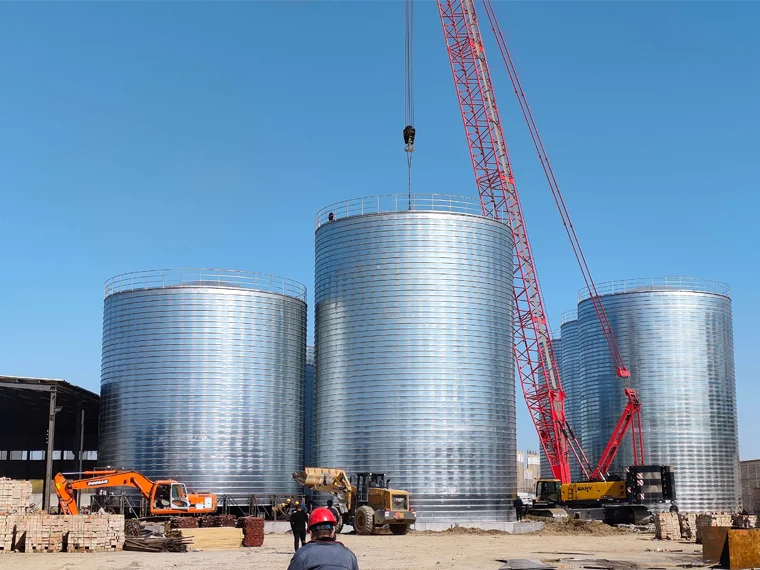
Fast on-site assembly using local construction resources
Reduced installation time compared with welded structures
Foundation design reserved for future additional silos
Supports future feed mill production expansion
4. Dual Outload System for Maximum Reliability
Two independent belt conveyors provide operational redundancy.
Even during maintenance or unexpected downtime of one conveyor, the second conveyor can continue supplying corn to the feed mill, minimizing production interruptions.
5. Climate-Adaptive Aeration Management
Thailand's tropical climate requires special consideration for grain storage management.
The silo aeration system uses environmental monitoring technology to optimize ventilation according to weather conditions.
Humidity sensors prevent unnecessary ventilation during high-humidity periods
Fans operate during cooler night periods to improve cooling efficiency
Temperature monitoring prevents hotspot formation
6. Typhoon-Resistant Steel Silo Structure
The silo structure is engineered to withstand wind loads up to 150 km/h, providing reliable operation under tropical storm conditions common in Southeast Asia.
5. Results & Client Benefits
After implementation of the integrated corn storage and drying facility, the client will achieve improved raw material security, lower operating costs, and greater production reliability.
| Performance Metric | Before Project | After Our Solution | Business Improvement |
|---|---|---|---|
| Corn Procurement Cost | Purchased dried corn with ฿1,800–2,200/ton seasonal premium | Direct harvest purchasing with in-house drying | Estimated savings of ฿1,500–2,000/ton (approximately ฿9–12 million/year) |
| Drying Capacity | No owned drying facility; dependent on external service providers | 50 TPD continuous grain drying system | Full drying independence and elimination of harvest-season delays |
| Moisture Consistency | Supplier moisture variation: 14–18% | Controlled output at 13% ±0.5% | Improved feed quality and storage stability |
| Storage Loss | 8–10% losses from rented warehouses and poor storage conditions | Less than 2% through aeration and monitoring | Reduced grain loss and improved inventory value |
| Outload Speed | 50–60 tons per shift through manual loading | 100–120 tons/hour automated loading | Approximately 10× faster dispatch capability |
| Drying Energy Cost | High dependence on outsourced or diesel drying | Biomass-powered drying using agricultural waste | 70–80% lower fuel cost compared with diesel equivalent |
6. Client Testimonial
"Before this project, we were dependent on middlemen and seasonal price fluctuations. With our own grain silos and drying system, we can purchase corn directly during harvest, dry it ourselves, and maintain enough inventory to operate our feed mill throughout the year.
The biomass furnace is a major breakthrough. We are using corn cobs and rice husks that were previously treated as agricultural waste. This project is not only a silo system — it is a complete supply chain solution for Thailand's feed industry."
7. Conclusion
This integrated corn storage and drying project provides a complete solution for Thailand's growing animal feed industry by combining grain receiving, high-moisture drying, renewable energy utilization, safe storage, and high-speed logistics.
By integrating:
50 TPD continuous biomass-powered grain dryer
2 × 3,000-ton bolted steel grain silos
120 t/h automated outload system
Advanced aeration and temperature monitoring
Integrated truck weighing and logistics management
the facility enables the client to secure raw material supply, reduce seasonal procurement risks, and improve overall feed mill competitiveness.
This project demonstrates how modern grain storage technology can transform an animal feed producer from a price follower into a more independent and efficient agricultural supply chain operator.
Complete Grain Storage & Drying Solutions for Southeast Asia
We provide turnkey grain storage systems, steel silos, grain dryers, biomass drying solutions, and feed mill material handling systems for customers worldwide.
Contact us for customized grain storage and drying solutions designed for your local climate, raw materials, and production requirements.