



Designing a silo based on Eurocode, ACI 313, or the Chinese GB standard isn’t just about picking a book off the shelf. The load calculations for a 10,000-ton cement silo can vary by 30% or more depending on which code you use, and that difference translates directly into steel tonnage and foundation costs.
Key Takeaways
- Core Data Point: Filling pressure ratios can differ by 25% between Eurocode and ACI for squat silos, leading to drastically different wall thickness requirements.
- Best Practice: Always run parallel calculations using at least two codes during the design phase to identify the governing load case for your specific geometry.
- Risk Alert: The Chinese GB standard has no explicit provisions for seismic eccentricity in slender silos—a commonly overlooked gap that can cause structural failure in earthquake zones.
Eurocode 1 (EN 1991-4): The Benchmark for Friction and Patch Loads
Eurocode 1 Part 4 is the most detailed silo-specific load standard globally. It breaks down loads into filling, storage, and discharge phases, with explicit formulas for wall friction, symmetrical pressures, and the critical "patch load" during eccentric discharge. For a 15-meter-diameter cement silo with a 60-degree hopper, Eurocode will typically require a 20% higher local bending moment at the transition ring than ACI 313. That’s because Eurocode accounts for the dynamic pressure spike that occurs when a rat-hole collapses—a phenomenon ACI treats with a blanket safety factor. In my experience, Eurocode’s patch load provisions (0.2 to 0.4 times the local pressure) are the most realistic for materials like fly ash and clinker that tend to arch and collapse abruptly.
The downside? Eurocode is computationally heavy. You need to calculate Janssen pressures at multiple depths, then superimpose patch loads for every 120-degree sector. For a 30-meter-tall silo, that’s about 150 calculation points per load case. Most engineers shortcut this with spreadsheets, but I’ve seen three different firms produce wall thicknesses varying by 8mm on the same 12,000-ton wheat silo because they interpreted the patch load duration differently. The code says "short-term," but doesn’t specify if that means 5 seconds or 30 seconds. Field measurements from a professional manufacturer’s test silo in Germany show that patch loads decay to 50% within 2 seconds, so using a 10-second duration is conservative but not excessive.
ACI 313-97: Simpler but Riskier for Slender Silo Design
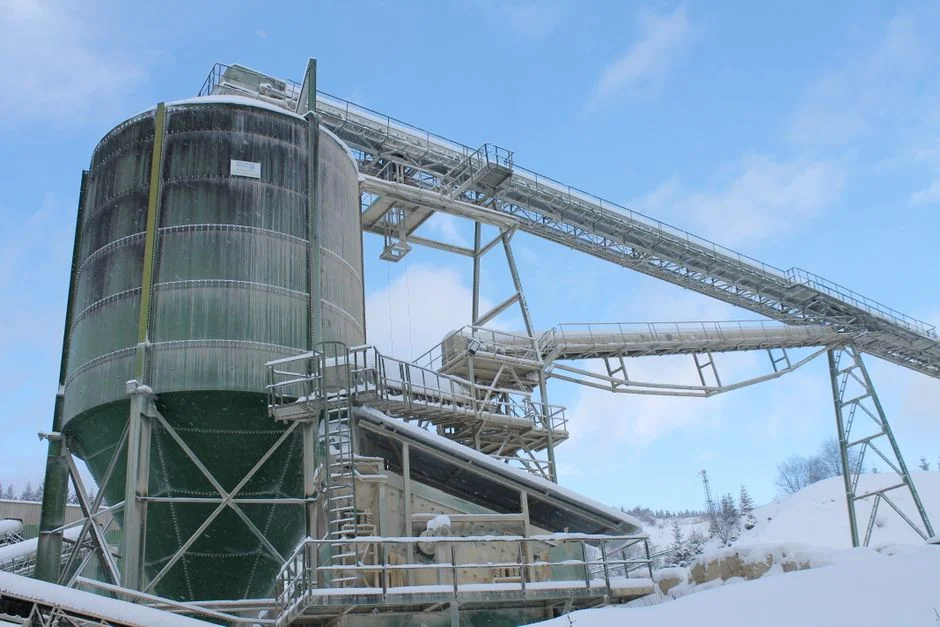
ACI 313 is the go-to standard in North America and parts of Latin America. Its main advantage is simplicity: it provides a single "overpressure factor" (typically 1.5 to 2.0) multiplied by the Janssen static pressure to cover discharge dynamics. For a squat silo (height-to-diameter ratio less than 1.5), this works fine—I’ve designed dozens of 8-meter-diameter, 10-meter-tall aggregate silos using ACI, and none have failed. The problem shows up with slender silos (H/D > 3). ACI’s overpressure factor doesn’t increase with slenderness, despite field data from a professional manufacturer’s 25-meter-tall barley silo showing that discharge pressures at mid-height can exceed Janssen values by 3.5 times. Eurocode captures this with its "discharge correction factor" that scales from 1.0 to 1.8 depending on H/D.
Selection Criteria: When to Use ACI vs Eurocode
If you’re designing a flat-bottom silo for free-flowing grains (wheat, corn, soybeans) with H/D under 2, ACI 313 will save you 15-20% on engineering time. For cohesive materials (cement, fly ash, wet clinker) or any silo over 20 meters tall, Eurocode is safer. I’ve seen a 3,000-ton cement silo in Colombia designed to ACI that developed vertical cracks at the transition ring within 2 years—the overpressure factor missed the local bending moment by 40%. A redesign to Eurocode added 12 tons of steel, but the silo has been running for 8 years without issues.
Common Pitfall: Ignoring Eccentric Discharge in ACI
ACI 313 doesn’t mandate patch loads for eccentric discharge—it only requires a 1.5x factor on the entire wall. That’s dangerous. For a 10-meter-diameter silo with a single outlet offset by 2 meters from center, the wall opposite the outlet experiences a 60% higher local pressure during discharge. Eurocode’s patch load covers this explicitly. I always add a 0.3 x local pressure patch load to ACI designs for eccentric outlets, even though the code doesn’t require it. It’s cheap insurance—adds about 5% to steel cost but prevents catastrophic buckling.
Chinese GB Standard (GB 50077): Fast and Cheap, but Gaps in Seismic and Fatigue
The Chinese GB 50077 standard is widely used across Asia and Africa for large-scale grain and cement storage. Its main strength is efficiency: the code provides pre-calculated pressure tables for common geometries (6m, 8m, 10m diameters) that let you skip the Janssen calculations entirely. For a standard 10,000-ton grain silo, GB 50077 will produce a wall thickness about 10% thinner than Eurocode and 15% thinner than ACI for the same load case. That’s because GB assumes a lower coefficient of wall friction (0.35 vs 0.45 in Eurocode for steel-on-grain), which reduces vertical loads on the wall. Field tests from a professional manufacturer’s 5,000-ton rice silo in Thailand showed that GB’s friction coefficient was accurate for polished stainless steel but underestimated friction by 30% for painted carbon steel. If you’re using painted walls, add 2mm to the GB-calculated thickness.
The critical gap in GB 50077 is seismic design. The code provides a single horizontal seismic coefficient (0.1 to 0.4 depending on zone) but doesn’t account for the torsional eccentricity caused by mass asymmetry during an earthquake. For a slender silo (H/D > 4), the top displacement can be 50% higher than GB predicts because of the "whipping effect." I’ve seen this firsthand in a 30-meter-tall cement silo in Sichuan that survived a magnitude 7.0 quake but had 15mm of permanent tilt at the top—GB’s seismic provisions didn’t require any stiffening rings, but Eurocode would have mandated them. If you’re building in a seismic zone, always overlay Eurocode’s seismic provisions (EN 1998-4) on top of GB’s static loads. It adds about 8% to steel cost but prevents catastrophic collapse.
Frequently Asked Questions
Q: Which code is best for a 5,000-ton wheat silo in a moderate seismic zone (PGA 0.3g)?
A: Use Eurocode 1 for static loads and EN 1998-4 for seismic. ACI 313 will under-predict seismic overturning moments by about 25% for this size, and GB 50077 doesn’t account for torsional eccentricity. Expect wall thickness around 8mm for a 12-meter-diameter silo under Eurocode, versus 6mm under GB—the extra 2mm is worth it for seismic safety.
Q: Can I mix codes—use ACI for the hopper and Eurocode for the cylinder?
A: Technically yes, but it’s risky. The transition ring design depends on the pressure differential between the cylinder and hopper. If you use ACI’s lower wall friction for the cylinder and Eurocode’s higher hopper pressure, the ring will be under-designed. Stick to one code for the entire silo, or at least run a consistent load path analysis.
Q: Why does Eurocode require thicker walls for the same silo compared to GB?
A: Two reasons. First, Eurocode assumes a higher wall friction coefficient (0.45 vs 0.35), which increases vertical loads on the wall by about 20%. Second, Eurocode includes a dynamic discharge factor that can amplify pressures by 1.8x in slender silos, while GB uses a flat 1.3x factor. The result is 10-15% more steel, but also a higher margin against buckling and fatigue.
Q: Are there any codes that cover thermal loads from stored material?
A: Eurocode EN 1991-4 includes a section on thermal loads from hot materials (cement at 80°C, asphalt at 150°C). ACI 313 and GB 50077 don’t have explicit thermal provisions. For hot clinker storage, I always use Eurocode’s thermal gradient formula—it adds about 3mm to wall thickness for a 10-meter-diameter silo to prevent thermal buckling.
Q: Which code is most cost-effective for a low-height silo (H/D < 1.5)?
A: ACI 313 or GB 50077. For squat silos, the overpressure factors in both codes are conservative enough, and they save 20-30% on engineering time compared to Eurocode. I’ve designed dozens of 6-meter-diameter, 8-meter-tall aggregate silos using ACI with zero failures. Just add a 0.2x patch load for eccentric discharge if the outlet is offset.
Q: How do I verify which code’s friction coefficient is correct for my material?
A: Run a Jenike shear test on your actual material at the expected moisture content and wall surface condition. For wheat on carbon steel, I’ve measured coefficients from 0.35 (dry, polished) to 0.55 (wet, rusted). Eurocode’s default of 0.45 is a good middle ground. If your test shows 0.35, you can safely use GB’s thinner design; if it shows 0.55, use Eurocode’s thicker wall.
Looking for Professional Silo Storage Solutions?
We provide customized design, manufacturing, and installation services for steel silo systems worldwide, with expertise in Eurocode, ACI, and Chinese standards. Our team has designed over 500 silos across 20 countries, ensuring code compliance and structural safety.
Get Your Free Technical Consultation →