
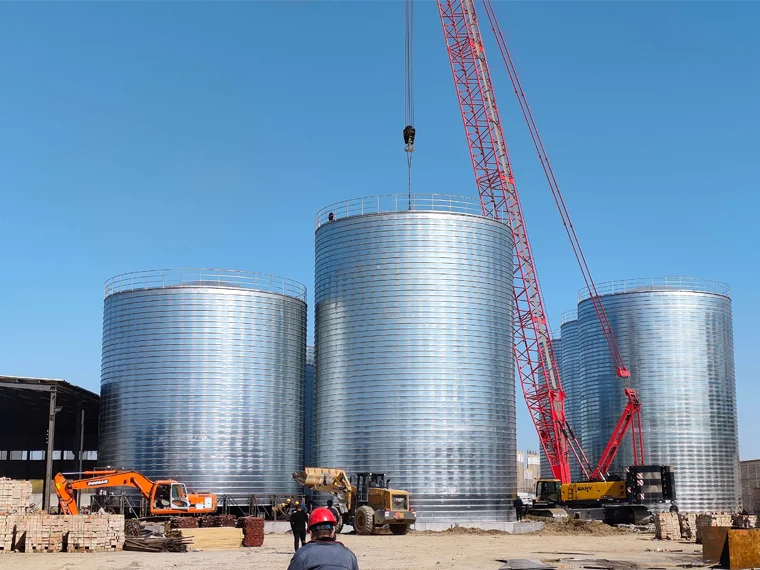
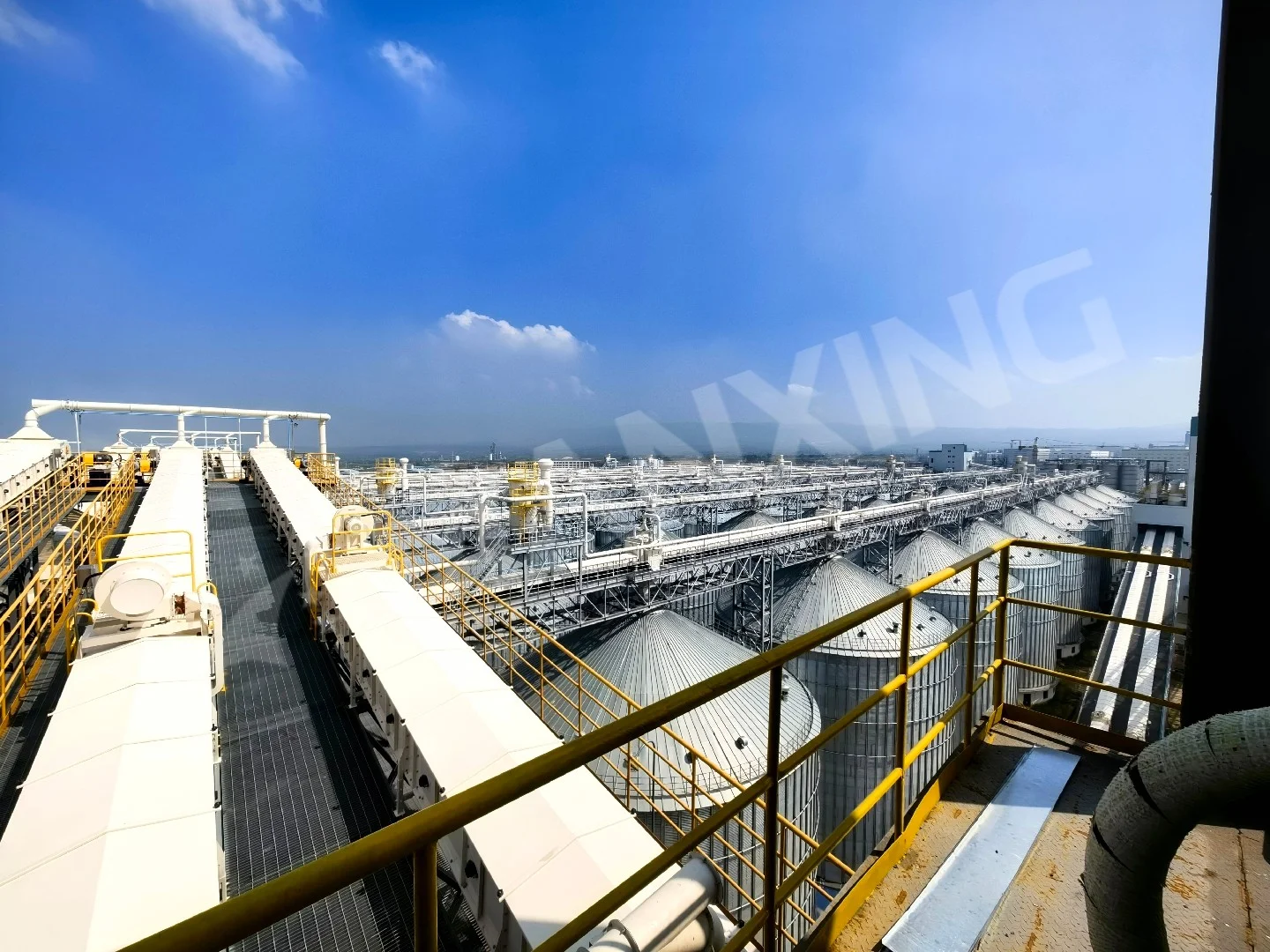


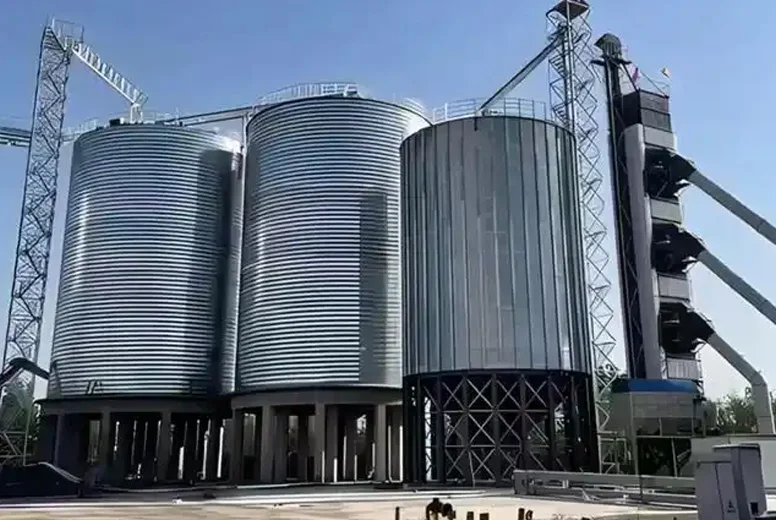
Ukraine’s strategic agricultural and industrial sectors demand storage solutions that can withstand extreme temperature swings and high humidity. A recently completed concrete silo project demonstrates how high-strength concrete design, segmented construction, and intelligent climate control systems set a new benchmark for grain and bulk material storage in the region. This article explores the core technologies, operational benefits, and key considerations for implementing concrete silos in Ukraine.
Core Design and Technical Features of the Ukrainian Concrete Silo Project
This project employs several innovative technologies to ensure long-term stability and operational efficiency under Ukraine’s challenging climate. The core feature is the use of high-performance ready-mix concrete with a compressive strength exceeding 40 MPa, paired with a customized rebar layout to handle the immense internal pressure during filling and discharge. To counter the high humidity and risk of corrosion from agricultural chemicals, all reinforcement and exposed surfaces are coated with a protective anti-corrosion layer, significantly extending the structure’s lifespan. The segmented construction method not only optimizes the construction timeline but also facilitates future maintenance and inspection.
For environmental control, the silo integrates embedded insulation panels and an active ventilation system. This system precisely maintains internal temperature and humidity, effectively preventing grain mold and pest infestation. This is particularly critical for sensitive crops like wheat and corn, ensuring they remain in export-grade condition during long-term storage.
Solving Ukraine’s Core Agricultural and Industrial Storage Challenges
As a major global grain exporter, Ukraine’s storage facilities face two primary challenges: extreme seasonal temperature variation (from -30°C in winter to over 35°C in summer) and the need for rapid drying and long-term preservation of harvested grain. Traditional steel silos are prone to condensation under these temperature extremes, leading to grain quality degradation. Concrete silos, with their high thermal mass, effectively buffer temperature fluctuations. Combined with an active climate control system, they stabilize internal humidity within a safe threshold, dramatically reducing spoilage rates.
Agricultural Applications: From Field to Export
In the agricultural sector, this silo is designed primarily for storing wheat, corn, and barley. Its airtight construction, rodent and insect-proof design, and integrated fumigation ports allow grain to maintain export-grade quality for up to 12 months. The project also includes provisions for rapid loading and unloading, enabling seamless integration with rail and port logistics for enhanced supply chain efficiency.
Customized Solutions for Industrial and Feed Industries
For the feed industry, the silo’s interior features a smooth wall surface and an anti-static coating to prevent the accumulation of feed dust and the risk of spontaneous combustion. A partitioned storage and precise discharge system allows for blending different formulas without cross-contamination. For industrial materials like cement, the high-strength concrete structure can handle higher bulk densities and is equipped with pneumatic conveying interfaces for fully enclosed, dust-free operation.
Key Takeaways
- Key Data: High-performance concrete compressive strength exceeds 40 MPa, a 33% improvement over traditional C30 grade, significantly enhancing crack resistance and durability.
- Best Practice: The segmented construction method can shorten the project timeline by 15-20% while allowing for phased quality inspections, reducing the risk of rework.
- Watch Out For: In Ukraine’s high-humidity regions, it is essential to apply epoxy or zinc-based anti-corrosion coatings to all rebar. Failure to do so can lead to rust-induced cracking within 3-5 years.
- Pro Tip: Use air-entrained concrete (4-6% air content) to create microscopic bubbles that buffer ice crystal pressure during extreme winter freezes, preventing internal micro-cracking.
- Bottom Line: While concrete silos have a 20-30% higher initial cost than steel, their significantly lower maintenance needs and superior thermal performance often result in a lower total cost of ownership over a 50-year design life. Related: Flat bottom silo for agricultural use >
Segmented Construction and Intelligent Monitoring: Keys to Operational Efficiency
A standout feature of this project is the modular segmented construction strategy. By dividing the silo into four independent construction segments—foundation, wall, hopper, and roof—the risk of working at height is reduced, and prefabrication can occur indoors during cold months, with final assembly taking place when temperatures rise. Dur
ing construction, total stations and laser distance meters continuously monitor verticality, ensuring each segment’s deviation is kept within ±5 mm. During operation, the silo is equipped with IoT sensors that provide real-time data on temperature, humidity, material level, and structural stress. Maintenance personnel can remotely adjust ventilation strategies via a smartphone app, enabling unmanned, intelligent management.Frequently Asked Questions
Q: How does Ukraine’s extreme temperature difference specifically affect the long-term durability of a concrete silo, and how is this mitigated through design?
A: Ukraine’s winter lows (-30°C) can cause water inside the concrete to freeze and expand, creating micro-cracks. Summer highs (35°C+) accelerate carbonation. To mitigate this, the project uses air-entrained concrete (4-6% air content) to create microscopic bubbles that buffer ice crystal pressure. Additionally, silica fume and fly ash are added to reduce heat of hydration and improve impermeability. All exposed surfaces are coated with a flexible polyurea waterproofing layer to block moisture and CO2 penetration, achieving a design life of over 50 years.
Q: What is the difference in initial investment and maintenance costs between concrete and steel silos in Ukraine, and what is the typical return on investment (ROI) period?
A: Concrete silos typically have a 20-30% higher initial cost than steel silos of the same capacity. However, their maintenance costs are significantly lower. Steel silos require recoating every 5-7 years to prevent corrosion, while concrete silos only need seal inspections every 10-15 years. In Ukraine, where steel prices are volatile and welding is restricted during winter, the total life-cycle cost (LCC) of a concrete solution is often lower. For a 100,000-ton capacity project, the ROI for a concrete silo is approximately 8-10 years, compared to 12-15 years for a steel silo due to higher maintenance and energy costs.
Q: Is the “segmented construction method” used in this project suitable for all ground conditions, particularly soft soil?
A: The segmented method has specific ground condition requirements. In Ukraine’s black soil or soft soil areas, deep mixing piles or CFG piles must first be used to improve the foundation’s bearing capacity to over 200 kPa. During construction, each wall segment must be left to cure for at least 7 days, reaching 70% of its design strength, before the next segment is poured to avoid uneven settlement. For high-seismicity zones, seismic isolation rubber bearings are installed between the foundation and the wall, a technique successfully applied in projects in southern Ukraine.
Q: How does the concrete silo’s thermal mass compare to steel in preventing condensation, and what are the specific energy savings?
A: Concrete’s high thermal mass acts as a thermal battery, absorbing and slowly releasing heat. This dramatically reduces the temperature differential between the silo wall and the stored grain, which is the primary cause of condensation in steel silos. In practice, this can lower the energy required for active aeration and temperature control by 25-40% compared to a steel silo, as the system doesn’t need to work as hard to counteract rapid external temperature changes.
Q: What specific IoT sensors are integrated into this concrete silo project, and how do they improve operational decision-making?
A: The project integrates a network of sensors including cable-based temperature sensors at multiple grain depths, humidity probes in the headspace, radar level transmitters for continuous inventory, and strain gauges embedded in the concrete wall. This data is fed into a central platform that can automatically trigger aeration fans to maintain optimal conditions. For example, if a localized hot spot is detected, the system can activate specific fans to cool that area, preventing spoilage without manual intervention and reducing energy waste.
Need expert concrete silo solutions for your Ukrainian project?
We provide full-cycle services from geological surveys and structural design to precast component manufacturing and on-site installation. We support high-strength concrete mixes from 40 MPa to 60 MPa and integrate IoT-based intelligent monitoring systems. With multiple successful project deliveries in Ukraine’s agricultural and industrial sectors, we are ready to help.
Get a Free Technical Consultation →