
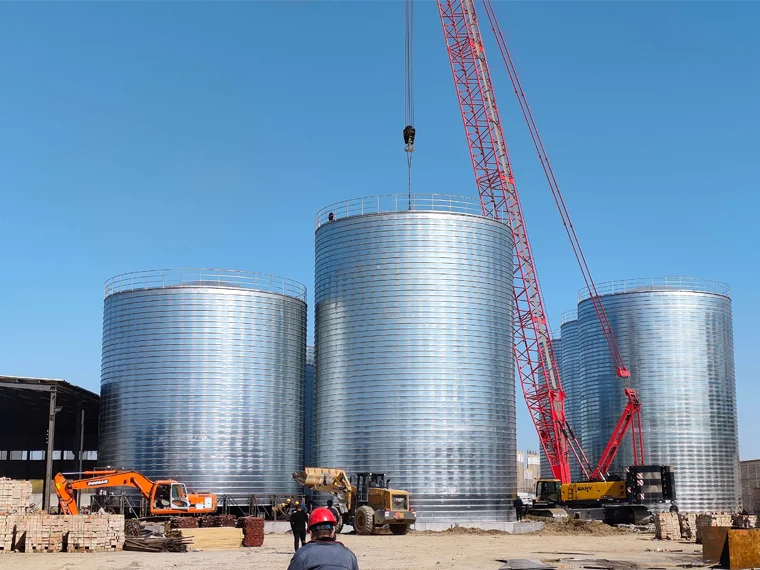



A G90 galvanized coating on steel silo panels isn't just a spec—it's a corrosion warranty that can fail silently if the coating weight falls below 0.45 oz/ft². Measuring that thickness correctly, using a magnetic gauge per ASTM A123, separates a 20-year silo from one that starts rusting in five.
Key Takeaways
- Core Data Point: The minimum average coating weight for structural silo panels per ASTM A123 is 3.9 oz/ft² (total both sides), equivalent to about 3.5 mils per side. Anything less risks premature corrosion in agricultural environments.
- Best Practice: Use a calibrated magnetic thickness gauge with a two-point verification (shim and bare steel) before every inspection batch. Spot-check at least five points per panel—corners and edges are where coating thins first.
- Risk Alert: Coating weight (oz/ft²) and coating thickness (mils) are not interchangeable without conversion. A reading of 2.0 mils on one side does NOT mean the total coating weight is 2.0 oz/ft²—you must sum both sides and apply the ASTM conversion factor (1 mil ≈ 0.43 oz/ft²).
Why Coating Weight Verification Matters for Steel Silo Longevity
Galvanizing is the primary corrosion defense for bolted steel silo panels, especially in grain storage where humidity, acidic dust, and condensation create a corrosive microclimate. The zinc coating acts as a sacrificial anode—it corrodes instead of the steel. But that protection is finite. A standard G90 coating provides roughly 0.45 oz/ft² of zinc per side. In a clean rural environment, that might last 25 years. In a poultry feed plant with ammonia and moisture, you could see significant zinc loss in 8–10 years if the coating is marginal.
I’ve inspected silos where the spec called for G90 but field measurements showed spots as low as 0.3 oz/ft²—barely G60. Those panels were already showing red rust within three years of installation. The root cause? The manufacturer either skimped on the galvanizing bath time or the steel surface wasn’t properly prepared. That’s why you don’t rely on a certificate of compliance alone. You verify with a gauge. The industry standard is ASTM A123, which requires the average of five readings across the panel to meet the minimum. One low spot doesn't fail the panel, but a pattern of low readings means the entire batch is suspect.
How to Measure Galvanizing Thickness: Magnetic Gauge Method
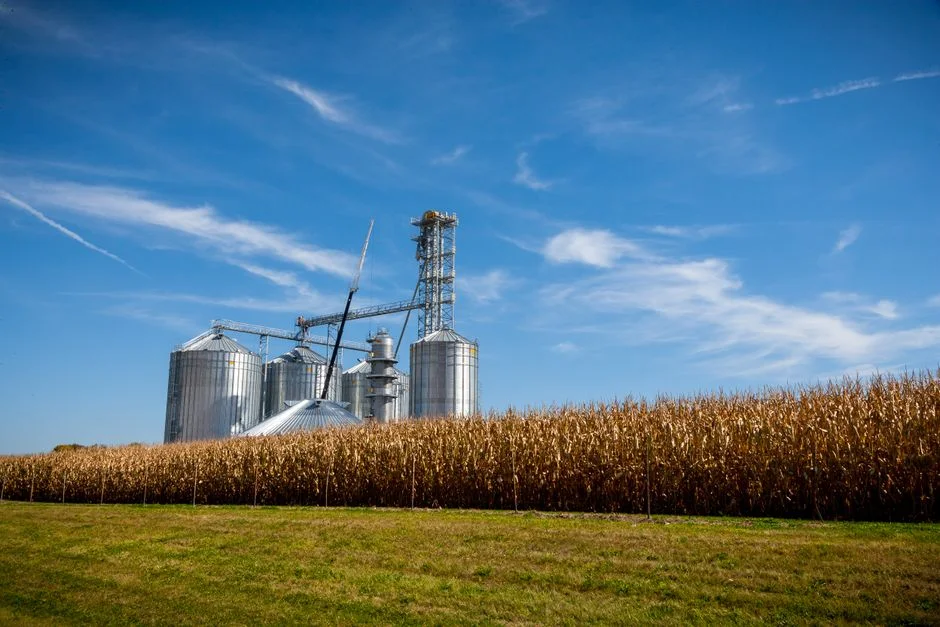
The only practical field method for verifying coating thickness on installed or loose silo panels is the magnetic thickness gauge (also called a coating thickness gauge). It works by measuring the magnetic flux between the probe and the steel substrate—the thicker the non-magnetic zinc layer, the greater the distance, and the higher the reading. For silo panels, you’ll typically use a Type 1 gauge (magnetic pull-off) or a Type 2 gauge (electronic constant-pressure probe). Type 2 is faster for multiple readings. Calibration is critical: zero the gauge on a piece of bare steel from the same batch, then verify with a shim of known thickness (e.g., 3.0 mils). If the gauge reads 3.0 ±0.2 mils, you’re good.
Take readings at five locations per panel: center, 2 inches from each corner, and one mid-edge. Corners and edges often have thinner coating due to drainage during galvanizing—zinc runs off before it solidifies. If you’re measuring a G90 spec, you’re looking for a minimum of 3.5 mils per side (0.45 oz/ft² per side). But remember: ASTM A123 specifies the total coating weight on both sides combined. So if one side reads 2.0 mils and the other reads 1.5 mils, the total is 3.5 mils, which converts to about 1.5 oz/ft² total. That’s below the G90 minimum of 0.90 oz/ft² total. Always sum both sides and convert.
Common Pitfall: Confusing Coating Thickness with Coating Weight
This is the most frequent mistake I see on job sites. A gauge reads in mils (thousandths of an inch). A silo spec calls out oz/ft² (coating weight). They are not the same. The conversion factor is approximately 1 mil = 0.43 oz/ft² for zinc. So a 3.5 mil reading per side equals 1.5 oz/ft² per side. But the ASTM standard for G90 is 0.45 oz/ft² per side minimum, which is about 1.05 mils per side. If your gauge reads 1.0 mil, you’re borderline. Don’t assume a higher mil reading automatically means better protection—it could mean the steel is thinner, which is a different problem.
Risk Alert: Surface Roughness and False Readings
A rough galvanized surface—common on hot-dip panels—can give artificially high readings because the probe sits on a peak, not the average surface. Always take multiple readings in the same spot and average them. If readings vary by more than 0.5 mils, the surface is too rough for reliable single-point measurement. In that case, use the stripping method (ASTM A90) for a lab-grade verification. But for field work, a Type 2 gauge with a V-groove probe can help on curved or rough panels.
Field Verification Protocol: What Every Silo Erection Team Should Do
Before accepting a shipment of silo panels, your quality control team should randomly sample at least 5% of the panels, or a minimum of 10 panels per batch. Mark each panel, take five readings per panel (as described), and record the average. Compare against the purchase spec—typically G90 or G115 for agricultural silos. If the average of any panel falls below 0.40 oz/ft² per side (about 0.93 mils), flag that panel. If more than 10% of sampled panels fail, reject the entire batch. I’ve seen this happen twice in my career—both times the manufacturer tried to pass off G60 as G90. A $200 gauge saved the client $50,000 in premature replacement costs.
Also check for uniformity. A panel that reads 4.0 mils on one end and 1.5 mils on the other indicates poor bath drainage or inconsistent immersion. That panel will fail at the thin spot first. For flat bottom silo for government grain storage projects, government inspectors often require third-party verification with a certified gauge. Don’t skip it—it’s cheaper than a lawsuit. For hopper bottom silo with conical base installations, pay extra attention to the cone panels—they often have thinner coating due to their geometry. I recommend specifying G115 (4.0 oz/ft² total) for cone sections in any concrete silo for poultry feed plant where ammonia exposure is high.
Frequently Asked Questions
Q: Can I use a simple magnet to check galvanizing thickness?
A: No. A magnet will stick to galvanized steel regardless of coating thickness because the zinc layer is non-magnetic but thin. The magnet test only tells you if the steel is present, not how much zinc is on it. You need a magnetic thickness gauge that measures the gap between the probe and the steel. A simple magnet gives you zero useful data on coating weight.
Q: What is the difference between G90 and G115 galvanizing for silo panels?
A: G90 means a minimum total coating weight of 0.90 oz/ft² on both sides combined (approximately 2.1 mils total thickness). G115 requires 1.15 oz/ft² total (about 2.7 mils total). G115 is recommended for corrosive environments like poultry feed plants or coastal areas. The cost difference is roughly 10–15% more for G115, but it can double the service life in aggressive conditions.
Q: How do I convert coating thickness (mils) to coating weight (oz/ft²)?
A: Multiply the thickness in mils by 0.43 to get oz/ft² per side. For example, 3.5 mils × 0.43 = 1.505 oz/ft² per side. For total coating weight (both sides), add the two sides and multiply by 0.43. So 3.5 mils on one side and 3.0 on the other = 6.5 mils total × 0.43 = 2.795 oz/ft² total. Always use the total for ASTM A123 compliance.
Q: What causes thin galvanizing on silo panel edges?
A: During hot-dip galvanizing, the panel is immersed in molten zinc and then withdrawn. Gravity causes excess zinc to drain off. Edges and corners have less surface tension to hold the zinc, so it runs off faster, leaving a thinner coating. This is normal to some degree, but if edges are below 0.3 oz/ft², the panel may need to be re-dipped or rejected. Proper drainage control during manufacturing can minimize this.
Q: How often should I recalibrate my magnetic thickness gauge?
A: Calibrate before each use, and verify with a shim every 50 readings. If you drop the gauge or it experiences a temperature shock (e.g., from a hot truck to a cold site), recalibrate immediately. Most quality gauges drift less than 1% per year, but field conditions—dust, oil, humidity—can affect readings. Always zero on bare steel from the same batch as the panels you're measuring.
Q: Can I measure galvanizing thickness on a curved silo panel?
A: Yes, but you need a probe designed for curved surfaces—a V-groove or small-diameter probe. Standard flat probes can give false readings on curves because the probe doesn't sit flush. For hopper bottom silo with dust collection system panels, which often have complex curves, use a flexible shim or a two-point calibration on a curved reference piece. If in doubt, use the stripping method (ASTM A90) for critical panels.
Looking for Professional Silo Storage Solutions?
We provide customized design, manufacturing, and installation services for steel silo systems worldwide. Our quality control includes third-party galvanizing thickness verification on every panel batch.
Get Your Free Technical Consultation →