


Modern industrial grain silos are far more than simple storage containers; they are complex systems integrating temperature control, airtight sealing, conveying, and automation. Based on 15 years of industry experience, this article breaks down the five core process design requirements that prevent mold, pests, and operational inefficiency, ensuring your grain storage system delivers maximum ROI.
The Core Goal of Industrial Grain Silo Process Design: From Storage to System Integration
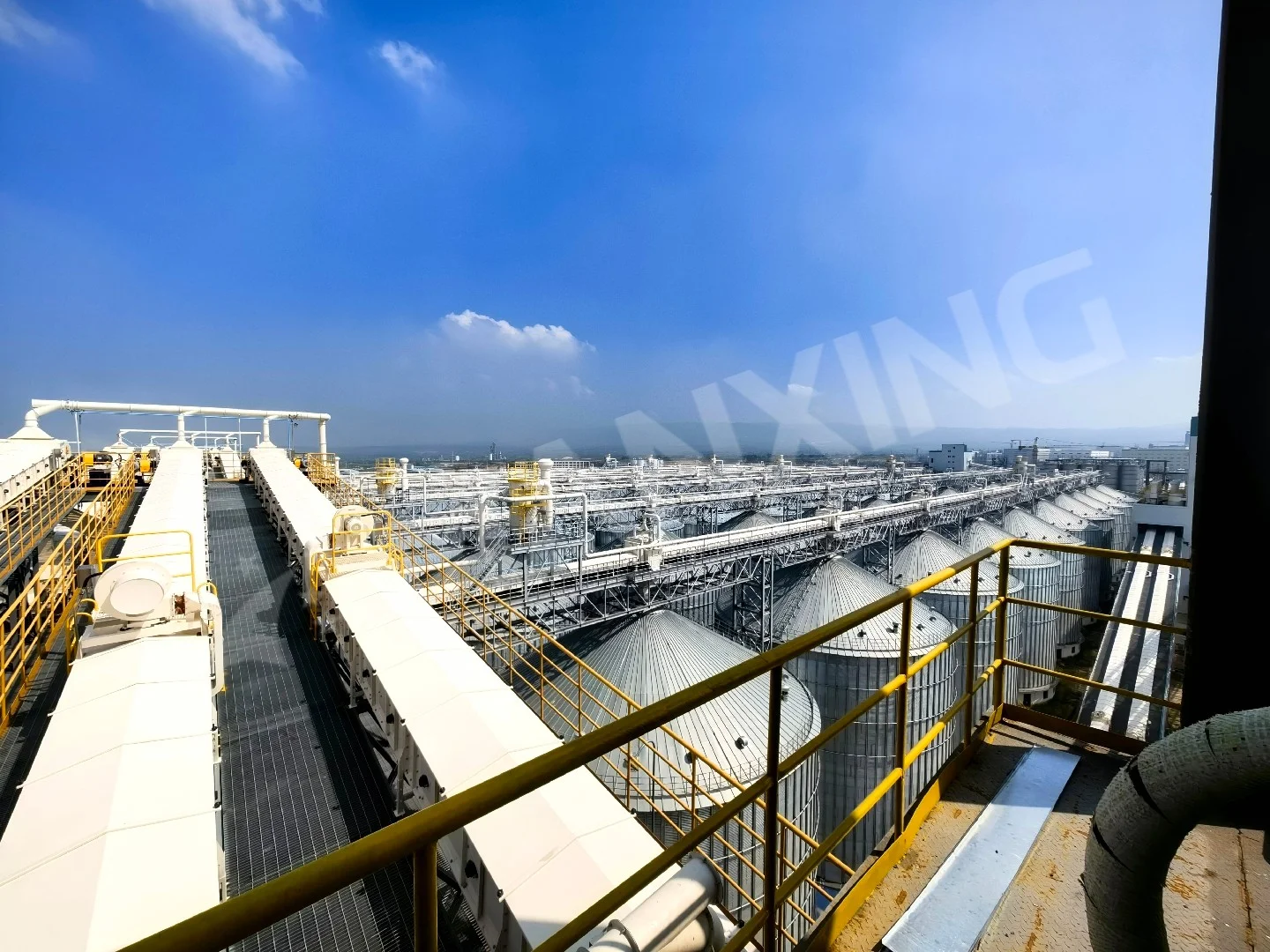
In modern bulk material handling, industrial grain silos are rarely built as standalone units. Instead, they are designed as silo clusters or complexes that integrate seamlessly with conveying, cleaning, and automation systems. The primary goal of process design is to guarantee the safety and stability of grain throughout the storage cycle. For silos storing grain for more than one month, essential systems include temperature monitoring, grain drying, moisture detection, level measurement, ventilation, and fumigation or modified atmosphere control. These systems work synergistically to prevent spoilage, mold growth, and insect infestation, ensuring long-term grain quality. For short-term storage, the system configuration can be simplified, but core safety functions must never be compromised.
A frequently overlooked design principle is the necessity of reserving at least one empty silo within a cluster. This is not wasted space; it provides critical operational flexibility for grain turning, emergency transfers, or equipment maintenance, preventing the logistical deadlock of a "full-house" scenario.
How to Design Efficient Loading and Unloading Systems to Solve Grain Throughput Bottlenecks
The loading and unloading efficiency of a silo system directly dictates the throughput capacity of the entire grain storage logistics chain. Process design must ensure smooth and efficient material flow. Key requirements include: deep integration with the workhouse tower; deployment of high-capacity conveying equipment for intake and outtake; conveyor capacity that meets peak production demands; and the ability to perform flexible grain turning between silos. The workhouse tower acts as the system's "brain," integrating all functions such as receiving, unloading, weighing, cleaning, and conveying. All designs must strictly adhere to the process flow diagram.
Deep Dive: Workhouse Tower Functional Configuration
The workhouse tower is far more than a collection of equipment. Its design must consider rational material flow to avoid cross-contamination and dust explosion risks. Typically, a workhouse should include: a pre-cleaning sieve, a magnetic separator, an automatic weighing system, a bucket elevator, and a scraper conveyor. Equipment selection must be customized based on the physical properties of the specific grain type (e.g., wheat, corn, soybeans), including bulk density, angle of repose, and moisture content.
Technical Barriers: Airtightness and Structural Integrity
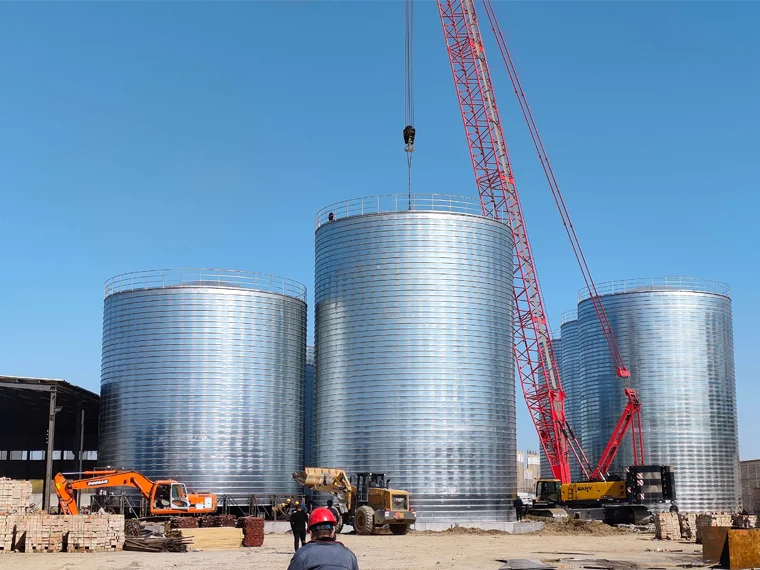
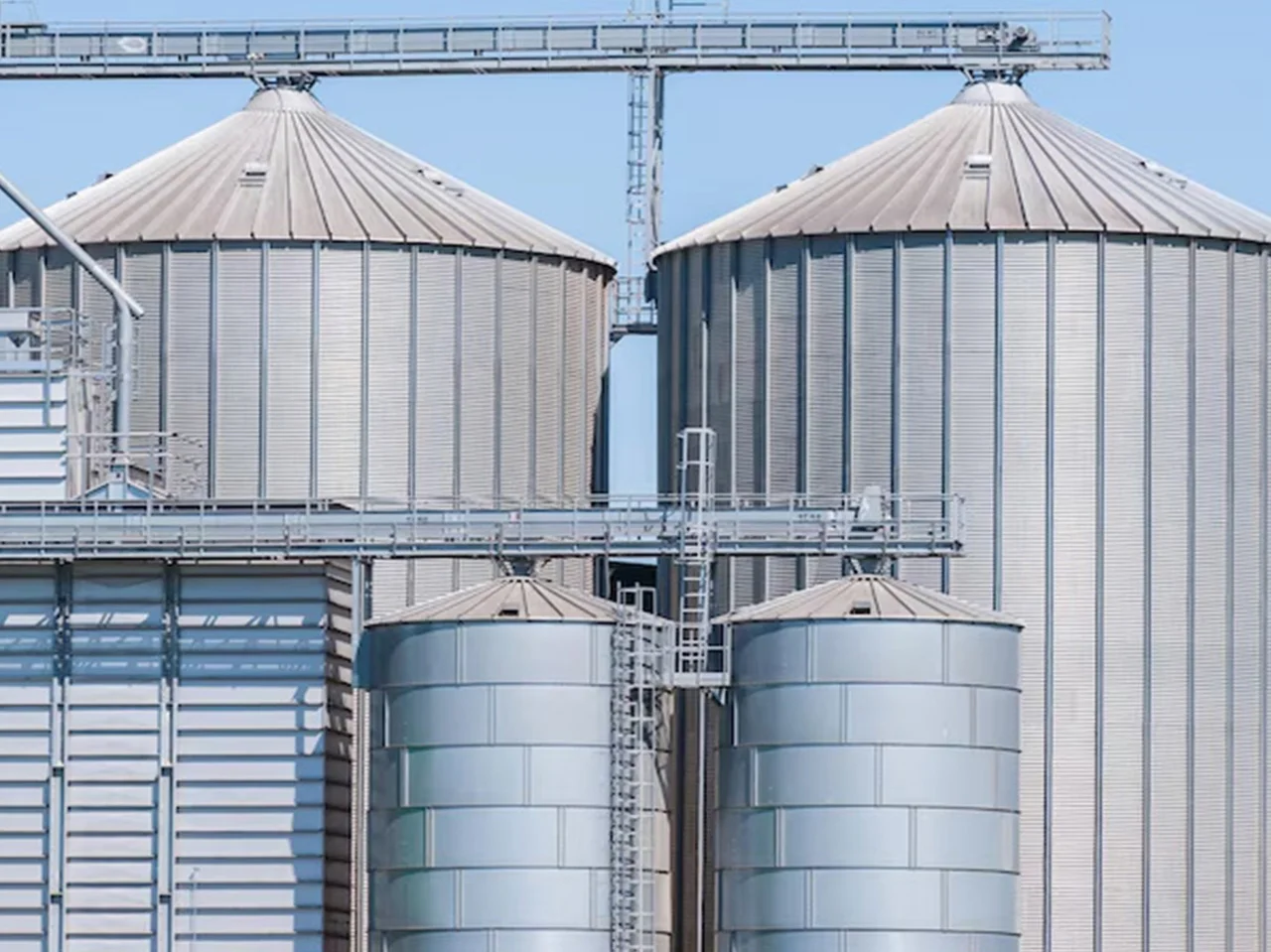
Industrial grain silos must possess robust environmental protection capabilities. High airtightness is crucial for preventing air leakage, maintaining fumigation efficacy, and reducing energy consumption. Simultaneously, waterproof and moisture-proof structures, protection against rain penetration and condensation, and rodent and bird-proof designs are all indispensable. High-quality galvanized steel silos are widely adopted for their superior durability and corrosion resistance. How
ever, note that airtightness testing (e.g., pressure decay testing) should be a standard acceptance criterion, not a matter of empirical judgment.Key Takeaways
- Key Data: Silos storing grain for over a month without temperature and ventilation systems can experience annual grain loss rates of 5%-8%, far exceeding the industry standard of 1%.
- Best Practice: In silo cluster design, always reserve 10%-15% of capacity as "empty buffer bins" to handle emergency grain turning or equipment failures.
- Watch Out For: Do not treat "short-term storage" as "no-system storage." Even for two-week storage, silos lacking basic ventilation and level monitoring risk condensation and localized heating.
- Pro Tip: Use Computational Fluid Dynamics (CFD) simulation to optimize aeration duct layout and perforation rates. This ensures uniform airflow through the grain mass, preventing "short-circuiting" and dead zones.
- Bottom Line: A successful industrial grain silo is not just a container; it is an integrated system where process design dictates safety, efficiency, and long-term profitability.
Automation and Integration: The "Central Nervous System" of Modern Silo Systems
The top-level logic of process design is automation control. An advanced industrial grain silo system should feature a central control room (DCS or PLC system) capable of real-time monitoring of temperature, level, and equipment status across all bins. Automation not only boosts efficiency but also serves as the final line of defense for safety. For example, when a temperature sensor detects a localized hot spot, the system can automatically activate the corresponding aeration fans or trigger an alarm to guide operators for grain turning. Furthermore, integrated management software can generate inventory reports and in/out records, providing data-driven support for grain depot management.
Frequently Asked Questions
Q: Why do many newly built grain silos still suffer from "hot top, cold bottom" or condensation issues in practice? How can process design fundamentally solve this?
A: This typically stems from a disconnect between theoretical ventilation design and real-world conditions. Many designs simply select fans based on standard airflow rates, ignoring the uniformity of air distribution within the bin. The deep solution involves three steps: 1) When using "floor duct" or "underground channel" aeration systems, use Computational Fluid Dynamics (CFD) simulation to optimize duct layout and perforation rates, ensuring airflow penetrates the entire grain column; 2) Install multiple air inlets at the silo's cone bottom or flat bottom to prevent airflow short-circuiting from a single inlet; 3) Implement intelligent control that automatically adjusts aeration strategies based on the temperature and humidity differential between inside and outside the bin, rather than relying on fixed timers.
Q: What are the fundamental differences in process design between galvanized steel silos and concrete silos for grain storage? How should I choose?
A: The core differences lie in their airtightness implementation methods and thermal properties. Galvanized steel silos achieve high airtightness through roll-formed seams or welding, are easier to maintain, but their metal walls conduct heat rapidly. In regions with large diurnal temperature swings, this can cause condensation, making robust insulation design essential. Concrete silos have high thermal mass, leading to more stable internal temperatures, but achieving reliable airtightness is more difficult (requiring special sealants), and they have longer construction times and higher costs. The choice depends on your project: if you have a tight budget, a short construction timeline, and a storage period under six months, galvanized steel is preferred. If you require long-term storage (over one year) or store high-value seed grain, the temperature stability of concrete silos offers a distinct advantage.
Q: What is the most common mistake made during the installation of aeration systems in flat-bottom grain silos?
A: The most frequent error is improper placement and sizing of the aeration ducts relative to the silo's diameter and the grain's angle of repose. Ducts that are too short or too few in number create large "dead zones" where airflow cannot reach, leading to hotspots and moisture migration. A proper design uses a radial or ring configuration with ducts extending to at least 70% of the silo radius, and the total perforated area must be calculated to match the fan's static pressure and airflow volume. Furthermore, the duct openings must be protected with screens to prevent grain ingress, which can block the system.
Q: How does the choice of grain type (e.g., wheat vs. corn) influence the process design of a handling system?
A: Grain physical properties directly impact equipment selection and flow path design. For example, corn has a higher bulk density and lower angle of repose compared to wheat, which affects the power requirements for belt conveyors and bucket elevators. Soybeans, with their high oil content and fragile hulls, require gentler handling to minimize breakage, meaning we must specify lower belt speeds and impact-reducing transfer points. Wheat, being more free-flowing, may require steeper chute angles to prevent bridging. A one-size-fits-all approach to conveying and cleaning equipment will inevitably lead to inefficiency or product damage.
Q: What are the specific requirements for dust explosion prevention in the process design of an industrial grain silo complex?
A: Dust explosion prevention is paramount. The process design must incorporate several layers of defense. First, the workhouse tower and all conveying routes must be equipped with a centralized dust collection system, with collection points at all transfer points, elevator heads, and silo tops. Second, all electrical equipment must be explosion-proof (ATEX or NEC rated). Third, the design must include passive protection like explosion venting panels on the silo roof and in the workhouse, as well as active suppression systems. Finally, the layout must minimize horizontal surfaces where dust can accumulate, and the structure must be designed to prevent dust from settling in hidden voids.
Need expert industrial grain silo solutions for your project?
We provide professional design, manufacturing, and installation services for bulk storage and material handling systems worldwide, backed by 15 years of field experience.
Get a Free Technical Consultation →