
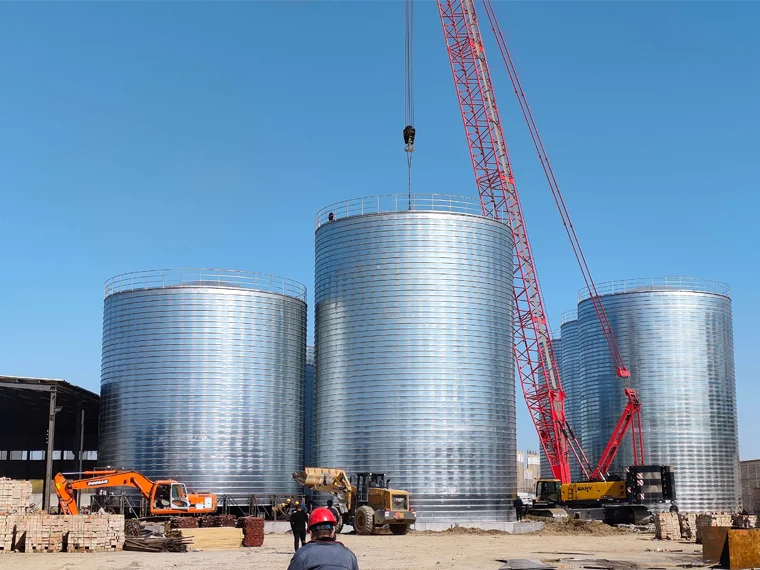
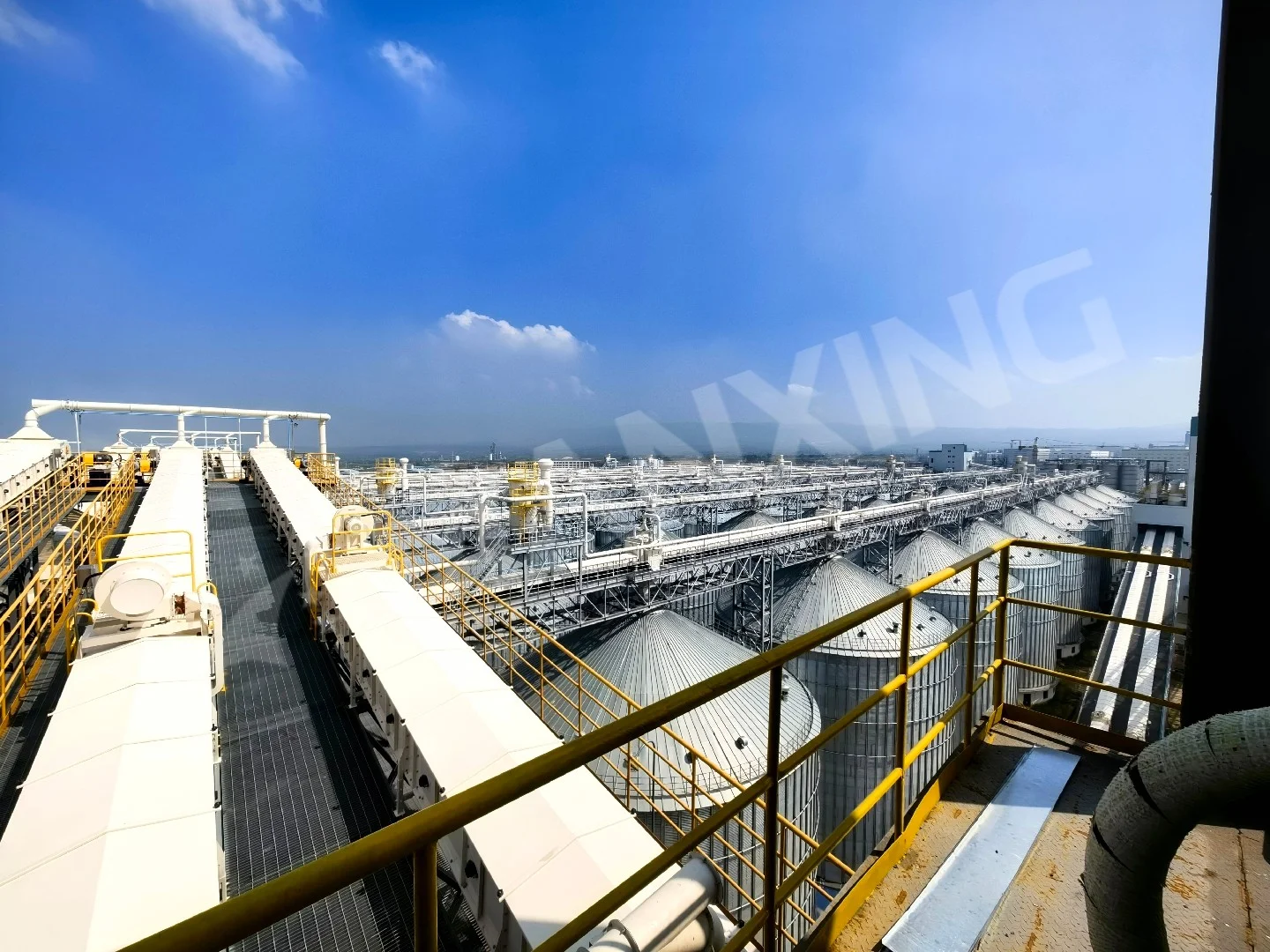


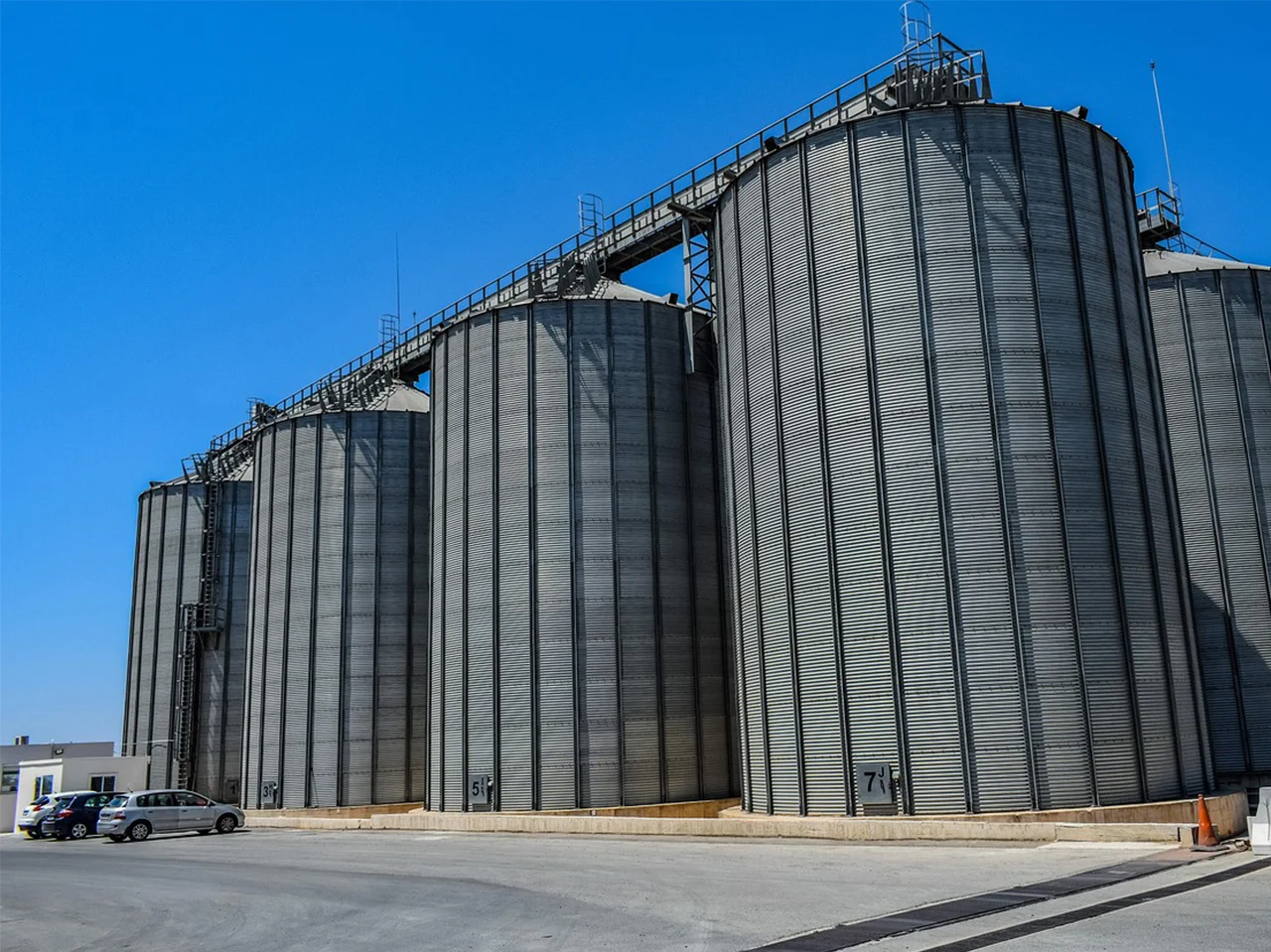
In the world of large-scale agriculture and industrial processing, commercial grain storage bins are the critical asset separating profit from loss—with over 70% of post-harvest grain losses attributed to storage conditions alone. Choosing the right steel grain bins, from 100-ton to 25,000-ton capacities, directly impacts operational costs, spoilage risk, and long-term return on investment. Dra wing on 15 years of field experience, this article provides an in-depth technical analysis of large steel grain bin selection, structural design, and best practices for maximizing storage efficiency and asset lifespan.Related: Process Design Requirements for Industrial Grain Silos
rong>Core Applications & Selection Criteria for Commercial Grain Storage Bins
Commercial grain storage bins are far more than oversized containers—they are engineered systems integrating structural mechanics, corrosion protection, and environmental control. Data from the global grain trade and processing industry reveals that over 70% of grain losses occur during storage, primarily due to uncontrolled temperature, humidity, and pest infestation. Therefore, bin selection must be precisely matched to the application scenario: grain elevators require ultra-large capacity and rapid turnover; feed mills and flour mills prioritize multi-variety segregation and frequent discharge efficiency; while ports and logistics hubs demand high corrosion resistance and seismic performance.
Manxing’s commercial grain bin series is designed to handle mainstream bulk materials including wheat, corn, rice, soybeans, barley, and oilseeds. The core value proposition lies in the use of hot-dip galvanized high-strength steel and modular construction, achieving an exceptional service life of 25 to 50 years while significantly reducing foundation and installation costs. For large farms and agricultural cooperatives, this translates directly into lower per-ton storage costs and greater asset liquidity.
Solving the Three Core Pain Points of Large Grain Bins: Capacity, Corrosion & Smart Monitoring
In industrial-scale storage, users most frequently face three challenges: (1) How to increase capacity without expanding the footprint? (2) How to prevent steel corrosion in humid or high-temperature-differential environments? (3) How to monitor grain conditions in real time to prevent mold losses? Manxing commercial grain bins address these pain points through three key technologies: maximizing vertical space with large-diameter silos, achieving single-bin capacities exceeding 25,000 tons; using double-sided hot-dip galvanized aluminum-zinc alloy steel (coating thickness ≥275 g/m²) combined with stiffeners and wind rings for structural stability under extreme weather; and integrating multi-point temperature monitoring with intelligent ventilation systems for automatic humidity and temperature control, reducing mold risk to below 0.5%.
Flat Bottom Bins: The Preferred Choice for Large-Volume, Long-Term Storage
Flat bottom bins are the workhorses of grain elevators and processing plants. Their key advantage is that the bottom rests directly on the ground, eliminating the need for a conical hopper, thereby maximizing storage volume for a given diameter. They are ideal for grains stored for periods exceeding three months with lower discharge frequency. When paired with a floor sweep system and central discharge outlet, they can achieve up to 95% self-flow discharge rate.
Hopper Bottom Bins: The Tool for Rapid Discharge & Multi-Variety Switching
Hopper bottom bins feature a 60° or 45° cone angle at the base, enabling complete gravity self-flow discharge without mechanical cleanout. For feed mills that require multiple recipe changes daily, hopper bottom bins significantly reduce the risk of cross-contamination and shorten single discharge time by over 40% compared to flat bottom bins. Their capacities typically range from 100 to 5,000 tons, making them ideal for medium and small factories and seed breeding facilities.
Key Takeaways
- Key Data: Hot-dip galvanized steel grain bins have a design life of 25–50 years—more than three times that of painted bins.
- Best Practice: For commercial bins with more than six turnovers per year, equipping intelligent temperature control and automatic ventilation systems can reduce overall operating costs by 15%–20%.
- Watch Out For: Avoid using flat bottom bins for long-term storage in high-humidity regions (average annual humidity >80%) unless equipped with powerful dehumidification and airtight sealing systems.
- Pro Tip: Always specify a galvanized coating thickness of ≥275 g/m² (double-sided) for commercial bins—this is the industry benchmark for corrosion resistance in demanding environments.
- Bottom Line: Selecting the right bin type and material specification is the single most impactful decision for reducing grain loss and maximizing ROI over decades of operation.
Structural Design & Modular Expansion Advantages of Commercial Grain Bins
The competitiveness of modern commercial grain bins lies not only in single-bin capacity but also in system scalability and assembly efficiency. Manxing utilizes modular corrugated panels assembled on-site with bolted connections, eliminating the need for large welding equipment and reducing construction time by over 60% compared to traditional concrete silos. This design allows users to flexibly add bins as business grows, forming multi-bin row systems that share conveying and monitoring lines. Furthermore, all connectors are hot-dip galvanized, avoiding the corrosion protection damage caused by on-site welding. In terms of foundation engineering, only a ring-shaped reinforced concrete foundation is required—no deep piling is necessary—further reducing civil construction costs.
For loading and unloading system compatibility, Manxing commercial grain bins seamlessly integrate with bucket elevators, drag conveyors, and pneumatic systems. For export trade scenarios requiring high-precision weighing, electronic weighbridges and automated batch control systems can be optionally configured, enabling full digital management from intake to outtake.
Frequently Asked Questions
Q: What are the fundamental structural standard differences between commercial grain storage bins and ordinary agricultural bins?
A: The core differences lie in load design and corrosion protection standards. Commercial bins must simultaneously satisfy grain lateral pressure (calculated using Janssen’s formula), wind loads (typically verified against Category 12 typhoon conditions), and seismic loads (≥8-degree fortification). Ordinary agricultural bins often only consider static loads. Additionally, commercial bins require a galvanized coating thickness of ≥275 g/m² (double-sided), while agricultural bins typically use 180 g/m². In terms of airtightness, commercial bins must achieve Grade A air-tightness (pressure half-life ≥5 minutes) to support fumigation for pest control—a requirement that agricultural bins cannot meet.
Q: For storing high-oil-content crops like soybeans and rapeseed, what special design considerations are needed?
A: High-oil-content crops are extremely sensitive to temperature and oxygen. First, multi-point temperature sensors must be installed—typically one sensor per 20–30 tons of grain—to detect hot spots early. Second, the bin must be equipped with a robust aeration system capable of delivering low-temperature, low-humidity air to the core of the grain mass. Finally, the bin’s airtightness is critical for controlled atmosphere storage (e.g., nitrogen flushing) to suppress oil oxidation and rancidity. Without these features, spoilage rates can increase dramatically within weeks.
Q: How do I determine whether a flat bottom or hopper bottom bin is better for my feed mill operation?
A: The decision hinges on your discharge frequency and variety changeover needs. If you store a single grain type for long periods (months) and discharge infrequently, a flat bottom bin offers the lowest cost per ton of storage. However, if your operation requires daily or weekly recipe changes with multiple grain types, a hopper bottom bin is superior. Its 60° cone ensures complete gravity discharge without cross-contamination between batches, and it reduces discharge time by over 40%, directly improving production line efficiency.
Q: Can commercial grain bins be expanded after initial installation? How does modular design work in practice?
A: Yes, modular design is a key advantage. Manxing bins use bolted corrugated steel panels, so additional bins can be erected adjacent to existing ones without major structural modifications. The modular system allows you to create multi-bin row configurations that share common conveying tunnels, electrical lines, and monitoring systems. This approach minimizes future civil works and downtime, enabling capacity expansion in phases as your business grows—often at 30–40% lower expansion cost than building a new standalone bin.
Q: What is the typical payback period for investing in smart temperature monitoring and ventilation systems for commercial grain bins?
A: Based on field data from large-scale operations, the payback period typically ranges from 2 to 4 years. The primary savings come from reduced grain loss—smart systems can lower spoilage rates from an average of 2–3% down to below 0.5%. For a 10,000-ton bin storing high-value wheat, that translates to saving 150–250 tons per cycle. Additionally, automated ventilation reduces energy consumption by optimizing fan runtime, and early hot-spot detection prevents catastrophic failures. For bins with more than six turnovers per year, total operating cost reductions of 15–20% are achievable.
Need expert manxingsilo solutions for your project?
We provide professional design, manufacturing, and installation services for bulk storage and material handling systems worldwide. Whether you need a single 5,000-ton bin or a multi-bin complex for 50,000 tons, our team has the experience to deliver.
Get a Free Technical Consultation →