
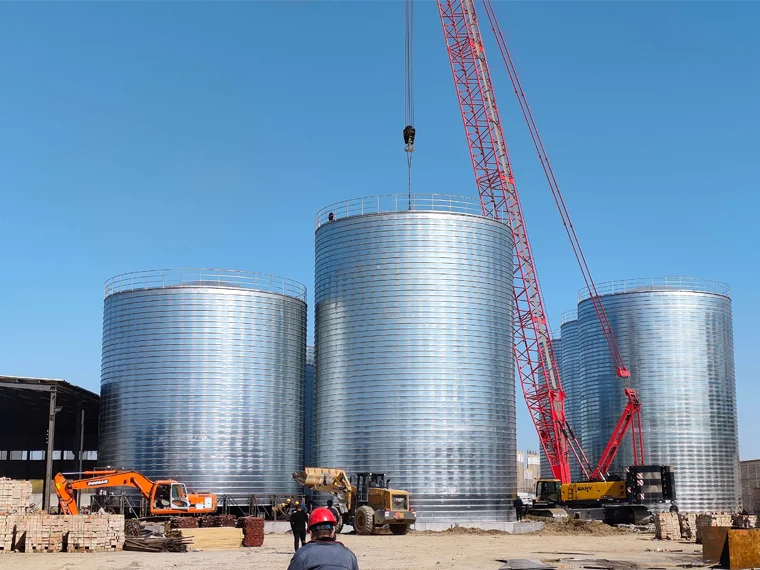
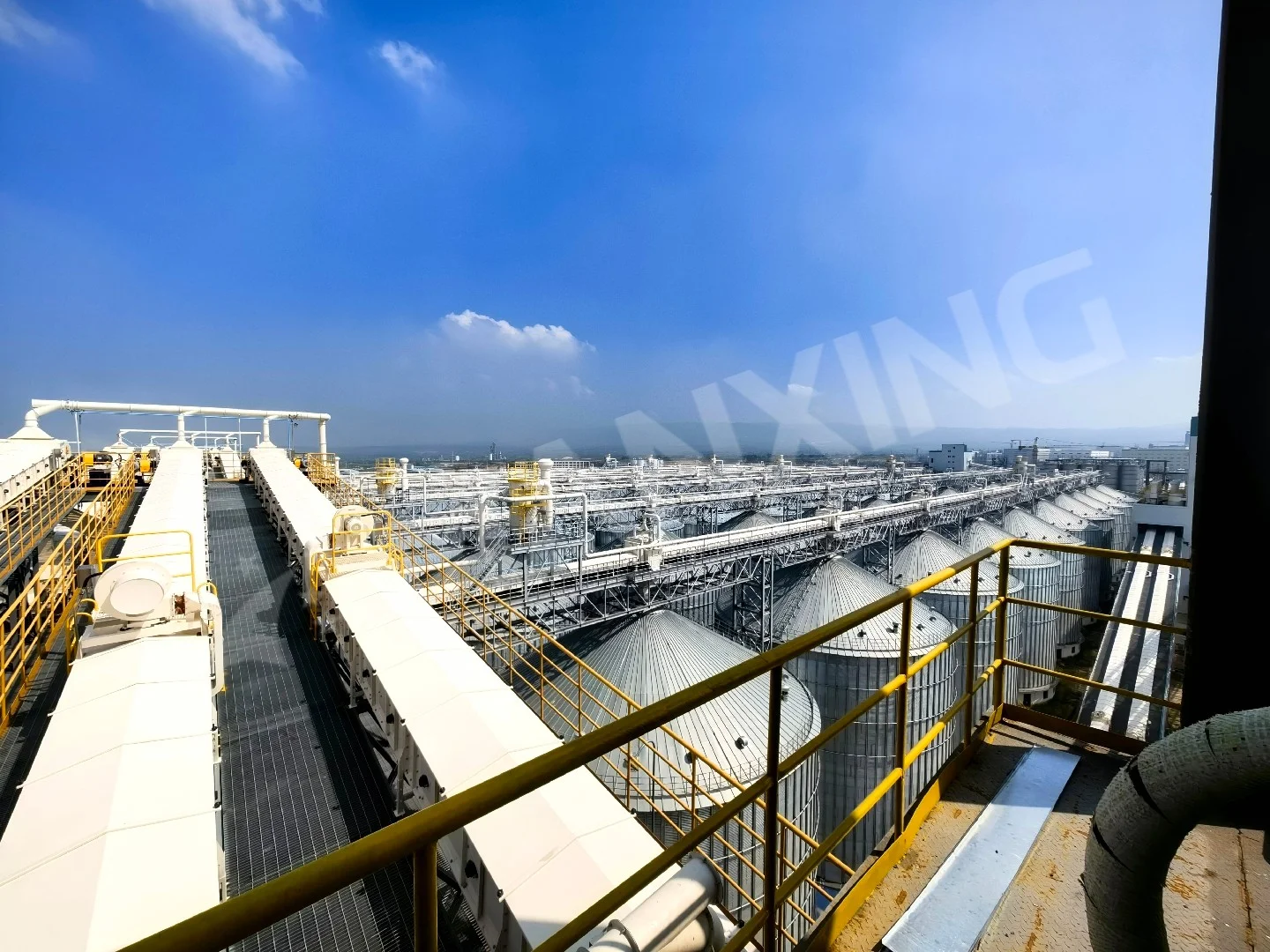


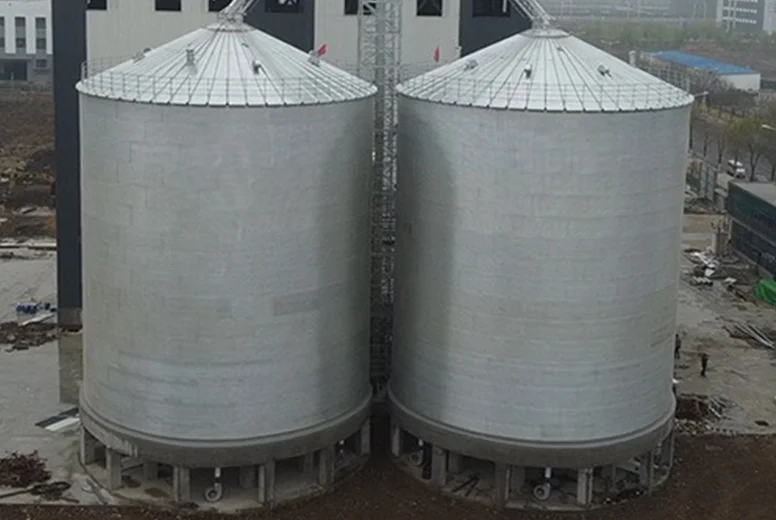
A large capacity concrete silo foundation is the "invisible pillar" of any industrial bulk storage facility, directly determining structural safety and service life. This comprehensive guide explores the core design principles, engineering challenges, and critical technical parameters that engineers and project decision-makers must understand to ensure long-term stability and operational reliability for silos storing cement, grain, and other bulk materials.
Core Design Logic of Large Capacity Concrete Silo Foundations
In the large-scale storage of cement, aggregates, grain, and industrial bulk materials, the foundation of a large concrete silo plays a critical role in safely transferring the superstructure's loads to the ground. Unlike smaller silos, high-capacity units (typically exceeding 10,000 tons per silo) impose stringent demands on foundation strength, stiffness, and durability. Foundation design must simultaneously account for static loads (the silo's self-weight and the stored material) and dynamic loads (impact during loading/unloading, wind forces, and seismic activity). The design must ensure that no unacceptable differential settlement or structural tilting occurs over a service life that often spans decades.
Modern large concrete silo foundations are almost exclusively built with reinforced concrete. Engineers optimize the reinforcement ratio and foundation thickness to resist immense bending moments and shear forces. A comprehensive geotechnical investigation is the primary basis for design—it must accurately assess the bearing capacity, compression modulus, and groundwater conditions of the load-bearing stratum. For soft soil sites, pile foundations or ground improvement techniques (such as CFG piles or vibro-compaction) are often required to meet settlement control limits. Common foundation types include ring foundations, raft foundations, or combined systems, with the final choice depending on the silo's geometry, load distribution, and site conditions.
Solving Settlement and Overturning Risks in Large Concrete Silo Foundations
Differential settlement is the primary engineering challenge for large concrete silo foundations. When the settlement difference between individual foundations in a silo group exceeds the allowable limit, it can cause silo tilting, rupture of connecting pipes, and even structural instability. The core solution lies in achieving uniform load transfer and a rational distribution of ground stress. Engineers employ techniques such as setting post-cast strips, using pre-stressed base slabs, and controlling the rate of construction loading to effectively reduce the risk of differential settlement. Furthermore, incorporating a flexible cushion layer beneath the foundation or adopting a "pile-soil interaction" design can significantly enhance overall foundation stability.
Uniform Load Distribution Design
Large silos experience dynamic loads during filling and discharge cycles. The foundation design must account for eccentric loads caused by material flow. A combined structure of ring beams and radial ribs can distribute concentrated loads over a larger ground area, preventing local stress concentrations. Finite Element Analysis (FEA) is the standard tool for optimizing this process, allowing engineers to simulate stress distribution under various loading scenarios.
Adapting to Diverse Silo Geometries
Industrial silos come in various cross-sectional shapes, including circular, rectangular, and conical. The foundation design must perfectly match the superstructure geometry: circular silos typically use ring or circular raft foundations, while rectangular silos often employ strip or grid-shaped raft foundations. For cone-bottom silos, the foundation must also accommodate discharge outlets and equipment installation space, requiring close collaboration between structural and process engineers.
Key Takeaways
- Key Data: The design service life for a large concrete silo foundation is typically 50 years, with the allowable differential settlement generally limited to no more than 1/500 of the foundation width.
- Best Practice: Always complete a detailed geotechnical investigation and static cone penetration test before foundation construction, and use the results to compare and select the optimal ground improvement scheme.
- Watch Out For: Avoid using a shallow foundation directly on soft soil. Doing so creates a high risk of long-term creep-induced tilting, which can render the entire silo structure unusable.
- Pro Tip: For silo groups, stagger the construction sequence and loading schedule. This allows the ground to consolidate gradually, significantly reducing the magnitude of differential settlement between adjacent silos.
- Bottom Line: A successful large concrete silo foundation is not just about strength; it is a precision-engineering solution that balances load distribution, ground conditions, and long-term settlement control.
Application Scenarios and Key Technical Parameters
Large concrete silo foundations are widely used in cement plants, power stations, port bulk cargo terminals, and grain storage centers. In the cement industry, a single clinker silo can hold over 50,000 tons, with a foundation diameter exceeding 30 meters and a base slab thickness of 2 to 3 meters. In the agricultural sector, foundations for large grain silos must also account for the effects of fumigation, aeration, and temperature variations on the concrete. Key technical parameters for foundation design include: the characteristic value of ground bearing capacity (typically ≥200 kPa), base slab thickness, reinforcement ratio (generally 0.2% to 0.5%), concrete strength grade (C30 to C50), and impermeability grade (P6 to P10). Furthermore, in regions with a seismic fortification intensity of 7 or higher, the foundation must undergo seismic verification and be fitted with adequate anchorage measures.
Frequently Asked Questions
Q: What is the main structural difference between a concrete silo foundation and a steel silo foundation?
A: The core difference lies in the load transfer path and foundation type. A concrete silo is extremely heavy (a single silo can weigh tens of thousands of tons), so its foundation must primarily resist compression, typically using a thick raft or ring foundation. In contrast, a steel silo is much lighter, but wind and seismic loads are more significant. Its foundation design focuses on resisting uplift and overturning, often using independent footings with anchor bolts. Additionally, concrete silo foundations are more sensitive to ground settlement, while steel foundations require greater attention to the fatigue strength of connection joints.
Q: What special ground treatment measures are needed when building a large concrete silo on soft soil?
A: Soft soil treatment is a major challenge for large silo construction. Common measures include: (1) using pre-stressed pipe piles or cast-in-place piles to transfer loads to a deep, load-bearing stratum; (2) applying surcharge preloading or vacuum preloading to accelerate ground consolidation and settlement; (3) constructing a rigid pile composite foundation to improve bearing capacity through pile-soil interaction; and (4) laying a gravel cushion with geogrids under the base slab to enhance drainage and stress distribution. Each option must be evaluated against the specific geological conditions and project budget.
Q: How does the foundation design differ for a single large silo versus a group of silos?
A: For a single silo, the primary concern is total and differential settlement across the foundation itself. For a silo group, the challenge is far greater due to the overlapping stress bulbs from adjacent foundations. This can lead to significant differential settlement between silos, causing structural distress at interconnecting galleries and pipes. Group silo foundations often require a stiffer, unified raft or a more robust pile system to ensure all silos settle uniformly. Finite element analysis is essential to model the group interaction effects.
Q: What is the role of the concrete strength grade and impermeability grade in foundation performance?
A: The concrete strength grade (e.g., C30 to C50) directly determines the foundation's ability to resist compressive and shear stresses from the massive silo load. A higher grade is needed for larger, more heavily loaded foundations. The impermeability grade (e.g., P6 to P10) is critical for preventing groundwater ingress, which can cause chemical attack on the concrete and steel reinforcement, especially in wet soil conditions. This is vital for ensuring the foundation's 50-year design life without degradation.
Q: How is the foundation design verified for seismic safety in high-risk zones?
A: In seismic zones (fortification intensity ≥7), the foundation must be verified for dynamic stability. This involves a dynamic analysis that considers the combined weight of the silo and stored material as a seismic mass. The design must ensure the foundation can resist overturning moments and sliding forces. This is achieved by increasing the foundation size, using deeper piles, and adding sufficient anchorage (e.g., longer, larger-diameter dowels) to connect the silo wall to the foundation securely, preventing uplift during an earthquake.
Need expert manxingsilo solutions for your large concrete silo foundation project?
We provide professional design, manufacturing, and installation services for bulk storage and material handling systems worldwide. Our team offers full-process technical support, from geotechnical investigation and foundation design to construction guidance, ensuring your silo project is safe, economical, and durable.
Get a Free Technical Consultation →