
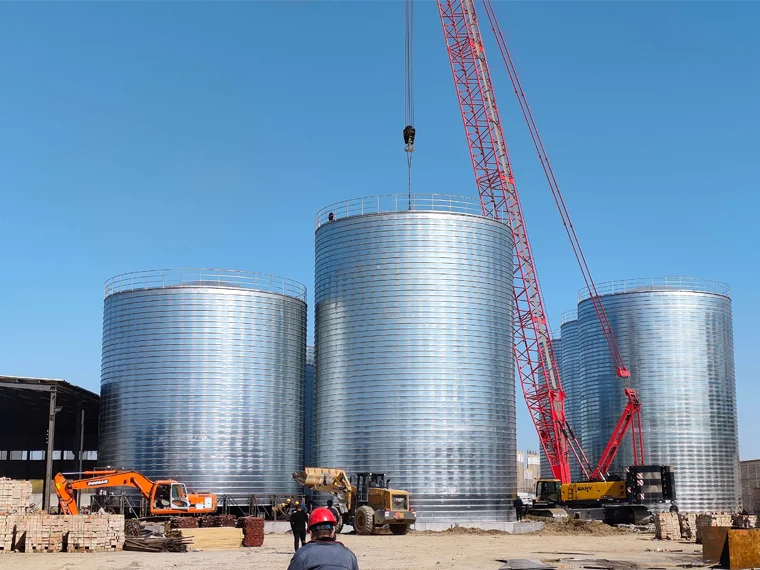
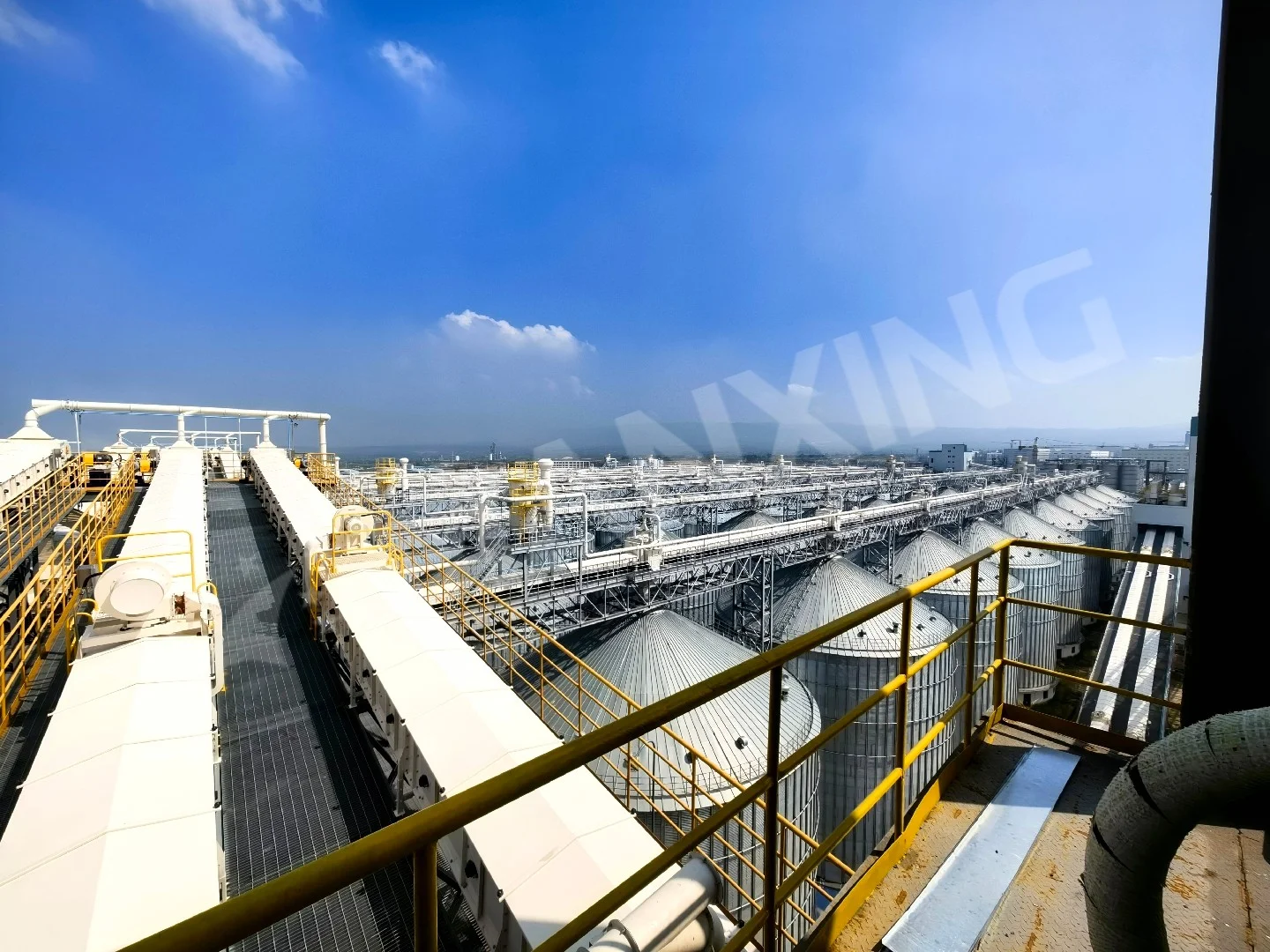


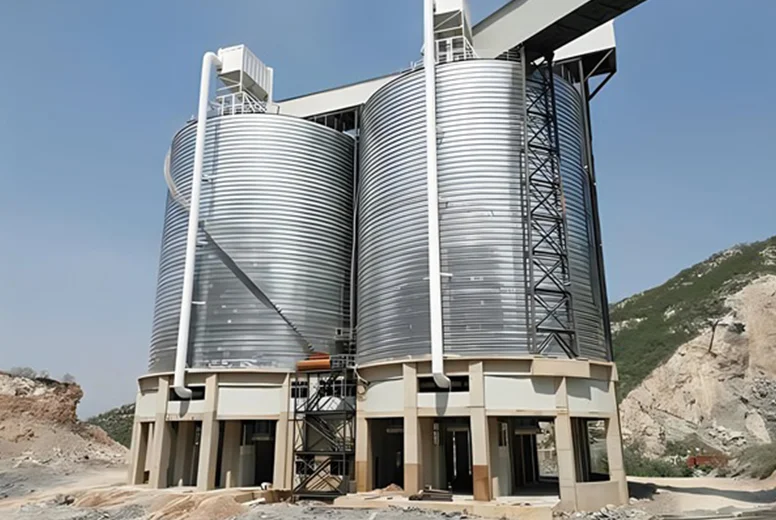
Reinforced concrete silos represent the gold standard for high-capacity, long-term bulk storage in industries ranging from cement and fly ash to grain and chemicals. By combining the compressive strength of concrete with the tensile resilience of steel reinforcement, these structures deliver exceptional durability, seismic resistance, and a service life exceeding 50 years—making them a superior investment for demanding industrial environments.
Structural Design Principles of Reinforced Concrete Silos
The core strength of a reinforced concrete silo lies in the synergistic composite action between concrete and steel rebar. Con
crete excels under compression but is inherently weak under tensile or bending forces. By precisely calculating the density, diameter, and placement of reinforcement bars, engineers create a structural system that resists complex stress states—including material lateral pressure, wind loads, seismic forces, and thermal gradients. This is particularly critical for large-capacity silos (single units holding tens of thousands of tons) or tall structures exceeding 30 meters in height.Design engineers typically employ the Limit State Design (LSD) methodology, factoring in silo geometry, material properties (such as internal friction angle and bulk density), foundation conditions, and regional seismic intensity. For cement storage, the high fluidity and hydration heat of the material require additional consideration of thermal stresses on the silo wall, often necessitating increased distribution reinforcement to control crack widths. Stress concentration zones—such as the hopper, ring beam, and foundation connections—must be reinforced with denser rebar or prestressed tendons to maintain structural integrity.
Solving Core Industrial Storage Challenges
Traditional storage solutions like steel silos or plain concrete silos frequently suffer from corrosion, fatigue cracking, and high maintenance costs over their lifespan. Reinforced concrete silos systematically address these pain points through several key mechanisms.
Exceptional Structural Durability and Environmental Resistance
Concrete naturally provides an alkaline environment that passivates steel reinforcement, protecting it from electrochemical corrosion. With an adequate concrete cover (typically ≥40 mm), the structure resists moisture, acid rain, and chemical dust. In contrast, steel silos in coastal or high-humidity environments require frequent anti-corrosion coating maintenance. A well-designed reinforced concrete silo offers a design life of over 50 years, reducing total lifecycle maintenance costs by 30%–50% compared to steel alternatives.
Customizable Capacity and Flexible Design Adaptability
By adjusting diameter (typically 3–25 m), height (10–50 m), and wall thickness (200–600 mm), reinforced concrete silos can accommodate storage needs ranging from a few hundred tons to several hundred thousand tons. For specialized applications—such as grain terminals requiring separate storage for different crop varieties—multi-cell silos or interstice bins can be designed to maximize space utilization.
Enhanced Seismic and Explosion Safety
In seismically active regions, ductile detailing of reinforced concrete silos—through tighter stirrup spacing and joint strengthening—enables the structure to absorb seismic energy and prevent brittle collapse. For storing combustible materials like coal dust or grain dust, the non-combustible nature of concrete and its good airtightness significantly reduce the risk of fire and dust explosions.
Key Takeaways
- Key Data: Reinforced concrete silos have a design service life of over 50 years—2–3 times that of typical steel silos—with lifecycle costs reduced by 40% or more.
- Best Practice: In coastal or highly corrosive environments, specify high-performance concrete (HPC) and increase the rebar cover thickness to at least 50 mm for maximum durability.
- Watch Out For: Poor construction quality—such as cold joints or honeycombing during concrete placement—can severely compromise structural capacity. Strict vibration and continuous pouring protocols are essential.
- Pro Tip: Use finite element analysis (FEA) to identify high-stress zones (e.g., hopper-wall junctions) for targeted reinforcement, while applying minimum reinforcement ratios in low-stress areas to optimize cost.
- Bottom Line: For projects requiring 30+ years of reliable, low-maintenance storage, reinforced concrete silos offer the best total cost of ownership, especially in harsh environments or seismic zones.
Typical Applications and Industry Practices
In the building materials industry, reinforced concrete silos are the backbone of cement plants and ready-mix concrete batching stations, storing cement, fly ash, and slag powder. These silos integrate seamlessly with pneumatic conveying systems for fully enclosed, automated loading and unloading. In agriculture, large grain terminals widely use concrete silos for wheat, corn, and soybeans, benefiting from superior thermal insulation and better pest and rodent resistance compared to metal bins. Additionally, in mining and chemical processing, these silos store corrosive or highly abrasive materials like phosphate fertilizers, sulfur, and limestone powder. Notably, the rise of green building practices has spurred interest in precast concrete (PC) silo technology, which offers faster on-site assembly, reduced wet work, and more consistent component quality.
Frequently Asked Questions
Q: For grain storage, which is more economical over the long term—a reinforced concrete silo or a steel silo?
A: The answer depends on the project horizon. Steel silos typically have a 20%–30% lower initial investment and a shorter construction period (about 2–3 months). However, reinforced concrete silos have negligible maintenance costs and a service life 2–3 times longer. Over a 30-year operational period, the total cost of a concrete silo is often lower. Furthermore, for grain stored longer than one year, concrete's stable internal temperature and humidity reduce spoilage losses—a hidden benefit that should be factored into any comprehensive economic comparison.
Q: How do engineers balance reinforcement steel quantity with project cost during design?
A: This is a classic optimization challenge. Rebar accounts for 15%–25% of a silo's total cost but directly determines load capacity and crack control. Modern practice uses finite element analysis (FEA) to create detailed models, identifying high-stress zones (e.g., wall-hopper junctions, ring beams) for local strengthening, while applying minimum reinforcement ratios in lower-stress areas like mid-wall sections. Specifying high-strength rebar (e.g., HRB500 grade) can reduce total steel weight by approximately 15% while maintaining capacity. Always engage a structural engineer with specific silo design experience to avoid either over-conservative or dangerously under-designed solutions.
Q: What are the most common quality issues during reinforced concrete silo construction, and how can they be prevented?
A: The primary issues include: (1) Cold joints from interrupted pouring, which create weak planes; (2) Honeycombing or voids from inadequate vibration, reducing strength and exposing rebar; and (3) Incorrect placement of reinforcement, especially in congested zones like ring beams. Prevention requires a well-defined pour sequence with continuous operation, strict control of concrete workability, and thorough vibration—especially at wall-hopper junctions. Use self-consolidating concrete (SCC) in highly reinforced areas, and conduct pre-pour inspections to verify rebar positioning and cover thickness.
Q: Can reinforced concrete silos be built in areas with poor soil conditions?
A: Yes, but foundation design becomes critical. For soft or compressible soils, engineers may specify deep foundations such as piles or caissons to transfer loads to competent strata. Alternatively, a reinforced concrete raft foundation can distribute the silo's weight over a larger area. The key is to conduct a thorough geotechnical investigation and engage a foundation specialist early in the design phase. Differential settlement must be strictly limited to prevent structural distress in the silo shell.
Q: How does the choice of concrete mix affect the performance of a reinforced concrete silo?
A: The mix design directly impacts durability, strength, and crack resistance. For standard applications, a minimum compressive strength of C30/C35 (30–35 MPa) is common, but for aggressive environments or high loads, C40–C50 or higher may be specified. Key admixtures include water reducers to lower the water-cement ratio (improving strength and reducing permeability), air-entraining agents for freeze-thaw resistance, and silica fume for enhanced chemical resistance. For cement storage silos, low-heat cement or fly ash blends help mitigate thermal cracking from hydration heat.
Q: What is the typical construction timeline for a reinforced concrete silo compared to a bolted steel silo?
A: A bolted steel silo can often be erected in 2–3 months, including foundation work. A reinforced concrete silo typically requires 4–8 months, depending on size and complexity. The longer timeline is due to formwork assembly, rebar placement, concrete pouring, and curing time (typically 7–28 days for initial strength gain). However, for projects where long-term durability and low maintenance are prioritized, the additional construction time is a worthwhile trade-off. Precast concrete segments can reduce on-site time to 3–5 months by shifting fabrication off-site.
Need expert reinforced concrete silo solutions for your project?
We provide professional design, manufacturing, and installation services for bulk storage and material handling systems worldwide, tailored to your specific material, capacity, and site conditions.
Get a Free Technical Consultation →