
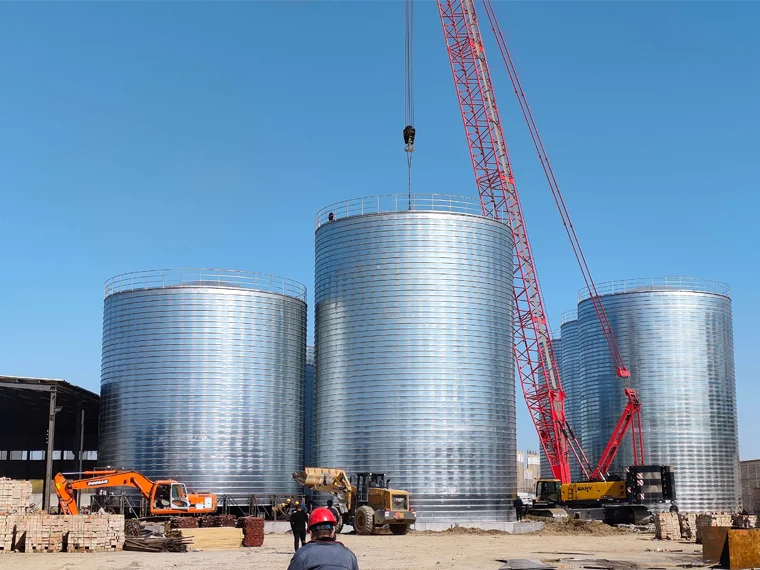
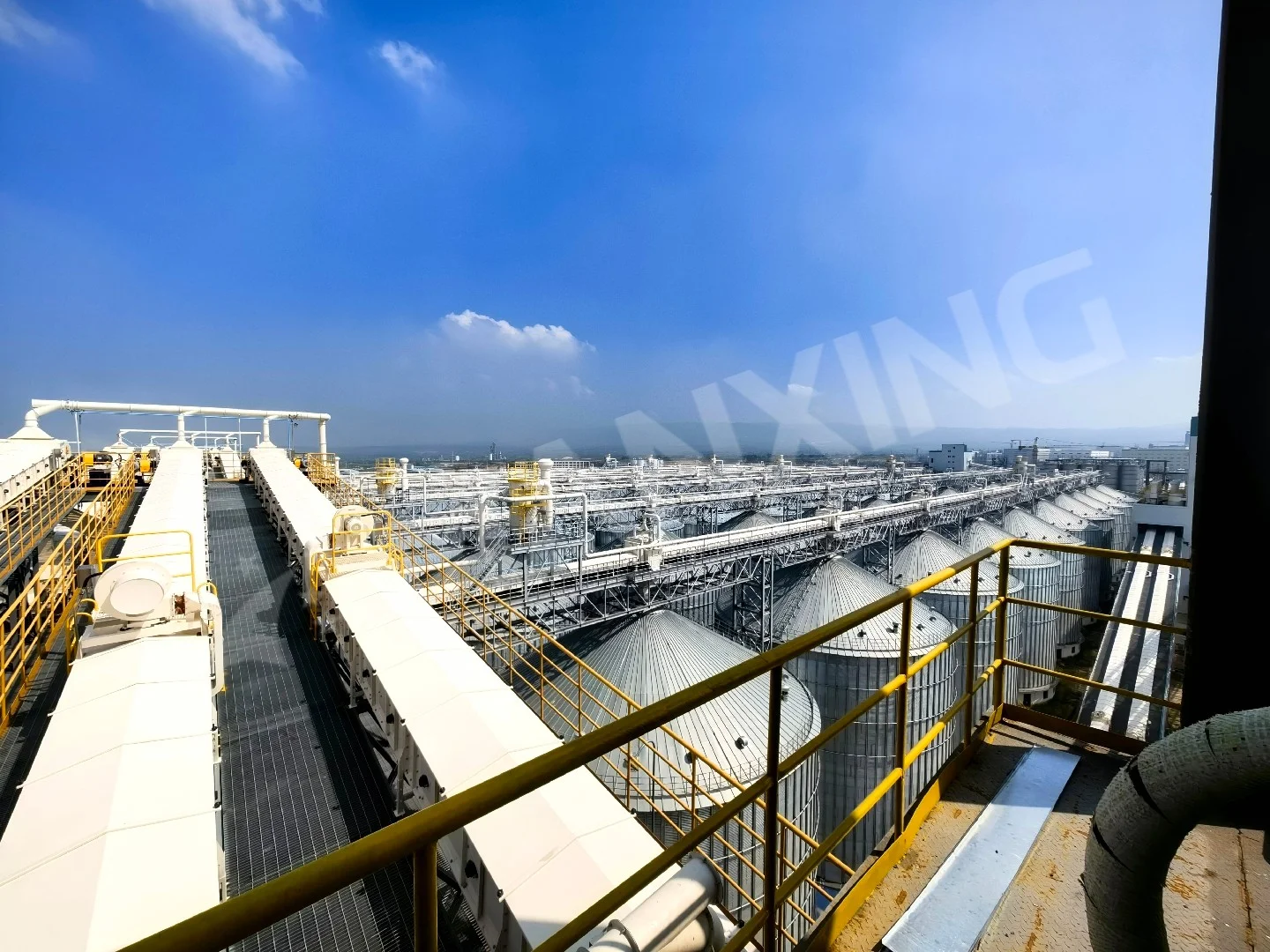


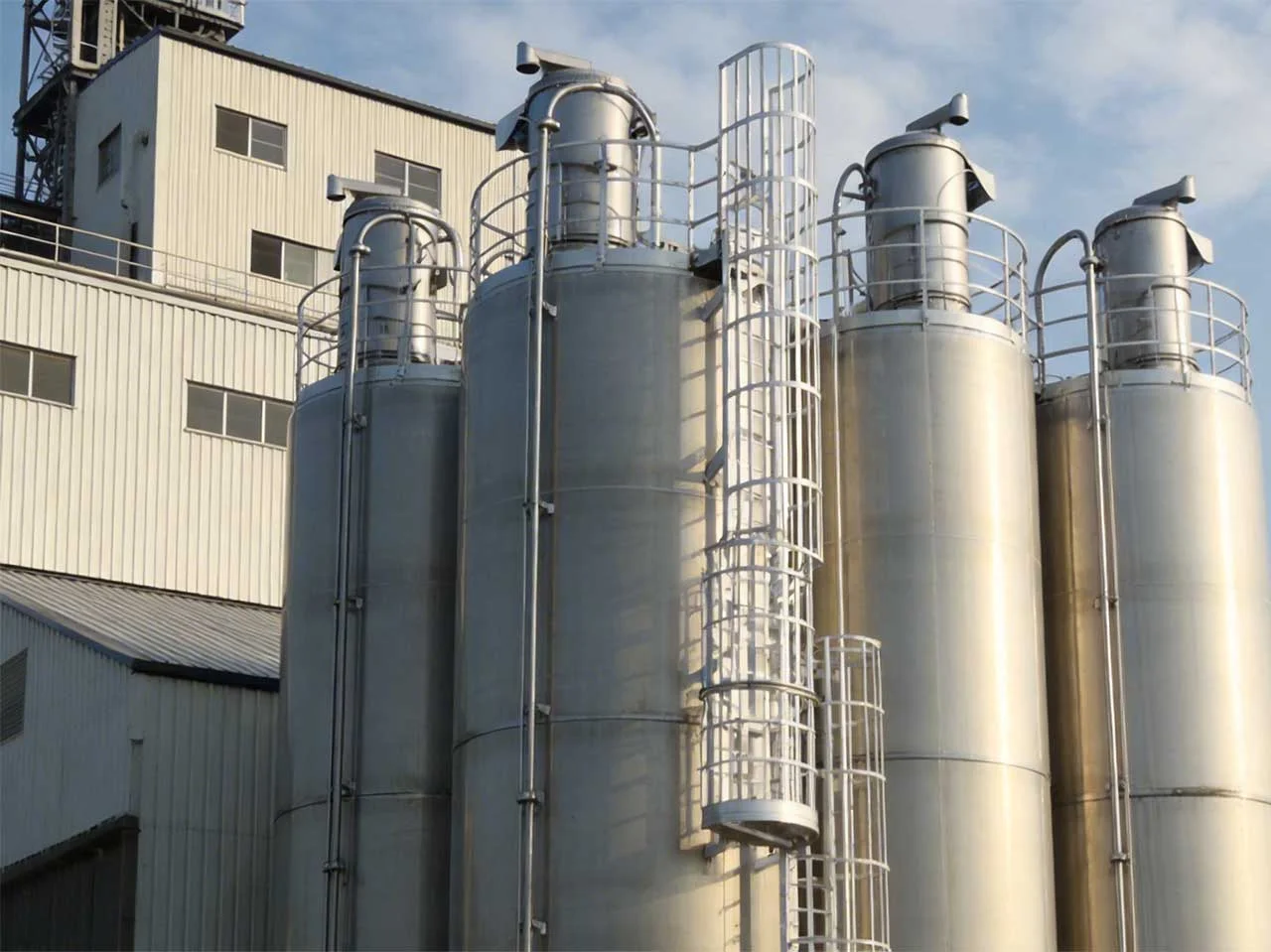
Flour is a highly hygroscopic, oxidation-prone material with a significant dust explosion risk, demanding storage solutions that deliver airtightness, temperature control, explosion protection, and clean discharge. Based on 15 years of industrial silo engineering experience, this guide explores the critical technologies behind modern welded steel flour silos—from structural design and insulation systems to automated discharge—helping processing plants achieve safe, low-loss long-term storage.Related: Process Design Requirements for Industrial Grain Silos
rong>Why Traditional Warehouses Fail Flour Storage: The Core Challenges
Flour particles, typically 15 to 150 microns in diameter, have a high surface area that readily absorbs moisture from the air, leading to caking and mold. Furthermore, flour dust is explosively reactive at concentrations between 50 and 1000 g/m³ when exposed to an ignition source. Traditional concrete or brick warehouses suffer from three critical shortcomings: poor airtightness allows humidity infiltration, rough interior walls cause material buildup and spoilage, and active explosion venting systems are absent. Industry data indicates that improper flour storage can result in annual loss rates of 3% to 5%, while dust explosions pose a direct threat to personnel and equipment. Con
sequently, a professional flour storage system must be specifically engineered across four dimensions: material selection, sealing technology, ventilation, and discharge mechanisms.Key Technical Parameters for Welded Steel Flour Silos
To address the unique properties of flour, a specialized steel silo requires targeted optimization: the roof must be equipped with explosion vents (venting area ≥ 0.06 m²/m³ of silo volume); the silo walls should feature a double-layer insulation structure (polyurethane or rock wool core, thickness ≥ 80 mm); and internal temperature and humidity sensors, along with an inert gas protection system, are essential. The discharge hopper angle must exceed 70° (75° to 80° is recommended), complemented by a vibratory assist or fluidized bed air cushion to ensure first-in, first-out (FIFO) flow with zero dead zones.
Welded Steel Silo: The Optimal Solution for Airtightness and Structural Integrity
Welded silos, constructed with continuous seams, achieve an airtightness level of 10⁻³ Pa·m³/s—far superior to bolted assemblies. This process completely eliminates air leakage and pest intrusion through joints. After weld inspection, the silo body can withstand a negative pressure of ±5000 Pa, accommodating the vacuum conditions of pneumatic flour conveying. The interior surface is polished to a roughness of Ra ≤ 3.2 μm, reducing flour flow resistance by over 40%.
Insulation System: A Protective Shield Against Temperature and Humidity Fluctuations
The ideal storage temperature for flour is 10–25°C, with relative humidity ≤ 60%. In regions with high summer heat or winter cold, uninsulated steel silos are prone to condensation on inner walls, causing moisture content to spike in the flour layer near the wall. A double-layer steel panel with a rock wool core (density ≥ 120 kg/m³) can limit internal temperature fluctuations to within ±3°C per day. Additionally, a reflective roof coating (Solar Reflectance Index ≥ 78) further reduces heat transfer from solar radiation.
Key Takeaways
- Key Data: A professional welded steel flour silo achieves airtightness of 10⁻³ Pa·m³/s, improving moisture resistance by 6x over traditional warehouses; discharge residue can be controlled to under 0.1%.
- Best Practice: Explosion vents on the silo roof should face unoccupied areas, and vent membranes must be replaced every 12 months. Install temperature monitoring points at the lower-middle section of the silo wall (one-third height from the bottom).
- Watch Out For: Never use steel cables or iron tools to clean caked flour inside a silo. All electrical equipment must meet explosion-proof rating Ex dⅡB T4 or higher.
- Pro Tip: For high-humidity regions (annual average >80%), consider closed-cell foam glass or vacuum insulation panels as core insulation to prevent internal condensation and thermal failure.
- Bottom Line: The combination of a welded steel structure, robust insulation, and an automated, spark-free discharge system is the only reliable way to achieve safe, low-loss flour storage.
Automated Discharge and Explosion Prevention: From Passive Storage to Active Safety
The discharge phase is a high-risk zone for flour silo accidents. Traditional gravity discharge often suffers from bridging and flow interruption, while manual hammering on silo walls can generate sparks. The modern solution combines a cone bottom, fluidizing pad, and pneumatic vibrator: a 75° eccentric cone directs material to the outlet; a porous stainless steel fluidizing pad introduces low-pressure (0.05–0.1 MPa) dry air to fluidize the flour for smooth discharge; and a pneumatic vibrator (50–200 Hz) replaces manual hammering, eliminating any spark risk. The entire process is PLC-controlled and linked with downstream packaging or blending systems for fully enclosed, unattended operation.
The explosion protection system employs a dual strategy of "passive venting + active suppression." Gravity-operated explosion doors on the roof (opening pressure ≤ 0.02 MPa) are paired with internal spark detection and extinguishing devices (response time < 50 ms). When sensors detect abnormal temperature or pressure spikes, the system automatically injects inert gas (nitrogen or CO₂) and closes pipeline valves, neutralizing the explosion risk at its inception. This design is ATEX 2014/34/EU certified and has been proven in numerous large-scale flour mills worldwide.
Frequently Asked Questions
Q: What specific material and welding requirements distinguish a flour silo from a standard steel grain silo?
A: Flour silos must use steel grade Q355B or higher, with wall thickness calculated based on diameter and wind load (e.g., ≥4 mm for diameters under 10 m, ≥6 mm for 10–15 m). The critical difference is that the inner surface must undergo pickling and passivation to form a dense oxide layer that prevents iron ion contamination of the flour. All welds require 100% vacuum box airtightness testing—not just random sampling. Additionally, every fastener inside the silo must be 304 stainless steel to prevent rust and contamination.
Q: Do flour silos in high-humidity regions (annual average >80%) need a special insulation design beyond standard rock wool?
A: Absolutely. In high-humidity environments, standard insulation like rock wool can suffer from internal condensation if a proper vapor barrier is not installed, leading to insulation failure. We recommend closed-cell foam glass or vacuum insulation panels as the core material. These have a thermal conductivity as low as 0.02 W/(m·K) and a moisture absorption rate below 0.5%. An aluminum foil vapor barrier (water vapor permeability ≤ 0.1 g/(m²·24h) must be applied on the exterior side of the insulation to prevent moisture ingress.
Q: How is the "first-in, first-out" principle ensured in a welded steel flour silo to prevent stale product?
A: FIFO is achieved through a combination of a steep hopper angle (75° to 80°) and an active discharge assist system. The steep cone ensures that flour flows downward by gravity without bridging. A fluidized bed air cushion or pneumatic vibrator then agitates the material near the outlet, promoting mass flow where all flour moves downward simultaneously. This design eliminates "ratholing" and dead zones, ensuring that the oldest flour is discharged first, maintaining product freshness.
Q: What is the recommended maintenance schedule for the explosion venting system on a flour silo?
A: The explosion vent membranes (or panels) should be inspected monthly for any signs of damage, corrosion, or blockage. They must be replaced every 12 months, regardless of apparent condition, as the material can degrade over time. The hinge and sealing mechanism of gravity-operated doors should be checked quarterly for smooth operation. All inspections and replacements should be documented in a logbook. It is also critical to ensure that the area around the vent outlets remains clear and unobstructed at all times.
Q: Can a welded steel flour silo be integrated with an existing pneumatic conveying system?
A: Yes, welded steel silos are designed to withstand the negative pressure of pneumatic conveying systems, typically up to ±5000 Pa. The silo's inlet can be fitted with a cyclone receiver or a direct pipe connection. The key is to ensure the conveying air is filtered and dehumidified to prevent moisture introduction. The PLC control system can be easily integrated with the conveying line's controls for automated filling and level monitoring, creating a seamless, enclosed material handling chain.
Need expert manxingsilo solutions for your flour storage project?
We provide professional design, manufacturing, and installation services for bulk storage and material handling systems worldwide, with over 15 years of experience in welded steel silos for flour and other sensitive materials.
Get a Free Technical Consultation →