
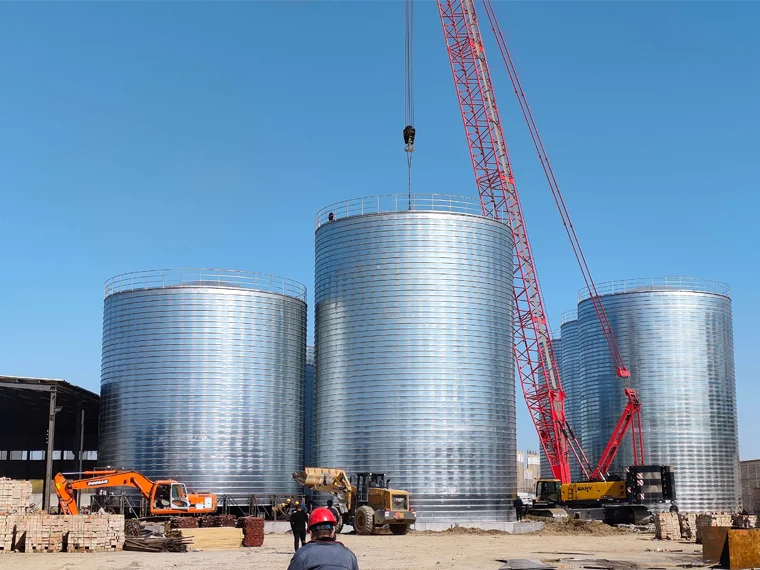
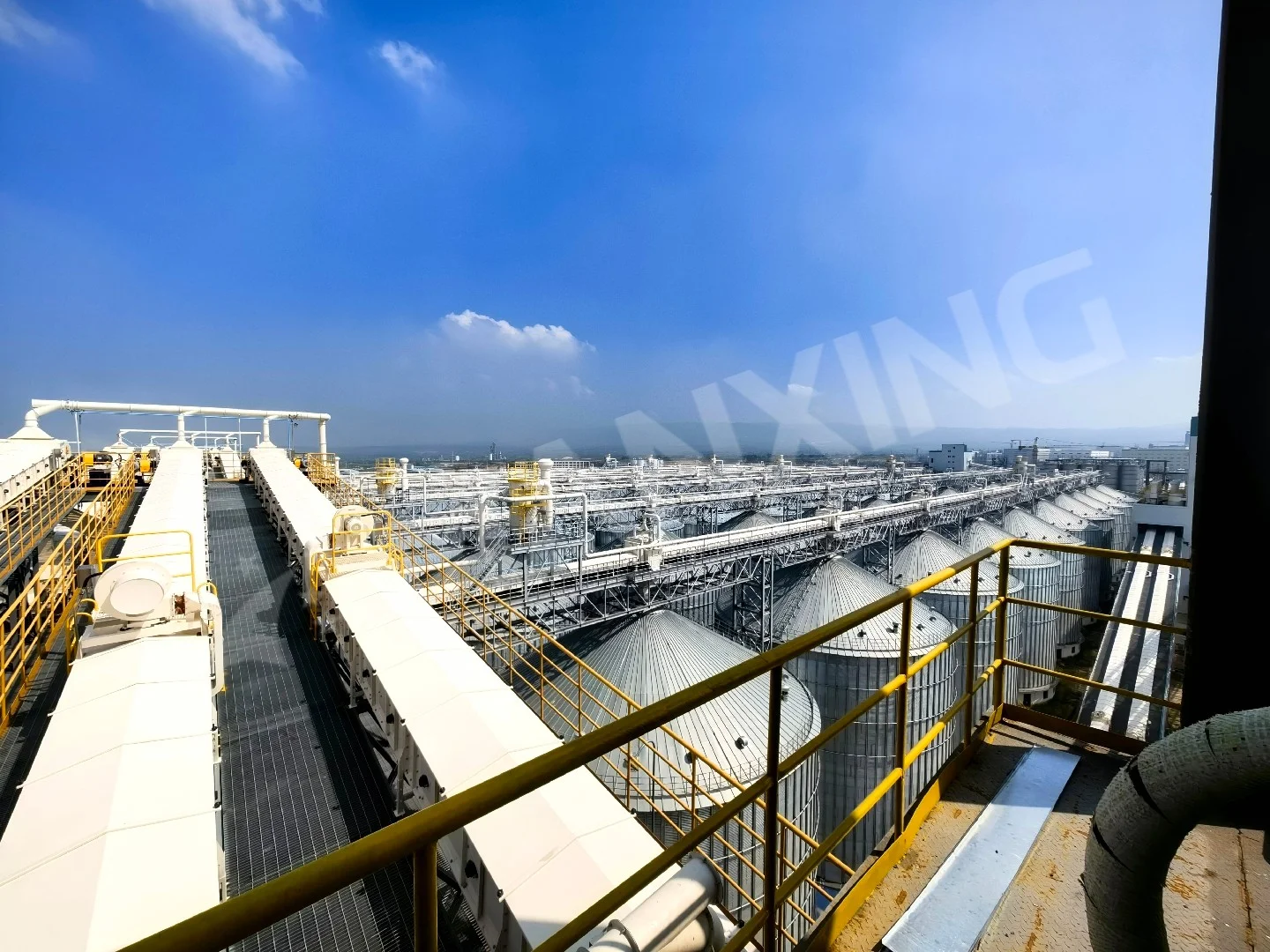


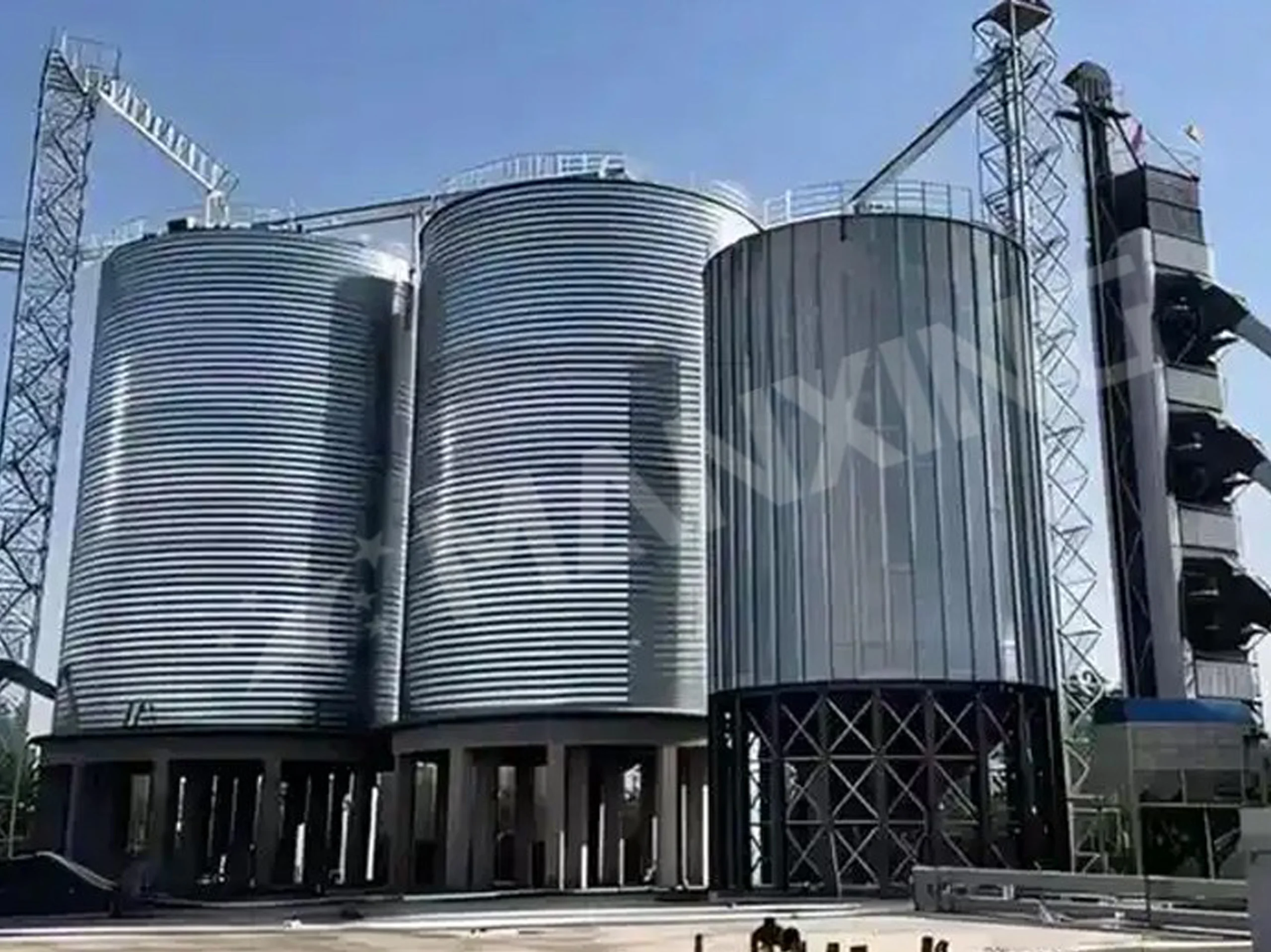
Completely emptying a flat-bottom silo is a critical yet often underestimated challenge in grain and bulk material storage. Residual material can compromise batch purity, cause caking, mold growth, and even create uneven structural stress. Based on 15 years of industry experience, this guide presents a systematic, step-by-step approach to achieve zero-residue discharge, maximizing your storage efficiency and product quality.
Why Flat-Bottom Silos Are Harder to Empty Than Cone-Bottom Silos
Flat-bottom silos are widely used for storing grain, feed, cement, and other bulk materials due to their simple structure and lower cost. However, their horizontal floor design creates inherent "dead zones" where material cannot flow by gravity alone. Unlike cone-bottom silos, which rely on a steep slope for self-discharge, flat-bottom silos require external mechanical or manual intervention for complete evacuation. The core difficulty lies in the formation of "bridges" (arching) over the outlet and "ratholes" along the walls. This means the central area may empty while the material at the edges remains stationary. Over time, residual material absorbs moisture, compacts, and cakes, making subsequent cleaning even more difficult and energy-intensive. Industry data shows that flat-bottom silos not regularly emptied can retain 3% to 8% of their effective volume as residue, directly causing storage waste and cross-contamination risks.
The 5-Step System for Completely Emptying a Flat-Bottom Silo
The following process integrates safety protocols, mechanical operations, and manual cleaning, and is suitable for most granular or powdery materials, including corn, wheat, soybeans, cement, and plastic pellets.
Step 1: Safety Preparation and Energy Isolation
Before any cleaning operation, a strict Lockout/Tagout (LOTO) procedure must be executed. Disconnect power to all conveying equipment connected to the silo, such as drag conveyors, bucket elevators, and screw conveyors, and hang warning tags. All personnel must wear hard hats, dust masks, non-slip gloves, and full-body harnesses if entry is required. Critical warning: flat-bottom silos can contain oxygen-deficient atmospheres or hazardous gases (e.g., CO₂ from grain respiration). Always perform gas detection before entry.
Step 2: Breaking Material Bridges and Ratholes
Due to self-weight compaction and moisture absorption, material often forms a "bridge" directly above the discharge opening or a "rathole" along the silo wall. Attempting to start the discharge equipment under these conditions can cause motor overload or mechanical damage. Recommended solutions include using silo vibrators or pneumatic air cannons on the exterior to apply vibration or shock, disrupting the material's internal cohesion. For large steel silos, an internal sweep auger can be used to gradually scrape material from the center outward.
Step 3: Primary Discharge – Combining Screw Conveyors and Pneumatic Systems
The most common discharge device for flat-bottom silos is the screw conveyor (auger) installed at the bottom outlet. Begin operation at the center outlet. Once the central material is emptied, gradually adjust the auger's angle or use an auxiliary cleaning arm to push edge material toward the center. For powdery or dusty materials like flour or lime powder, a pneumatic conveying system using negative or positive pressure is recommended. This method effectively moves material to its destination while significantly reducing the risk of dust explosions.
Step 4: Continuous Flow Management and Dead Zone Cleaning
During discharge, continuously monitor material flow. If flow slows or stops, immediately check for new arch formation. Installing a flow cone or a live bottom (vibrating bin activator) at the silo base can promote uniform material flow through vibration or air cushioning. After primary discharge, approximately 10% to 15% of the material will remain at the edges and in dead zones. This requires secondary cleaning using manual scrapers, industrial vacuum cleaners, or small cleaning robots.
Step 5: Final Cleaning and Residue Verification
Use high-pressure air or compressed air guns to blow down the silo walls, roof, and all weld seams. For food-grade materials like grain or feed, wet cleaning with food-grade detergents is recommended, followed by thorough drying. Finally, verify residual material using weighing or laser scanning to ensure it is below the target level (typically a residue rate of less than 0.5%). Record the cleaning data as a reference for the next cleaning cycle.
Key Takeaways
- Key Data: Unemptied flat-bottom silos retain 3% to 8% of their effective volume as residue, directly reducing storage efficiency and increasing cross-contamination risk.
- Best Practice: Installing a flow cone or live bottom above the discharge outlet can reduce dead zone residue from 15% to below 2%.
- Watch Out For: Never force-start a screw conveyor when material is still bridged. This is a common cause of motor burnout and shaft breakage.
- Pro Tip: For high-moisture or sticky materials, use a pneumatic air cannon in short, timed bursts rather than continuous vibration to avoid compacting the material further.
- Bottom Line: A systematic, proactive approach to cleaning—not a reactive one—is the single most effective way to maintain silo performance and product purity.
How to Prevent Residue Problems in Flat-Bottom Silos
It is far more efficient to design for easy emptying than to clean up after the fact. Modern flat-bottom silos can be optimized to significantly reduce residue through several design choices. First, a "micro-cone" floor with a slope of 1° to 3° can be incorporated; while still technically flat-bottom, this guides material toward the center. Second, installing a sweep arm that automatically scrapes the edges during discharge is highly effective. Third, lining the silo walls with ultra-high molecular weight polyethylene (UHMW-PE) sheets reduces the friction coefficient between the material and the wall. For existing flat-bottom silos, a thorough cleaning every 3 to 6 months is recommended, along with a "First-In, First-Out" (FIFO) material rotation system to prevent long-term static compaction.
Frequently Asked Questions
Q: How can I tell if material has formed a "bridge" in my flat-bottom silo, as opposed to just flowing slowly?
A: The key indicator of bridging is that a small amount of material trickles out intermittently, but the bulk of the material inside remains stationary. You may observe a "funnel" shape on the material surface from a sight glass that stops deepening, and increasing the discharge speed causes the output to drop sharply. A more accurate field test is the wall-tapping method: lightly tap the lower-middle silo wall with a wooden mallet. A hollow echo suggests the material has arched over. For professional monitoring, install a flow indicator or radar level sensor to track material dynamics in real-time.
Q: What special procedures are needed for emptying a flat-bottom silo containing high-moisture or sticky materials like wet corn or sugar powder?
A: High-moisture materials are prone to caking and compaction, making bridging more severe. Before starting, use a pneumatic air cannon or a long-reach vibrator to break up any hard crusts. Avoid using internal sweep augers at full speed initially, as they can become clogged or damaged. For extremely sticky materials, consider installing a flexible wall liner or using a live-bottom discharger with a variable-speed drive to prevent clogging. After emptying, a wet wash with a food-grade cleaner and a thorough drying cycle is essential to prevent mold and corrosion.
Q: Is it safe for personnel to enter a flat-bottom silo to clean out residual material?
A: Entry into a flat-bottom silo is extremely dangerous and should be the absolute last resort. The primary hazards include engulfment in flowing material, oxygen deficiency, toxic gas exposure, and falling material. If entry is unavoidable, strict confined-space entry procedures must be followed. This includes full energy isolation (LOTO), continuous atmospheric monitoring, use of a full-body harness with a lifeline, and having a trained attendant stationed outside. For most cleaning tasks, remote-operated tools like robotic cleaners, long-reach scrapers, or industrial vacuums are far safer and more effective.
Q: How often should a flat-bottom silo be completely emptied and cleaned?
A: The cleaning frequency depends on the material stored and the silo's design. For dry, free-flowing grains like wheat or soybeans, a thorough cleaning every 6 to 12 months is generally sufficient. For sticky, high-fat, or hygroscopic materials, a 3-month cycle is recommended. The best approach is to establish a baseline by measuring residual material after the first few cleanings. If the residue exceeds 0.5% or if you observe caking, odor, or pest activity, shorten the cleaning interval immediately.
Q: Can I retrofit an existing flat-bottom silo to make it easier to empty?
A: Yes, several retrofits can dramatically improve discharge efficiency. The most effective is installing a sweep arm system, which can be added to most steel silos. Adding a flow cone or a vibrating live bottom at the discharge point is another high-impact upgrade. For
silos with significant wall friction issues, applying a UHMW-PE liner to the lower third of the walls is a proven solution. While these retrofits require an upfront investment, they typically pay for themselves within a year through reduced labor, lower energy costs, and minimized product loss.Need expert manxingsilo solutions for your project?
We provide professional design, manufacturing, and installation services for bulk storage and material handling systems worldwide, including custom flat-bottom silos with optimized discharge systems.
Get a Free Technical Consultation →