


Most grain facilities still run on manual valve switches and clipboard logs, losing up to 12% throughput to bottlenecks between intake and outload. A fully automated grain handling system—from truck dump to ship loader—can cut labor costs by 40% and reduce product loss to under 0.5%. Here’s how to design it right, section by section.
Key Takeaways
- Core Data Point: Automated systems achieve 300–500 metric tons per hour continuous flow vs. 150–200 MT/h for manual setups.
- Best Practice: Integrate all sensors (temperature, moisture, level) into a single PLC/HMI platform—don’t let each vendor run its own box.
- Risk Alert: Over-automating the intake without matching outload capacity creates silo bottlenecks that cost more than they save.
Intake Automation: Truck Dumps, Pits, and Pre-Cleaning
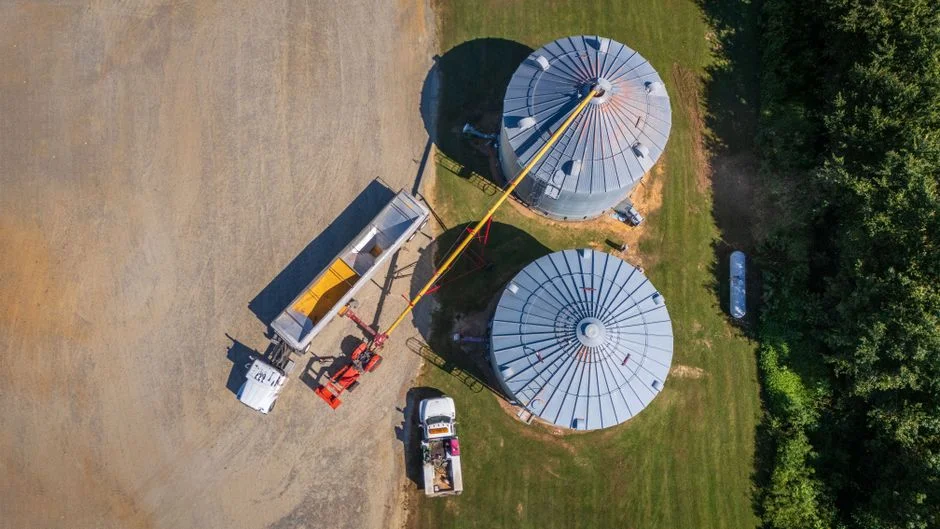
The intake station is where most grain handling facilities lose time. A typical manual truck dump averages 20–25 minutes per load—driver waits, paperwork, manual gate opening, slow auger engagement. With automation, that drops to 8–12 minutes. The system uses RFID or license-plate cameras to identify the truck, weigh it in-motion, and open the hydraulic grate only when the correct bin is ready. Conveyor start-up is sequenced automatically to prevent plugging: pit belt first, then incline conveyor, then bucket elevator. Sensors monitor flow rate and stop the dump if the downstream leg is near capacity—no more buried belts.
Pre-cleaning at intake is non-negotiable if you want consistent storage quality. An automated rotary screen or drum cleaner removes fines, chaff, and foreign material before the grain ever touches a silo. The reject rate should be set at 1.5–3% depending on harvest quality. That material goes straight to a separate fines bin, not the main storage. One facility I worked with in the Midwest skipped this step to save capital—they spent three times the savings on aeration fans trying to cool moldy corn six weeks later. Don’t make that mistake.
Conveying and Elevation: Matching Speed to Storage Geometry
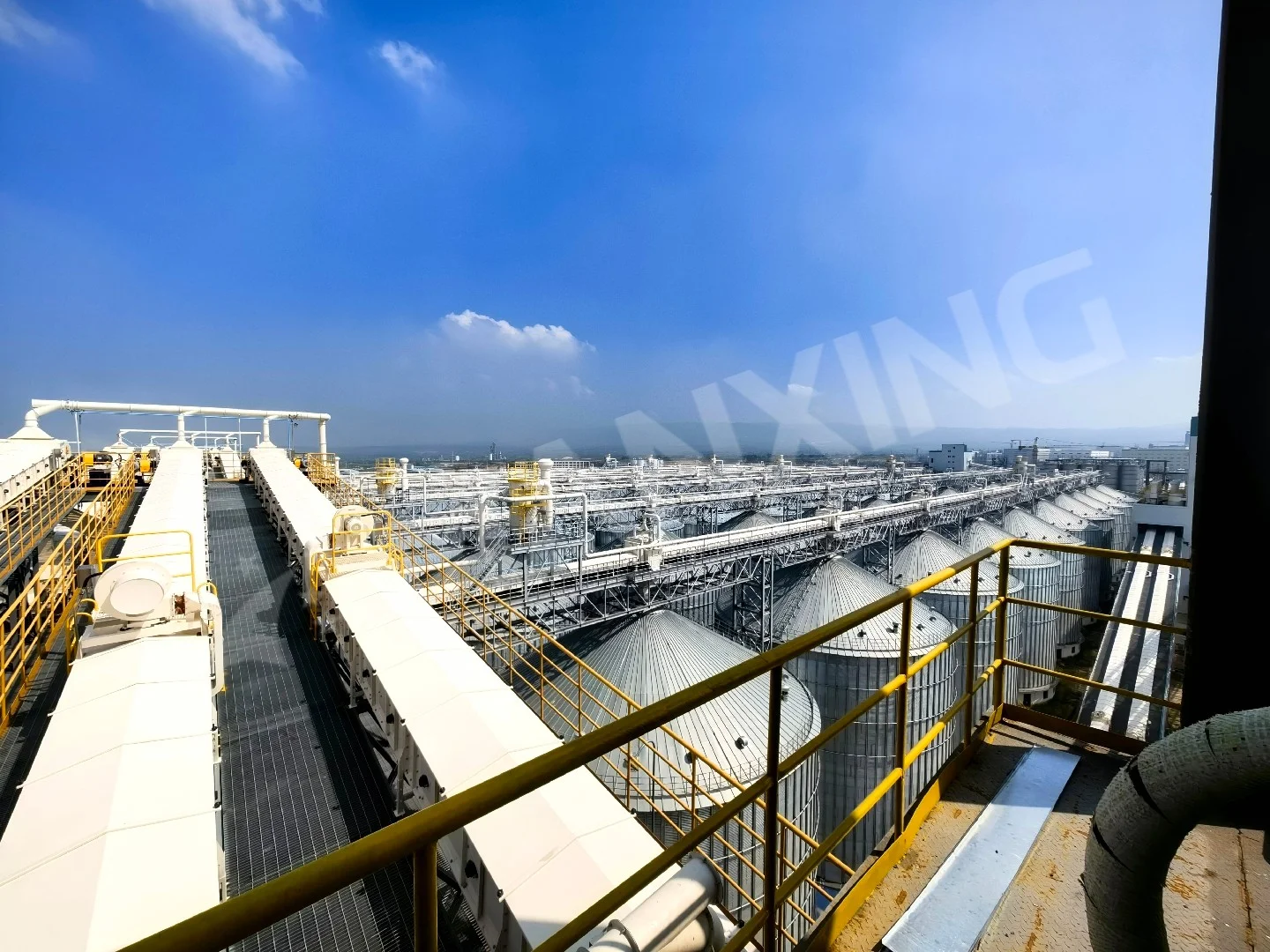
Once grain leaves the pit, the conveying system must match the silo arrangement. For a typical flat-bottom silo farm with six or more bins, you’re looking at a distribution conveyor running above the silos with a tripper or diverter valves. The key parameter is belt speed: 2.5–3.5 m/s for belt conveyors, 1.5–2.0 m/s for bucket elevators. Run them faster and you get belt wear, dust generation, and grain damage. Slower and you create backpressure in the intake. The PLC should monitor motor amps on every conveyor—a 15% amp spike means a choke is starting, and the system should reverse the belt for 3 seconds before it jams solid.
Selecting the Right Elevator Type
Centrifugal discharge bucket elevators are the standard for grain—they handle up to 600 MT/h at 60–80 meters lift. But for delicate crops like soybeans or malt barley, use a slow-speed, positive-discharge elevator. Tip speed under 1.0 m/s reduces cracking from 2.5% to below 0.8%. That’s a measurable quality improvement that buyers will pay a premium for.
Common Pitfall: Ignoring Fill Sequencing
Most operators fill silos in whatever order the truck arrives. That’s a recipe for segregation and moisture migration. An automated system should enforce a fill sequence: oldest grain first, or by moisture zone. One terminal in Argentina lost 200 tons of wheat to hot spots because they filled a dry bin on top of a damp one. The automation software didn’t check bin history. Modern systems cross-reference intake moisture with bin aeration zones and route accordingly.
Outload Systems: Speed, Accuracy, and Dust Control
Outload is where automation pays back fastest. A manual railcar loading operation might do 4–6 cars per hour. An automated system with a telescopic spout, weighbridge integration, and dust collection hits 12–15 cars per hour. The spout lowers into the car, a level sensor triggers the gate to open, and the conveyor ramps up to full speed. When the car reaches target weight (say 110 metric tons for a covered hopper), the gate closes within 0.5 seconds—no overfill, no spillage. The dust collection system must handle 8,000–12,000 CFM at the loading point; undersized filters are the #1 cause of outload slowdowns.
For truck outload, automation means driver self-service kiosks. Driver scans a QR code, the system selects the bin, opens the gate, and loads to preset weight. Average cycle time: 15 minutes. Compare that to 30–40 minutes with a weighmaster and manual gate. One 50,000-ton facility I audited saved $120,000/year in labor just on outload. The ROI on the automation hardware was 14 months. Pair that with a steel silo cost guide to model your own payback.
Frequently Asked Questions
Q: Can I retrofit automation to an existing grain handling system, or do I need a new facility?
A: Retrofitting is usually feasible and often cheaper than building new. You add PLC-controlled actuators to existing gates, conveyors, and diverters. The biggest cost is the control panel and sensor wiring—figure $30,000–$80,000 for a 6-bin system. The mechanical parts (motors, gearboxes) are typically fine. Just make sure your existing conveyor speeds and elevator capacities can handle the increased throughput automation enables.
Q: What’s the minimum throughput where automation makes financial sense?
A: Below 100 MT/h, the labor savings are small enough that manual operation might be cheaper. At 200+ MT/h, automation pays for itself in 2–3 years. At 500+ MT/h, it’s mandatory—you simply cannot coordinate that many conveyors, gates, and bins manually without constant chokes and spills. I’ve seen 800 MT/h facilities try to run manual; they lost 18% of their first season’s throughput to downtime.
Q: How do I handle moisture variation across different bins in an automated system?
A: Install moisture sensors at every bin inlet, not just at intake. The automation software should track a moisture “profile” per bin. When outload calls for grain, the system blends from bins to hit a target moisture—say 14.5% for corn. If bin A is 16% and bin B is 13%, the PLC calculates the blend ratio and opens gates accordingly. This is called “recipe blending” and is standard in advanced systems.
Q: What’s the biggest mistake in designing automated grain handling?
A: Under-sizing the dust control system. Automated systems move grain faster, which generates more airborne dust. A manual system might get away with 4,000 CFM at the elevator head. An automated 500 MT/h system needs 12,000 CFM minimum. If you skimp, you’ll get dust explosions (NFPA 61 compliance is mandatory) or frequent filter clogging that stops the whole line. Budget 8–12% of total project cost for dust collection.
Q: Do I need a separate SCADA system, or can I use a simple PLC with a touchscreen?
A: For a single facility with under 20 silos, a modern PLC with a 15-inch HMI is sufficient. You get real-time flow diagrams, alarm logs, and bin level trends. For multi-site operations or terminals with 50+ silos, you need SCADA for remote monitoring, historical data analysis, and integration with ERP systems. The tipping point is around 30 silos—beyond that, the HMI becomes too cluttered to navigate quickly.
Q: How often should I recalibrate the load cells and flow meters in an automated system?
A: Every 90 days minimum. Grain dust coats load cells and changes the tare weight. Flow meters drift from wear. I’ve seen a facility lose $50,000/year in overfills because load cells were 2% off. Calibrate with certified test weights (not just electronic zeroing). And put a daily check in the SOP: load a known-weight truck, compare to the system readout, log the variance.
Looking for Professional Silo Storage Solutions?
We provide customized design, manufacturing, and installation services for steel silo systems worldwide. From intake pits to outload spouts, we engineer the full chain.
Get Your Free Technical Consultation →