


A waste-to-energy plant processing 300 tonnes of municipal solid waste daily needs a fuel storage system that can handle density swings from 150 kg/m³ to 400 kg/m³ without bridging or rat-holing. Steel silos designed specifically for refuse-derived fuel (RDF) and solid recovered fuel (SRF) solve this, but only if you get the geometry and discharge hardware right from day one.
Key Takeaways
- Core Data Point: WtE plants typically require 2 to 5 days of fuel storage capacity—for a 300 tpd plant, that means silo volumes between 1,500 m³ and 4,500 m³ depending on fuel density.
- Best Practice: Specify a hopper angle of at least 70° from horizontal with a stainless steel liner (2B finish, 3 mm minimum thickness) to prevent RDF hang-ups.
- Risk Alert: Ignoring the exothermic potential of stored RDF—spontaneous combustion can occur if silo temperatures exceed 60°C. Install continuous CO and temperature monitoring.
Why Waste-to-Energy Fuel Storage Demands Specialized Silo Design
Unlike grain or cement, RDF and SRF are heterogeneous, fibrous, and abrasive. They contain plastics, textiles, paper, and organic residues that compress unevenly. A standard flat bottom barley storage silo will fail here—the material arches over the outlet, and the flat floor leaves a dead zone of decomposing fuel. I've seen plants lose 15% of their effective storage capacity within six months because the silo wasn't designed for the elastic recovery of shredded waste.
Steel silos for WtE plants need a mass-flow hopper design. That means the entire contents move downward during discharge—no stagnant material. The hopper must be steep (70° to 80° from horizontal) and smooth. I specify 304 stainless steel for the hopper section because carbon steel corrodes rapidly from the organic acids released during storage. The cylindrical section can be galvanized carbon steel, but the hopper? Non-negotiable stainless. A plant in Southeast Asia lost an entire hopper to pitting after 18 months because they skimped on this.
Key Design Parameters for RDF and SRF Storage Silos
Start with the fuel's bulk density range. RDF from a mechanical treatment plant might be 200 kg/m³ loose; SRF from a dry stabilisation process can hit 350 kg/m³. But here's the thing—compaction during storage can increase that by 30% at the bottom of the silo. Your structural design must account for the highest expected density at the deepest point. For a 20-meter-diameter silo, that means ring stiffness calculations based on 450 kg/m³, not the average.
Discharge Equipment Selection
You need a heavy-duty screw conveyor or a live-bottom floor with multiple augers. I prefer a single, large-diameter screw (600 mm or more) with variable pitch—tight at the inlet, wider at the discharge. This prevents the screw from acting like a compactor. The drive must be hydraulic or variable-frequency with torque limiting. RDF can contain metal fragments that jam a fixed-speed screw; a torque spike should trigger a reverse-clean cycle, not a shear pin replacement.
Fire and Explosion Prevention
This is the number-one blind spot. RDF dust is explosive above 50 g/m³. Install explosion venting panels on the silo roof (at least 0.2 m² per 10 m³ of silo volume). Also, fit a nitrogen inerting system for the headspace. I've walked plants where the only protection was a manual CO₂ hose—that's not a plan, it's a prayer. Continuous monitoring of CO (carbon monoxide) and temperature at three levels in the silo gives you a 4-hour warning before a fire starts.
Comparing Silo Types: Flat Bottom vs. Hopper Bottom for WtE
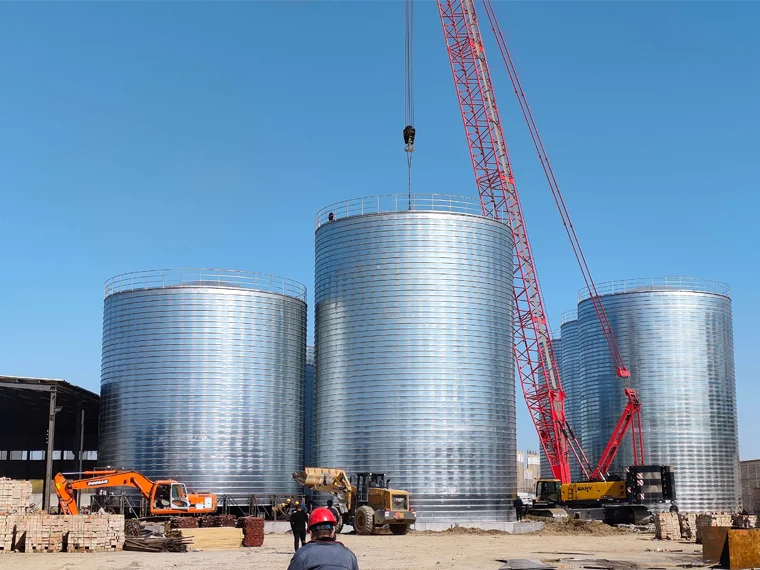
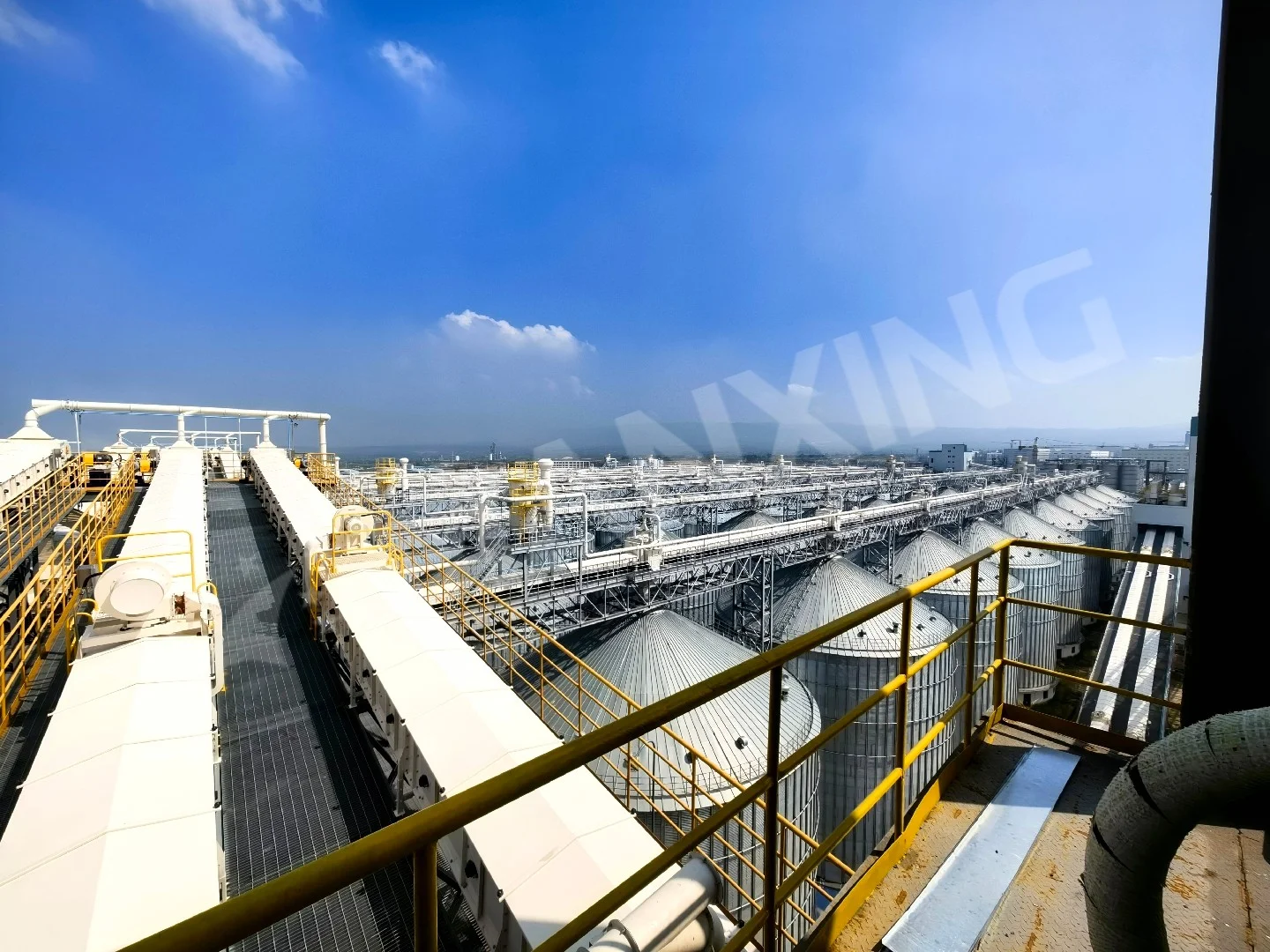
I've installed both. A flat bottom silo with aeration system works for dry, free-flowing fuels like wood chips, but not for RDF. The aeration pipes clog within weeks from the sticky fines. For WtE, a hopper bottom silo with strong bolts is the right choice—the bolted construction allows field erection in tight plant layouts, and the hopper ensures complete discharge. However, bolted silos must have gasketed seams (butyl rubber, 12 mm) to prevent fugitive dust emissions.
Another option is a hopper bottom silo for storage and drying, but that requires a hot air plenum and a moisture removal system. If your WtE plant receives wet waste (above 35% moisture), this can be a valuable add-on—it reduces the fuel's lower heating value penalty. But it adds complexity: you need a rotary airlock at the inlet and a baghouse for the exhaust. For most plants, a simple hopper bottom with a stainless liner and a screw feeder is the most reliable, lowest-maintenance solution.
Frequently Asked Questions
Q: What is the typical lifespan of a steel silo used for RDF storage?
A: With proper material selection—galvanized carbon steel for the cylinder and 304 stainless for the hopper—you can expect 20 to 25 years. The key is the hopper liner; if it's carbon steel, plan for replacement at 8 to 10 years. Also, inspect the interior coating every 2 years. I've seen silos last 30 years in dry climates, but coastal plants with high humidity need more frequent maintenance.
Q: How do I size the silo for a 500 tonnes per day WtE plant?
A: Start with a storage buffer of 3 days' fuel consumption. At 500 tpd, that's 1,500 tonnes of RDF. With an average bulk density of 250 kg/m³, you need 6,000 m³ of live storage. But add 20% for headspace and compaction allowance—so a 7,200 m³ silo. That's roughly a 22-meter diameter by 18-meter tall silo. Always verify with your fuel's actual density from the waste supplier.
Q: Can I use a concrete silo instead of steel for RDF storage?
A: You can, but I don't recommend it. Concrete is porous—RDF leachate will stain and eventually degrade the surface. You'd need an epoxy liner that costs as much as a steel silo. Plus, concrete silo with reinforced structure is heavier, requiring a more expensive foundation. Steel is lighter, faster to erect, and easier to repair. The only advantage of concrete is fire resistance, but with proper detection and inerting, steel is safe.
Q: What's the biggest mistake in WtE silo design?
A: Not accounting for the elastic recovery of shredded waste. When you pile RDF in a silo, it compresses under its own weight. But when you start discharging, the material at the top doesn't push down evenly—it arches. I've seen silos where the top 3 meters of fuel stayed in place while the bottom emptied, creating a void. Then the whole mass collapsed, damaging the screw feeder. Always design for mass flow, not funnel flow.
Q: How do I prevent bridging in the hopper?
A: Three things: steep hopper angle (70° minimum), low-friction liner (stainless steel 2B finish or UHMWPE), and a large outlet diameter—at least 6 times the maximum particle size. For RDF with 300 mm shreds, that means a 1.8-meter outlet. If the silo is too small for that, install a bridge breaker—a hydraulic cone or a vibratory discharger. But mechanical agitators are a maintenance headache; get the geometry right first.
Q: Is it safe to store RDF outdoors in a silo?
A: Yes, but with precautions. The silo must be weather-tight—rain ingress increases moisture, which promotes biological activity and heat generation. Install a roof with a 5° slope and a vent that closes automatically. Also, UV radiation degrades plastic components in RDF, but inside a steel silo, that's not an issue. The main risk is condensation on the inner walls; a small heater (1 kW per 100 m³) in the headspace prevents that.
Looking for Professional Silo Storage Solutions?
We provide customized design, manufacturing, and installation services for steel silo systems worldwide—including RDF and SRF storage for waste-to-energy plants.
Get Your Free Technical Consultation →