
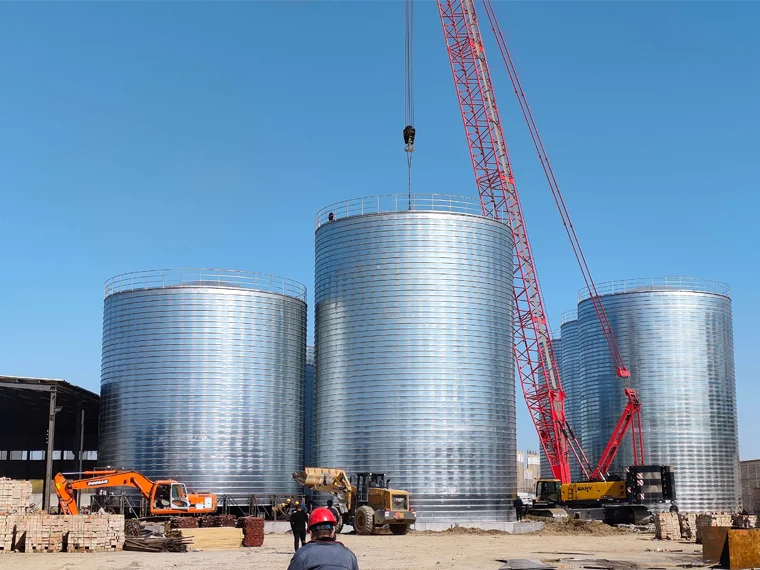
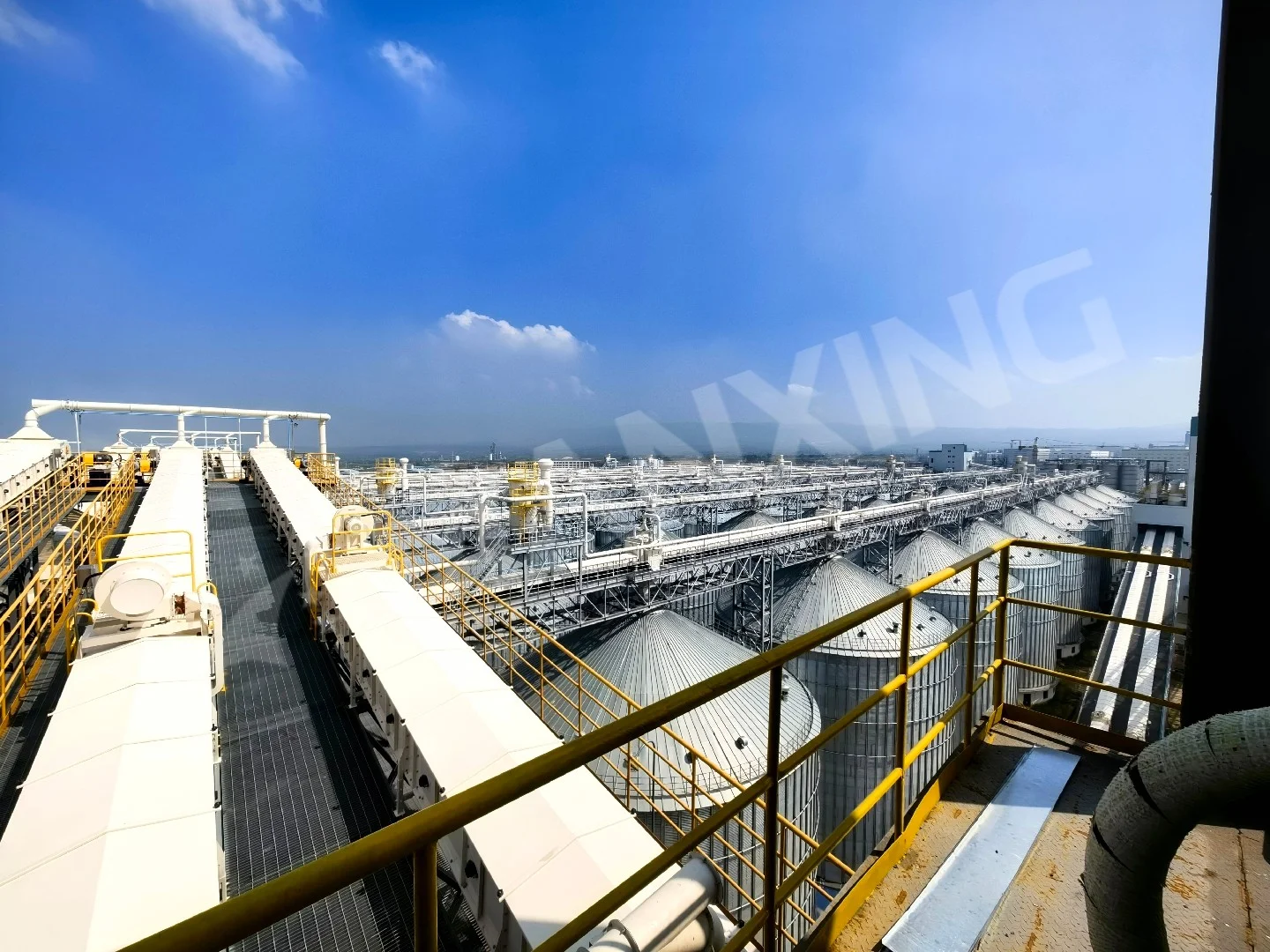


Field welding on large-diameter silo shells introduces unavoidable residual stresses and potential weld defects that, if undetected, can lead to catastrophic structural failure during loading cycles. With over 30% of silo structural failures traced back to weld zone cracking according to post-incident engineering reports, implementing a rigorous non-destructive testing (NDT) protocol is not optional—it is a fundamental requirement for operational safety and asset longevity.
Magnetic Particle Testing for Surface Crack Detection in Silo Shell Welds
Magnetic particle testing (MT) remains the primary method for detecting surface and near-surface discontinuities in ferromagnetic steel silo shells. During field erection, we routinely apply MT on 100% of butt welds in the bottom two ring courses—the zones experiencing the highest hoop stress from stored material pressure. The procedure involves magnetizing the weld area with a yoke or prods, then applying dry fluorescent particles while the structure is in a darkened condition. Sensitivity reliably detects cracks as shallow as 0.5 mm deep, which is critical because hairline cracks in the heat-affected zone often propagate rapidly under cyclic filling and emptying loads.
One practical challenge we encounter is surface roughness from grinding or slag residue. A professional silo manufacturer will insist on light grinding of all weld caps to a smooth contour before MT application, ensuring the magnetic field lines are not disrupted. For silos storing abrasive materials like cement or aggregate, we recommend repeating MT inspection after the first 90 days of service, as operational vibration can expose previously dormant micro-cracks.
Ultrasonic Thickness Gauging and Weld Volumetric Inspection
Ultrasonic testing (UT) provides volumetric examination of weld integrity and measures remaining shell thickness—a dual function essential for both new construction and in-service silos. Using a 5 MHz dual-element transducer, we can detect lack of fusion, slag inclusions, and porosity in welds up to 40 mm thick with a positional accuracy of ±1 mm. The procedure follows ISO 17640 standards, scanning the weld from both sides of the joint with a 10% overlap to ensure complete coverage. For flat bottom silo with heavy duty roof structure applications, we pay special attention to the T-joints where the roof plate meets the top ring—these connections experience complex stress distributions from wind and seismic loads.
Thickness mapping is equally vital. We take readings on a 500 mm grid pattern across the entire shell surface, focusing on areas prone to erosion such as material impact zones near inlet points. A thickness reduction exceeding 12.5% of the nominal plate thickness triggers a structural re-evaluation. For hopper bottom silo for cement storage, where abrasive flow accelerates wall wear, we recommend annual UT surveys rather than the standard biennial interval.
Calibration and Reference Standards
All UT equipment must be calibrated daily using an IIW-type reference block with known reflectors at 2 mm, 5 mm, and 10 mm depths. Without proper calibration, a 3 mm slag line can be misinterpreted as acceptable root penetration, leading to a missed defect that may grow under load.
Limitations of Conventional UT
Conventional UT struggles with coarse-grained materials like austenitic stainless steel or thick-walled silos above 50 mm plate thickness. In such cases, phased array ultrasonic testing (PAUT) offers superior beam focusing and real-time imaging, though at higher equipment and operator certification costs.
Key Takeaways
- Core Data Point: Industry failure analysis indicates that 30% of silo structural collapses originate from undetected weld defects in the bottom ring courses.
- Best Practice: Implement a tiered NDT strategy—100% MT on bottom ring welds, 20% random UT on upper ring welds, and annual UT thickness mapping for high-wear zones.
- Risk Alert: Do not rely solely on visual inspection; surface grinding can hide cracks that only magnetic particle testing will reveal.
Radiographic Testing for Critical Weld Joints in Large-Diameter Silos
Radiographic testing (RT) using iridium-192 or selenium-75 sources remains the gold standard for detecting volumetric flaws in butt welds on silo shells exceeding 20 meters in diameter. We apply RT selectively—typically on the first three ring course welds and any repair welds—because the radiation safety zone required during field testing can halt other construction activities for several hours. A single exposure of a 12 mm thick weld joint requires approximately 3 minutes of exposure time with an iridium-192 source at a 600 mm source-to-film distance, producing a radiograph that can resolve a 2% thickness change.
The interpretation of radiographs demands certified Level II or III personnel who understand silo-specific stress patterns. A linear indication in the weld root of a tension zone is far more critical than a similar indication in a compression zone. For hopper bottom silo turnkey installation projects, we coordinate RT scheduling with the concrete foundation curing timeline to avoid delays. Digital radiography (DR) is gaining adoption because it eliminates chemical processing and allows immediate image enhancement, though initial equipment investment is 40% higher than film-based systems.
Acoustic Emission Monitoring During Hydrostatic Testing and First Fill
Acoustic emission (AE) testing offers a unique advantage over other NDT methods: it monitors the structure under actual loading conditions. During the hydrostatic test of a silo shell—where water is filled to 110% of design capacity—AE sensors placed at 3-meter intervals around the circumference detect elastic waves generated by growing cracks, yielding steel, or slipping bolted connections. The system can locate the source of emission within a 500 mm radius using triangulation algorithms, allowing immediate targeted UT follow-up.
We have found AE particularly valuable during the first operational fill of a silo, when the structure experiences its maiden load cycle. Permanent deformation or crack initiation that does not occur during hydrostatic testing can manifest during grain or cement loading due to different material flow patterns. Real-time AE monitoring during the first three fill-empty cycles provides a baseline acoustic signature for the structure. Any deviation in subsequent annual AE tests—such as increased emission counts above 50 hits per minute—warrants immediate investigation. An experienced engineering team will integrate AE data with finite element analysis models to predict remaining service life with ±15% accuracy.
Frequently Asked Questions
Q: Can NDT methods detect stress corrosion cracking in silo shells storing high-moisture grain?
A: Yes, but with caveats. Stress corrosion cracking (SCC) typically initiates at the inner surface and propagates inward. Conventional UT from the outer surface may miss shallow SCC until it reaches 3-4 mm depth. The most effective protocol combines eddy current testing (ECT) for surface detection on the inner liner with phased array UT for depth sizing. For silos storing soybeans or corn above 14% moisture content, we recommend ECT screening every 18 months, as the humid microclimate accelerates SCC in carbon steel shells.
Q: How do environmental conditions affect NDT reliability during field welding of silo shells in winter?
A: Cold weather significantly impacts NDT accuracy. Below 5°C, ultrasonic couplant viscosity increases, reducing signal transmission by up to 20%. Magnetic particle testing becomes unreliable below -10°C because the magnetic permeability of steel changes, reducing particle attraction. For winter field projects, we mandate heated inspection enclosures around each weld joint, maintain all couplants at 20°C in insulated containers, and require a minimum 24-hour temperature stabilization period after welding before any NDT is performed. This adds approximately 15% to the inspection timeline but reduces false-positive rates from 12% to under 2%.
Looking for Professional Silo Storage Solutions?
We provide customized design, manufacturing, and installation services for steel silo systems worldwide, including comprehensive NDT protocols tailored to your material and site conditions.
Get Your Free Technical Consultation →