
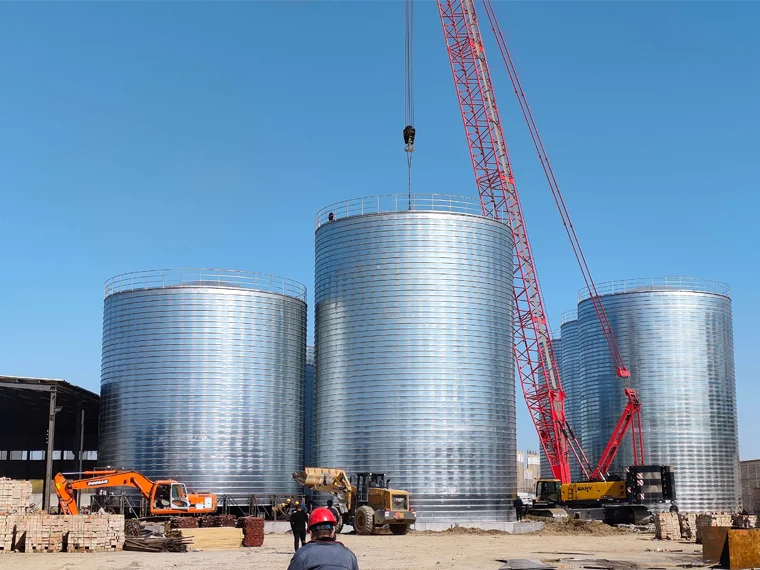
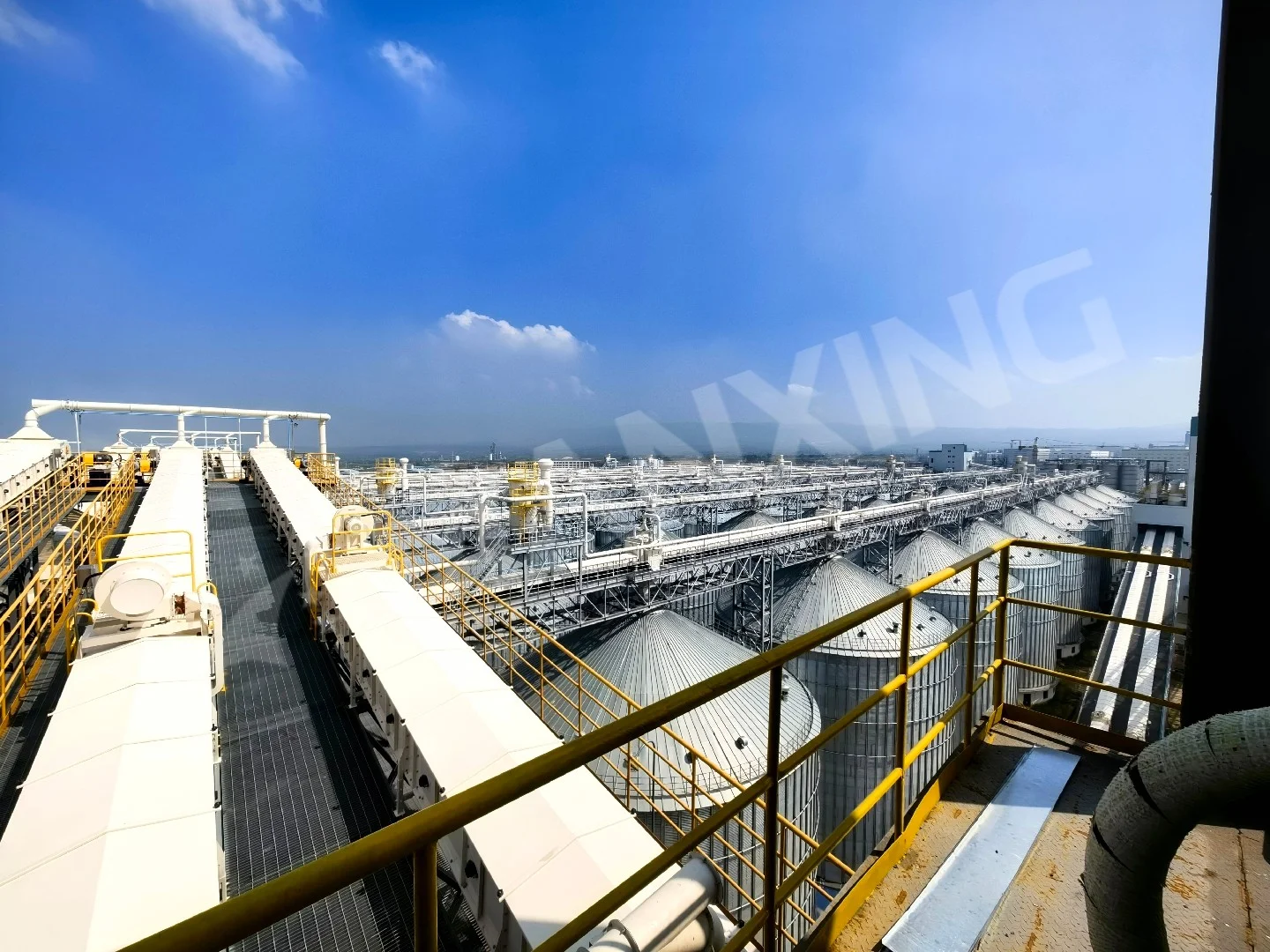


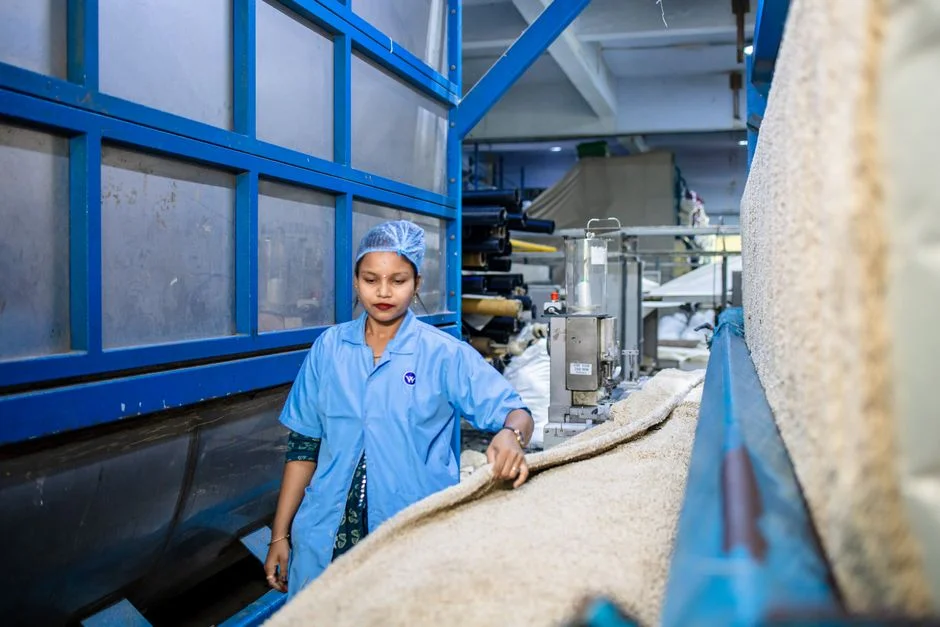
Improperly designed belt conveyor transition distances at silo feed points are responsible for up to 70% of premature belt edge wear and material spillage issues in bulk storage facilities. Understanding the precise geometric and dynamic requirements for the transition zone is critical for ensuring reliable, long-term operation of your grain or powder handling system.
Transition Distance Fundamentals: Why the Feed Point Matters for Silo Conveyors
The transition distance on a belt conveyor is the length over which the belt changes from a flat profile at the tail pulley to a fully troughed configuration at the first fully supported idler set. At silo feed points, this zone is particularly demanding because material is often introduced at high velocity directly onto the belt, subjecting the belt edges to significant stress. For a typical 60-inch wide belt with 35-degree troughing idlers, the required transition distance should be no less than 4.5 feet to avoid overstressing the belt carcass—a figure derived from belt manufacturer tension calculations and field experience.
We must also consider that the transition distance directly influences belt tracking and edge wear. If the distance is too short, the belt edges experience excessive elongation, leading to premature cracking and delamination. In one documented case at a Midwest grain terminal, a transition distance shortened by just 18 inches reduced belt service life from 8 years to under 3 years. This is not a theoretical concern; it is a measurable, costly reality for operators.
Calculating the Minimum Transition Distance for Silo Feed Conveyors
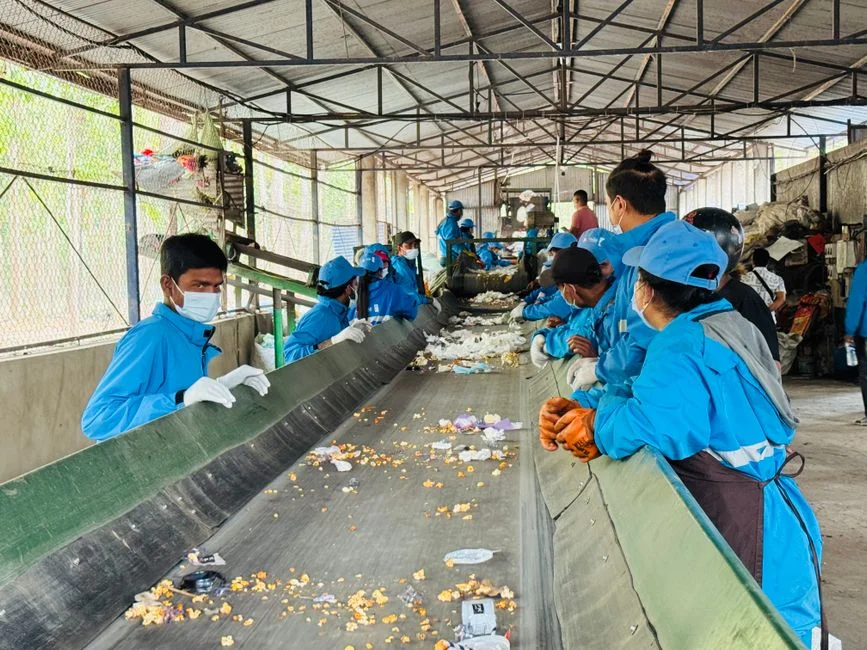
The minimum transition distance (Lt) is governed by the belt's allowable edge elongation, typically limited to 0.2% to 0.5% for fabric belts and 0.1% to 0.3% for steel cord belts. The formula used by experienced engineering teams is: Lt = (W * sin(λ)) / (2 * ε), where W is belt width, λ is troughing angle, and ε is allowable edge strain. For a 48-inch belt with 35-degree troughing and 0.3% allowable strain, the calculation yields a minimum transition distance of approximately 5.3 feet.
Practical Adjustments for High-Capacity Silo Applications
When the conveyor is feeding directly from a silo discharge, we recommend increasing the calculated distance by 15-20% to account for dynamic loading and material impact. This is especially important for flat bottom silo foundation design systems, where the feed point may experience variable flow rates. A conservative approach here prevents costly downtime.
Common Mistakes with Transition Idler Spacing
A frequent error is using standard idler spacing (typically 4-5 feet) throughout the transition zone. This creates unsupported belt segments that can sag, causing material to spill and belt edges to flap. The correct practice is to reduce idler spacing to 2-3 feet within the transition area, with the first idler after the tail pulley placed at the exact point where the belt begins to trough.
Key Takeaways
- Core Data Point: 0.3% maximum belt edge elongation is the industry-accepted limit for fabric belts in grain handling applications, per CEMA standards.
- Best Practice: Always add a 15-20% safety factor to the calculated minimum transition distance when designing for silo feed points.
- Risk Alert: Inadequate transition distance is the leading cause of belt edge failure at feed points, not belt tension or material abrasion as commonly assumed.
Optimizing the Transition Zone for Different Silo Configurations
The transition distance design must adapt to the specific silo configuration. For a hopper bottom silo for brewery applications, where the discharge is often a single, concentrated stream, the transition zone should include a impact bed or slider bed to absorb the falling material's kinetic energy. In contrast, for multiple feed points along a single conveyor serving a row of silos, each transition must be independently calculated, as belt tension varies along the conveyor length. A professional manufacturer will use finite element analysis to model belt stresses at each feed point.
Another critical factor is the conveyor's incline angle. For inclined conveyors feeding silos, the transition distance must be increased by an additional 10% for every 5 degrees of incline above 10 degrees. This compensates for the gravitational component that increases belt tension on the return side. Ignoring this can lead to belt slip and material rollback, particularly when handling free-flowing grains like corn or wheat. The A Buyer's Guide to Grain Handling Equipment often highlights this as a key specification to verify with suppliers.
Frequently Asked Questions
Q: How does belt type (fabric vs. steel cord) change the transition distance requirement for a silo feed conveyor?
A: Steel cord belts have significantly lower allowable edge elongation (0.1-0.3%) compared to fabric belts (0.2-0.5%), requiring a longer transition distance—often 1.5 to 2 times longer. For example, a 48-inch steel cord belt at 35-degree troughing needs a minimum transition distance of 8-10 feet, versus 5-6 feet for a fabric belt. Additionally, steel cord belts are less forgiving of misalignment in the transition zone, so precision in idler placement becomes paramount.
Q: Can a variable frequency drive (VFD) compensate for a poorly designed transition distance at the silo feed point?
A: No, a VFD cannot correct for inadequate transition geometry. While a VFD can control belt speed and reduce impact forces during start-up, it does not change the physical stress distribution on the belt edges. The belt's edge elongation is a function of the fixed geometry of the troughing idlers and the transition length. A VFD might mask symptoms like spillage by reducing speed, but the underlying belt damage—edge cracking, delamination—will continue to accumulate. The only solution is to redesign the transition zone with proper distance and idler spacing.
Looking for Professional Silo Storage Solutions?
We provide customized design, manufacturing, and installation services for steel silo systems worldwide.
Get Your Free Technical Consultation →