


Managing a multi-silo complex without a unified control view is like flying blind in a storm. A poorly designed SCADA architecture can lead to misdirected grain transfers, undetected temperature spikes, and costly downtime. This article distills 15 years of field experience into a practical framework for designing SCADA systems that deliver real-time visibility and operational control over large storage facilities.
SCADA Network Topology for Distributed Silo Systems: From Field Sensors to Central Control
The backbone of any large multi-silo complex is its network architecture. We typically recommend a three-tier topology: the field level, the control level, and the supervisory level. At the field level, each silo is equipped with temperature cables, level indicators, and pressure sensors—these are hardwired to local Remote Terminal Units (RTUs) or Programmable Logic Controllers (PLCs). These local controllers handle critical safety interlocks, such as preventing overfill or detecting a belt misalignment on a concrete silo with conveyor system, ensuring operations continue even if the central server goes offline.
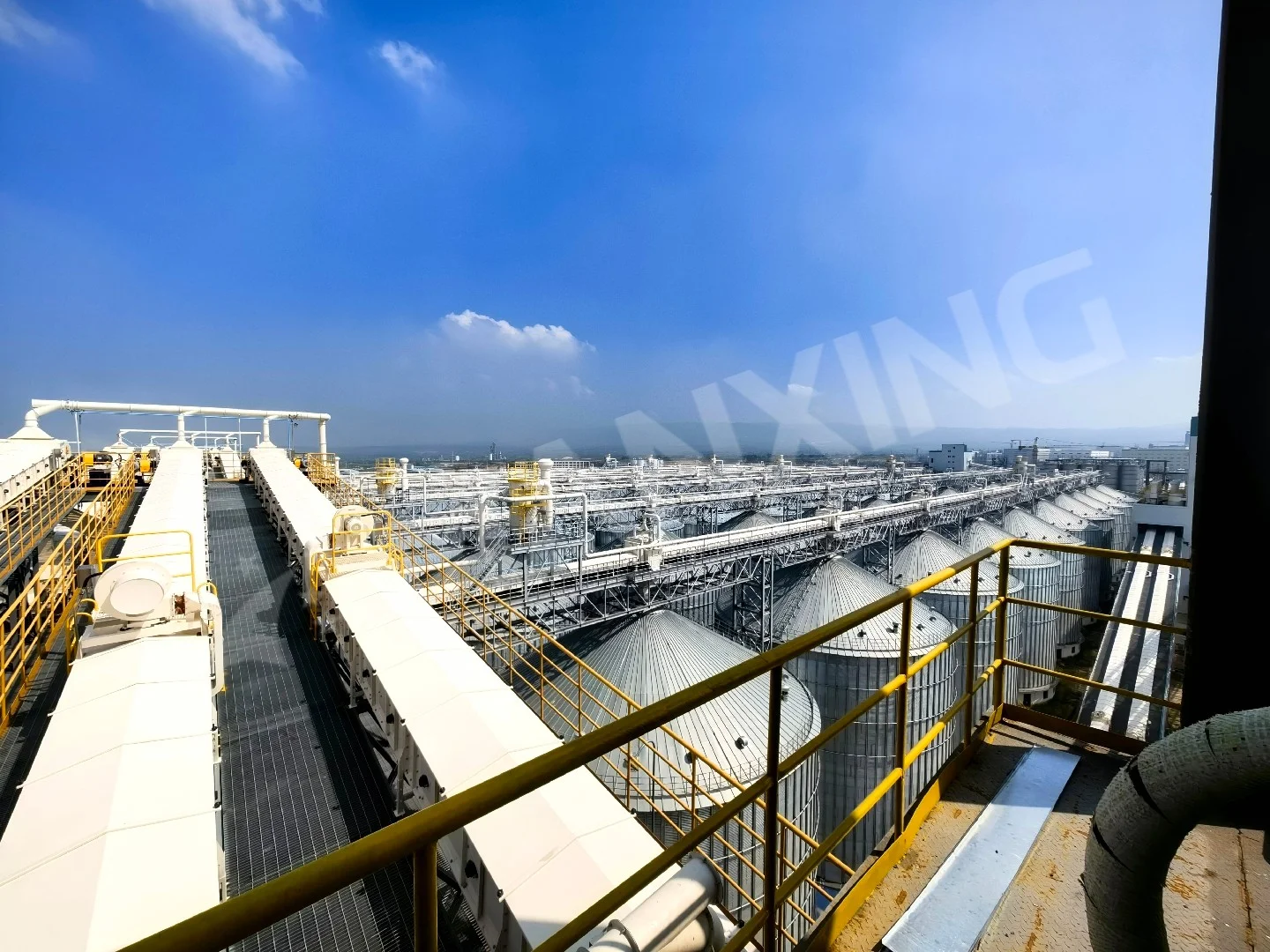
The control level uses a high-speed industrial Ethernet ring network (often fiber optic) connecting all RTUs/PLCs. This ring topology provides redundancy; if one cable is severed, data simply routes the other way. The supervisory level then aggregates this data onto a single HMI server, which presents a live schematic of the entire complex. We have seen facilities with over 50 silos successfully managed from just two operator workstations using this architecture, with network latency kept under 50 milliseconds.
Integrating Temperature Monitoring and Inventory Management into a Single HMI
A common mistake is running temperature monitoring and inventory management on separate, disconnected systems. This creates blind spots. For example, a temperature rise in a silo might be dismissed as seasonal, but when cross-referenced with a recent inbound load of high-moisture grain, it becomes a critical alert. A unified SCADA system must integrate these data streams. The HMI should display a color-coded silo overview: green for stable, yellow for caution (e.g., temperature gradient > 1°C per day), and red for alarm.
Configuring Alarms and Automated Responses
Set thresholds based on stored material properties. For grain, a temperature rise above 35°C near the silo wall typically triggers an aeration fan sequence. For cement, pressure differentials exceeding 0.2 psi indicate a potential bridge collapse. The SCADA should not just alarm the operator but also initiate a pre-programmed response, such as activating the aeration system on a concrete silo with ventilation system.
Data Historization and Reporting Pitfalls
Do not store high-frequency data (e.g., temperature readings every second) in the same database as daily inventory logs. This will crash your historian within months. We recommend a two-tier data storage approach: a fast, rolling buffer for real-time data (retained for 7 days) and a compressed, averaged archive for long-term trend analysis.
Key Takeaways
- Core Data Point: Industry data shows that 70% of silo operational delays are caused by poor data integration between subsystems.
- Best Practice: Implement a network ring topology with fiber optics to ensure 99.99% uptime for your control network.
- Risk Alert: Running temperature and inventory data on separate platforms can delay critical response times by up to 15 minutes.
Cybersecurity and Remote Access for Multi-Silo SCADA Systems
As silo complexes become more automated, they also become more vulnerable. A direct connection from the SCADA server to the internet is an invitation for ransomware. The standard we follow is a Defense-in-Depth approach. First, place a hardware firewall between the corporate network and the control network. Second, use a DMZ (demilitarized zone) for the data historian server, so external queries never touch the live control system. Third, enforce role-based access: operators can view and acknowledge alarms, but only engineers can modify set points or control logic.
For remote monitoring, we advocate for a VPN-only connection with two-factor authentication. Avoid using cloud-based SCADA providers that store your operational data on third-party servers; a local, on-premise server with a secure VPN tunnel is far more reliable for critical bulk material handling. A professional manufacturer will always provide a detailed network diagram with these security layers clearly documented.
Frequently Asked Questions
Q: What is the maximum cable distance between a field sensor and the central PLC without signal degradation?
A: For standard 4-20mA analog sensors, the practical limit is about 1,000 feet (300 meters) before you need a signal repeater or a remote I/O module. For digital temperature cables using a 1-Wire protocol, the limit is closer to 500 feet. In large complexes spanning 500+ feet, we always install local RTU enclosures at the silo cluster to convert signals to fiber optic, eliminating distance concerns entirely.
Q: How do you handle SCADA failover when the primary server crashes during a critical grain unloading operation?
A: We design a hot-standby server pair. The secondary server continuously mirrors the primary's database and control states. If the primary fails, the secondary takes over in under 5 seconds. The key is to ensure both servers have identical hardware and are connected via a dedicated heartbeat link. We also recommend a manual "last-resort" hardwired emergency stop button at each silo's local control panel, bypassing the SCADA entirely.
Looking for Professional Silo Storage Solutions?
We provide customized design, manufacturing, and installation services for steel silo systems worldwide.
Get Your Free Technical Consultation →