



Radar level sensors in silos fail more often from false echoes than from hardware faults — we’ve seen ghost readings cause overflow events in over 30% of poorly tuned installations. The fix isn’t a better sensor; it’s proper signal processing and false echo mapping.
Key Takeaways
- Core Data Point: False echoes account for roughly 1 in 3 radar level measurement errors in bulk storage silos — most from internal structures like ladders, level switches, and weld seams.
- Best Practice: Always run a full “false echo learning” cycle after installation and after any internal modification. This maps fixed reflectors so the transmitter ignores them.
- Risk Alert: Dust buildup on antennas and condensation on the silo roof can create intermittent false echoes that change with weather — standard static mapping won’t catch these.
Why Internal Silo Structures Create Ghost Radar Readings
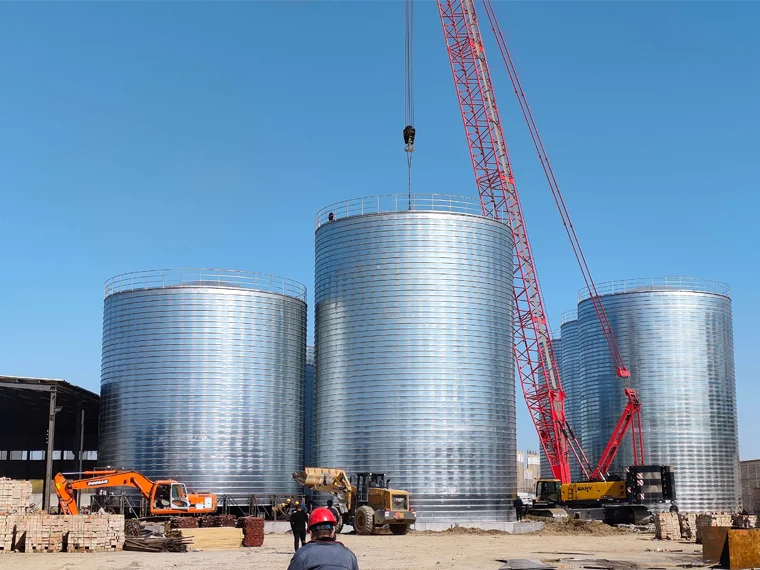
Radar level transmitters work by sending a microwave pulse down into the silo and measuring the time-of-flight to the material surface. But the beam doesn’t travel in a perfect straight line — it spreads, typically 8° to 12° depending on the antenna. Any object inside that cone reflects part of the signal back. Internal ladders, cable trays, stiffener rings, level switches, and even weld beads all act as unintended reflectors. In a 20-meter-tall silo with a 2-meter-diameter radar cone at the bottom, you’ve got dozens of potential false echo sources.
We’ve measured false echo amplitudes that were 40% to 60% of the true surface reflection in some grain silos with internal ladder runs. The transmitter can’t tell the difference between a reflection off a rung and a reflection off grain. Without signal processing, the device locks onto the strongest return — which might be a ladder at 8 meters when the actual grain level is at 14 meters. That’s a recipe for overflow or, worse, structural overstress if you’re filling based on that reading.
False Echo Mapping: How to Train Your Radar Transmitter
Most modern radar transmitters include a false echo learning function. You run this when the silo is empty — or at a known, stable low level. The transmitter fires pulses, records every reflection, and builds an “echo curve.” It then stores the amplitude and distance of each fixed reflector. During normal operation, the transmitter compares every incoming echo against that stored map. Any echo matching a known fixed reflector is discarded. Only the echo that doesn’t match — or that exceeds the stored amplitude — is treated as the true surface. This works well for static structures, but there’s a catch: you have to re-run the learning cycle anytime you add or remove internal hardware.
Dynamic Filtering and Tracking Algorithms
Beyond static mapping, good transmitters use tracking algorithms. They look for the echo that moves consistently with fill or discharge rates. If the silo fills at 0.5 m/min, the true surface echo shifts downward at that rate. A false echo from a ladder stays fixed. The algorithm compares successive scans and rejects stationary returns. We recommend enabling both static mapping and dynamic tracking — some operators skip the static map and rely only on tracking, but that fails if the fill rate is very slow or intermittent.
The Dust and Condensation Blind Spot
Here’s what many miss: dust accumulation on the antenna or condensation on the silo roof can create a new false echo that wasn’t there during the learning cycle. We’ve seen this in cement silos where a thin dust layer on the antenna face attenuates the signal by 15-20 dB, and in grain silos where roof condensation reflects the beam back at 3-4 meters. The solution is periodic automatic gain control (AGC) adjustments and, for critical applications, a purge air system that keeps the antenna clean. Without that, you’re flying blind.
Installation Positioning: The First Line of Defense Against False Echoes
You can’t fix a bad radar installation with software. The most common mistake we see is mounting the radar too close to the silo wall. A rule of thumb: keep the radar at least 300 mm from any wall or internal structure for every meter of silo diameter. For a 6-meter-diameter silo, that means 1.8 meters from the wall. That’s often impossible in a conical roof, so you angle the antenna slightly — but never more than 5° off vertical, or the beam skews and you get side-wall reflections. We also recommend a stilling well or bypass pipe for silos with heavy dust or turbulent fill streams. This isolates the radar beam from internal structures entirely, though it adds installation cost and potential bridging issues in sticky materials.
Frequently Asked Questions
Q: Can false echoes be completely eliminated in a steel silo with internal ladders?
A: No, not completely. Steel ladders are strong reflectors. But with proper false echo mapping and dynamic tracking, you can suppress them to the point where they don’t interfere with level measurement. The key is running the learning cycle when the silo is empty and re-running it after any internal modification. Expect some residual noise, but it shouldn’t cause reading errors beyond ±2% of full scale.
Q: How often should I run the false echo learning cycle?
A: At minimum, run it after initial installation and after any change to internal structures — adding a level switch, installing a new ladder, or replacing a stiffener ring. For silos with heavy dust or condensation issues, we recommend a quarterly re-learn. Some modern transmitters can auto-trigger a learning cycle when they detect a significant change in the echo profile, but manual verification is still best practice.
Q: What’s the difference between a false echo and a multiple echo?
A: A false echo comes from an internal structure — a fixed reflector. A multiple echo is the radar pulse bouncing off the material surface, then off the silo roof, then back down to the surface again. Multiple echoes appear at twice the distance of the true surface. Most modern transmitters can identify multiples by their distance pattern. False echoes require mapping because they don’t follow a predictable distance relationship.
Q: Does antenna type affect false echo susceptibility?
A: Yes, significantly. Horn antennas with a narrow beam angle (8°) are less susceptible to false echoes from nearby structures than parabolic or rod antennas with wider beams (12-15°). For silos with dense internal structures, use a horn antenna with a beam angle under 10°. In very dusty environments, a purged horn antenna is better than a rod antenna, which tends to accumulate material and create its own false echo.
Q: Can I use radar level measurement in a silo with a conical bottom?
A: Yes, but you need to account for the cone angle. The radar beam will reflect off the cone walls if the material level is low. For steep cones (60° or more), mount the radar slightly off-center so the beam hits the material surface rather than the cone wall. False echo mapping is critical here — the cone itself is a large fixed reflector. In many conical-bottom silos, we recommend a guided-wave radar probe instead of non-contact radar to avoid cone reflections entirely.
Q: What signal processing parameters should I adjust first when troubleshooting false echoes?
A: Start with the false echo learning cycle — re-run it with the silo at a known low level. If that doesn’t fix the issue, adjust the gain (amplification) downward. Too much gain amplifies weak false echoes. Then increase the signal-to-noise ratio threshold — this makes the transmitter ignore any echo below a certain amplitude. Finally, check the tracking window size: a window that’s too wide can lock onto a false echo near the true surface. Narrow the window to ±0.5 meters around the expected surface position.
Looking for Professional Silo Storage Solutions?
We provide customized design, manufacturing, and installation services for steel silo systems worldwide. Our engineers can help you select the right level measurement approach for your material and silo configuration.
Get Your Free Technical Consultation →